 flip
flipAruhe — roasted and beaten fern root
Aruhe — roasted and beaten fern root
Why this dish? Aruhe, the rhizome of the bracken fern, was for centuries the daily bread of the Māori. It could only be eaten after being passed over the embers: without the fire given by Mahuika, this hard, fibrous root would have remained inedible. It is the humblest and most everyday gesture made possible by her gift.
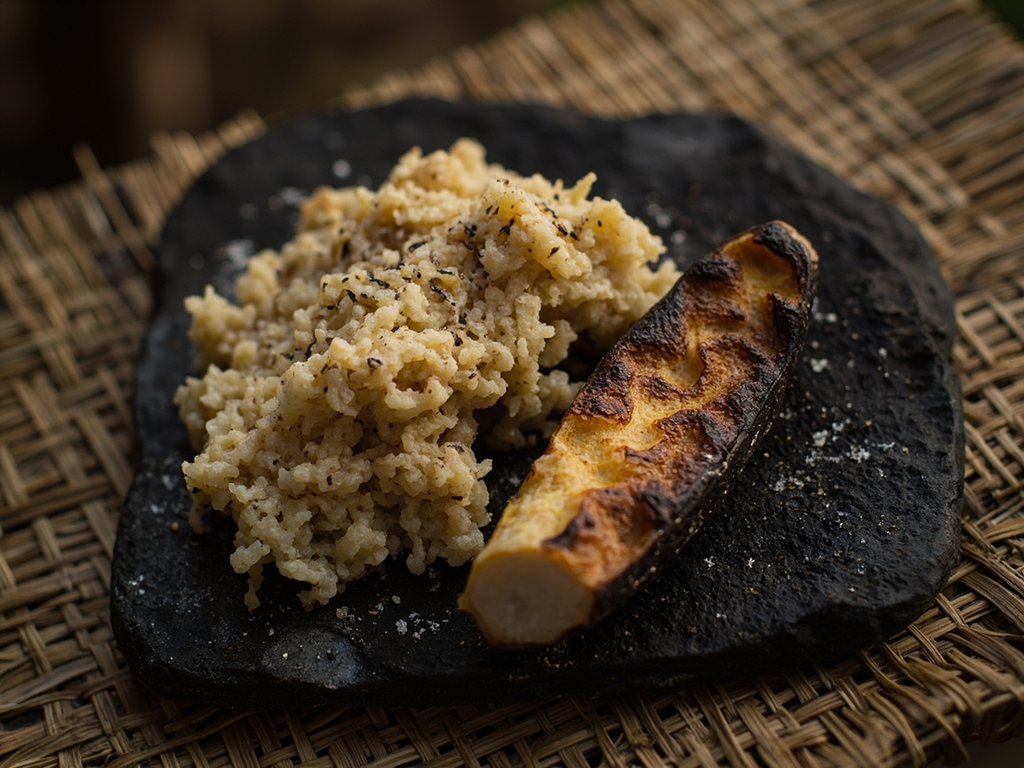
The fern rhizome is roasted on the embers until blackened, then beaten on a flat stone to separate the starchy pith from the fibers. The warm paste is chewed, slightly bitter and smoky. A gesture repeated every day in every *kāinga* (village).
Come closer, mokopuna, grandchild of the long white land, and look at the tips of my fingers: that is where I keep the fire. Without it, this fern root that your people dig up would break your teeth. Lay it on the embers I have given you, wait until it blackens, then beat it on the stone until the pith separates from the fibers. Chew slowly: bitterness is the taste of patience, and patience is what nourishes a people.
- •Bracken fern rhizome (aruhe) — a few well-fleshed roots (staple starch)
- •Hardwood embers — a bed of live coals (cooking)
- •Spring water — a little (to moisten and soften)
Aruhe — roasted and beaten fern root
The fern rhizome is roasted on the embers until blackened, then beaten on a flat stone to separate the starchy pith from the fibers. The warm paste is chewed, slightly bitter and smoky. A gesture repeated every day in every *kāinga* (village).
Why this dish? Aruhe, the rhizome of the bracken fern, was for centuries the daily bread of the Māori. It could only be eaten after being passed over the embers: without the fire given by Mahuika, this hard, fibrous root would have remained inedible. It is the humblest and most everyday gesture made possible by her gift.
Come closer, mokopuna, grandchild of the long white land, and look at the tips of my fingers: that is where I keep the fire. Without it, this fern root that your people dig up would break your teeth. Lay it on the embers I have given you, wait until it blackens, then beat it on the stone until the pith separates from the fibers. Chew slowly: bitterness is the taste of patience, and patience is what nourishes a people.
Ingredients (period version)
- Bracken fern rhizome (aruhe) — a few well-fleshed roots (staple starch)
- Hardwood embers — a bed of live coals (cooking)
- Spring water — a little (to moisten and soften)
Ingredients
- Taro root (or parsnip if unavailable) — 400 g (safe, edible substitute for fern rhizome)
- Neutral vegetable oil — 1 tbsp (to prevent sticking)
- Sea salt — 1 pinch (seasoning (optional))
Method
- Important: real aruhe (bracken fern rhizome) is now discouraged for consumption — the technique is reproduced here with a safe root.
- Make a good bed of embers (barbecue) or preheat the oven to 220°C.
- Place whole taro pieces on the embers (or in the oven) until the skin blackens and the inside is tender, 25–35 min.
- Place the hot piece on a board and crush it with a pestle or rolling pin to separate the pulp from the fibers.
- Serve warm, optionally with a pinch of salt, and chew slowly as the ancestors did.
How it was made : Aruhe was harvested with a wooden spade (kō), dried, then roasted and beaten on a stone (the gesture of 'patu aruhe'). Rich in starch but fibrous and bitter, it was the main calorie source where kūmara did not grow. Today we know that bracken fern contains toxic compounds: it is mentioned out of historical respect, without recommendation.
The contemporary twist : Serve the smoked taro purée as a 'damper' of origins, in a quenelle on slate, with a smoked oil to evoke the embers.
Mahuika · Charactorium