 flip
flipMaza, the barley flatbread of the Lesbians
Maza, the barley flatbread of the Lesbians
Why this dish? Bread and barley maza formed the daily staple of every Greek table, rich or poor. Before singing of wine, Alcaeus first ate this barley base, like any Mytilenean: aristocratic luxury lay in the opson placed on top, not in the grain itself.
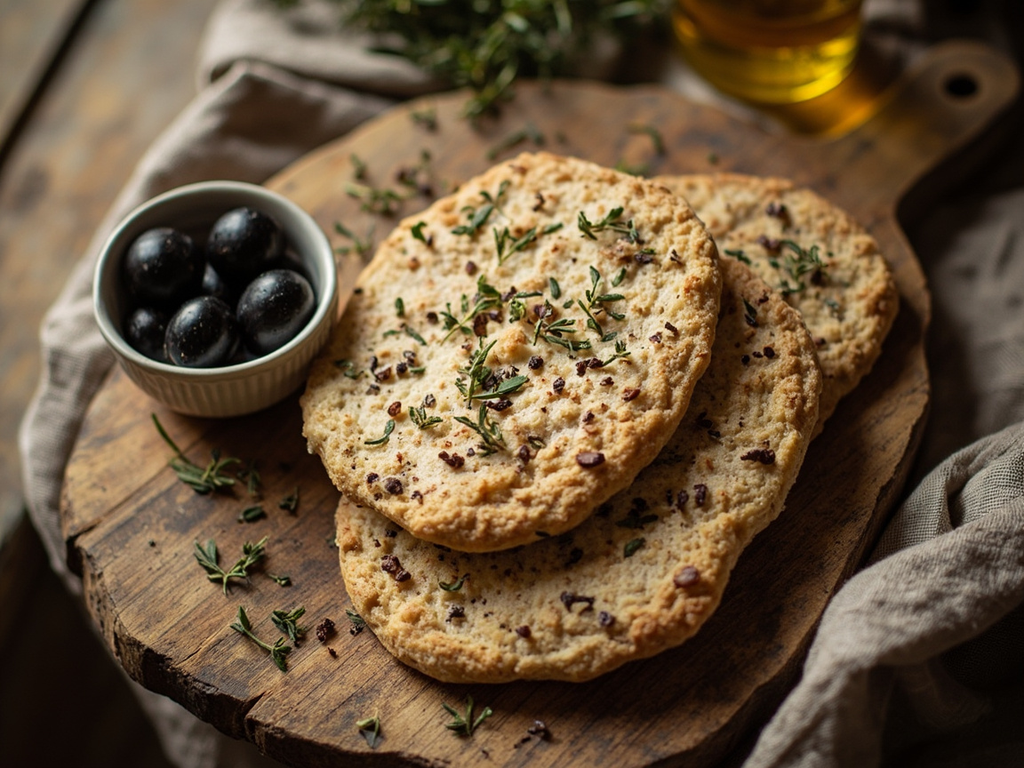
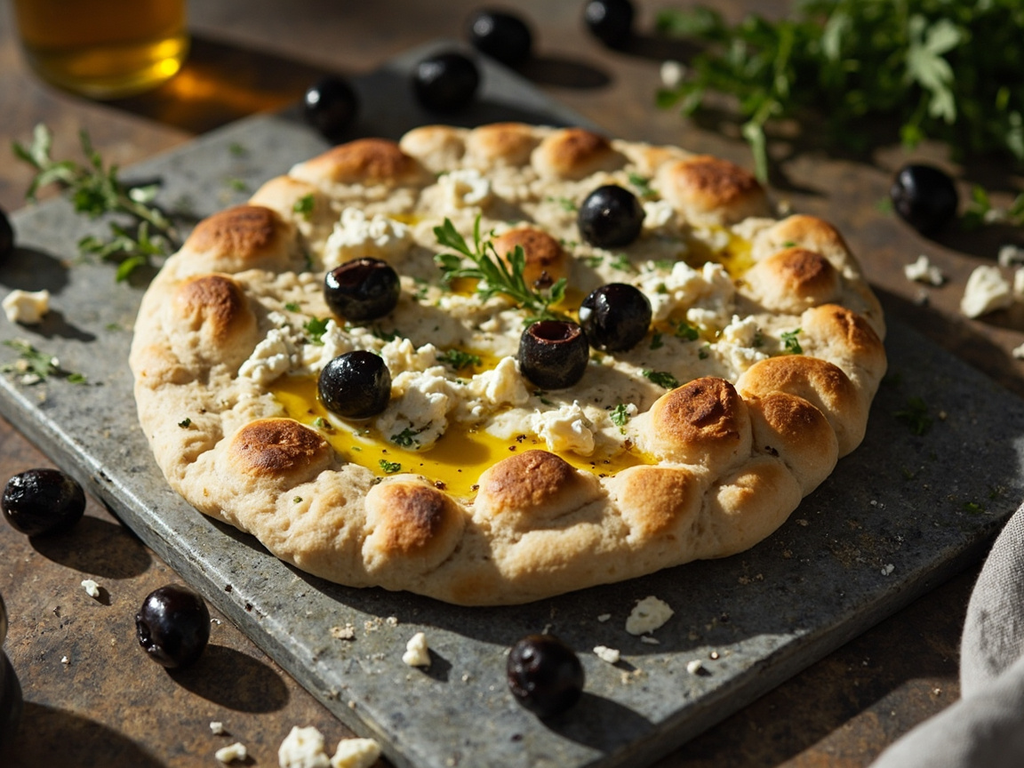
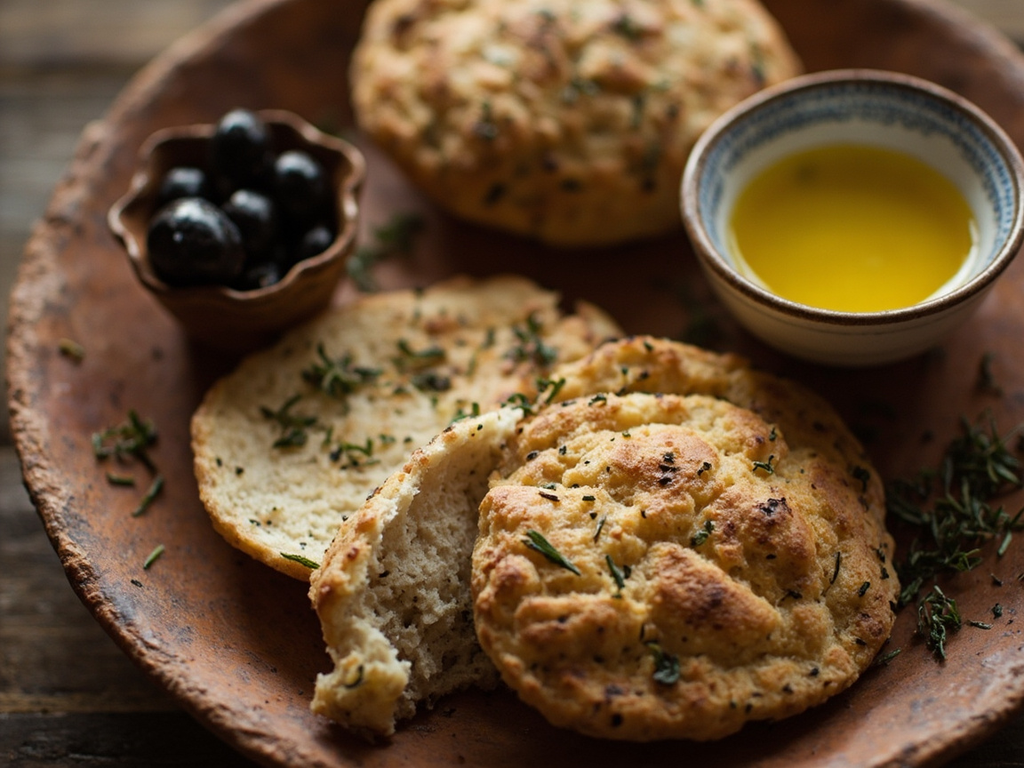
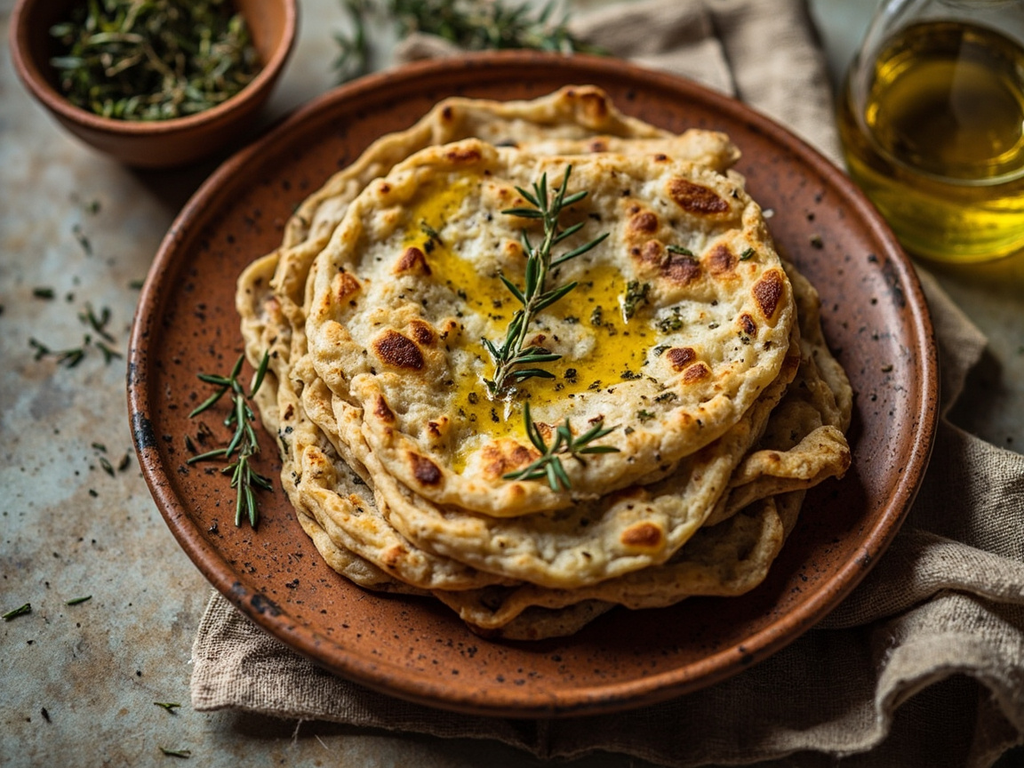
A dense, rustic flatbread of toasted barley flour, barely leavened, kneaded with water and olive oil, and scented with herbs. More than bread, it is a foundational food: you break it to dip into oil, crushed olives, or fresh cheese.
Come closer, stranger, and do not scorn the barley: it is she who keeps a man upright before the cup lays him low! We toast it, we grind it, we knead it with oil from our Lesbos olive trees, and we break it with full hands. Eat first, friend — for wine taken on an empty stomach is a horse without a bridle, and I know something of that.
- •Toasted barley flour — two good handfuls per guest (base)
- •Lesbos olive oil — a generous drizzle (binder and flavor)
- •Warm water — as needed (kneading)
- •Aegean sea salt — a pinch (seasoning)
- •Wild thyme or oregano — a few crumbled sprigs (scent)
Maza, the barley flatbread of the Lesbians
A dense, rustic flatbread of toasted barley flour, barely leavened, kneaded with water and olive oil, and scented with herbs. More than bread, it is a foundational food: you break it to dip into oil, crushed olives, or fresh cheese.
Why this dish? Bread and barley maza formed the daily staple of every Greek table, rich or poor. Before singing of wine, Alcaeus first ate this barley base, like any Mytilenean: aristocratic luxury lay in the opson placed on top, not in the grain itself.
Come closer, stranger, and do not scorn the barley: it is she who keeps a man upright before the cup lays him low! We toast it, we grind it, we knead it with oil from our Lesbos olive trees, and we break it with full hands. Eat first, friend — for wine taken on an empty stomach is a horse without a bridle, and I know something of that.
Ingredients (period version)
- Toasted barley flour — two good handfuls per guest (base)
- Lesbos olive oil — a generous drizzle (binder and flavor)
- Warm water — as needed (kneading)
- Aegean sea salt — a pinch (seasoning)
- Wild thyme or oregano — a few crumbled sprigs (scent)
Ingredients
- Barley flour — 200 g (base)
- Extra virgin olive oil — 3 tbsp (binder and flavor)
- Warm water — 120 to 150 ml (kneading)
- Fine salt — 1 tsp (seasoning)
- Dried oregano — 1 tsp (scent)
Method
- In a dry pan, lightly toast the barley flour for 2-3 minutes over medium heat until fragrant: this gives the characteristic toasted taste.
- Mix the flour, salt, and oregano in a bowl.
- Add the oil, then gradually add the warm water while kneading, until you have a soft but firm dough that no longer sticks.
- Shape into 4 to 6 flat cakes about 1 cm thick.
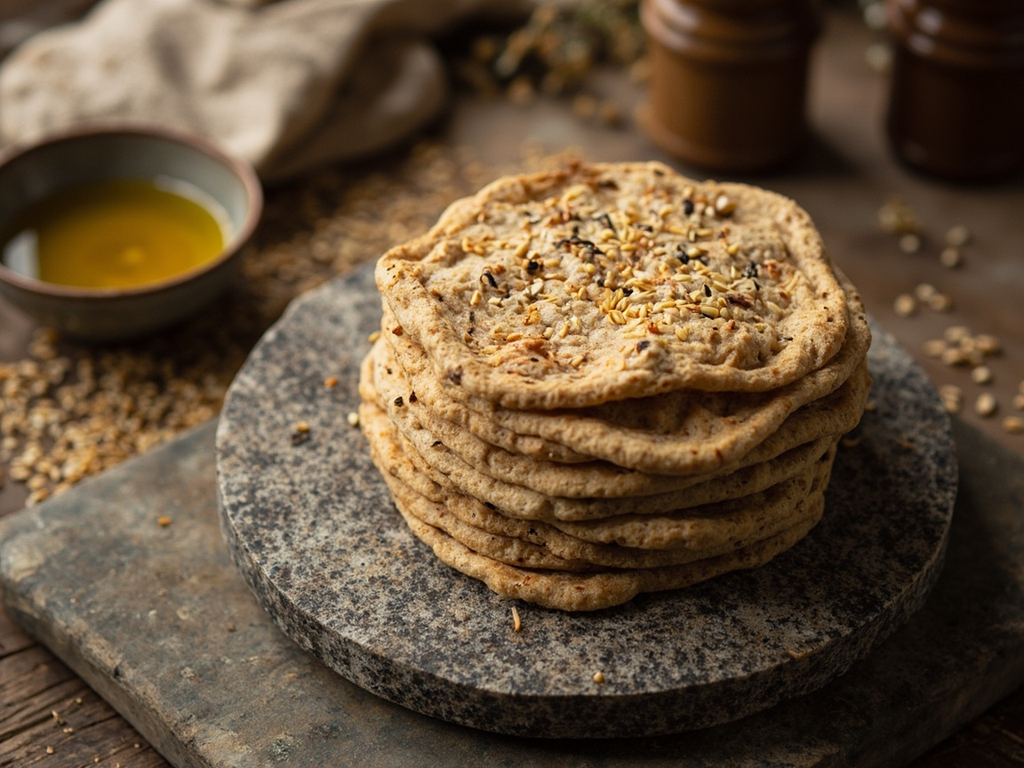
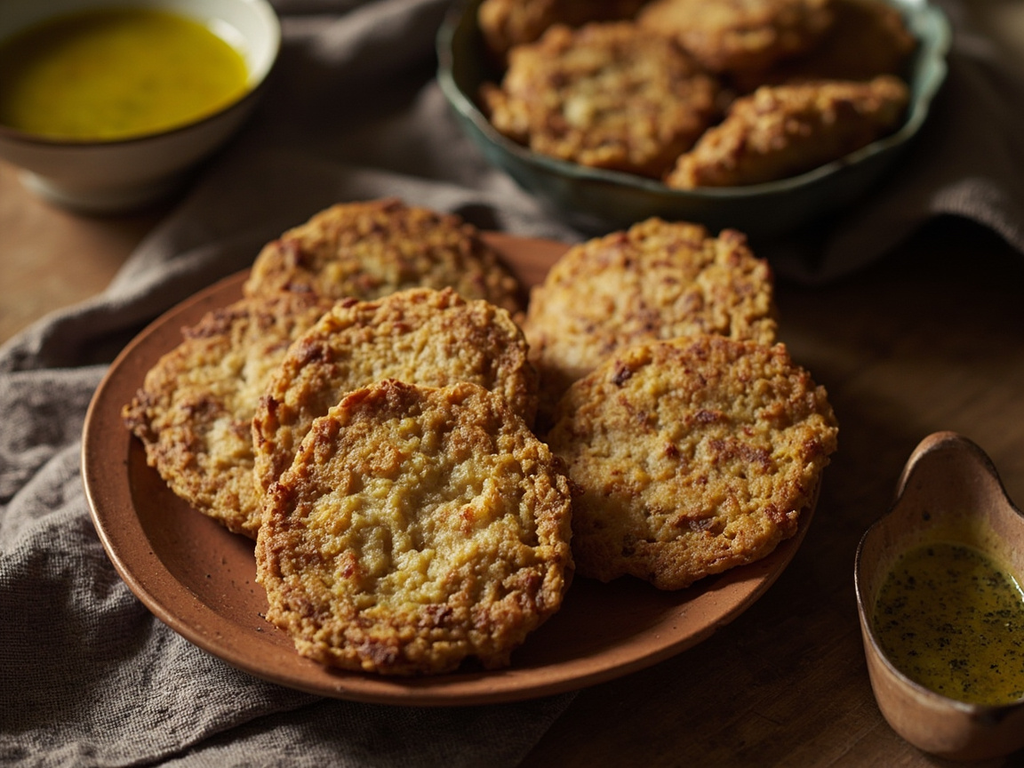
- Cook on a hot stone or dry pan for 4-5 minutes per side, until golden and dotted with brown spots.
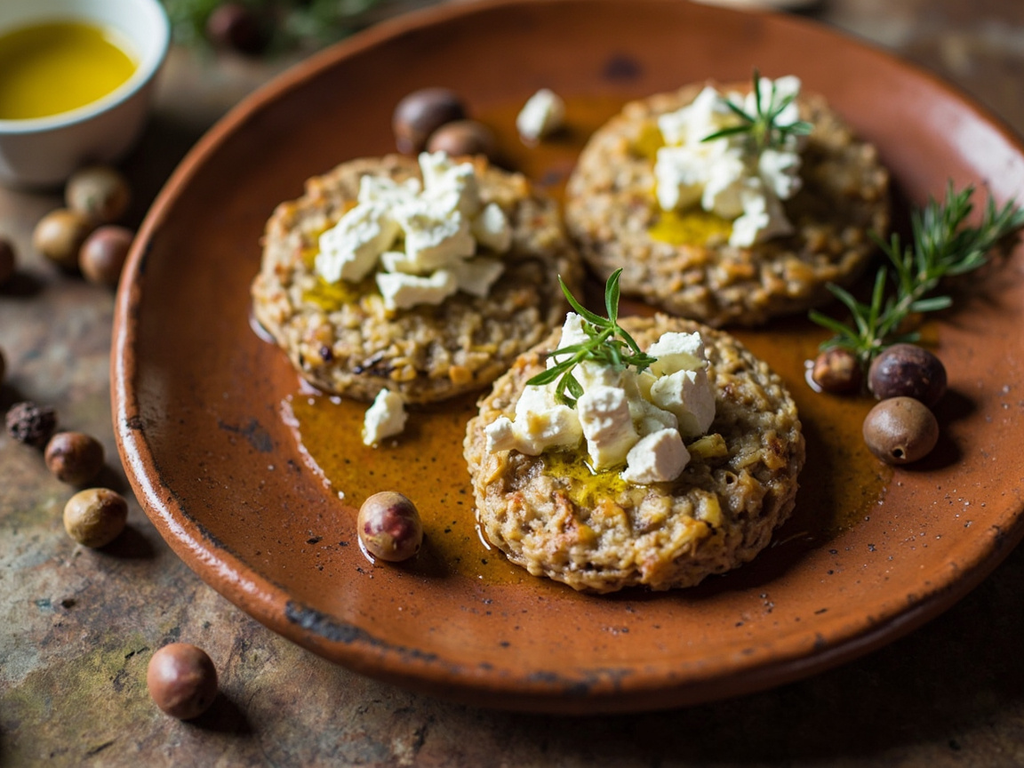
- Serve warm, to be broken by hand to dip into oil and olives.
How it was made : Barley grew better than wheat in Greek soil: maza, made from barely cooked or simply moistened barley flour, was the staple food, more common than wheat bread reserved for special days. It was eaten with opson — everything that 'accompanies' the bread.
The contemporary twist : Serve it on an appetizer board with a drizzle of new oil and a pinch of dukkah: the barley flatbread makes an ideal rustic base, far more evocative than a cracker.
Sources : Athenaeus of Naucratis, The Deipnosophists (The Banquet of the Learned), book III · Andrew Dalby, Siren Feasts: A History of Food and Gastronomy in Greece (1996)
Alcaeus · Charactorium