 flip
flipBarley Maza with Fresh Cheese and Olive Oil
Barley Maza with Fresh Cheese and Olive Oil
Why this dish? Before Zeus crossed her threshold in the guise of Amphitryon, Alcmene was first a mistress of the Theban palace: it is the *maza*, the barley flatbread kneaded daily, that feeds her table as it does that of all Greeks of the Heroic Age.
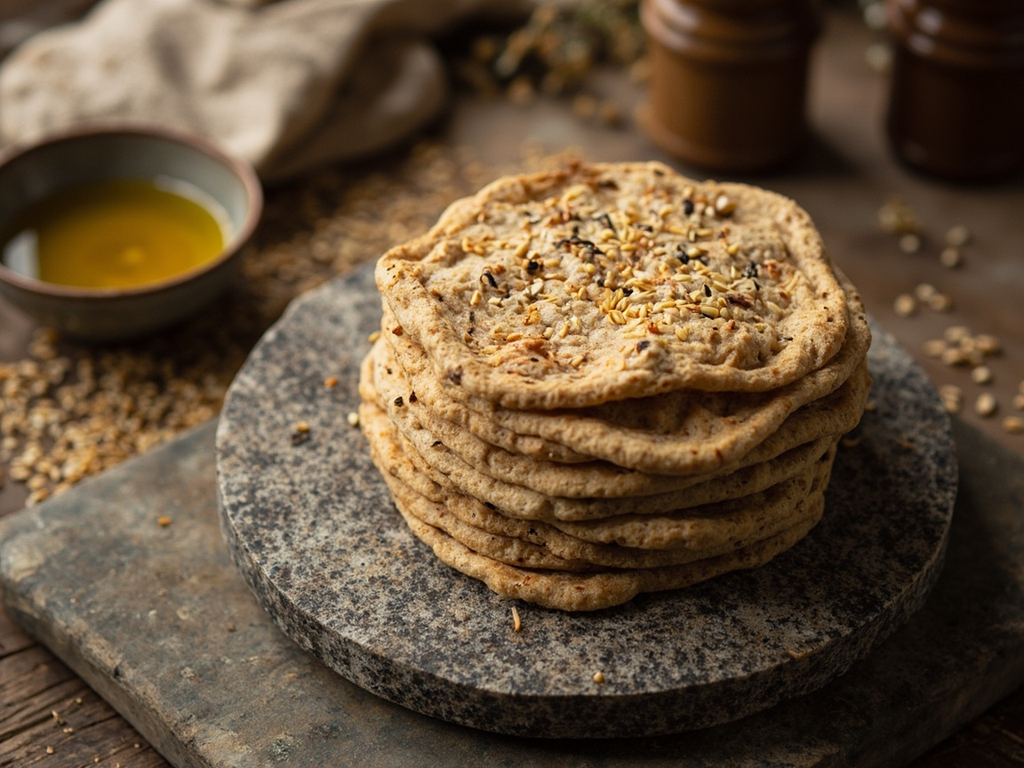
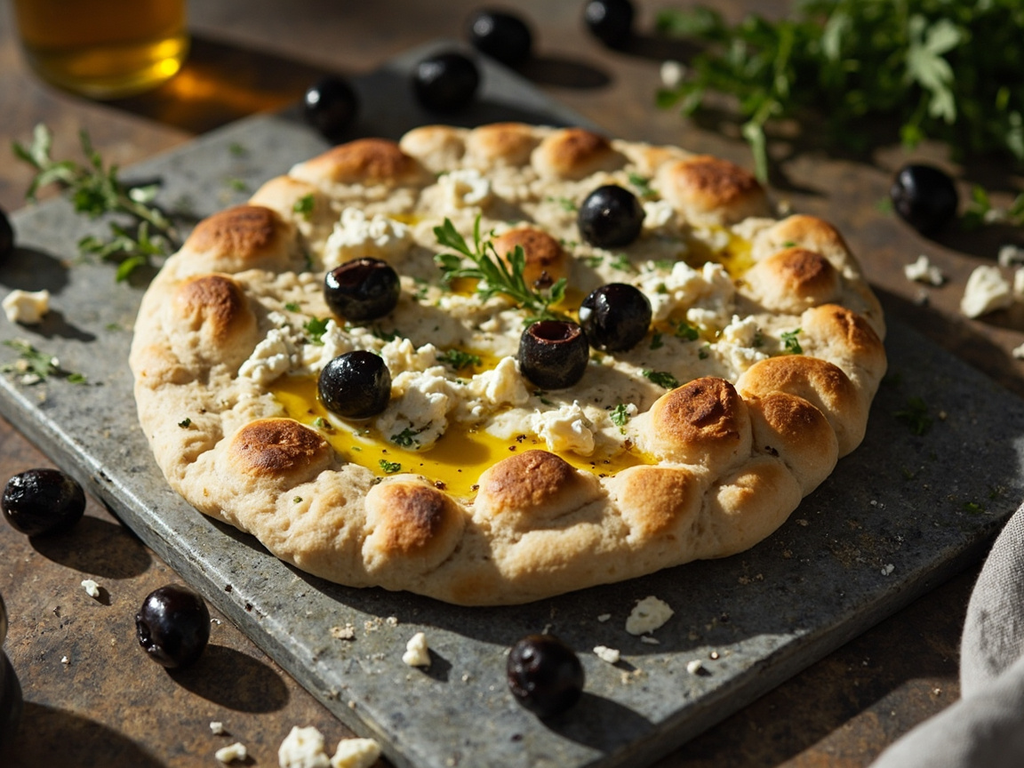
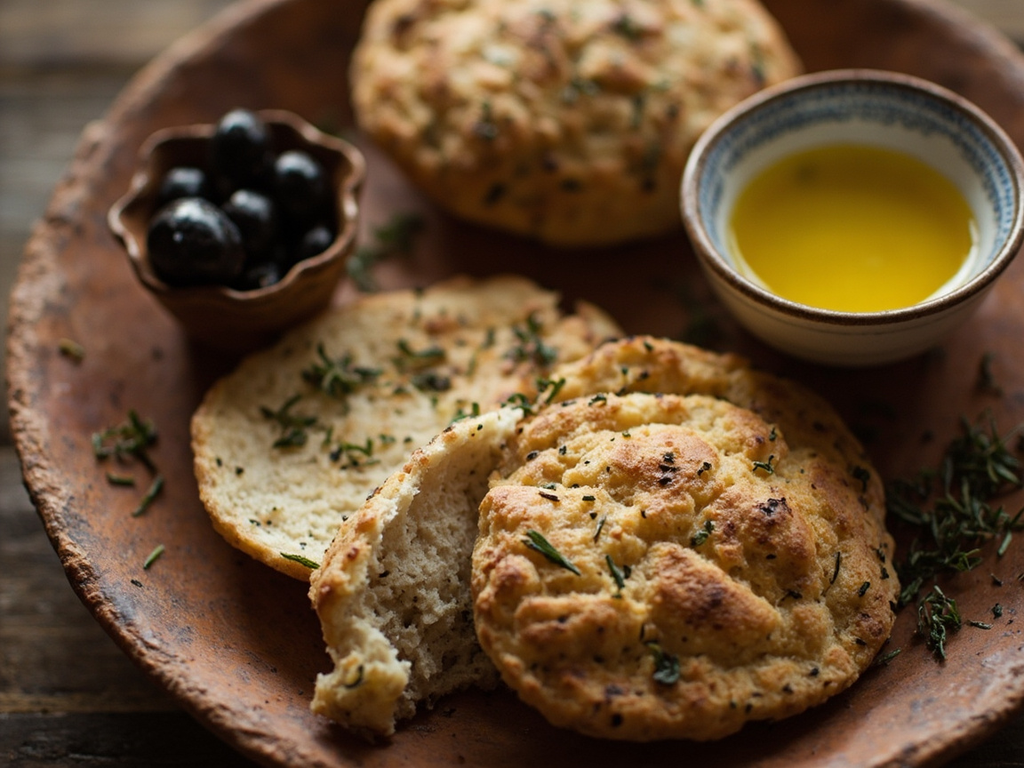
The barley flatbread — not really a leavened loaf, but a dense dough of roasted and ground barley, barely cooked, eaten warm with a drizzle of olive oil and a piece of goat cheese. The everyday bread of Homer's heroes.
Come closer, stranger, and do not scorn what my servants knead at dawn. We in Electryon's palace, and under Amphitryon's roof, grind barley on the millstone, wet it with spring water, and press it with our palms. Pour over it the oil from our olive trees, crumble a little goat cheese: this is the gift Demeter gives to mortals, and no king eats better.
- •Roasted barley flour — two handfuls (flatbread base)
- •Spring water — enough to bind (binder)
- •Olive oil — a drizzle (seasoning)
- •Fresh goat cheese — a piece (topping)
- •Sea salt — a pinch (seasoning)
Barley Maza with Fresh Cheese and Olive Oil
The barley flatbread — not really a leavened loaf, but a dense dough of roasted and ground barley, barely cooked, eaten warm with a drizzle of olive oil and a piece of goat cheese. The everyday bread of Homer's heroes.
Why this dish? Before Zeus crossed her threshold in the guise of Amphitryon, Alcmene was first a mistress of the Theban palace: it is the *maza*, the barley flatbread kneaded daily, that feeds her table as it does that of all Greeks of the Heroic Age.
Come closer, stranger, and do not scorn what my servants knead at dawn. We in Electryon's palace, and under Amphitryon's roof, grind barley on the millstone, wet it with spring water, and press it with our palms. Pour over it the oil from our olive trees, crumble a little goat cheese: this is the gift Demeter gives to mortals, and no king eats better.
Ingredients (period version)
- Roasted barley flour — two handfuls (flatbread base)
- Spring water — enough to bind (binder)
- Olive oil — a drizzle (seasoning)
- Fresh goat cheese — a piece (topping)
- Sea salt — a pinch (seasoning)
Ingredients
- Barley flour — 200 g (flatbread base)
- Warm water — 120 to 150 ml (binder)
- Extra virgin olive oil — 3 tbsp (seasoning)
- Fresh goat cheese (mild feta or fresh chèvre) — 100 g (topping)
- Salt — 1/2 tsp (seasoning)
Method
- Toast the barley flour in a dry pan for 3-4 minutes, stirring, until it smells nutty, then let it cool slightly.
- Mix the flour and salt, add warm water little by little until you get a soft, slightly sticky dough.
- Knead for 2 minutes, then form flat discs about 1/2 cm thick.
- Cook each disc for 3 minutes per side on a lightly oiled hot griddle or pan.
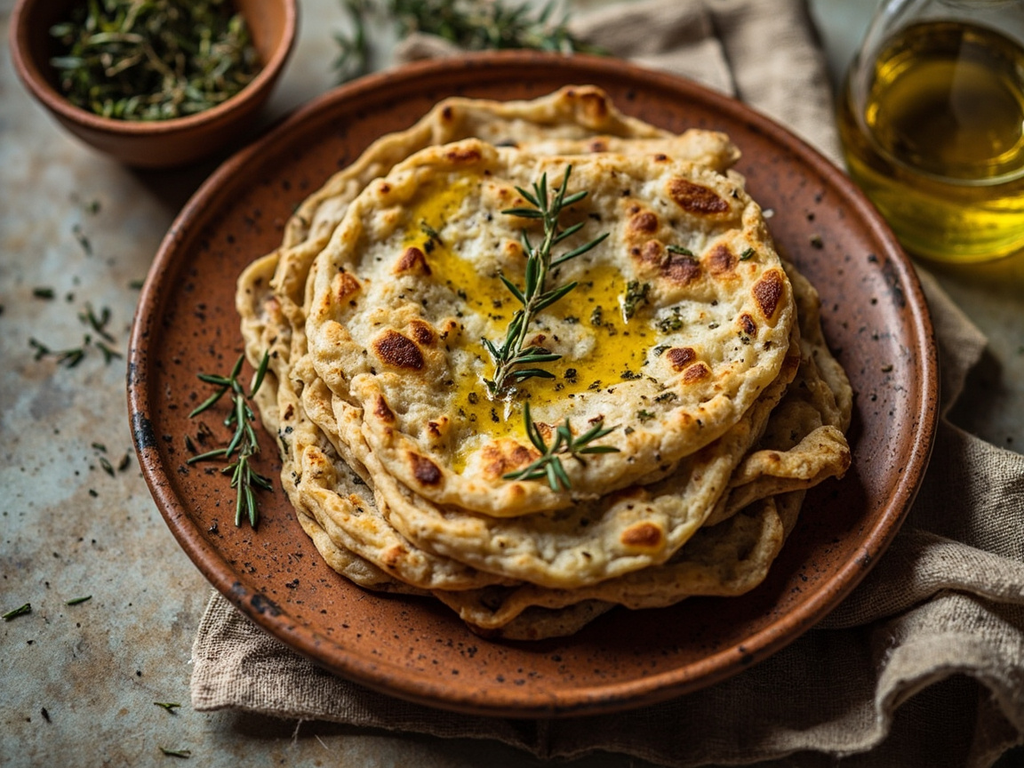
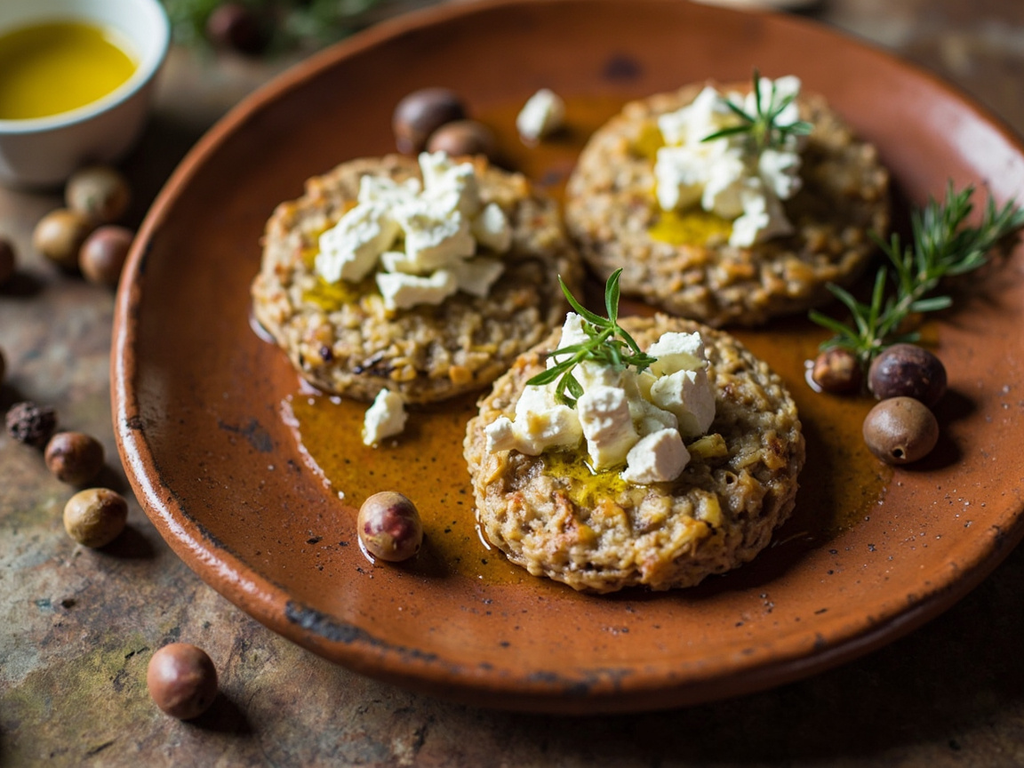
- Serve warm, drizzled with olive oil and topped with crumbled fresh cheese.
How it was made : The *maza* was not baked in an oven like our bread but often simply kneaded and eaten raw or lightly grilled. Barley dominated the Greek diet; wheat bread (*artos*) remained rarer and more prestigious. It was eaten at all hours, the invariable base of the meal.
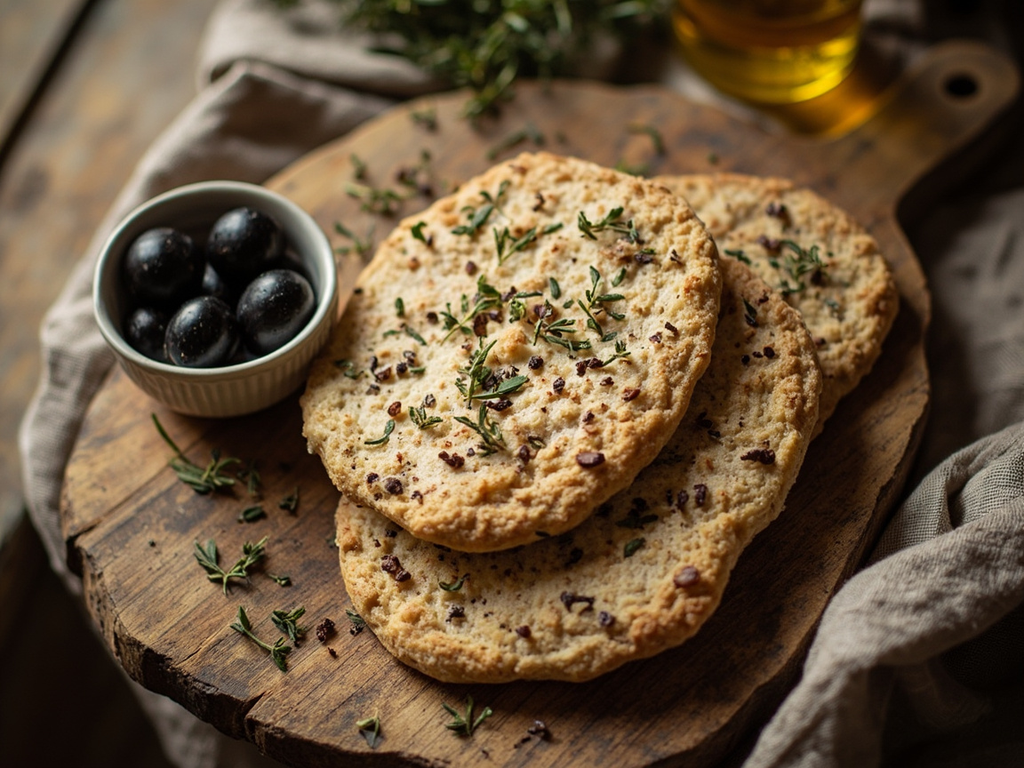
The contemporary twist : Serve it on an appetizer board 'Mycenaean style' with olives, honey, and a touch of fresh thyme — the *maza* becomes the convivial flatbread of summer tables.
Alcmene · Charactorium