 flip
flipHuahua manu — birds confit in their own fat
Huahua manu — birds confit in their own fat
Why this dish? To survive the winter, the Māori cooked fat birds over Mahuika's fire, then submerged them in their own rendered fat inside a sealed gourd. Without the goddess's flame to render the fat, this great preservation technique — which enriched chiefs — could not have existed.
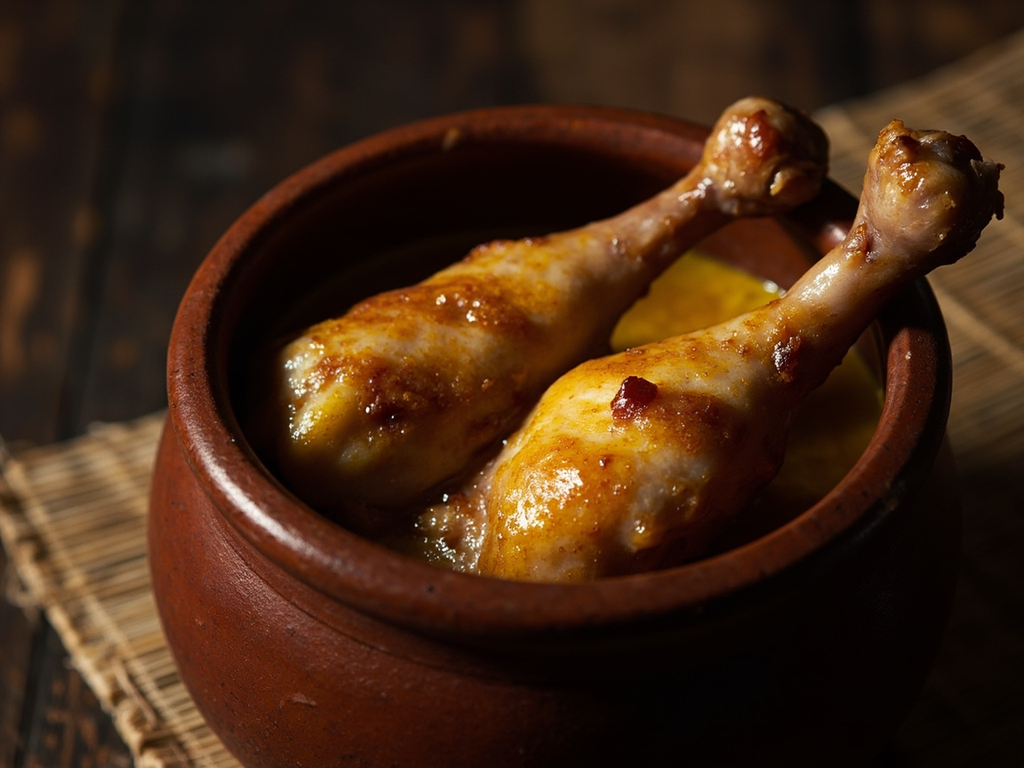
Fat birds are cooked, deboned, then packed tightly into a large gourd (taha) and covered with their rendered fat, sealing them from the air. Preserved for months, they were a treasure offered to distinguished guests. The Māori ancestor of confit.
When the days grow short and the forest of Tāne falls silent, it is my fire that saves you, mokopuna. Cook the fat bird over the embers, collect the fat that runs, then lay the flesh in the great gourd and drown it in that golden butter. Seal it well: neither air nor cold will enter. And when a great chief comes to sit at your door, you will open this taha, and he will know your mana.
- •Fat birds (kererū, young tītī/muttonbirds) — as many as the hunt provides (meat to confit)
- •Fat from the same birds — all the rendered fat (sealant and preservative)
- •Gourd (taha) — 1 large (sealed container)
Huahua manu — birds confit in their own fat
Fat birds are cooked, deboned, then packed tightly into a large gourd (taha) and covered with their rendered fat, sealing them from the air. Preserved for months, they were a treasure offered to distinguished guests. The Māori ancestor of confit.
Why this dish? To survive the winter, the Māori cooked fat birds over Mahuika's fire, then submerged them in their own rendered fat inside a sealed gourd. Without the goddess's flame to render the fat, this great preservation technique — which enriched chiefs — could not have existed.
When the days grow short and the forest of Tāne falls silent, it is my fire that saves you, mokopuna. Cook the fat bird over the embers, collect the fat that runs, then lay the flesh in the great gourd and drown it in that golden butter. Seal it well: neither air nor cold will enter. And when a great chief comes to sit at your door, you will open this taha, and he will know your mana.
Ingredients (period version)
- Fat birds (kererū, young tītī/muttonbirds) — as many as the hunt provides (meat to confit)
- Fat from the same birds — all the rendered fat (sealant and preservative)
- Gourd (taha) — 1 large (sealed container)
Ingredients
- Duck legs — 6 (fatty meat to confit)
- Duck fat — 500 g (slow cooking and sealing)
- Sea salt — 1 tsp (light seasoning)
- Scalded glass jar — 1 large (replaces the gourd)
Method
- Lightly salt the duck legs and let them rest in the fridge for 1 hour.
- Submerge them in melted duck fat and cook very gently (90°C in the oven) for 2.5 to 3 hours, until the meat falls off the bone.
- Pack the legs tightly into the scalded jar.
- Pour the hot, strained fat over them to cover completely, with no air bubbles.
- Let it set, then store in a cool place; keeps for several weeks, like a confit.
How it was made : Huahua manu was a prestige food: birds caught in autumn, perfectly fat, were cooked and preserved in their fat inside gourds (taha huahua) sometimes decorated and fitted with carved feet. Offering a full taha sealed alliances. The technique relies entirely on mastering fire to render the fat.
The contemporary twist : Shred the cold confit over a grilled kūmara cake, like 'rillettes from the end of the world'.
Mahuika · Charactorium