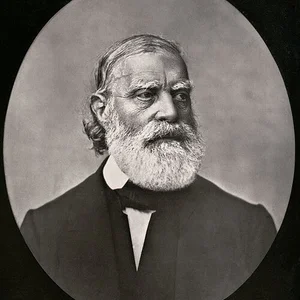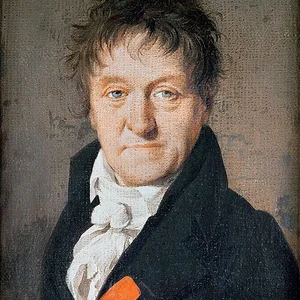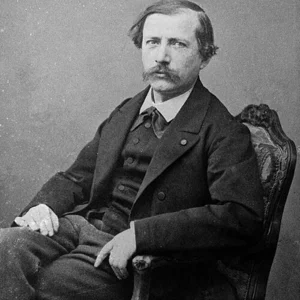

French chemist (1827–1907), founder of thermochemistry and organic synthesis chemistry. He was also a republican politician, serving as Minister of Public Education and then Minister of Foreign Affairs.
Marcellin Berthelot(1827 — 1907)
Marcellin Berthelot
France
8 min read
Frequently asked questions
Famous Quotes
« The world today holds no more mysteries.»
« Chemistry creates its own subject matter.»
Key Facts
- 1827: born in Paris
- 1854: first total synthesis of a fatty compound (methyl alcohol)
- 1865: Chair of Organic Chemistry at the Collège de France
- 1877: publication of the Essai de mécanique chimique fondée sur la thermochimie
- 1886–1887: Minister of Public Education; 1895–1896: Minister of Foreign Affairs
Works & Achievements
A two-volume work establishing modern organic synthetic chemistry. Berthelot demonstrates that organic substances can be created without any involvement of living matter, definitively overturning vitalist theory and opening the era of industrial chemistry.
A theoretical and popular-science work that spreads Berthelot's ideas on the creation of organic substances. He puts forward the revolutionary idea that chemistry "creates its own subject matter," unlike the natural sciences, which limit themselves to observing the world.
A two-volume treatise establishing thermochemistry as a fully independent scientific discipline. Berthelot develops his calorimetric method and sets out the fundamental laws of heat of reaction, laying the groundwork for chemical thermodynamics.
A collection of essays in which Berthelot lays out his positivist worldview, arguing that science should guide philosophy and morality. A landmark work of secular and republican thought, widely read in teaching circles during the French Third Republic.
An exhaustive compilation of twenty years of calorimetric measurements, providing the scientific community with a reference body of data on heats of reaction. Used as the definitive authority in the field for decades.
A philosophical essay arguing that morality must be grounded in science rather than religion, in direct line with Auguste Comte's positivism. Highly influential in the republican and secular circles that were building France's public education system.
Anecdotes
In 1853, Berthelot synthesized methanol entirely from mineral substances, without ever using any material of living origin. This feat definitively refuted the theory of "vitalism
which held that only living organisms could produce organic molecules. The achievement made him famous throughout scientific Europe at just 26 years old.
On March 18, 1907, Marcellin Berthelot died in Paris just a few hours after his wife Sophie, whom he had loved passionately for forty years. The State granted them both the honor of the Panthéon, and the couple rests there side by side — one of the most beautiful love stories in the history of learned France.
During the Prussian siege of Paris in 1870–1871, Berthelot put his expertise at the service of national defense. He chaired the scientific commission tasked with improving the manufacture of gunpowder and explosives, spending nights in the laboratory searching for more effective formulas. His patriotic commitment earned him a reputation far beyond academic circles.
In 1901, Berthelot was elected to the Académie française, becoming the first chemist to take a seat under the Coupole among the "immortals." He had already held the title of permanent secretary of the Académie des sciences since 1889. This dual honor, exceedingly rare, attests to his status as an encyclopedic scholar in the French tradition — equally at home with test tubes and with words.
Berthelot was a committed republican and a militant freethinker. When he died, he explicitly refused any religious ceremony, in keeping with his positivist convictions. His entry into the Panthéon, without mass or prayer, was hailed by the secular press as a symbol of the triumphant Republic — science at the pinnacle of the nation.
Primary Sources
Chemistry creates its own subject matter. This creative faculty, akin to that of art itself, is what essentially distinguishes it from the natural and historical sciences.
Thermochemistry aims to measure the forces that produce chemical phenomena, and to trace back from those measurements to a knowledge of the general laws governing the transformations of matter.
Science is the foundation of all sound philosophy; it alone can provide the materials for a positive morality and a rational politics, freed from dogmas and superstitions.
Morality must be founded on scientific knowledge of human nature and not on supernatural revelations; this is the great task of our closing century.
He had understood that science and philosophy are not enemies but sisters, and that the greatness of mankind lies in seeking truth without ever tiring or ever despairing.
Key Places
Institution where Berthelot held the chair of organic chemistry from 1865 and where his main laboratory was located. It was here that he conducted, for over forty years, the founding experiments of thermochemistry, training several generations of chemists.
Republican monument where France's great figures rest. Berthelot and his wife Sophie were interred together on 19 March 1907, during a secular state funeral, in recognition of his scientific achievements and republican commitment.
The neighbourhood where Berthelot was born on 25 October 1827, the son of a Parisian physician, and where he spent his entire life. The Latin Quarter, with its faculties, cafés, and bookshops, formed the permanent backdrop of his life as a scholar and republican intellectual.
The institution where Berthelot began his chemistry studies under Professor Antoine Jérôme Balard, the discoverer of bromine. This rigorous training instilled in him a passion for systematic experimentation and precise measurement that would define his entire career.
The seat of French diplomacy where Berthelot served as Minister of Foreign Affairs from November 1895 to April 1896. His time at the Quai d'Orsay was marked by his efforts to consolidate the Franco-Russian alliance in the face of German power.
Typical Objects

An apparatus that measures the heat produced or absorbed during a chemical reaction by immersing the reaction vessel in a mass of water and tracking the temperature change. Central to thermochemistry, it allowed Berthelot to establish precise energy values for hundreds of reactions.

A sealed metal vessel invented by Berthelot in 1881, designed to burn a substance under pure oxygen pressure and measure the exact heat released. It is still used today, in modernized form, in laboratories around the world.

A spherical borosilicate glass vessel, resistant to heat and acids, used for chemical synthesis reactions in the laboratory. It was in this type of glassware that Berthelot carried out his first organic syntheses from inorganic substances.

A hefty leather-bound volume, carefully annotated, in which Berthelot recorded his theories and experimental results. His publications, notably *Chimie organique fondée sur la synthèse* (1860), transformed the way chemistry was taught and practised across Europe.

An extremely sensitive weighing instrument, capable of measuring masses to the nearest milligram, indispensable in thermochemistry for accurately dosing reagents. It stands as a symbol of the quantitative rigor that Berthelot brought to French chemistry.

The official ceremonial coat embroidered with olive branches, worn by members of the Académie française at formal sessions. Berthelot, the first chemist elected an "immortal" in 1901, wore this coat alongside his role at the Académie des sciences, embodying the ideal of the republican man of science.
School Curriculum
Vocabulary & Tags
Key Vocabulary
Daily Life
Morning
Berthelot rose early and made his way to his laboratory at the Collège de France in the first hours of the morning. He would have a light coffee and immediately immerse himself in his experiments, meticulously recording every observation in his notebooks. His work discipline and punctuality were proverbial among his students and collaborators.
Afternoon
Afternoons were devoted to thermochemical measurements, calculations, and drafting scientific papers for the Académie des sciences. When he served as a minister, he alternated between political duties — cabinet meetings, official receptions — and scientific reading, which he could never entirely give up.
Evening
In the evenings, Berthelot often received friends and colleagues at his apartment in the Latin Quarter, notably his close friend Ernest Renan, with whom he maintained a passionate intellectual correspondence. Conversations ranged across science, positivist philosophy, and republican politics, often stretching late into the night.
Food
Berthelot ate simply and conventionally, in the manner typical of the Third Republic: soup, roast meat, seasonal vegetables. He had little interest in gastronomy, absorbed as he was by his work. His wife Sophie managed the household with great efficiency, freeing him to devote himself entirely to science.
Clothing
At the Académie and in his official functions, Berthelot wore the green dress coat of the Académie française or the black tailcoat required in learned and governmental circles. In the laboratory, he pulled on a grey canvas work coat to protect his clothes from acid splashes and the staining of chemical reagents.
Housing
Berthelot spent his entire life in Paris, in a bourgeois apartment in the 5th arrondissement near the Collège de France. His home was overrun with books, scientific journals, and documents; he owned neither a château nor a country retreat, remaining a man of the city, of libraries, and of laboratories.
Historical Timeline
Period Vocabulary
Liens externes & ressources
Références
Œuvres
Chimie organique fondée sur la synthèse
1860
La Synthèse chimique
1876
Essai de mécanique chimique fondée sur la thermochimie
1879
Science et philosophie
1886
Thermochimie — Données et lois numériques
1897
Science et morale
1897