 flip
flipVenetian Panada with Bread and Oil
Venetian Panada with Bread and Oil
Why this dish? When Marco Polo returned to Venice after twenty-four years, he rediscovered the simple foods of his water city: stale bread was never thrown away, but revived in a soup with olive oil and broth, as in all Venetian merchant households.
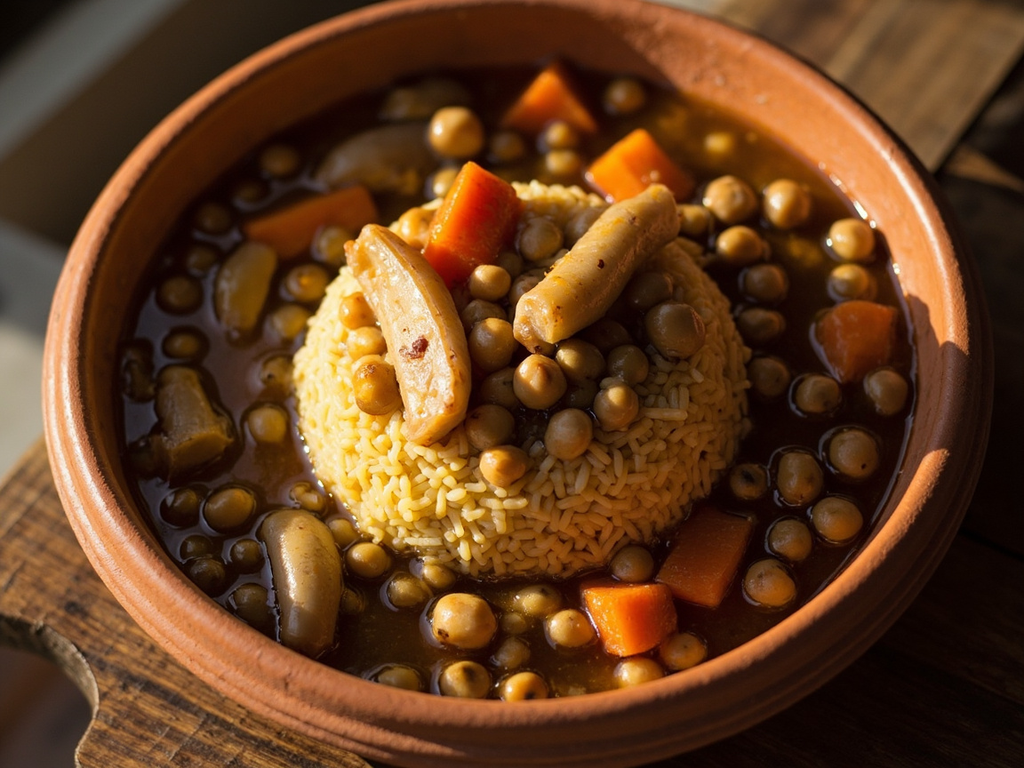
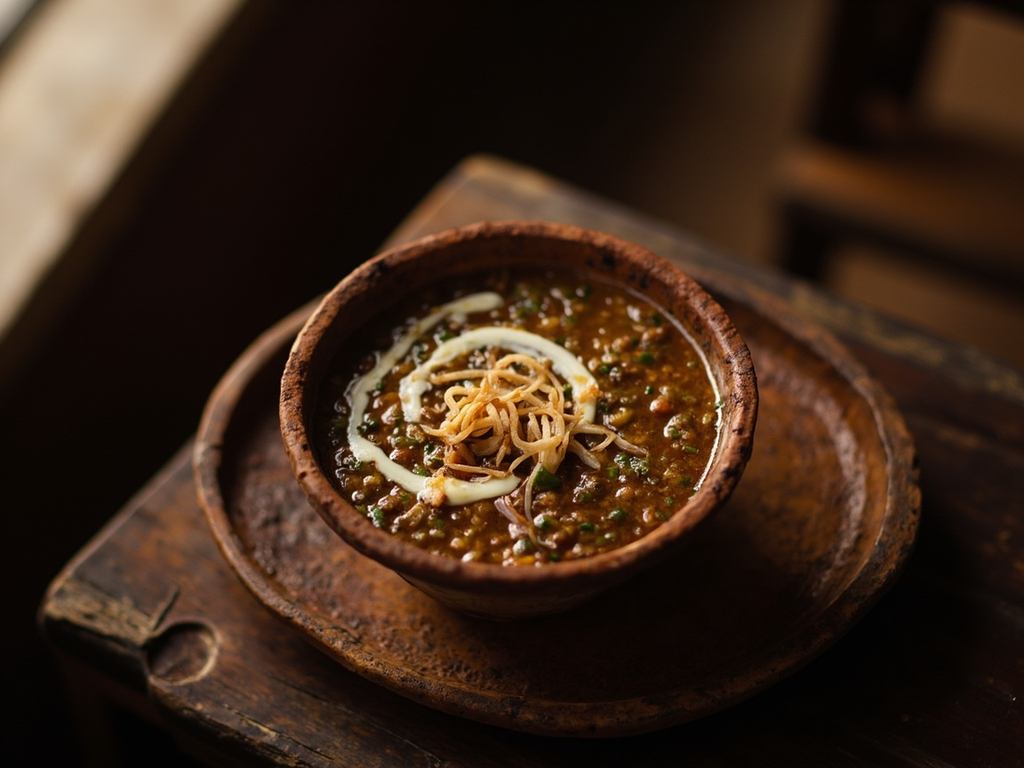
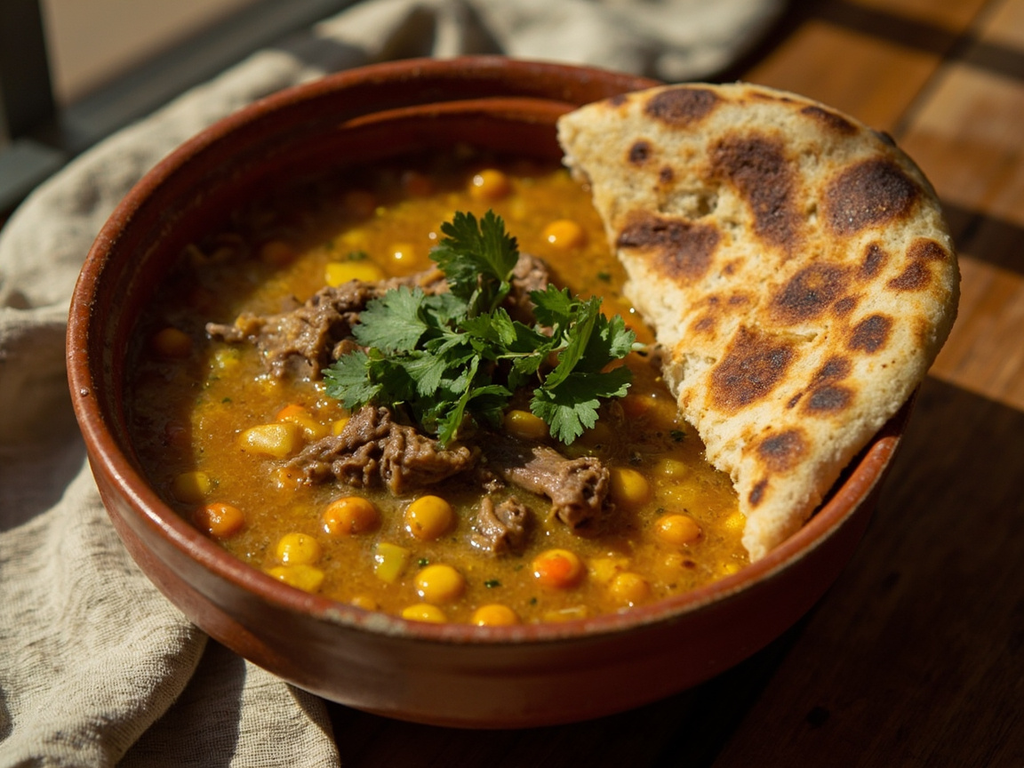
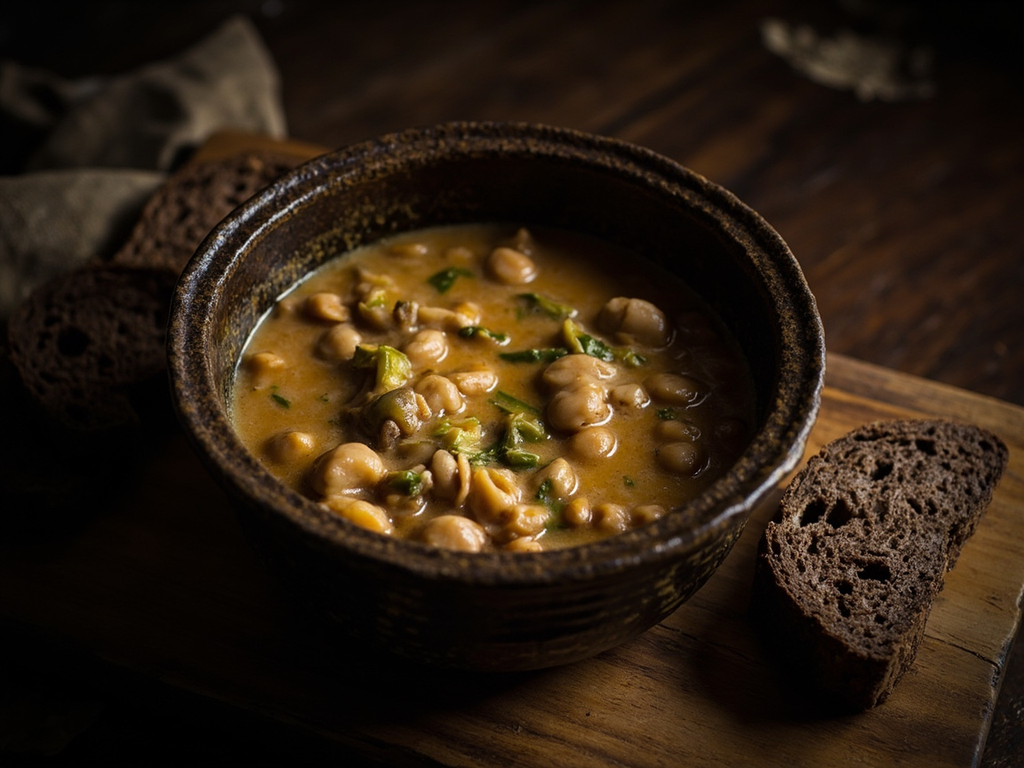
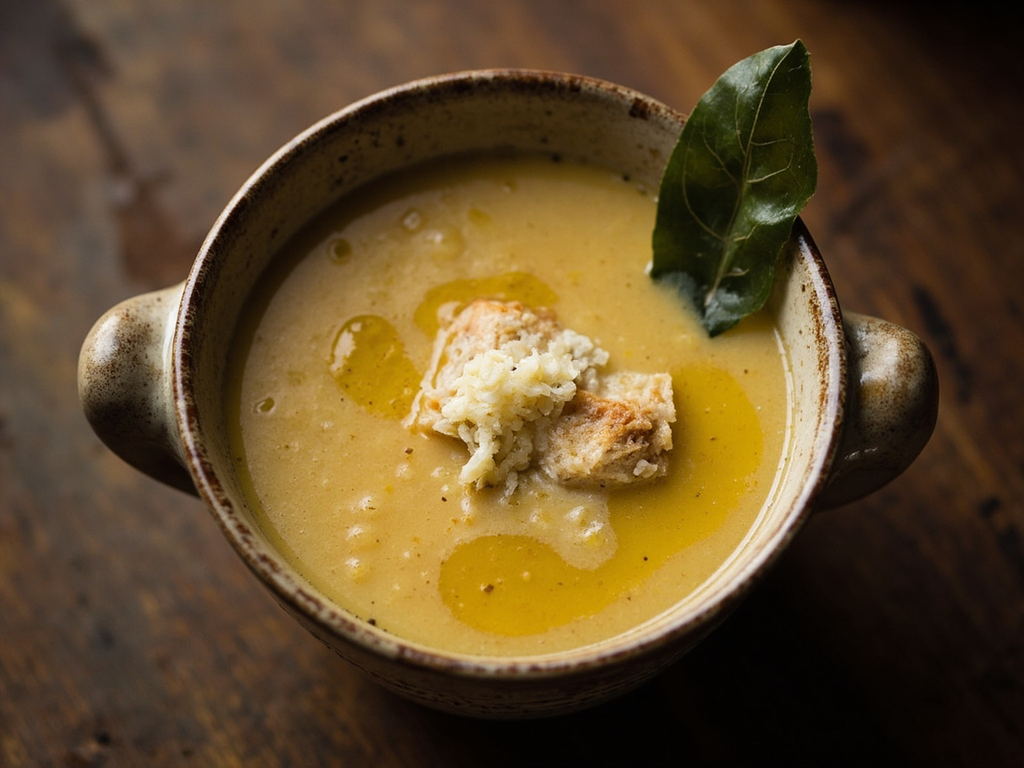
A soup of stale bread simmered until it melts into a broth flavored with garlic, bay leaf, and olive oil, bound with a little cheese. The ultimate anti-waste dish of medieval Venice, comforting and thrifty.
Upon my return to my city of Venice, after so many years over mountains and seas, I did not disdain the foods of home. Yesterday's bread is never thrown away: it is melted in hot broth, with olive oil, a clove of garlic, and a bay leaf, and some cheese grated on top. It is the food of both poor and merchant, and after the Khan's feasts, believe me, it tastes of homeland.
- •Stale bread — several slices (base)
- •Olive oil — a good drizzle (fat and flavor)
- •Garlic — one clove (fragrance)
- •Bay leaf — one leaf (herb)
- •Grating cheese — a handful (savory binder)
Venetian Panada with Bread and Oil
A soup of stale bread simmered until it melts into a broth flavored with garlic, bay leaf, and olive oil, bound with a little cheese. The ultimate anti-waste dish of medieval Venice, comforting and thrifty.
Why this dish? When Marco Polo returned to Venice after twenty-four years, he rediscovered the simple foods of his water city: stale bread was never thrown away, but revived in a soup with olive oil and broth, as in all Venetian merchant households.
Upon my return to my city of Venice, after so many years over mountains and seas, I did not disdain the foods of home. Yesterday's bread is never thrown away: it is melted in hot broth, with olive oil, a clove of garlic, and a bay leaf, and some cheese grated on top. It is the food of both poor and merchant, and after the Khan's feasts, believe me, it tastes of homeland.
Ingredients (period version)
- Stale bread — several slices (base)
- Olive oil — a good drizzle (fat and flavor)
- Garlic — one clove (fragrance)
- Bay leaf — one leaf (herb)
- Grating cheese — a handful (savory binder)
Ingredients
- Stale country bread — 200 g (base)
- Broth (vegetable or chicken) — 750 ml (cooking liquid)
- Extra virgin olive oil — 4 tbsp (fat)
- Garlic — 1 clove (fragrance)
- Bay leaf — 1 (herb)
- Grated Parmesan or Grana — 50 g (binder)
- Salt and pepper — to taste (seasoning)
Method
- Gently brown the crushed garlic clove in olive oil with the bay leaf.
- Add the broth, salt, bring to a simmer, then remove the bay leaf and garlic.
- Crumble the stale bread into the broth and simmer for 15–20 minutes, stirring, until it becomes a creamy porridge.
- Off the heat, stir in the grated cheese and a final drizzle of oil. Season with pepper and serve hot.
How it was made : Panada (from *pane*, bread) was the universal recovery dish of medieval Italy. In Venice, a city without farmland, nothing was wasted: hard bread was revived in soup, enriched with whatever was available — oil, cheese, sometimes an egg.
The contemporary twist : Served in a deep bowl with a poached egg on top and a drizzle of flavored oil — the panada that passes for brunch.
Sources : Anonimo Veneziano, *Libro per cuoco* (Venetian cookbook, 14th c.)
Marco Polo · Charactorium