 flip
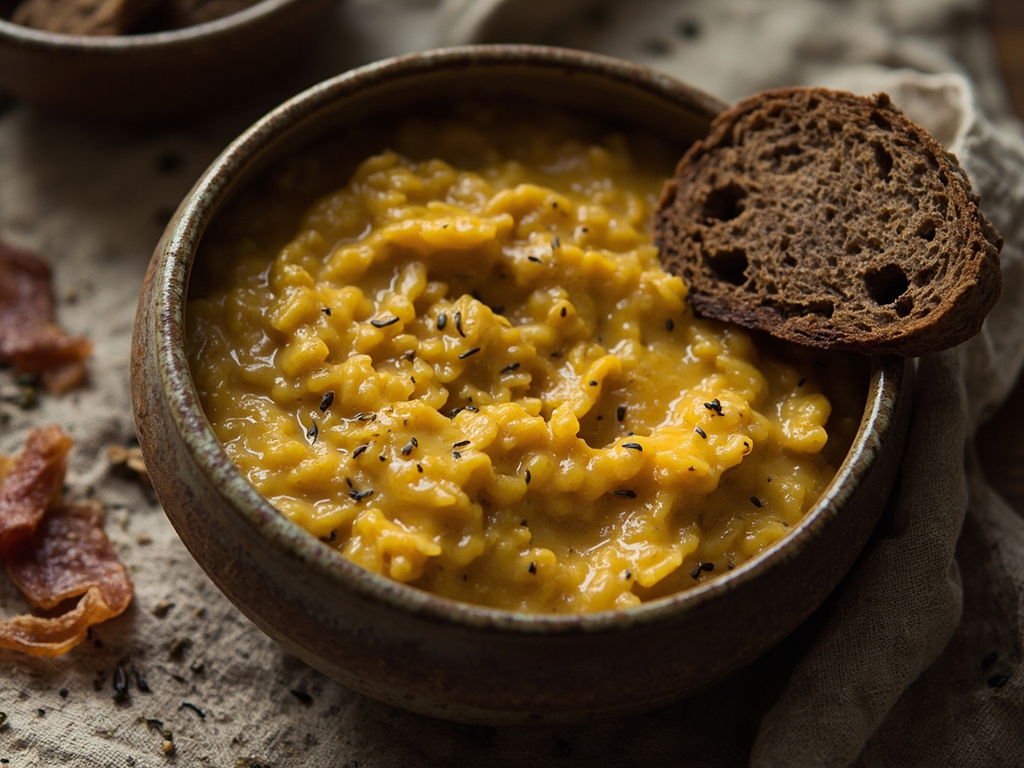
flipErbsbrei — yellow pea porridge with rye bread
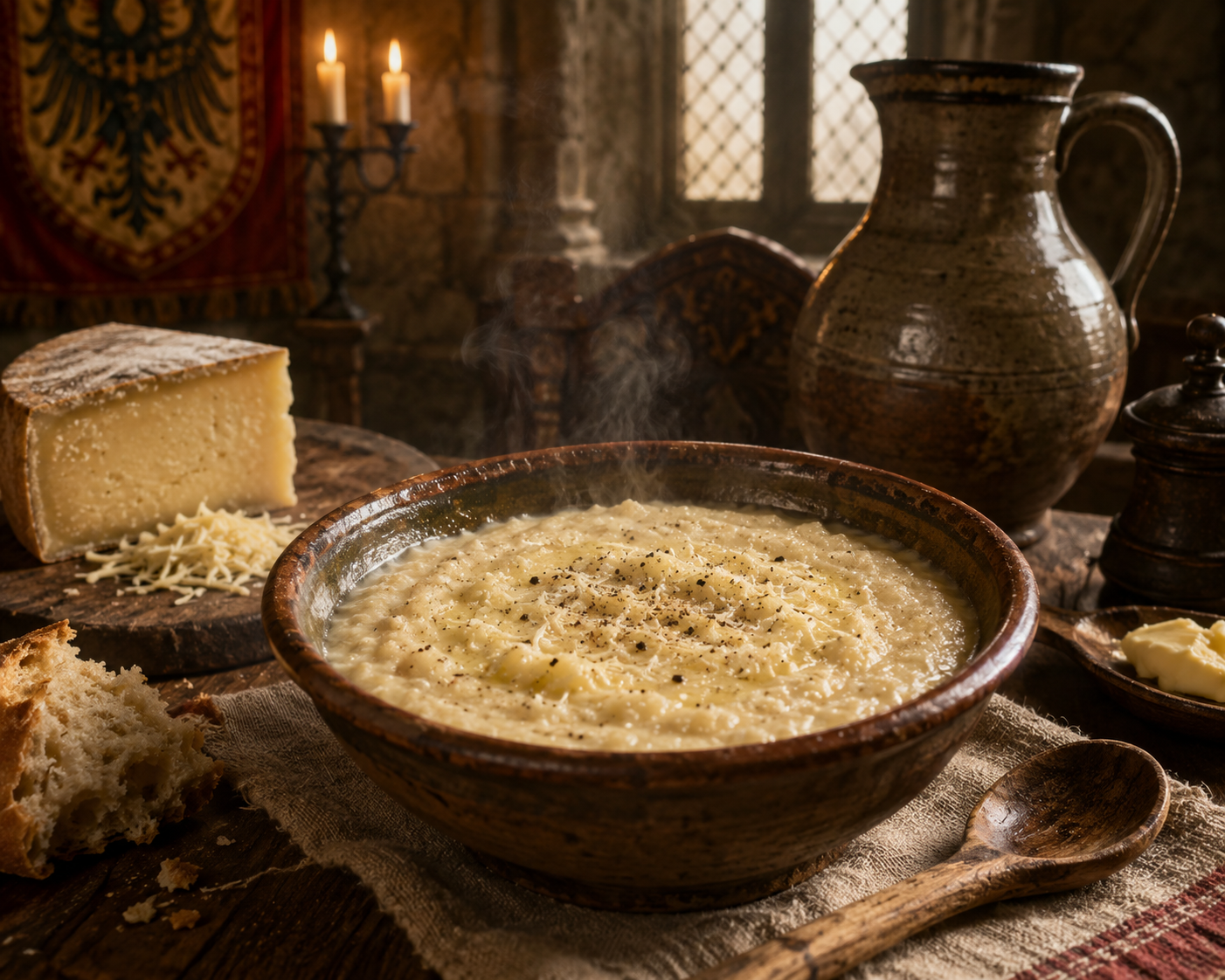
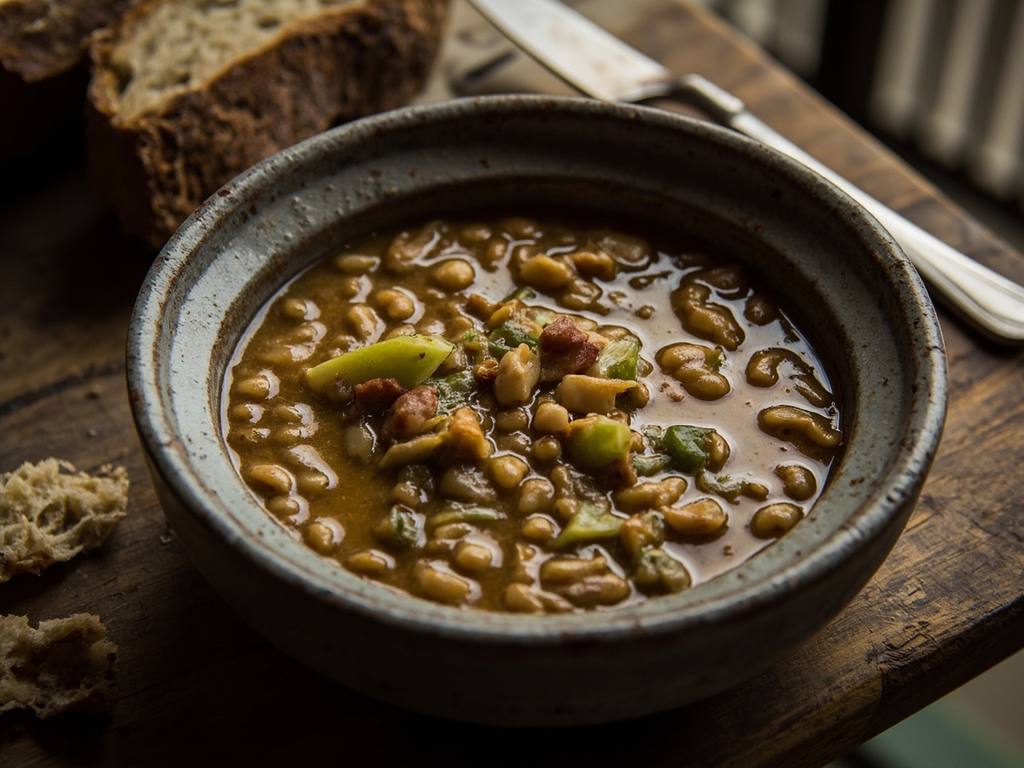
Erbsbrei — yellow pea porridge with rye bread
Why this dish? Luther ate simply, "convivially, without the asceticism of monks." Pea porridge — one of the humblest and most widespread dishes in 16th-century Germany — is exactly the nourishing base that Katharina served to the large household of the Black Cloister before the table talk began.
A thick puree of yellow split peas, long-simmered with a bit of bacon and onion, seasoned with caraway and marjoram, savored with large slices of rye bread. The meal of the poor and the theologian alike: filling, earthy, democratic.
Listen to me well: God did not make the belly so that we torment it with proud fasts! At my table in Wittenberg, my dear Käthe cooks the peas until they melt, with a finger of bacon and onion from the garden, and we dip good black bread into it. Eat heartily, drink your beer, and let the monks chew on their misery — a well-fed man serves the Lord better than a hungry one who whines. That is my theology of the pot, and it is worth more than many indulgences.
- •Yellow split peas (dried) — a full bowl (base of the porridge)
- •Smoked bacon — a piece (fat and umami flavor)
- •Onion — one (aromatic)
- •Caraway (Kümmel) — a pinch (signature spice, aids digestion)
- •Dried marjoram — a pinch (herb)
- •Rye bread — as needed (accompaniment and spoon)
- •Salt — to taste (seasoning)
Erbsbrei — yellow pea porridge with rye bread
A thick puree of yellow split peas, long-simmered with a bit of bacon and onion, seasoned with caraway and marjoram, savored with large slices of rye bread. The meal of the poor and the theologian alike: filling, earthy, democratic.
Why this dish? Luther ate simply, "convivially, without the asceticism of monks." Pea porridge — one of the humblest and most widespread dishes in 16th-century Germany — is exactly the nourishing base that Katharina served to the large household of the Black Cloister before the table talk began.
Listen to me well: God did not make the belly so that we torment it with proud fasts! At my table in Wittenberg, my dear Käthe cooks the peas until they melt, with a finger of bacon and onion from the garden, and we dip good black bread into it. Eat heartily, drink your beer, and let the monks chew on their misery — a well-fed man serves the Lord better than a hungry one who whines. That is my theology of the pot, and it is worth more than many indulgences.
Ingredients (period version)
- Yellow split peas (dried) — a full bowl (base of the porridge)
- Smoked bacon — a piece (fat and umami flavor)
- Onion — one (aromatic)
- Caraway (Kümmel) — a pinch (signature spice, aids digestion)
- Dried marjoram — a pinch (herb)
- Rye bread — as needed (accompaniment and spoon)
- Salt — to taste (seasoning)
Ingredients
- Yellow split peas — 300 g (base of the porridge)
- Smoked bacon lardons (or smoked pork belly) — 120 g (fat and umami)
- Onion — 1 large (aromatic)
- Caraway seeds — 1 tsp (signature spice)
- Dried marjoram — 1 tsp (herb)
- Vegetable or bone broth — 1 L (cooking liquid)
- Whole-grain rye bread — 4 thick slices (accompaniment)
- Salt, pepper — to taste (seasoning)
Method
- Rinse the split peas (no need to soak if fresh).
- Sauté the chopped onion and lardons in a pot until browned.
- Add the peas, caraway, marjoram, and broth. Bring to a simmer.
- Cover and simmer for 45 minutes to 1 hour, stirring occasionally, until the peas break down into a thick puree. Add liquid if needed.
- Season with salt and pepper, and mash roughly for a rustic texture.
- Serve piping hot with thick slices of rye bread, optionally rubbed with bacon fat.
How it was made : In the 15th-16th centuries, legume porridges (peas, beans, lentils) and cereal porridges (Grütze) formed the backbone of popular and monastic diet in the Holy Roman Empire. They were cooked for hours over embers in an iron cauldron; meat, when available, was only a seasoning, not the center of the dish.
The contemporary twist : Serve it "table talk" style: the porridge in a deep bowl, a drizzle of walnut oil, toasted rye bread cubes with caraway as crumble, and a soft-boiled egg on top.
Martin Luther · Charactorium