 flip
flipTorta d'erbe — herb pie from the Marche
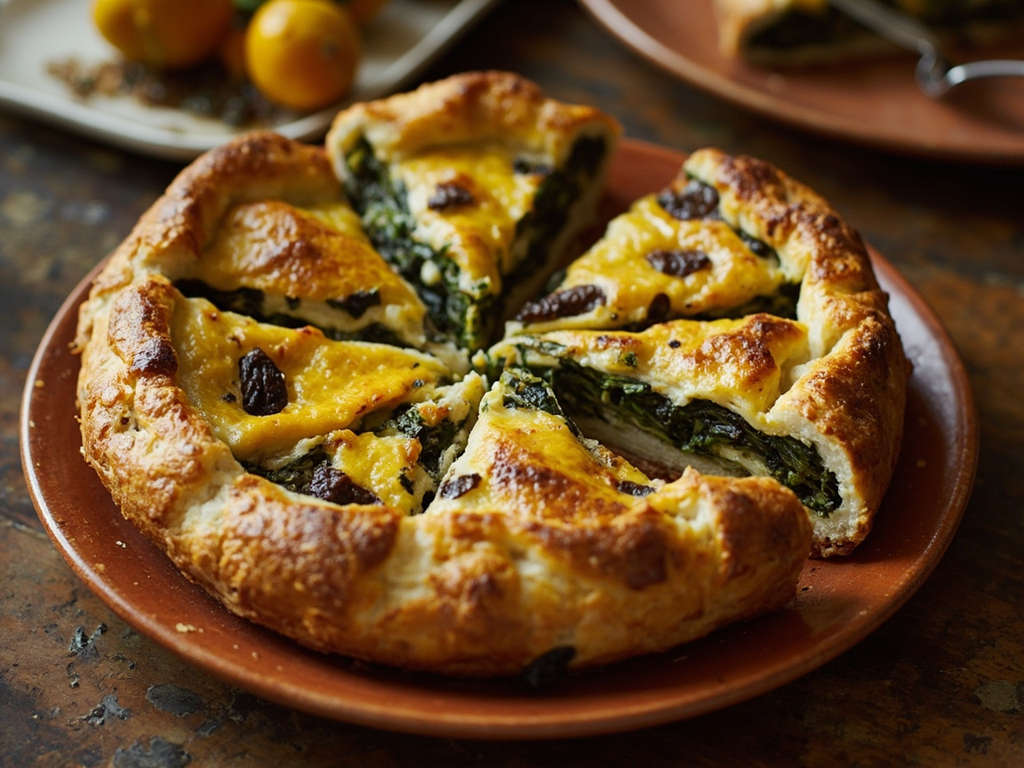
Torta d'erbe — herb pie from the Marche
Why this dish? Raphael was born in Urbino, in the hills of the Marche, the son of a court painter. These green pies — chard, cheese, eggs — were the everyday comfort food of central Italy, from Umbria where he trained with Perugino to his Roman workshop. A dish a working man would eat casually between cartoon sessions.
A thin-crust pie filled with chopped chard and herbs, bound with eggs and fresh cheese, lifted with a pinch of saffron and sweetened with raisins. Baked until golden, served warm in wedges.
Let me tell you: before grinding my earths and lakes, I would willingly break a piece of this green pie, as they made it in the land of Urbino. You finely chop the garden chard with a little fresh cheese, bind it with a few eggs, and toss in a pinch of saffron so the crust turns golden like a Madonna's background. Believe me, nothing steadies the hand better than a light, content belly; I ate it warm, with white bread and a finger of watered wine.
- •Chard and garden herbs (spinach, parsley, borage) — a large bunch (green filling)
- •Fresh cheese and grated dry cheese — two handfuls (binder, umami)
- •Eggs — a few (binder)
- •Raisins — a handful (sweet note)
- •Saffron — a few threads (color, perfume)
- •Pastry dough (flour, water, lard or oil) — enough to line a mold (crust)
Torta d'erbe — herb pie from the Marche
A thin-crust pie filled with chopped chard and herbs, bound with eggs and fresh cheese, lifted with a pinch of saffron and sweetened with raisins. Baked until golden, served warm in wedges.
Why this dish? Raphael was born in Urbino, in the hills of the Marche, the son of a court painter. These green pies — chard, cheese, eggs — were the everyday comfort food of central Italy, from Umbria where he trained with Perugino to his Roman workshop. A dish a working man would eat casually between cartoon sessions.
Let me tell you: before grinding my earths and lakes, I would willingly break a piece of this green pie, as they made it in the land of Urbino. You finely chop the garden chard with a little fresh cheese, bind it with a few eggs, and toss in a pinch of saffron so the crust turns golden like a Madonna's background. Believe me, nothing steadies the hand better than a light, content belly; I ate it warm, with white bread and a finger of watered wine.
Ingredients (period version)
- Chard and garden herbs (spinach, parsley, borage) — a large bunch (green filling)
- Fresh cheese and grated dry cheese — two handfuls (binder, umami)
- Eggs — a few (binder)
- Raisins — a handful (sweet note)
- Saffron — a few threads (color, perfume)
- Pastry dough (flour, water, lard or oil) — enough to line a mold (crust)
Ingredients
- Swiss chard (or spinach) — 600 g (green filling)
- Ricotta — 250 g (creamy binder)
- Grated Parmesan or pecorino — 60 g (umami)
- Eggs — 3 (binder)
- Raisins — 40 g (sweet note)
- Saffron — 1 small pinch (infused in 1 tbsp hot water) (color, perfume)
- Shortcrust pastry — 1 roll (or homemade: 250 g flour, 100 g butter, water, salt) (crust)
- Salt, pepper — to taste (seasoning)
Method
- Wash the chard, blanch in boiling water for 3-4 minutes, drain, squeeze dry, and chop.
- Soak the raisins in a little warm water; infuse the saffron.
- Mix chard, ricotta, grated cheese, eggs, drained raisins, saffron, salt, and pepper.
- Line a pie dish with pastry, pour in the filling, top with a pastry disk (or leave open), and seal the edges.
- Brush with egg wash and bake at 180 °C for 35-40 minutes until the crust is golden.
- Let cool slightly and serve in wedges.
How it was made : Herb pies (*torte d'erbe*) run through all of medieval and Renaissance Italian cuisine: Maestro Martino and Platina give many variations. The touch of sweetness (raisins, sometimes sugar) in a savory preparation is typical of the period's taste, which did not sharply separate sweet from savory.
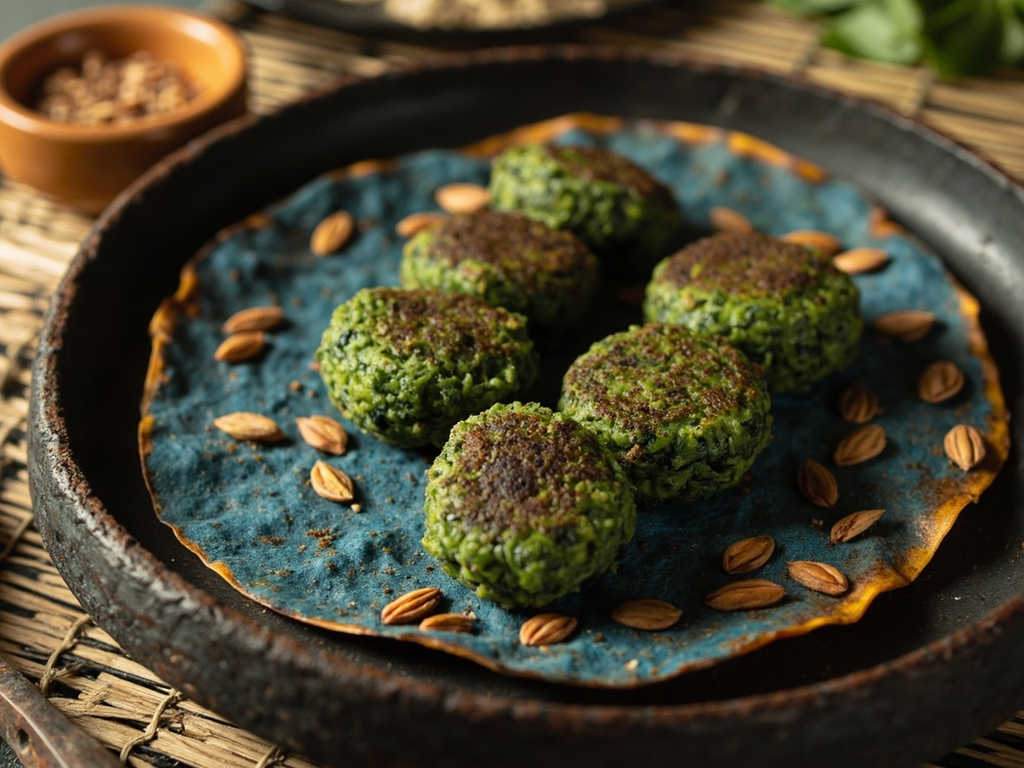
The contemporary twist : Served as square slices on a slate, with a dusting of lemon zest and a few toasted pine nuts: a 'workshop pie' to nibble with your fingers.
Sources : Maestro Martino, Libro de arte coquinaria, c. 1465 · Bartolomeo Platina, De honesta voluptate et valetudine, 1474
Raphael · Charactorium