 flip
flipGhormeh sabzi
Ghormeh sabzi
Why this dish? Iran's national dish and a classic of Tehran's kitchens where Maryam grew up: this slow-cooked herb stew is the archetype of the family meal she found at home, the kind of flavor she kept at her table in the United States.
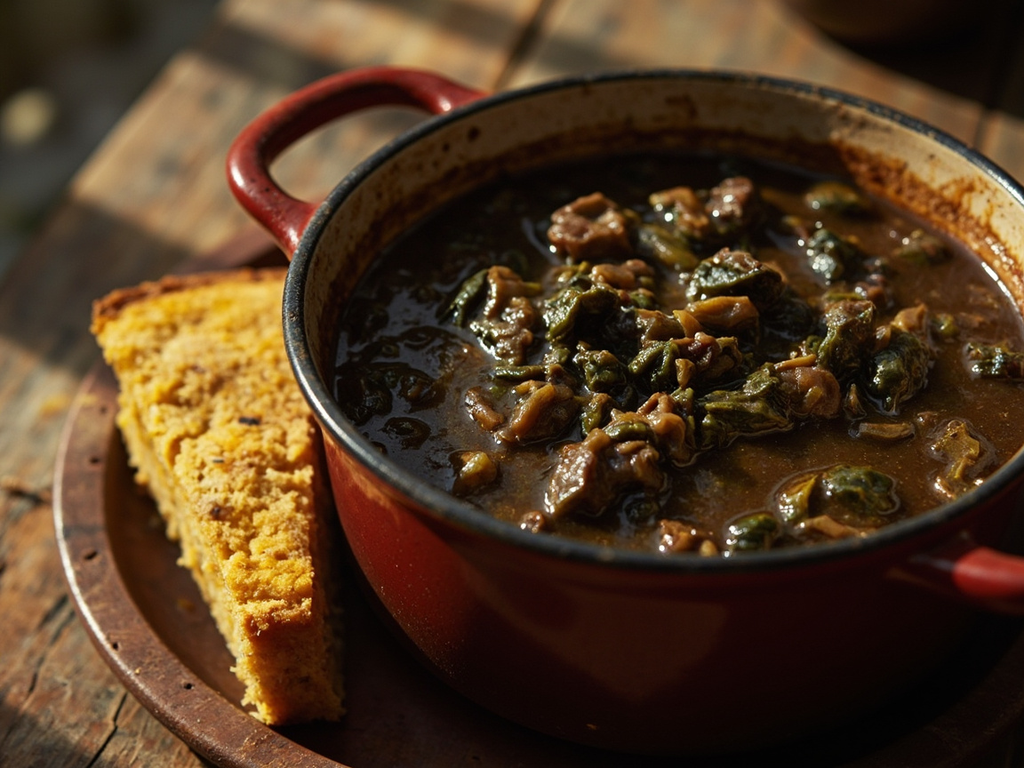
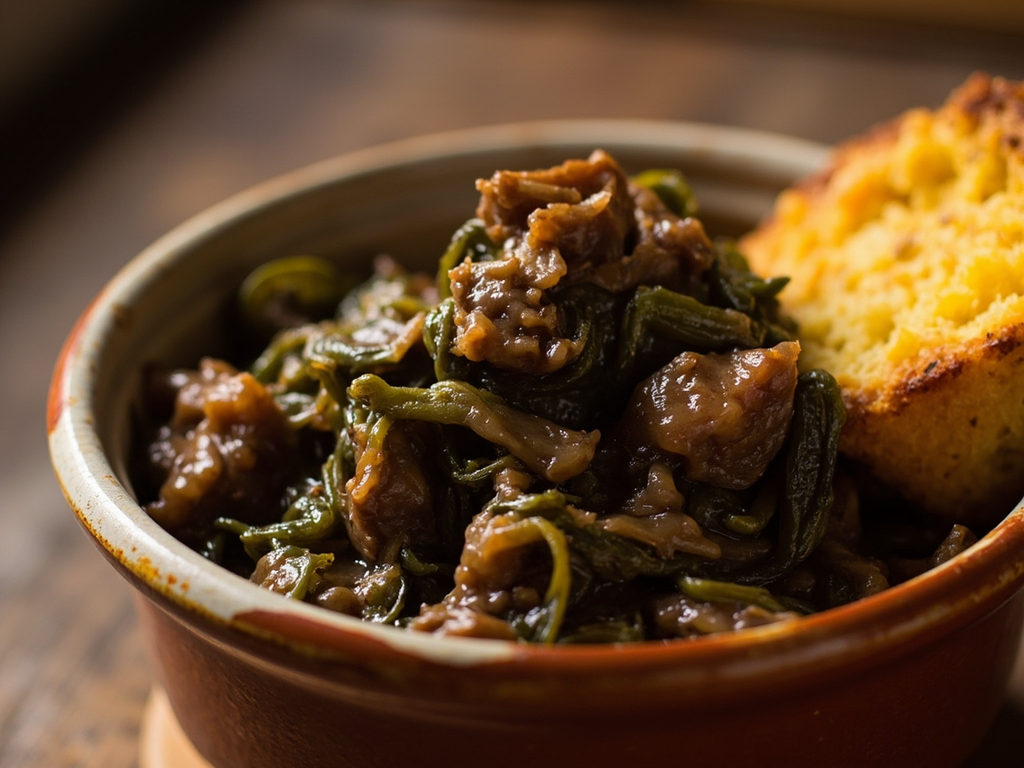
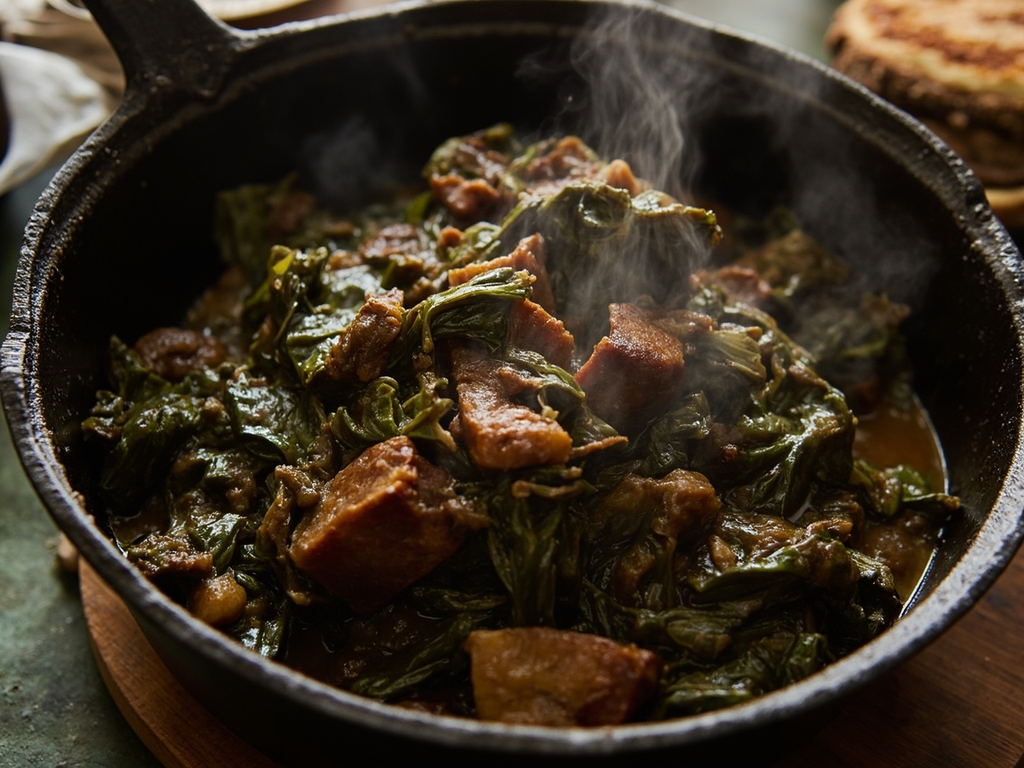
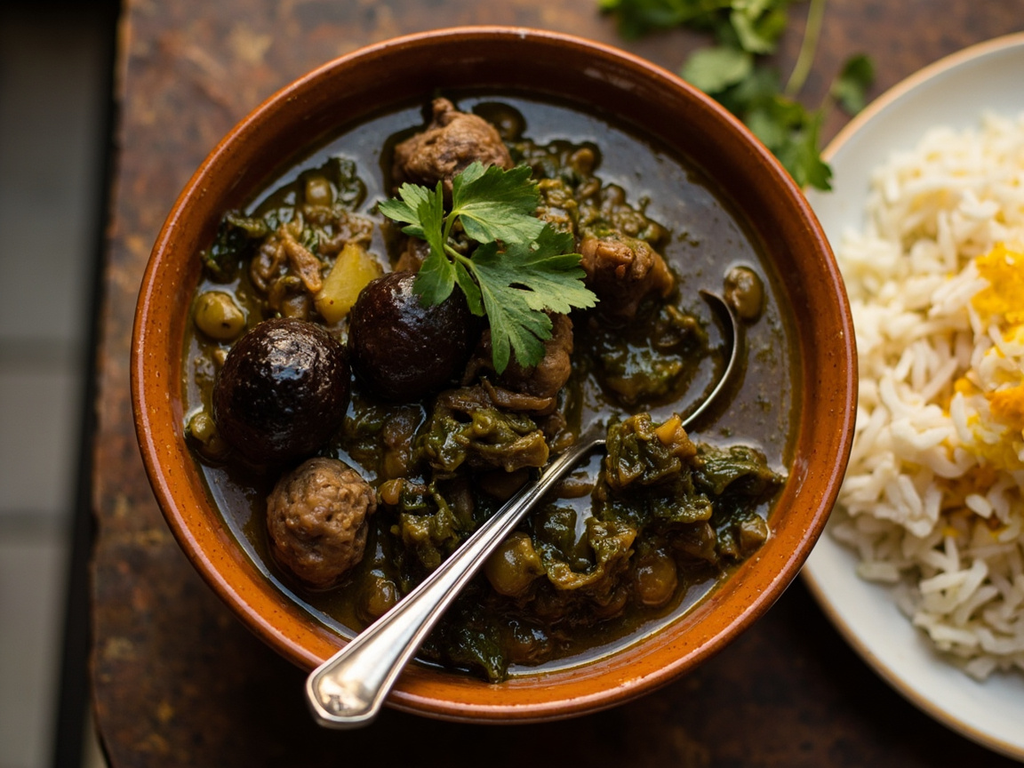
A deep green, slow stew where a mountain of chopped herbs (parsley, cilantro, scallions, fenugreek) melts into the meat and beans, sharpened by dried black lime (limou amani). The ultimate comfort dish, eaten with saffron white rice.
You know, this dish requires patience—exactly like a geometry problem you wrestle with for months. At home in Tehran, my mother would wash the herbs one by one, chop them until her arm hurt, then sauté them for a long time: that's the whole secret, never rush the greens. The black lime, you pierce it with a fork before throwing it into the pot, and it releases that bitterness that makes the dish so recognizable. I still made it in California, because a smell always takes you back to the kitchen of your childhood.
- •Parsley, cilantro, scallions — a large bowl, finely chopped (green aromatic base)
- •Fenugreek leaves (shanbalileh) — a handful (signature bitterness)
- •Lamb or beef — in pieces (stew base)
- •Red or pinto beans — soaked overnight (body)
- •Dried black limes (limou amani) — a few (acidity and bitterness)
- •Onion, turmeric, oil — as needed (cooking base)
Ghormeh sabzi
A deep green, slow stew where a mountain of chopped herbs (parsley, cilantro, scallions, fenugreek) melts into the meat and beans, sharpened by dried black lime (limou amani). The ultimate comfort dish, eaten with saffron white rice.
Why this dish? Iran's national dish and a classic of Tehran's kitchens where Maryam grew up: this slow-cooked herb stew is the archetype of the family meal she found at home, the kind of flavor she kept at her table in the United States.
You know, this dish requires patience—exactly like a geometry problem you wrestle with for months. At home in Tehran, my mother would wash the herbs one by one, chop them until her arm hurt, then sauté them for a long time: that's the whole secret, never rush the greens. The black lime, you pierce it with a fork before throwing it into the pot, and it releases that bitterness that makes the dish so recognizable. I still made it in California, because a smell always takes you back to the kitchen of your childhood.
Ingredients (period version)
- Parsley, cilantro, scallions — a large bowl, finely chopped (green aromatic base)
- Fenugreek leaves (shanbalileh) — a handful (signature bitterness)
- Lamb or beef — in pieces (stew base)
- Red or pinto beans — soaked overnight (body)
- Dried black limes (limou amani) — a few (acidity and bitterness)
- Onion, turmeric, oil — as needed (cooking base)
Ingredients
- Flat-leaf parsley — 2 large bunches (green base)
- Cilantro — 1 large bunch (green base)
- Scallions (green parts) — 1 bunch (green base)
- Dried fenugreek — 2 tbsp (signature bitterness)
- Lamb shoulder or stewing beef — 600 g, cubed (meat)
- Canned red beans — 1 can (400 g), drained (body)
- Dried black limes — 3-4 (or 2 tbsp lemon juice) (acidity)
- Onion — 1 large, sliced (base)
- Turmeric — 1 tsp (spice)
- Oil — 3 tbsp (cooking)
Method
- Sauté the sliced onion in oil, add turmeric, then the meat cubes and brown.
- Finely chop all herbs and fenugreek, then sauté separately in a little oil for 15-20 minutes until they darken and become fragrant (key step, do not burn).
- Combine meat and herbs in the pot, cover with water, add the pierced black limes.
- Simmer covered on low heat for 1.5 hours.
- Add beans, season with salt, continue for 45 minutes until the sauce thickens and oil rises to the surface.
- Serve hot over saffron white rice.
How it was made : Ghormeh sabzi has been attested for centuries in Persian cuisine; the separate, prolonged cooking of the herbs (sometimes for hours over charcoal) was the mark of a skilled cook. Limou amani, limes boiled then sun-dried, served both as a souring agent and preservative in a region where fresh citrus was not always available.
The contemporary twist : A quick version using frozen fenugreek can recreate the deep green on a weekday; some serve the stew in a bowl with a spoonful of crunchy rice (tahdig) crumbled on top.
Sources : Najmieh Batmanglij, Food of Life: Ancient Persian and Modern Iranian Cooking
Maryam Mirzakhani · Charactorium