 flip
flipZereshk polo (rice with barberries and saffron)
Zereshk polo (rice with barberries and saffron)
Why this dish? The festive Persian rice, served at weddings, Nowruz (New Year), and large family reunions. Maryam, born in post-revolutionary Iran, grew up with these festive tables; saffron rice was the shared meal of happy moments she recalled about her family.
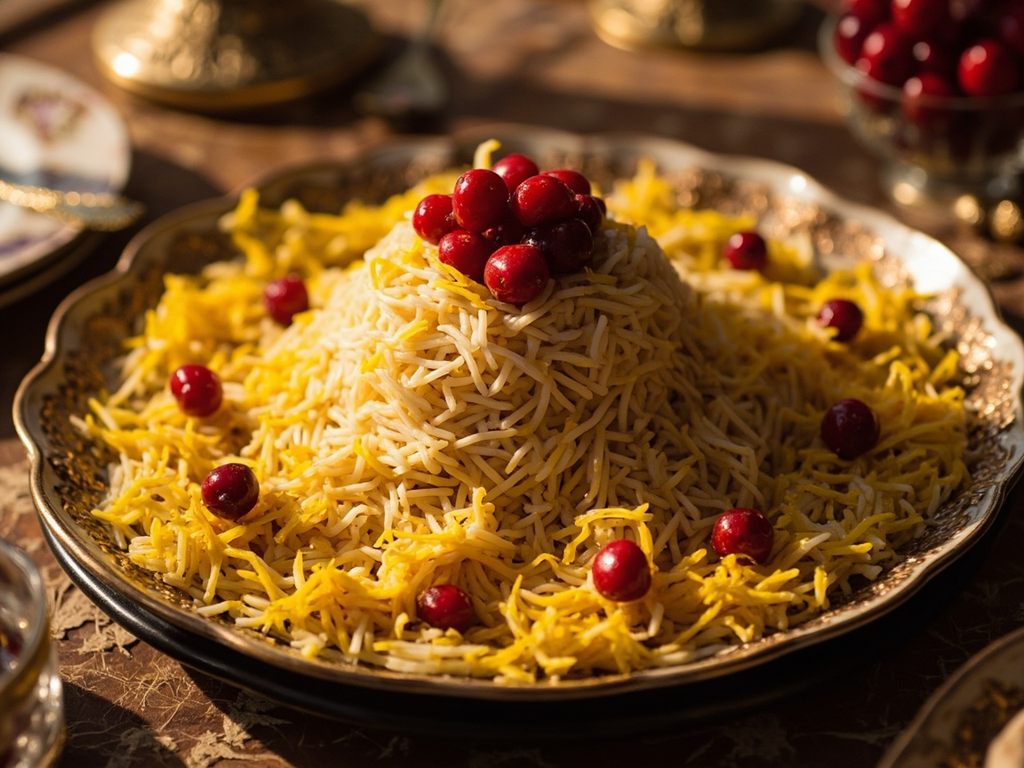
Fluffy, airy basmati rice crowned with tart, ruby barberries (zereshk) and perfumed with saffron. Often served with chicken, and the golden crust at the bottom of the pot—the famous tahdig—is the table's coveted trophy.
For Nowruz, when spring returned, this rice was the celebration on the tablecloth. The key move is to steam the rice in a little mound so it stays light, grain by grain—and especially to watch the tahdig at the bottom, that golden crust you flip out with a quick motion and everyone fights over laughing. The little red berries, you sauté them for barely a minute in a little butter, otherwise they burn and turn bitter. Sprinkle them like rain over the saffron, and you have a dish that looks like a garden.
- •Basmati rice — soaked and washed several times (base)
- •Saffron — a pinch, steeped (color and aroma)
- •Barberries (zereshk) — a handful (acidity, decoration)
- •Clarified butter (roghan) — generous (tahdig and binding)
- •Chicken (optional) — separate, saffron-braised (accompaniment)
Zereshk polo (rice with barberries and saffron)
Fluffy, airy basmati rice crowned with tart, ruby barberries (zereshk) and perfumed with saffron. Often served with chicken, and the golden crust at the bottom of the pot—the famous tahdig—is the table's coveted trophy.
Why this dish? The festive Persian rice, served at weddings, Nowruz (New Year), and large family reunions. Maryam, born in post-revolutionary Iran, grew up with these festive tables; saffron rice was the shared meal of happy moments she recalled about her family.
For Nowruz, when spring returned, this rice was the celebration on the tablecloth. The key move is to steam the rice in a little mound so it stays light, grain by grain—and especially to watch the tahdig at the bottom, that golden crust you flip out with a quick motion and everyone fights over laughing. The little red berries, you sauté them for barely a minute in a little butter, otherwise they burn and turn bitter. Sprinkle them like rain over the saffron, and you have a dish that looks like a garden.
Ingredients (period version)
- Basmati rice — soaked and washed several times (base)
- Saffron — a pinch, steeped (color and aroma)
- Barberries (zereshk) — a handful (acidity, decoration)
- Clarified butter (roghan) — generous (tahdig and binding)
- Chicken (optional) — separate, saffron-braised (accompaniment)
Ingredients
- Basmati rice — 400 g (base)
- Saffron — 1 good pinch, steeped in 3 tbsp hot water (color, aroma)
- Dried barberries (zereshk) — 60 g, rinsed (acidity, decoration)
- Butter — 60 g (tahdig)
- Sugar — 1 tsp (balance the berries)
- Salt — to taste (seasoning)
Method
- Soak washed rice in salted water for 30 minutes. Parboil in plenty of salted boiling water for 6-8 minutes, then drain firmly (al dente).
- In the pot, melt some butter, add a ladle of rice mixed with a little saffron to form the tahdig base.
- Pile the rest of the rice into a mound, make holes with the handle of a spoon for steam, cover with a cloth under the lid.
- Cook on low heat for 35-40 minutes: the crust browns at the bottom, the rice puffs up above.
- Sauté barberries in a little butter with sugar for 1 minute (do not burn).
- Plate the rice, drizzle with steeped saffron, scatter barberries on top. Flip out the tahdig and serve it separately, crispy.
How it was made : The prepared polo (rice cooked in two stages, parboiled then steamed) is a refined Persian technique, a marker of court cuisine that became part of family feasts. Barberries, wild dried berries from Khorasan, provided fruity acidity before citrus became widespread; tahdig, born from frugality (wasting nothing of the rice stuck to the bottom), became the most coveted morsel.
The contemporary twist : For a spectacular and foolproof tahdig, some line the bottom of the pot with thin slices of lavash bread or potatoes before adding the rice.
Sources : Najmieh Batmanglij, Food of Life · Margaret Shaida, The Legendary Cuisine of Persia
Maryam Mirzakhani · Charactorium