 flip
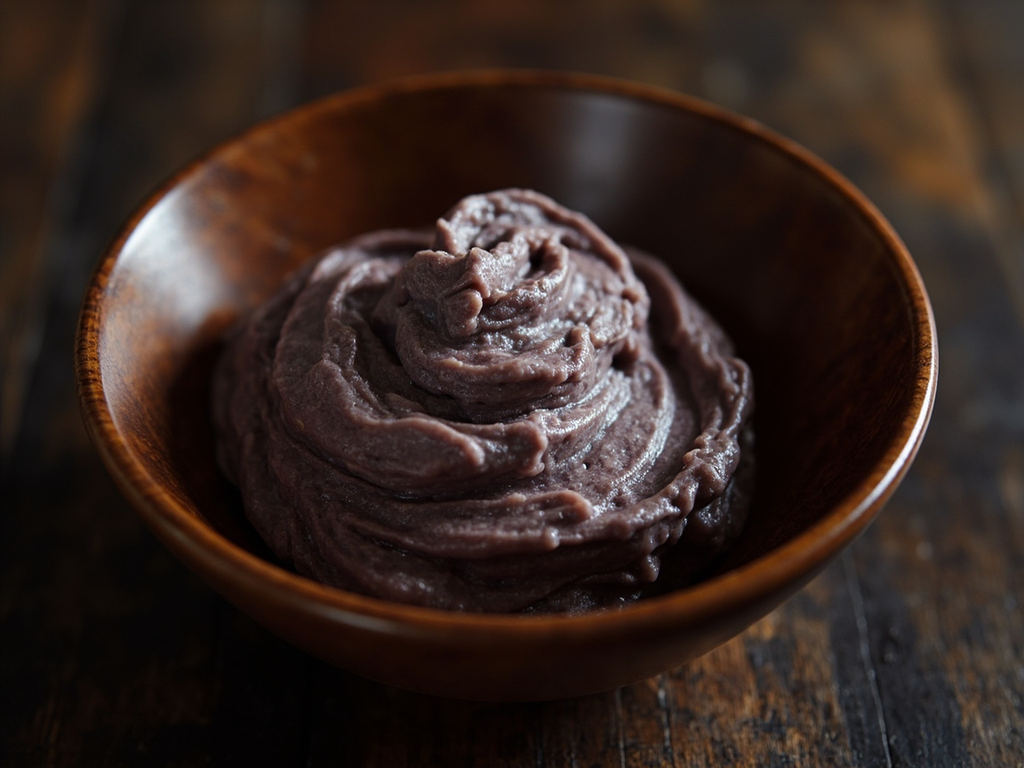
flipPoi — the taro paste offered to the gods
Poi — the taro paste offered to the gods
Why this dish? In the islands where Mauna Kea rises, taro is the eldest child of the gods and the poi made from it is sacred: one never raises one's voice around an open poi bowl. For Māui, the demigod who walks between worlds, it is the food shared with ancestors as much as with the living — the link between earth, sky and sea.
Taro cooked then pounded into a smooth paste, mixed with water and left to rest a day or two: it sours slightly, becomes alive. The staple food of tropical Polynesia, first presented as an offering before dipping in one's fingers.
Lower your voice, stranger: the poi bowl is open, and with it the presence of the elders. The taro is the firstborn, the elder brother of humans — we cook it in the oven, we pound it on the stone until it becomes smooth as the water of a calm lagoon. We pour a little water in, we let time do its work: one day, two days, and the poi pricks the tongue gently, a sign that it is alive. The first portion is not for you: it is for those who came before us.
- •Taro (corm) — several roots (base)
- •Fresh water — according to texture (binder and fermentation)
Poi — the taro paste offered to the gods
Taro cooked then pounded into a smooth paste, mixed with water and left to rest a day or two: it sours slightly, becomes alive. The staple food of tropical Polynesia, first presented as an offering before dipping in one's fingers.
Why this dish? In the islands where Mauna Kea rises, taro is the eldest child of the gods and the poi made from it is sacred: one never raises one's voice around an open poi bowl. For Māui, the demigod who walks between worlds, it is the food shared with ancestors as much as with the living — the link between earth, sky and sea.
Lower your voice, stranger: the poi bowl is open, and with it the presence of the elders. The taro is the firstborn, the elder brother of humans — we cook it in the oven, we pound it on the stone until it becomes smooth as the water of a calm lagoon. We pour a little water in, we let time do its work: one day, two days, and the poi pricks the tongue gently, a sign that it is alive. The first portion is not for you: it is for those who came before us.
Ingredients (period version)
- Taro (corm) — several roots (base)
- Fresh water — according to texture (binder and fermentation)
Ingredients
- Fresh taro — 1 kg (base)
- Water — 150 to 300 ml (loosens the paste)
Method
- Important: raw taro is an irritant — it must be well cooked. Peel with gloves, as taro can cause itching.
- Steam or boil taro pieces for 40 to 50 min, until completely tender.
- Pound or mash the hot taro, adding water little by little, until a smooth, homogeneous paste.
- For fresh poi (sweet poi), serve immediately with a spoon or fingers.
- For traditional sour poi, cover and let ferment 1 to 2 days at room temperature, stirring: it develops a slight acidity.
- Symbolically present the first portion as a tribute to the ancestors, then share.
How it was made : Throughout tropical Polynesia — and especially in Hawaiʻi — poi is the quintessential staple food. Taro, considered the mythical ancestor of humanity (Hāloa), was cooked in the earth oven then pounded on a board with a stone pestle. The natural fermentation, sought after, gave poi its characteristic acidity and allowed it to be preserved. Deep respect surrounded the open bowl.
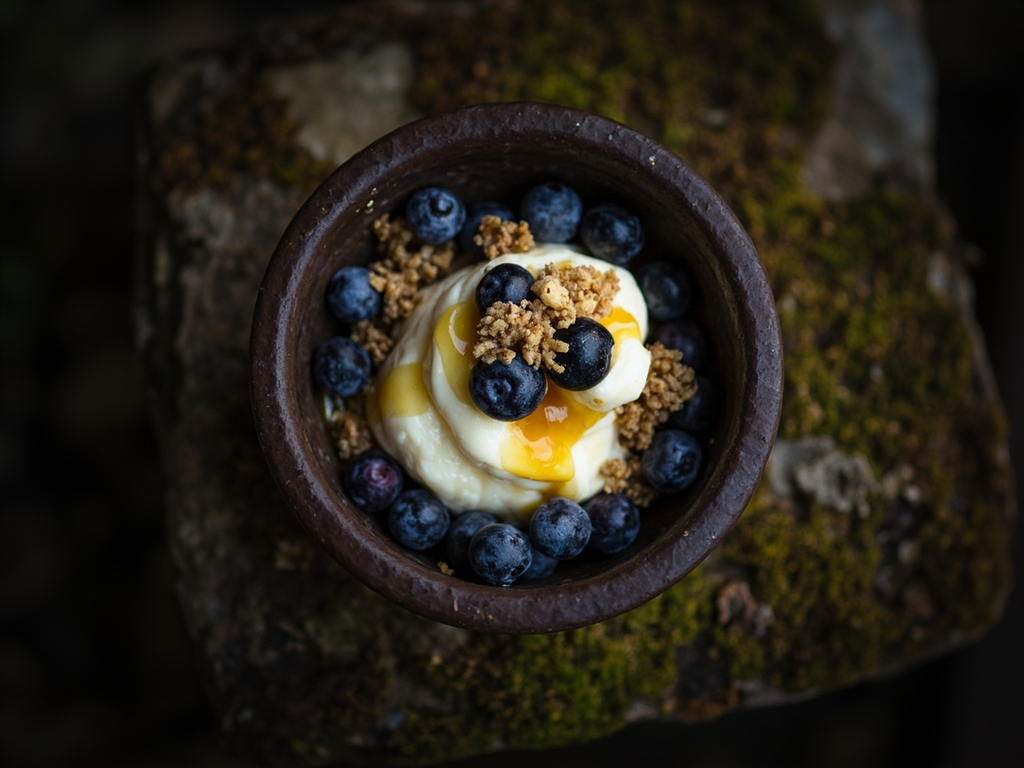
The contemporary twist : Served in a small bowl smooth as a mirror, to eat by hand: the most ancient and direct experience of the Polynesian taste.
Maui-tikitiki-a-Taranga · Charactorium