 flip
flipPiccalilli (mustard vegetable pickles)
Piccalilli (mustard vegetable pickles)
Why this dish? In an England where nothing was wasted, piccalilli allowed garden vegetables to be preserved from one season to the next. On a college table, this bright yellow condiment accompanied Sunday cold cuts and cheese — a burst of flavour in the austerity of rationing.
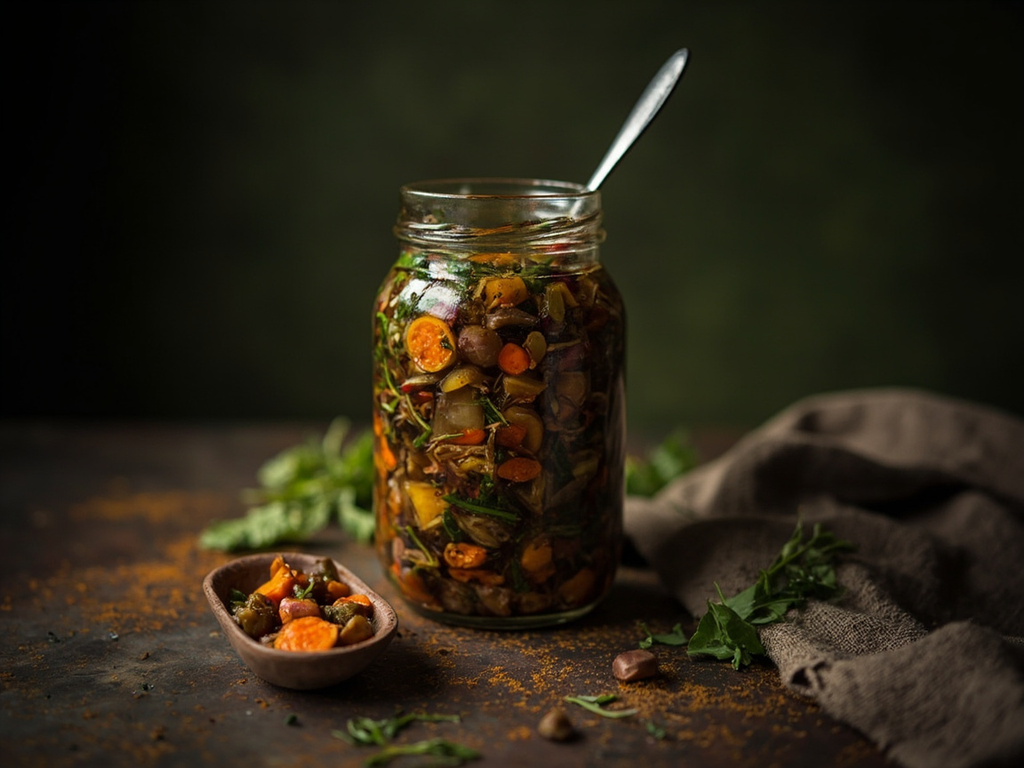
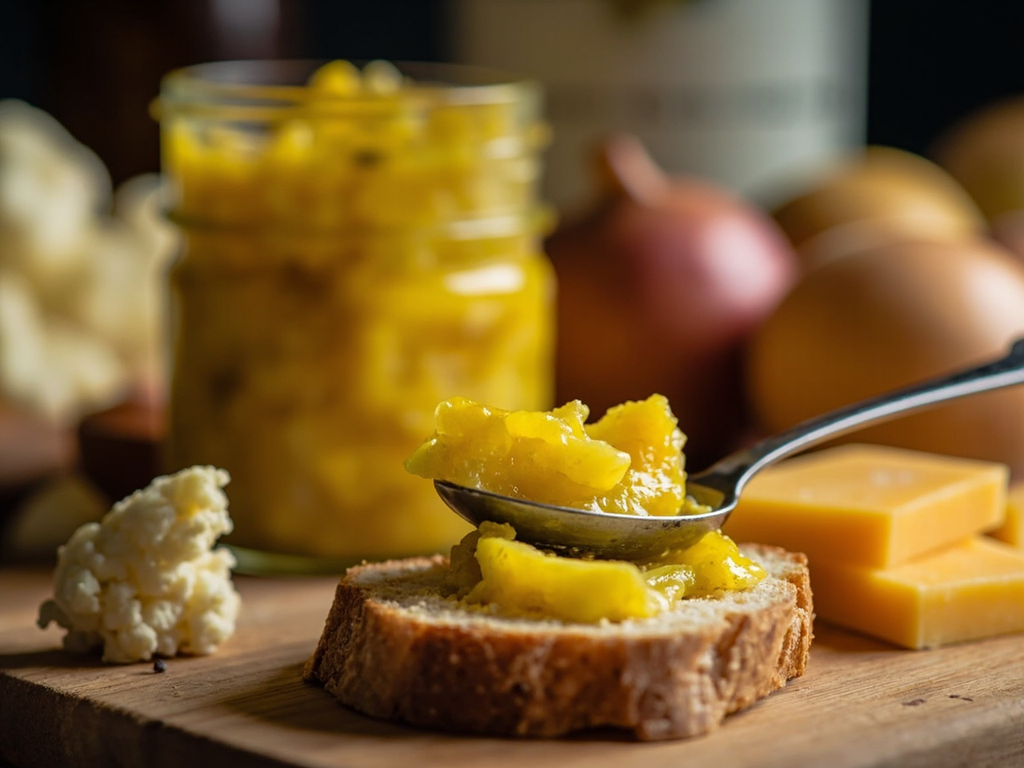
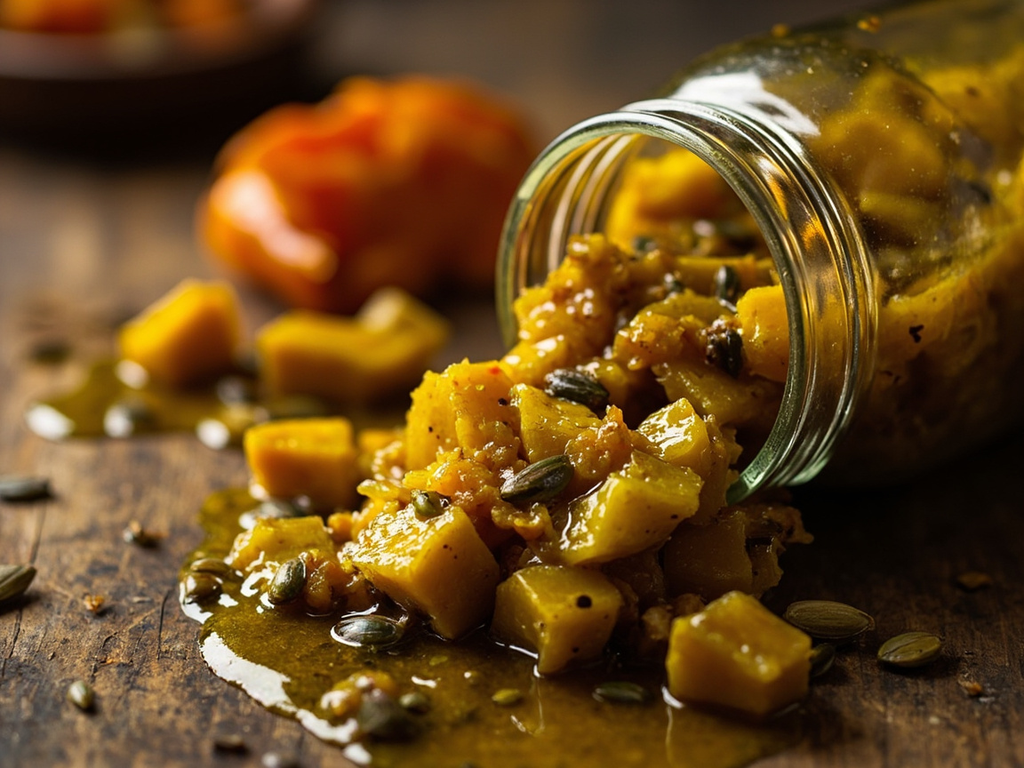
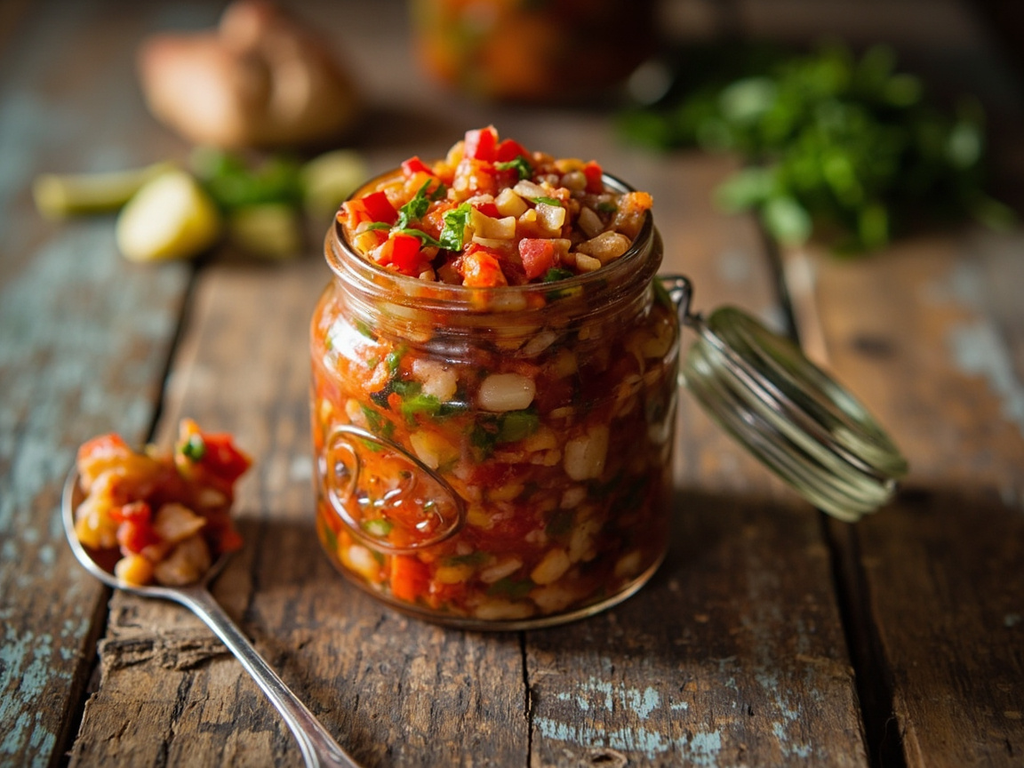
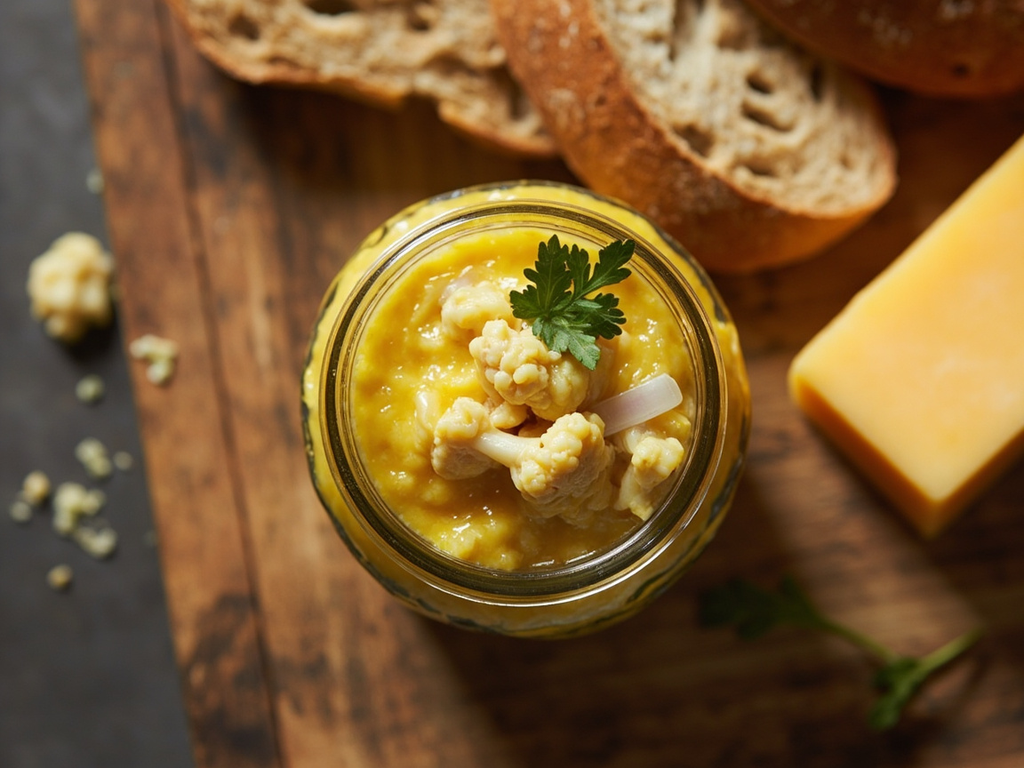
A pickle of crunchy vegetables (cauliflower, onion, cucumber) in a yellow vinegar sauce with mustard and turmeric. Sour, spicy, sharp: the quintessential British condiment.
At home, we never threw away a vegetable: what was left from the garden ended up in a jar, and piccalilli was the finest proof. That bright yellow came from turmeric and mustard, and the vinegar kept it all good for months. A spoonful next to a slice of cheese and a crust of bread, and you had a meal — modest, certainly, but that sharpness made it interesting. I recommend it for evenings when you come home late from the lab.
- •Cauliflower — in small florets (main crunch)
- •Small onions and cucumber — diced (variety of textures)
- •Coarse salt — for salting (draw out moisture)
- •Vinegar — to cover (acidity and preservation)
- •Mustard powder and turmeric — generously (colour and heat)
- •Flour and sugar — a little (thickener and balance)
Piccalilli (mustard vegetable pickles)
A pickle of crunchy vegetables (cauliflower, onion, cucumber) in a yellow vinegar sauce with mustard and turmeric. Sour, spicy, sharp: the quintessential British condiment.
Why this dish? In an England where nothing was wasted, piccalilli allowed garden vegetables to be preserved from one season to the next. On a college table, this bright yellow condiment accompanied Sunday cold cuts and cheese — a burst of flavour in the austerity of rationing.
At home, we never threw away a vegetable: what was left from the garden ended up in a jar, and piccalilli was the finest proof. That bright yellow came from turmeric and mustard, and the vinegar kept it all good for months. A spoonful next to a slice of cheese and a crust of bread, and you had a meal — modest, certainly, but that sharpness made it interesting. I recommend it for evenings when you come home late from the lab.
Ingredients (period version)
- Cauliflower — in small florets (main crunch)
- Small onions and cucumber — diced (variety of textures)
- Coarse salt — for salting (draw out moisture)
- Vinegar — to cover (acidity and preservation)
- Mustard powder and turmeric — generously (colour and heat)
- Flour and sugar — a little (thickener and balance)
Ingredients
- Cauliflower — 1/2, in small florets (crunch)
- Pickling onions — 150 g (texture)
- Cucumber — 1/2, diced (freshness)
- Coarse salt — 2 tbsp (draw out moisture)
- Cider or white vinegar — 400 ml (acidity)
- English mustard powder — 2 tbsp (signature heat)
- Turmeric — 1 tsp (yellow colour)
- Sugar — 3 tbsp (balance)
- Flour (or cornstarch) — 2 tbsp (sauce thickener)
Method
- Salt the cut vegetables and let them stand for 12 h, then rinse well and drain.
- Heat most of the vinegar with the sugar.
- Blend flour, mustard, and turmeric with the remaining cold vinegar, then whisk into the hot vinegar until thickened.
- Add the drained vegetables and cook for 2 to 3 min: they must remain crunchy.
- Pack into sterilised jars, seal, and let mature at least 2 weeks before eating.
How it was made : Piccalilli, inspired by Indian pickles brought back by the Empire, is attested in England since the 18th century. During the wars and rationing, it enjoyed a revival: preserving garden surplus was a patriotic duty (the 'Dig for Victory' campaign).
The contemporary twist : A spoonful on a modern ploughman's lunch (cheese, bread, apple): piccalilli remains the timeless companion of British cheese boards.
Maurice Wilkins · Charactorium