 flip
flipHomemade Sour Cabbage (Sauerkraut)
Homemade Sour Cabbage (Sauerkraut)
Why this dish? The 'seasonal vegetables' of Planck's frugal table spent the Berlin winter as Sauerkraut, a lacto-fermented preserve in every German household. An everyday food, anti-waste before its time.
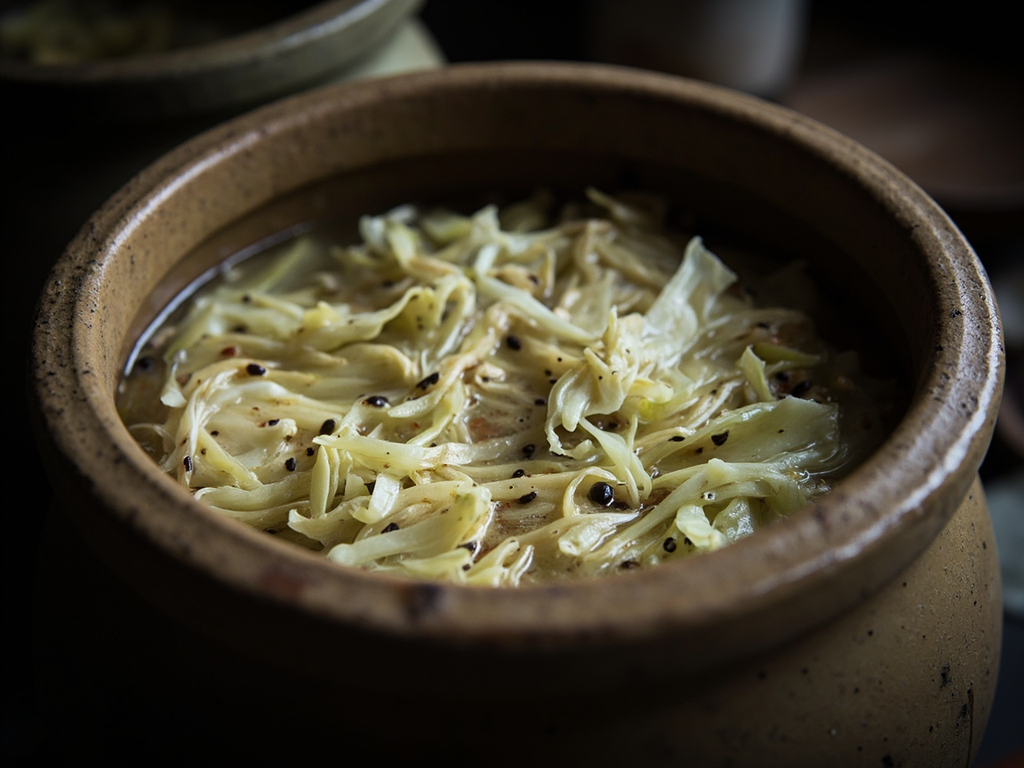
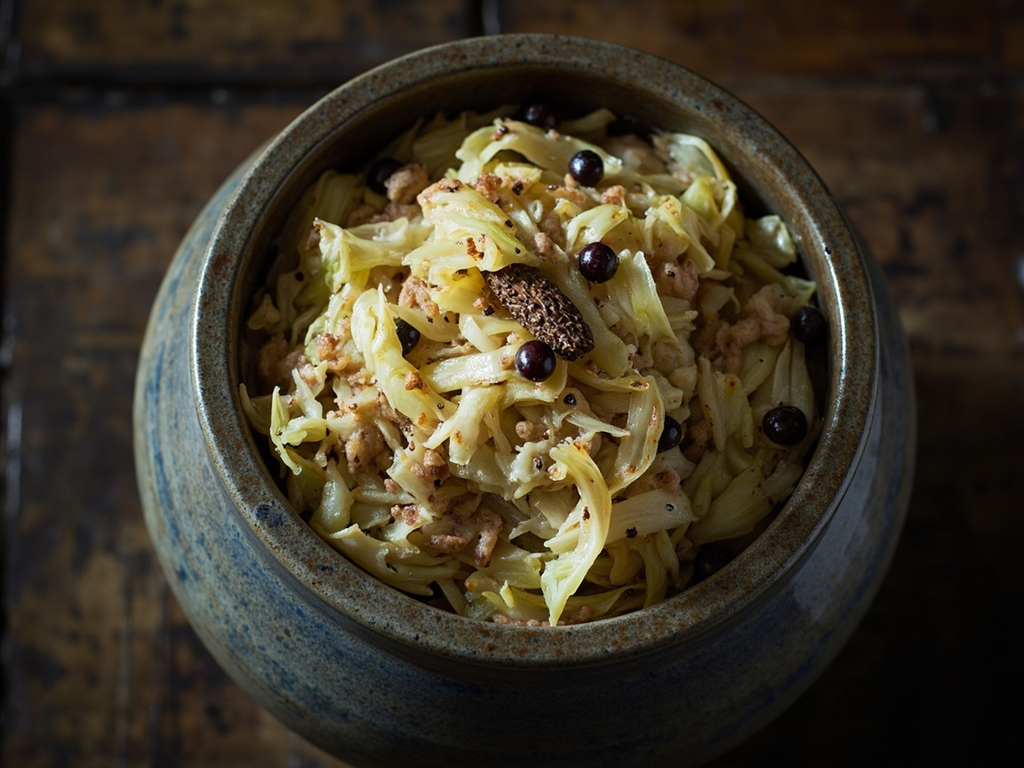
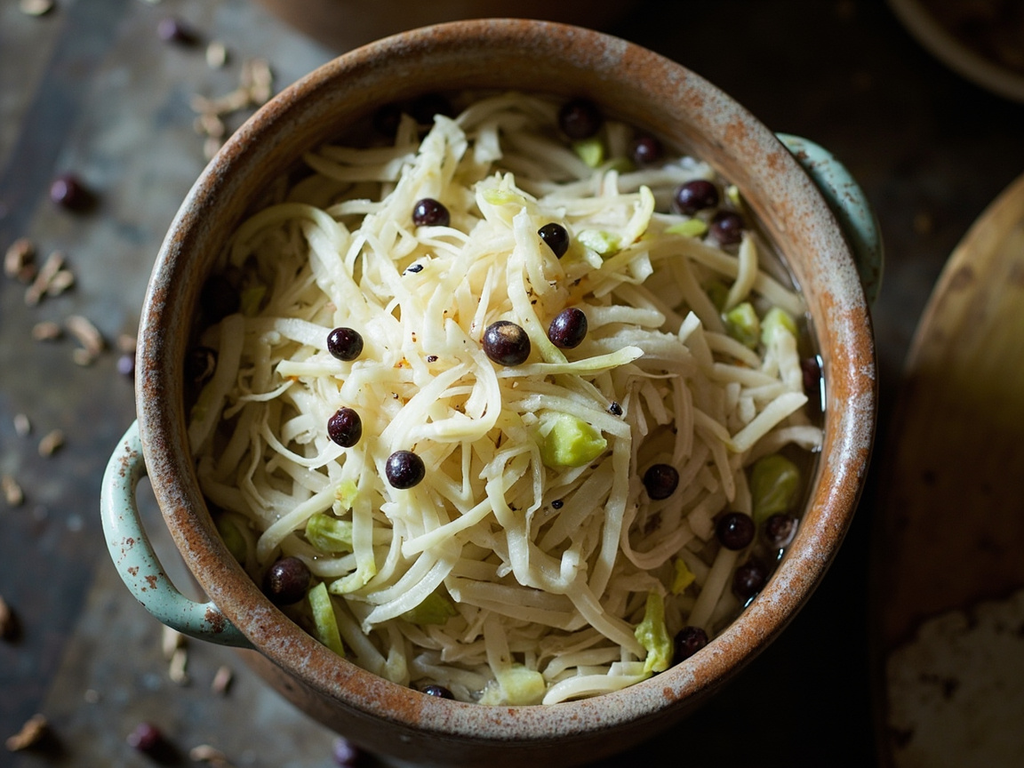
Finely shredded white cabbage, salted and packed into a pot, slowly fermenting on its own for weeks to become tangy and crunchy. The quintessential German preserve, providing vitamin C all winter.
Here is something of perfect logic, which pleased me by its simplicity: cabbage, salt, and time doing the rest. We packed it into the stoneware pot until the brine covered it, weighed it down with a stone, and waited — patience being, in cooking as in physics, the first of virtues. In the heart of winter, when the garden yielded nothing more, this sour cabbage served us as freshness. Nothing was wasted, and everything transformed.
- •White cabbage — one firm head (base)
- •Salt — a good handful (fermentation and preservation)
- •Juniper berries, caraway seeds — a few (aromatics)
Homemade Sour Cabbage (Sauerkraut)
Finely shredded white cabbage, salted and packed into a pot, slowly fermenting on its own for weeks to become tangy and crunchy. The quintessential German preserve, providing vitamin C all winter.
Why this dish? The 'seasonal vegetables' of Planck's frugal table spent the Berlin winter as Sauerkraut, a lacto-fermented preserve in every German household. An everyday food, anti-waste before its time.
Here is something of perfect logic, which pleased me by its simplicity: cabbage, salt, and time doing the rest. We packed it into the stoneware pot until the brine covered it, weighed it down with a stone, and waited — patience being, in cooking as in physics, the first of virtues. In the heart of winter, when the garden yielded nothing more, this sour cabbage served us as freshness. Nothing was wasted, and everything transformed.
Ingredients (period version)
- White cabbage — one firm head (base)
- Salt — a good handful (fermentation and preservation)
- Juniper berries, caraway seeds — a few (aromatics)
Ingredients
- White cabbage — 1 kg (net) (base)
- Non-iodized salt — 20 g (2% of weight) (fermentation and preservation)
- Juniper berries — 6 (aromatic)
- Caraway seeds — 1 tsp (aromatic)
Method
- Shred the cabbage very finely (reserve 1-2 whole large leaves).
- Massage vigorously with the salt until it releases its water (5-10 min).
- Add juniper and caraway, pack firmly into a clean jar so that the brine covers the cabbage.
- Cover with a whole cabbage leaf and a weight to keep everything submerged.
- Ferment at room temperature (18-20°C) for 1 to 4 weeks, tasting; refrigerate once the desired acidity is reached.
How it was made : Lacto-fermentation of cabbage has been attested for centuries in Central Europe. Stored in stoneware pots in cellars, Sauerkraut was the main source of vegetables and vitamin C during long winters, long before refrigeration.
The contemporary twist : Serve it barely drained as a fresh pickle on a quark tartine, rather than cooked — the 'raw fermented' trend brings this ancient gesture back into fashion.
Max Planck · Charactorium