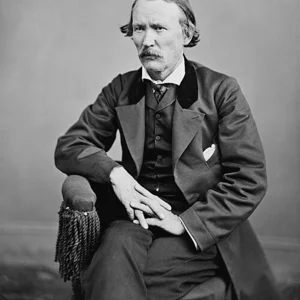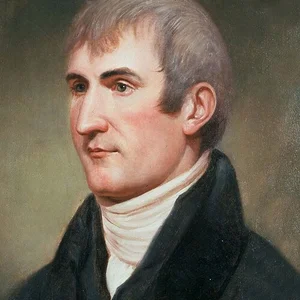

American army officer and explorer, Meriwether Lewis co-led with William Clark the 1804–1806 expedition commissioned by Thomas Jefferson to explore the American West all the way to the Pacific. This expedition, known as the Corps of Discovery, crossed the newly acquired Louisiana Territory and paved the way for the westward settlement of the continent.
Meriwether Lewis(1774 — 1809)
Meriwether Lewis
États-Unis
7 min read
Frequently asked questions
Key Facts
- 1774: Born in Virginia
- 1803: Thomas Jefferson selects him to lead the expedition to explore the Louisiana Territory
- 1804–1806: Lewis and Clark Expedition, from St. Louis to the Pacific Ocean and back
- 1807: Appointed Governor of the Missouri Territory
- 1809: Dies under mysterious circumstances on the Natchez Trace
Works & Achievements
Written in the field throughout the expedition, these journals are the primary source on the geography, fauna, flora, and Native American peoples of the American West. Published posthumously by Nicholas Biddle, they remain a landmark of exploration literature.
A synthesis of the geographical and scientific findings submitted to Jefferson upon the party's return to Washington. This document laid the foundation for American territorial expansion policy toward the Pacific.
Lewis described and collected specimens from more than 170 plant species and around one hundred animal species new to science. His descriptions of the grizzly bear, the bison, and the western red cedar remain benchmarks of natural history.
Drawn from astronomical observations taken throughout the journey, these maps were the first accurate representations of American territory stretching to the Pacific, paving the way for later westward migration.
Anecdotes
Before the expedition departed, Thomas Jefferson summoned Lewis to Monticello to personally teach him botany, cartography, and medicine. Lewis spent several months training under the finest American scientists of the era — proof that Jefferson viewed the mission as a scientific adventure every bit as much as a geopolitical one.
Throughout the expedition, Lewis was tasked with cataloguing every animal and plant species encountered. He described more than 170 plants and roughly a hundred animals completely unknown to Western science, including the grizzly bear, which his men faced on several occasions with sheer terror.
In August 1805, Lewis met Shoshone chief Cameahwait to obtain horses essential for crossing the Rockies. He then discovered that Cameahwait was the brother of Sacagawea, their invaluable guide and interpreter. This extraordinary coincidence allowed the party to negotiate for the horses and may well have saved the entire expedition.
Throughout the journey, Lewis distributed what were known as "peace medals
struck with the likeness of President Jefferson. Presented to the chiefs of the Native American nations they encountered, these medals symbolized acknowledgment of American authority and served as a diplomatic tool to assert United States sovereignty over the newly acquired lands.
Lewis's death in October 1809, at a tavern in Tennessee, remains one of the enduring mysteries of American history. Found with a gunshot wound, he died under murky circumstances that fueled decades of debate: suicide or murder? Jefferson himself leaned toward suicide, but some historians still raise the possibility of foul play today.
Primary Sources
The object of your mission is to explore the Missouri River and, through its principal tributaries, to find the most direct and practicable route of communication across the continent, for the purposes of commerce.
We saw several large brown bears today […] these animals are truly formidable, and I have no particular desire to encounter them alone.
We have found that this country is generally fertile, watered by a great number of navigable rivers, and that it offers considerable resources for the fur trade.
I assure you that I am in perfect health and that our journey, though long and arduous, has been accomplished with greater success than I dared to hope.
Key Places
Winter training camp where Lewis and Clark gathered and prepared their team from May 1803 to May 1804. It was from here that the Corps of Discovery officially set out on its epic journey westward.
Winter quarters built by the expedition in 1804–1805 in the heart of Mandan territory. It was here that Lewis and Clark met Sacagawea and her husband Toussaint Charbonneau, who would become essential guides.
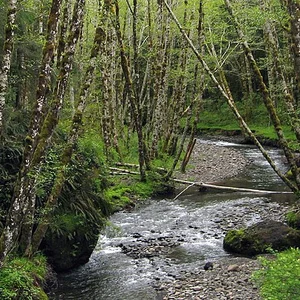
Winter fort built by the expedition in 1805–1806 on the Pacific coast, near present-day Astoria. The stay allowed Lewis to write up his naturalist observations and prepare for the return journey.
A massive waterfall discovered by Lewis in June 1805, requiring eighteen grueling days of portage to bypass the series of rapids. This ordeal is one of the most celebrated challenges of the entire expedition.
Meriwether Lewis was born on August 18, 1774, in this rural Virginia county, not far from Monticello, the estate of Thomas Jefferson. This geographic closeness forged a lasting bond between the two men.
An isolated inn where Meriwether Lewis died on October 11, 1809, under circumstances that have never been fully explained. A monument marks the site today, which remains a symbol of the explorer's tragic fate.
Typical Objects

Lewis used sextants and quadrants to determine latitude and longitude throughout the journey. These instruments, carefully selected before departure, allowed him to draw precise maps of the territories crossed.

Struck with Jefferson's likeness, these silver medals were presented to Native American chiefs to symbolize the new American authority. Lewis solemnly distributed them at each diplomatic meeting with Indigenous nations.

Lewis kept a detailed journal recording geographical observations, species descriptions, and ethnographic notes. These notebooks, carefully preserved despite harsh weather, constitute the primary source of knowledge about the expedition.

Members of the expedition were equipped with long-range rifles essential for hunting and defense. Lewis himself carried this type of weapon and describes in his journals several encounters with grizzly bears.

Trained in field medicine by Dr. Benjamin Rush before departure, Lewis brought an extensive pharmacopoeia: cinchona bark, mercury, laudanum. He served as the de facto physician of the expedition, treating illnesses, injuries, and frostbite.

The 55-foot keelboat, nicknamed “the boat of discovery,” transported men and supplies during the first phase of the journey up the Missouri River. This sturdy vessel, fitted with sails and oars, symbolizes the expedition’s mode of river travel.
School Curriculum
Vocabulary & Tags
Key Vocabulary
Tags
Daily Life
Morning
Lewis typically rose before dawn — sometimes as early as four in the morning — to take astronomical readings and determine the expedition's exact position. After a quick meal of corncakes or dried meat, he inspected the men, checked the equipment, and issued orders for the day's march or navigation.
Afternoon
Afternoons were devoted to pushing up the Missouri or trekking overland, often in grueling conditions — heat, mosquitoes, powerful currents. At every stop, Lewis took the opportunity to record plant and animal species in his notebooks, sometimes venturing away from the group on his own to collect specimens.
Evening
Once camp was set, Lewis wrote up his journals by candlelight or firelight, recording distances covered, weather observations, and encounters with Native peoples. He also studied available maps to plan the next day's route and conferred with Clark on decisions ahead.
Food
The expedition's diet relied mainly on hunting: bison, deer, elk, and beaver made up the bulk of their meals. When food ran short, the men ate dogs purchased from Native nations, roots such as camas, or horse fat during the grueling crossing of the Rockies.
Clothing
Lewis wore his American military uniform during diplomatic ceremonies with Native chiefs to project the prestige of the mission. On the trail, he switched to buckskin clothes, moccasins, and wool blankets — often in poor condition from harsh weather and river crossings.
Housing
During the navigation phases, Lewis slept aboard the keelboat in cramped quarters shared with the other officers. In winter, the expedition built log forts — Fort Mandan, Fort Clatsop — where the men lived in rough-hewn cabins, huddled together to endure near-polar temperatures.
Historical Timeline
Period Vocabulary
Liens externes & ressources
Références
Œuvres
Journaux de l'expédition Lewis et Clark
1804-1806 (publiés en 1814)
Rapport officiel au président Jefferson sur l'expédition du Corps of Discovery
1806
Catalogues botaniques et zoologiques de l'expédition
1804-1806
Cartes géographiques du territoire de la Louisiane et du bassin du Missouri
1806