 flip
flipCawl of leeks, barley, and river fish
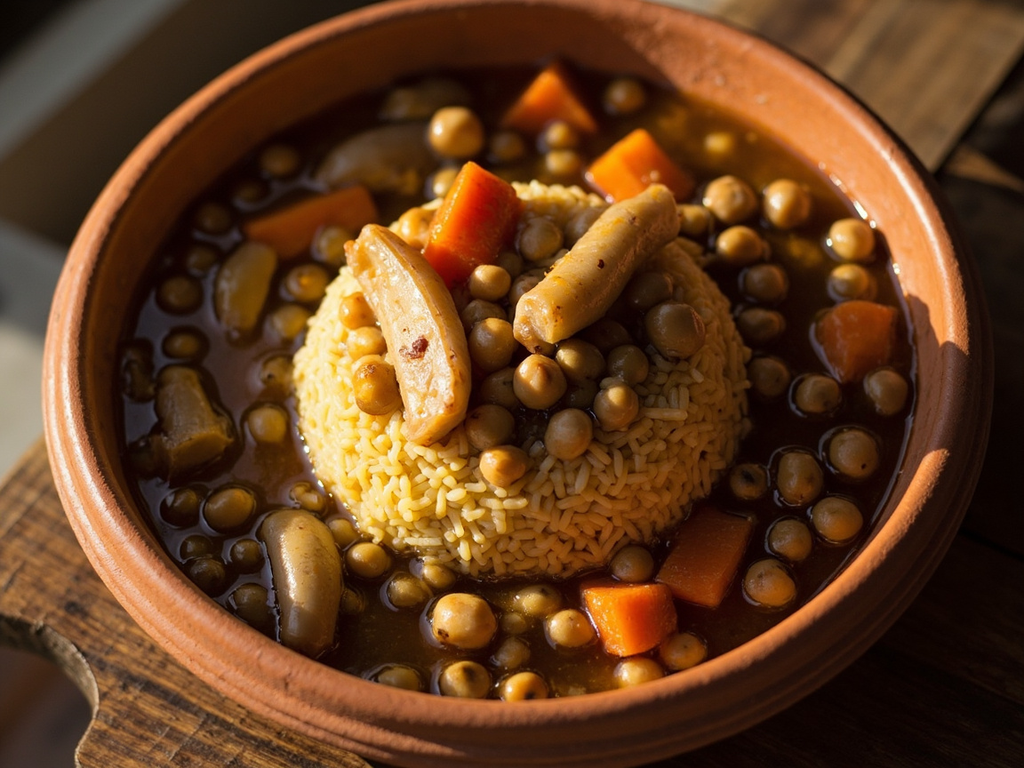
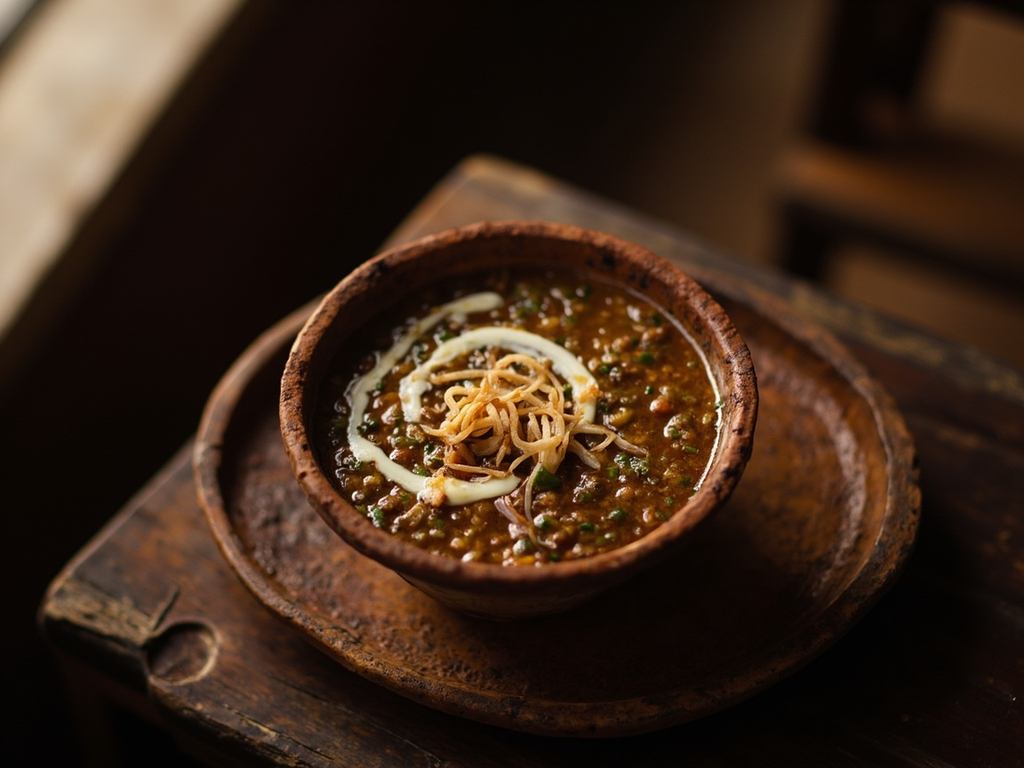
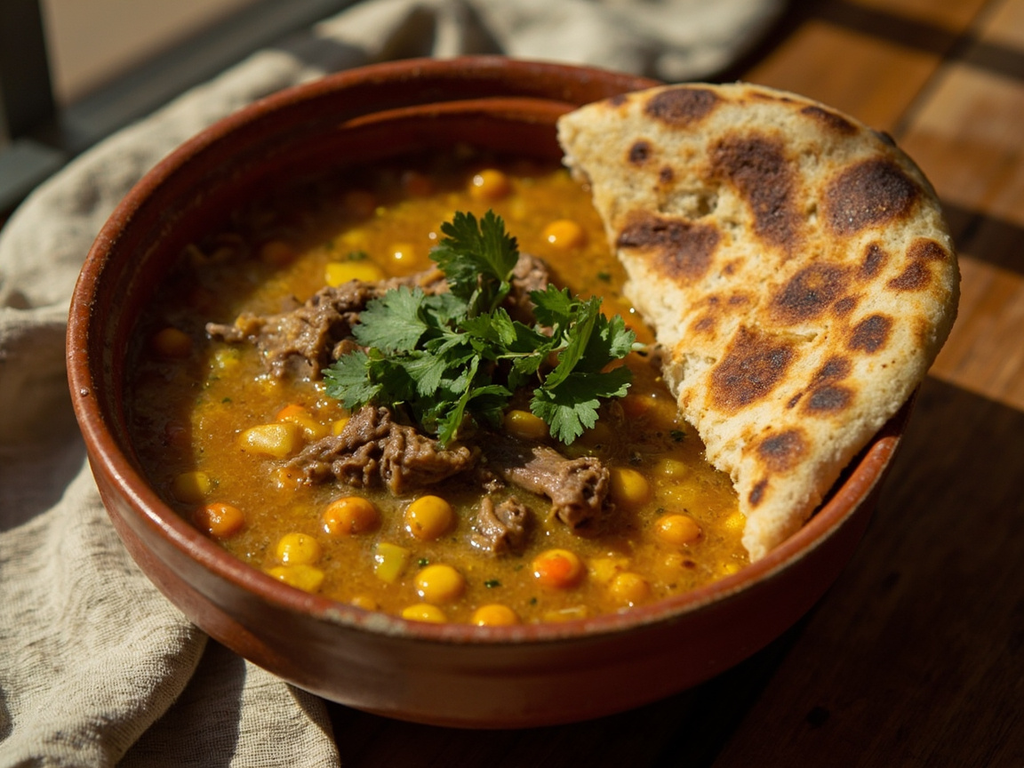
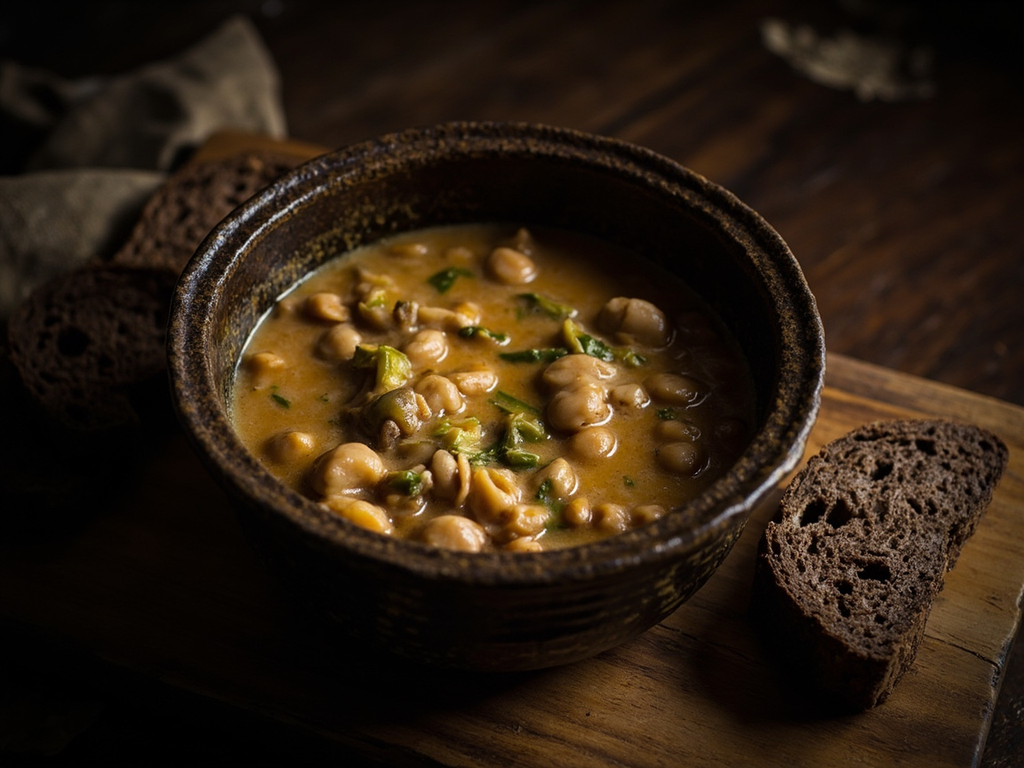
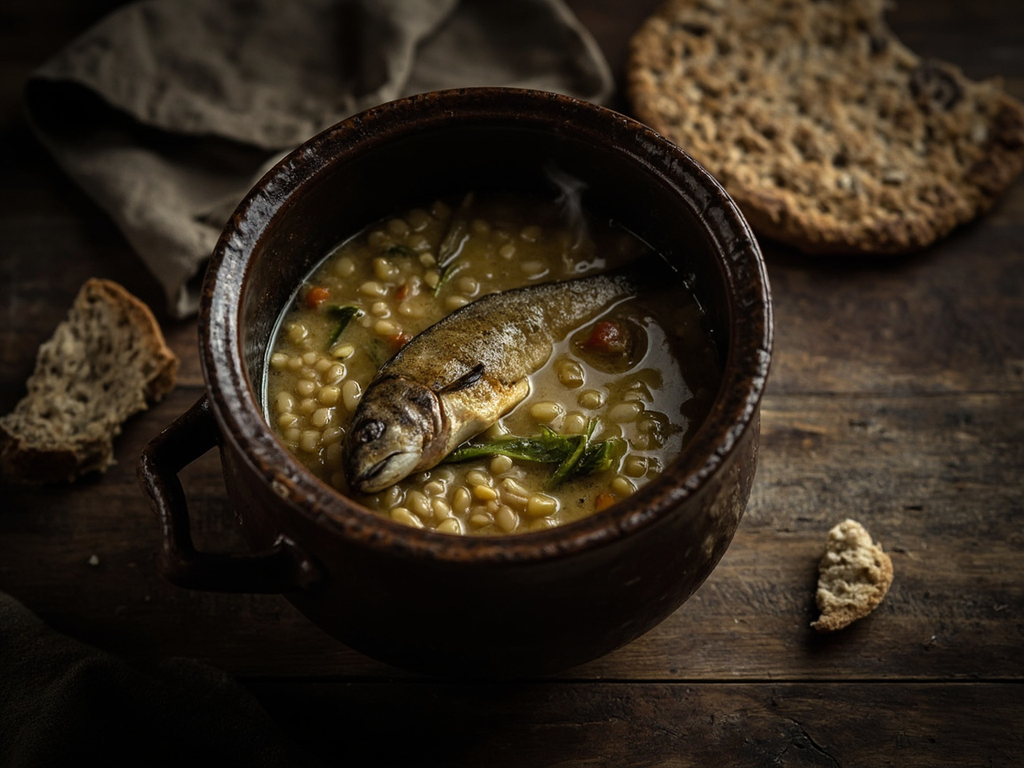
Cawl of leeks, barley, and river fish
Why this dish? Merlin lives on the margins, in the forests of Brocéliande and the Welsh valleys, feeding on freshwater fish and herbs. This humble pottage, which brings together the leek (the very emblem of Wales), the barley of poor fields, and river trout, is exactly the kind of stew that a hermit-druid could keep warm on his embers.
A comforting broth where barley melts gently, leeks become silky, and a river fish brings its delicate flesh. A one-pot dish, eaten with a spoon and an oatcake for sopping.
Come close to the fire, traveler, and fear not the smoke. See this cauldron: I threw in the barley at dawn, that it might soften as stone yields to the patience of water. The leeks I cut fine, for they are the green of my Brittonic land; the trout I took from the ford with a flick of my hand while the day still hesitated. Salt with a pinch, let it murmur, and you shall know that a man needs no king's palate to be satisfied.
- •Hulled barley — a generous handful (starch base that thickens the broth)
- •Garden leeks — three or four (emblematic vegetable, sweetness)
- •River trout or perch — one fish (protein, fine flesh)
- •Wild herbs (lovage, parsley, thyme) — a bunch (flavor)
- •Salt — a pinch (seasoning)
- •Spring water — full cauldron (base of the pottage)
Cawl of leeks, barley, and river fish
A comforting broth where barley melts gently, leeks become silky, and a river fish brings its delicate flesh. A one-pot dish, eaten with a spoon and an oatcake for sopping.
Why this dish? Merlin lives on the margins, in the forests of Brocéliande and the Welsh valleys, feeding on freshwater fish and herbs. This humble pottage, which brings together the leek (the very emblem of Wales), the barley of poor fields, and river trout, is exactly the kind of stew that a hermit-druid could keep warm on his embers.
Come close to the fire, traveler, and fear not the smoke. See this cauldron: I threw in the barley at dawn, that it might soften as stone yields to the patience of water. The leeks I cut fine, for they are the green of my Brittonic land; the trout I took from the ford with a flick of my hand while the day still hesitated. Salt with a pinch, let it murmur, and you shall know that a man needs no king's palate to be satisfied.
Ingredients (period version)
- Hulled barley — a generous handful (starch base that thickens the broth)
- Garden leeks — three or four (emblematic vegetable, sweetness)
- River trout or perch — one fish (protein, fine flesh)
- Wild herbs (lovage, parsley, thyme) — a bunch (flavor)
- Salt — a pinch (seasoning)
- Spring water — full cauldron (base of the pottage)
Ingredients
- Pearl barley — 120 g (starch base)
- Leeks — 3 medium (main vegetable)
- Trout fillets — 2 (approx. 250 g) (protein)
- Bunch of thyme, parsley, and lovage (or celery) — 1 (aromatics)
- Salt — 1 tsp (seasoning)
- Water — 1.5 L (broth base)
Method
- Rinse the pearl barley and cook it in salted water with the herb bunch for about 30 minutes at a simmer.
- Slice the leeks and add them; continue for 15 minutes until they are tender.
- Cut the trout fillets into large chunks and plunge them into the broth; poach for 5 to 6 minutes, the fish should remain pearly.
- Remove the herb bunch, adjust salt, and serve hot in bowls, with oatcakes for dipping.
How it was made : The cawl is the ancestral dish of Wales: a one-pot pottage simmered in a cauldron over the central hearth, into which grain, leeks, roots, and whatever meat or fish was available were thrown. The laws of Hywel Dda (10th century) show the importance of oats, barley, and dairy products in this subsistence cuisine.
The contemporary twist : Serve it in a raw earthenware bowl, the trout fillet placed on top and just kissed with a blowtorch for golden skin — a nod to the hermit's fire.
Sources : Laws of Hywel Dda (medieval Welsh codification) · Welsh culinary tradition of cawl
Merlin · Charactorium