 flip
flipDruid's herbal honey electuary
Druid's herbal honey electuary
Why this dish? Merlin is not only a mage: he is also a seer and healer, heir to the druidic knowledge of herbs. This paste of honey and bitter plants, halfway between candy and remedy, evokes the mouth ointments that a woodsman could prepare against coughs and winter fatigue.
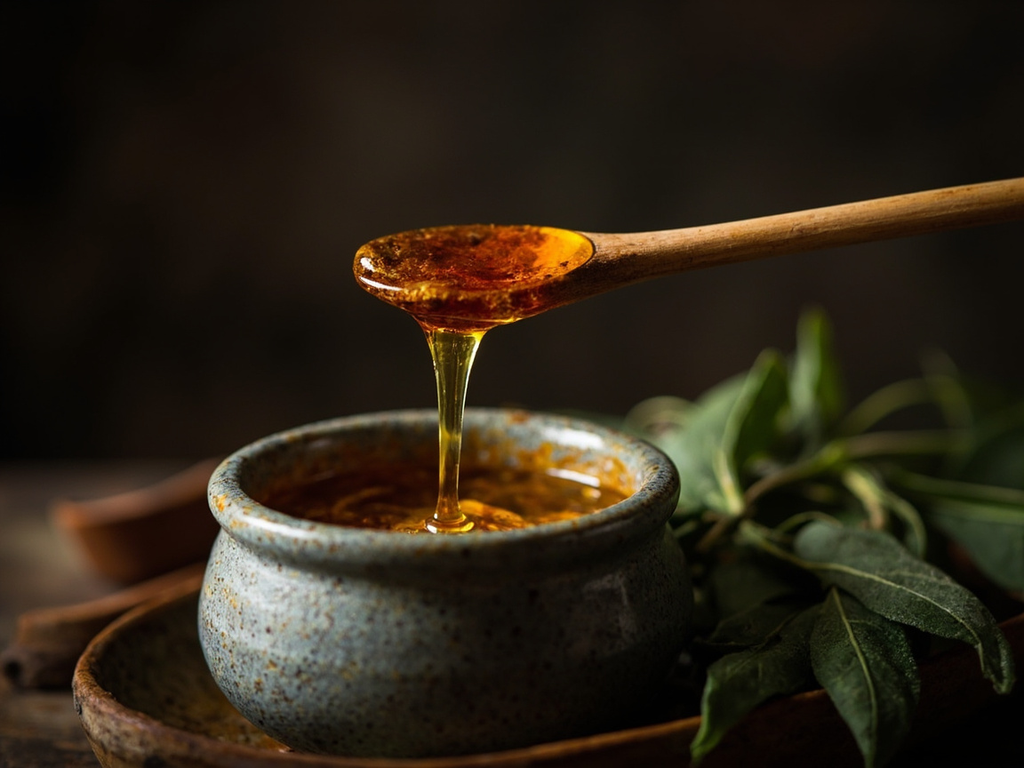
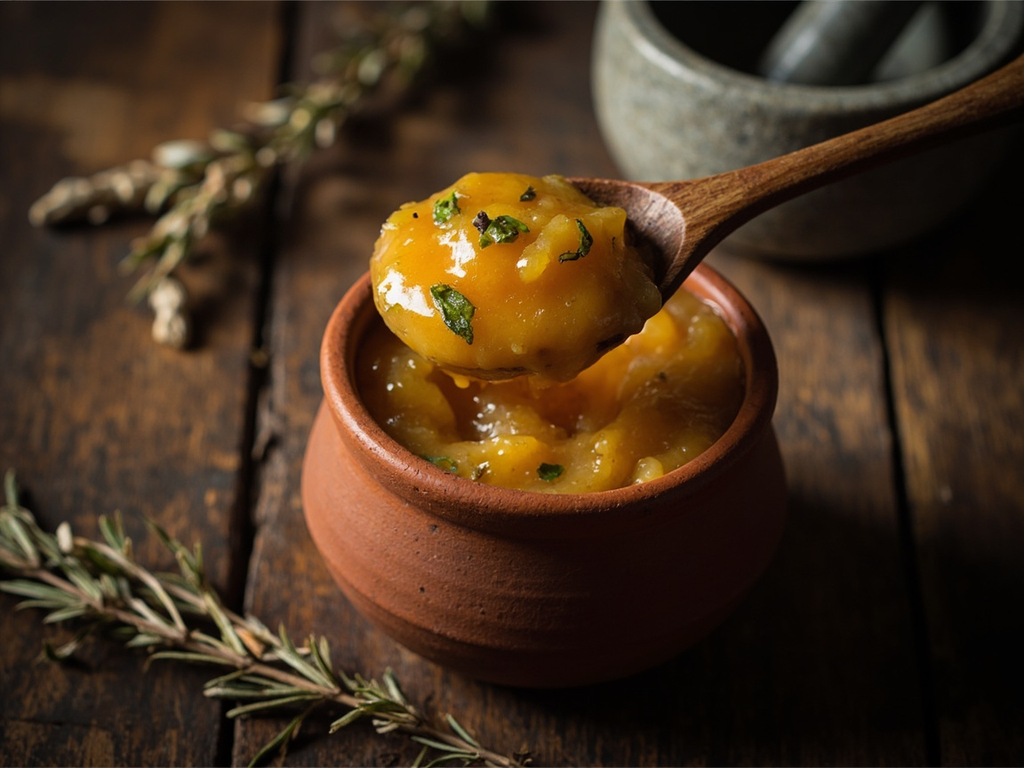
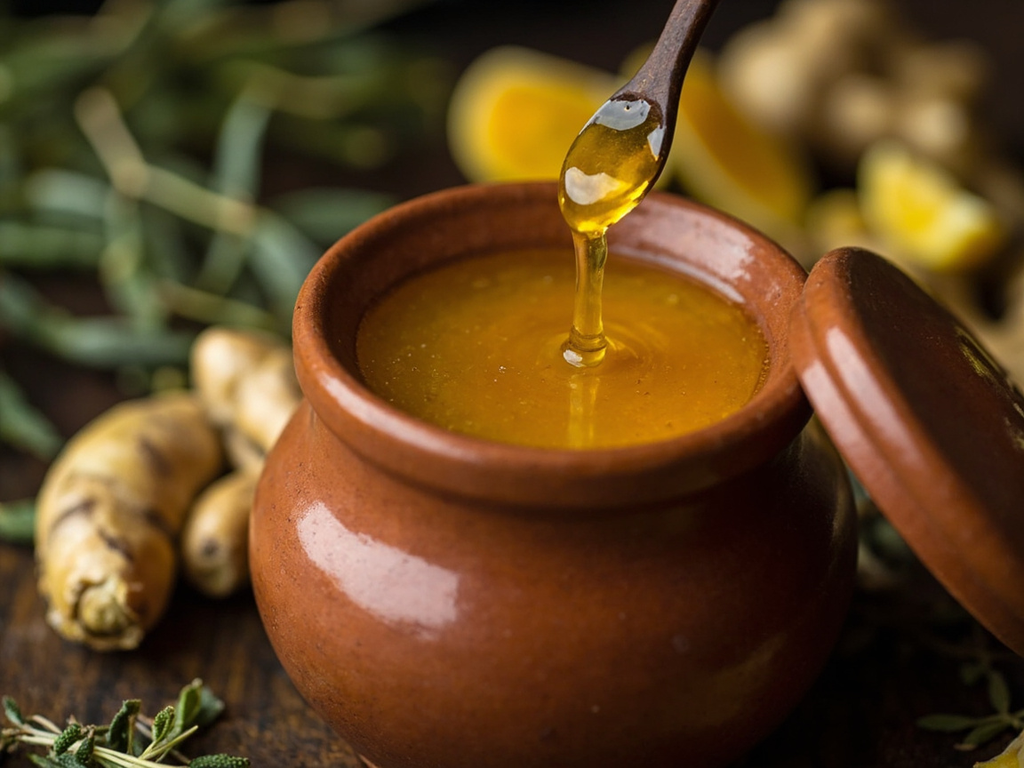
A thick, golden paste where honey coats medicinal herbs and a hint of ginger. Sweet at first, then bitter and warm, it is taken by the small spoon to comfort the throat.
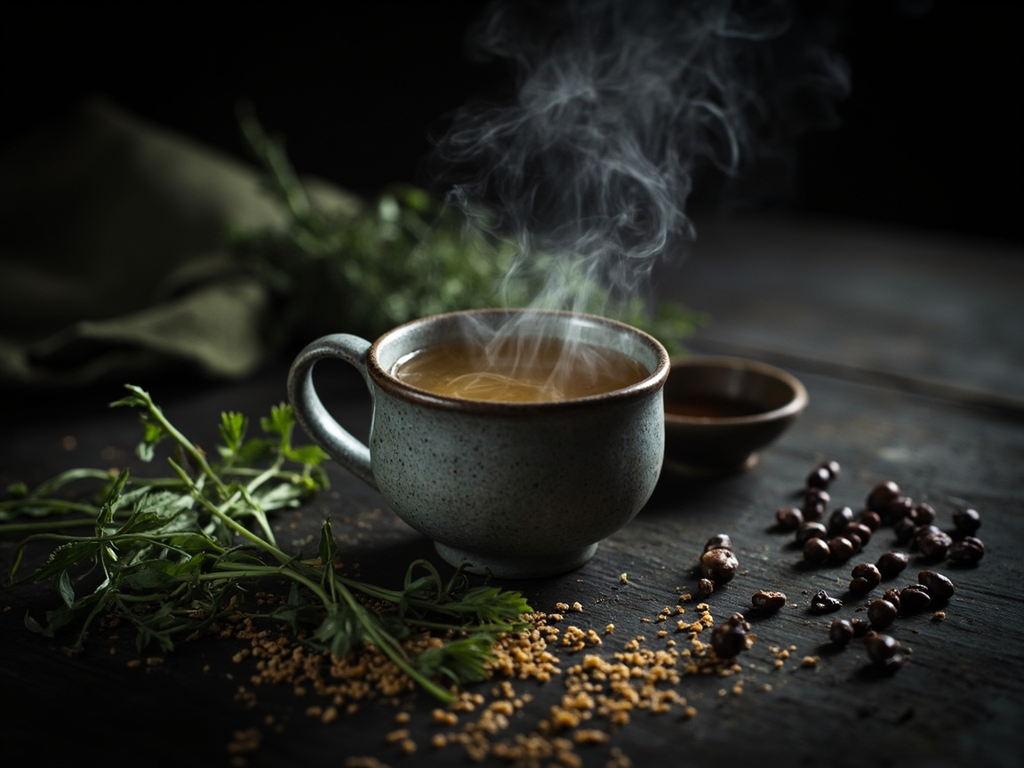
You cough, and the forest knows the remedy long before the court physicians. Take honey, that balm which bees draw from the sun, and marry it to bitter herbs I gather at the waxing moon: sage, thyme, a touch of root from afar to warm the inside. Keep this in a pot; a spoonful at dawn, one at dusk, and the cough will flee like a shadow before my lantern. The secret, you see, is not in magic — it is in the patient knowledge of growing things.
- •Thick honey — a pot (base and preservative)
- •Dried sage and thyme — a pinch of each (medicinal herbs)
- •Ginger root (imported spice) — a small piece, grated (warmth, spicy signature)
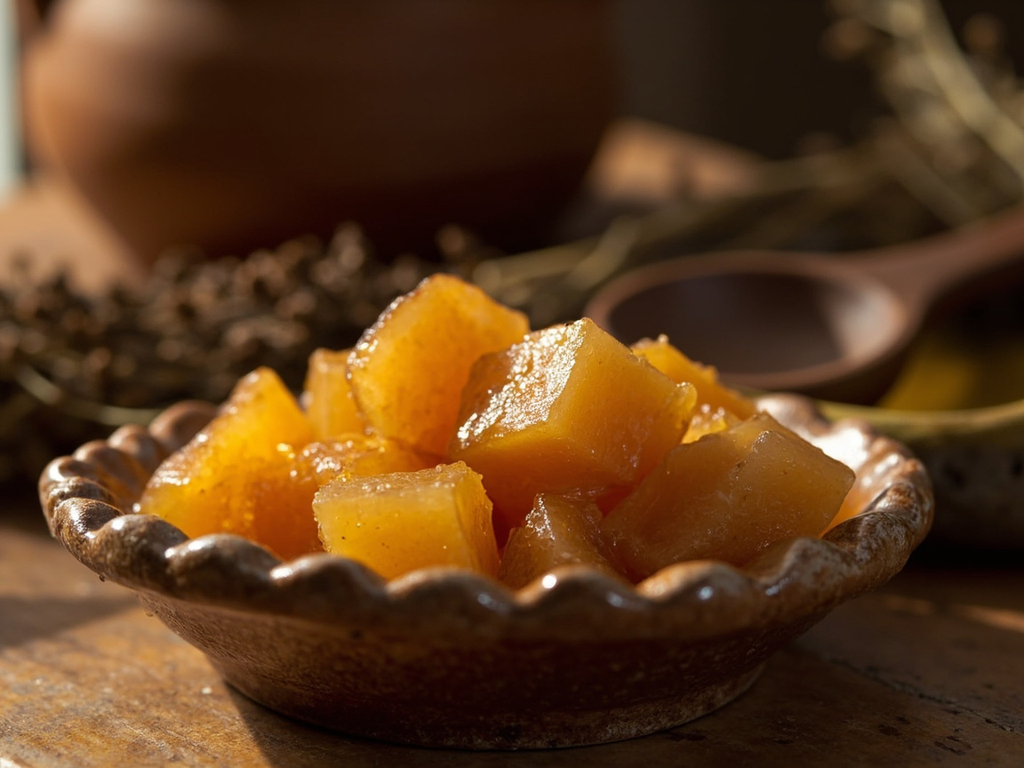
- •Zest and juice of quince or apple — a little (astringent binder)
Druid's herbal honey electuary
A thick, golden paste where honey coats medicinal herbs and a hint of ginger. Sweet at first, then bitter and warm, it is taken by the small spoon to comfort the throat.
Why this dish? Merlin is not only a mage: he is also a seer and healer, heir to the druidic knowledge of herbs. This paste of honey and bitter plants, halfway between candy and remedy, evokes the mouth ointments that a woodsman could prepare against coughs and winter fatigue.
You cough, and the forest knows the remedy long before the court physicians. Take honey, that balm which bees draw from the sun, and marry it to bitter herbs I gather at the waxing moon: sage, thyme, a touch of root from afar to warm the inside. Keep this in a pot; a spoonful at dawn, one at dusk, and the cough will flee like a shadow before my lantern. The secret, you see, is not in magic — it is in the patient knowledge of growing things.
Ingredients (period version)
- Thick honey — a pot (base and preservative)
- Dried sage and thyme — a pinch of each (medicinal herbs)
- Ginger root (imported spice) — a small piece, grated (warmth, spicy signature)
- Zest and juice of quince or apple — a little (astringent binder)
Ingredients
- Honey — 200 g (base and preservative)
- Dried sage and thyme — 1 tsp total (aromatics / medicinal virtue)
- Fresh grated ginger — 1 tsp (spicy and warm signature)
- Lemon or quince juice — 1 tbsp (acidity, binder)
Method
- Gently warm the honey in a bain-marie, without boiling, to preserve its qualities.
- Incorporate the sage, thyme, and grated ginger, then let infuse off the heat for 15 minutes.
- Add the lemon or quince juice and mix well until a homogeneous paste forms.
- Pour into a small clean pot; take a teaspoon as needed. Keeps for several weeks in a cool place.
How it was made : Electuaries — medicinal pastes bound with honey — are a form of remedy attested from Antiquity through the Middle Ages, in monastic herbals as well as folk medicine. Honey served as preservative, sweetener, and base; to it were added plants from the medicinal garden and, for those who could afford them, imported spices like ginger, already known in medieval Europe via trade routes.
The contemporary twist : Present it in a small pot sealed with a paper disc and string, labeled 'seer's balm' — a homemade winter gift.
Sources : Tradition of medieval electuaries and monastic herbals · Medieval use of honey and ginger in pharmacopoeia
Merlin · Charactorium