 flip
flipBizcocho de mar (Ship's Biscuit)
Bizcocho de mar (Ship's Biscuit)
Why this dish? Cervantes was a marine soldier: wounded at the Battle of Lepanto (1571) where he lost the use of his left hand, then captured at sea in 1575 and held captive in Algiers. Life aboard the galleys revolved around the *bizcocho*, this twice-baked hardtack, the basic ration of the Crown's armies.
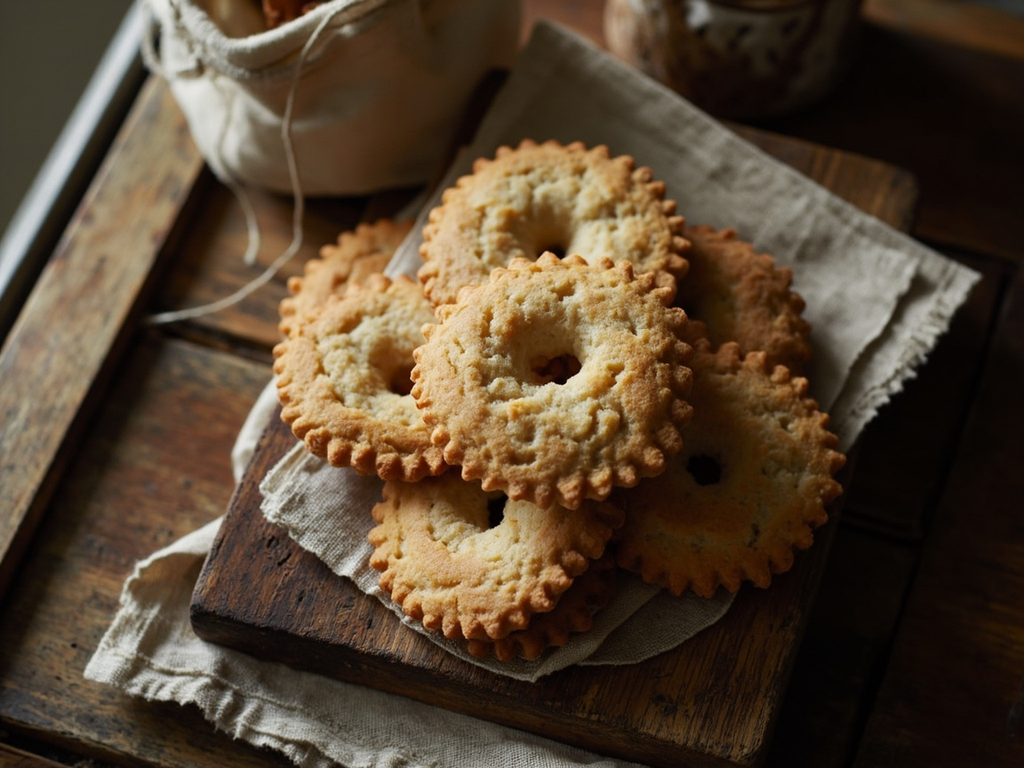
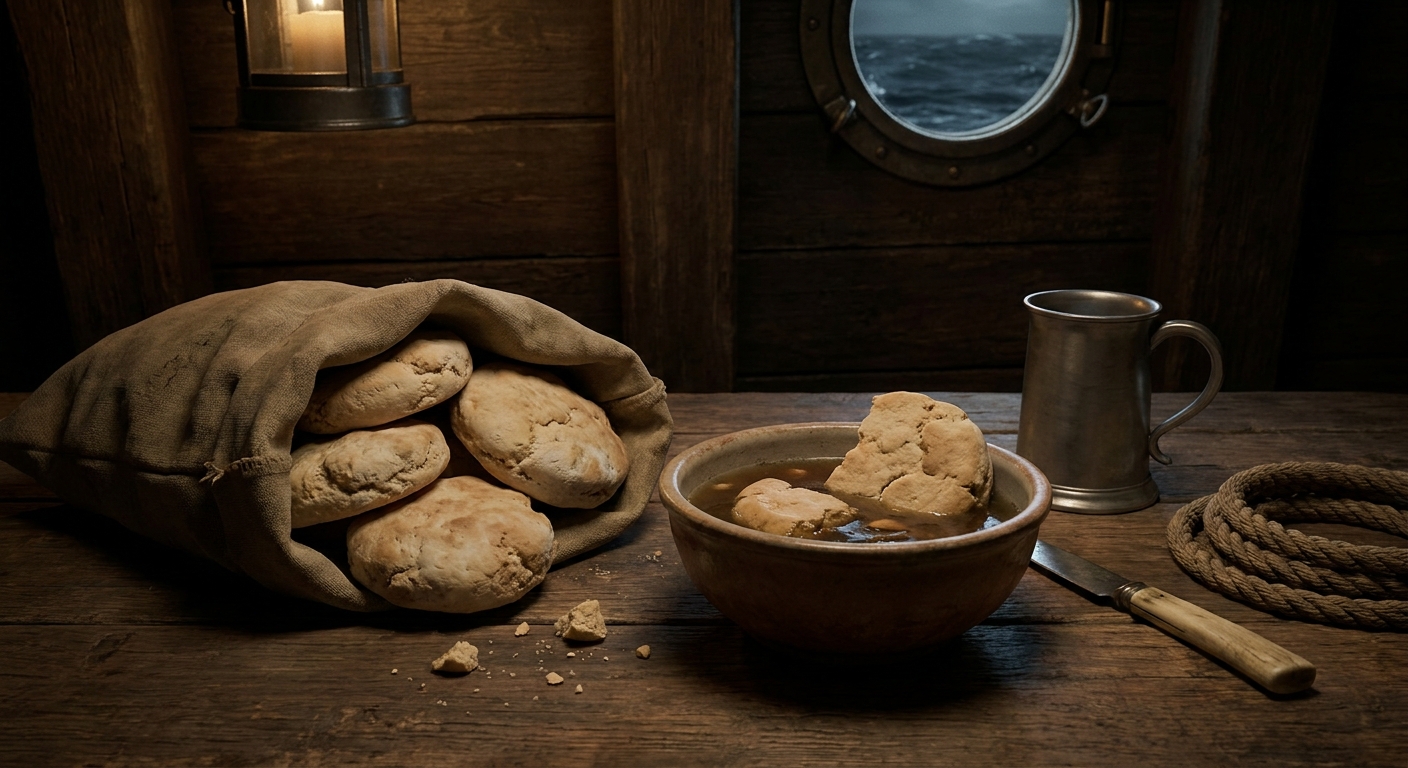
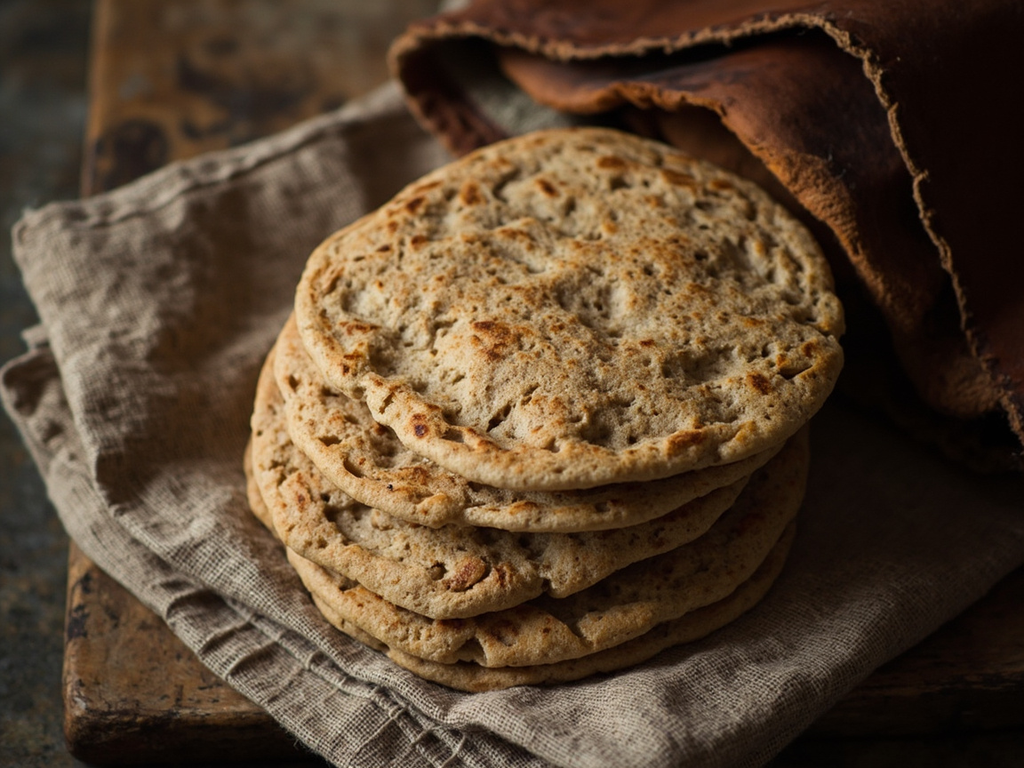
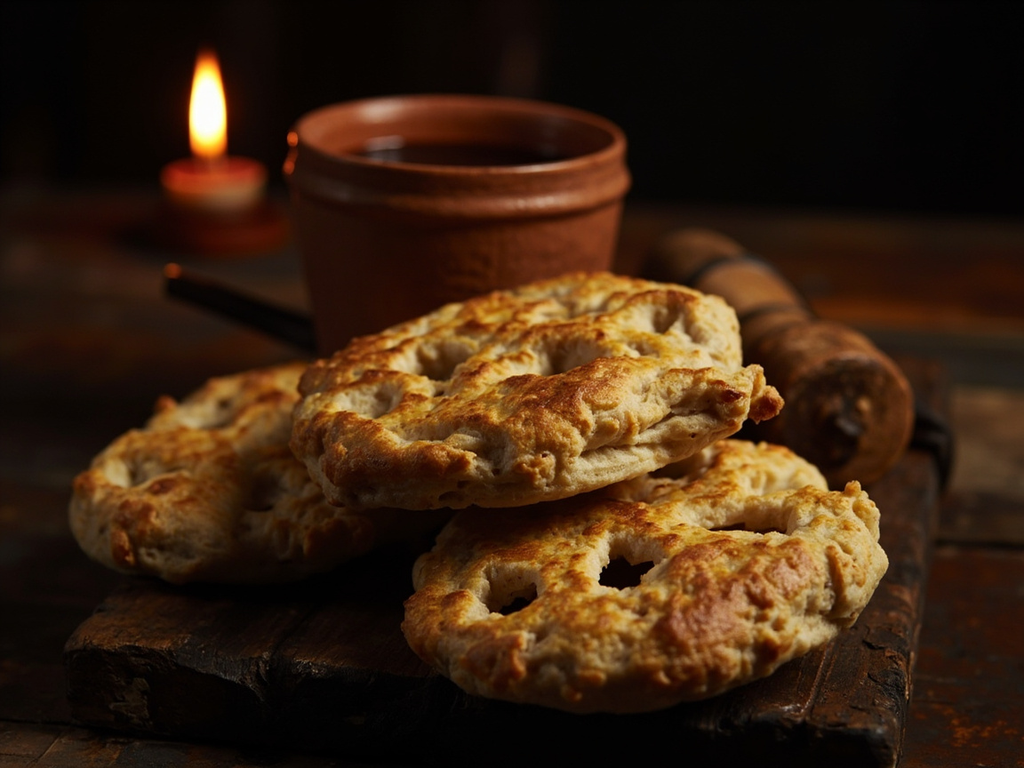
Hard bread baked twice, dry and light, which keeps for months at sea: the ration of galley slaves and soldiers of the Spanish fleet, soaked in broth or wine to soften it.
You who are dry on solid ground, know what the man of war eats on the King's galleys! *Bizcocho* — bread baked twice, hard as a board, but which does not mold for months at sea. One dips it in broth or wine cut with water so that it consents to be chewed. At Lepanto I lived on it, and during my captivity in Algiers I dreamed of it: it is little, but that little saves the soldier's life.
- •Wheat flour — as needed (base)
- •Water — as needed (binder)
- •Sourdough starter — a little (light leavening)
- •Salt — a pinch (preservation and flavor)
Bizcocho de mar (Ship's Biscuit)
Hard bread baked twice, dry and light, which keeps for months at sea: the ration of galley slaves and soldiers of the Spanish fleet, soaked in broth or wine to soften it.
Why this dish? Cervantes was a marine soldier: wounded at the Battle of Lepanto (1571) where he lost the use of his left hand, then captured at sea in 1575 and held captive in Algiers. Life aboard the galleys revolved around the *bizcocho*, this twice-baked hardtack, the basic ration of the Crown's armies.
You who are dry on solid ground, know what the man of war eats on the King's galleys! *Bizcocho* — bread baked twice, hard as a board, but which does not mold for months at sea. One dips it in broth or wine cut with water so that it consents to be chewed. At Lepanto I lived on it, and during my captivity in Algiers I dreamed of it: it is little, but that little saves the soldier's life.
Ingredients (period version)
- Wheat flour — as needed (base)
- Water — as needed (binder)
- Sourdough starter — a little (light leavening)
- Salt — a pinch (preservation and flavor)
Ingredients
- Wheat flour (T65 or semi-wholemeal) — 500 g (base)
- Water — 280 ml (binder)
- Sourdough starter or baker's yeast — 100 g starter (or 5 g dry yeast) (leavening)
- Salt — 10 g (flavor and preservation)
Method
- Knead flour, water, starter and salt into a firm dough; let rise 1 h to 1 h 30.
- Shape into flat, thick rounds or small loaves; pierce with holes.
- Bake first time at 220 °C for about 25 min until colored.
- Let cool, cut into slices or pieces.
- Bake a second time at 120 °C for 1 h to 1 h 30 until completely dry and crisp.
- Store in an airtight container; dip in broth or a little wine cut with water before eating.
How it was made : The *bizcocho* (from *bis coctus*, "twice cooked") was the bread ration of the Spanish navy and armies. Baked then dried, it could keep for months without molding. It was distributed as a daily ration on the galleys; too dry to be eaten as is, it was softened in broth, water or wine. It is the direct ancestor of the biscotte and sailors' hardtack.
The contemporary twist : Served as a "galley picada" with a drizzle of olive oil and a touch of garlic, like an austere bruschetta — the aperitif of the Lepanto soldier.
Sources : Archivo General de Simancas, documents on Armada rations (16th c.) · Miguel de Cervantes, autobiographical references to Lepanto and captivity in Algiers
Miguel de Cervantes · Charactorium