 flip
flipBajre ki Roti and Lentil Dal
Bajre ki Roti and Lentil Dal
Why this dish? Mirabai, having become a wandering devotee, sustained herself on the flatbread (roti) and dal from temples and devotees. In the arid Rajasthan, bajra millet often replaces wheat: this is the humble bread of one who left the luxury of Chittorgarh palace.
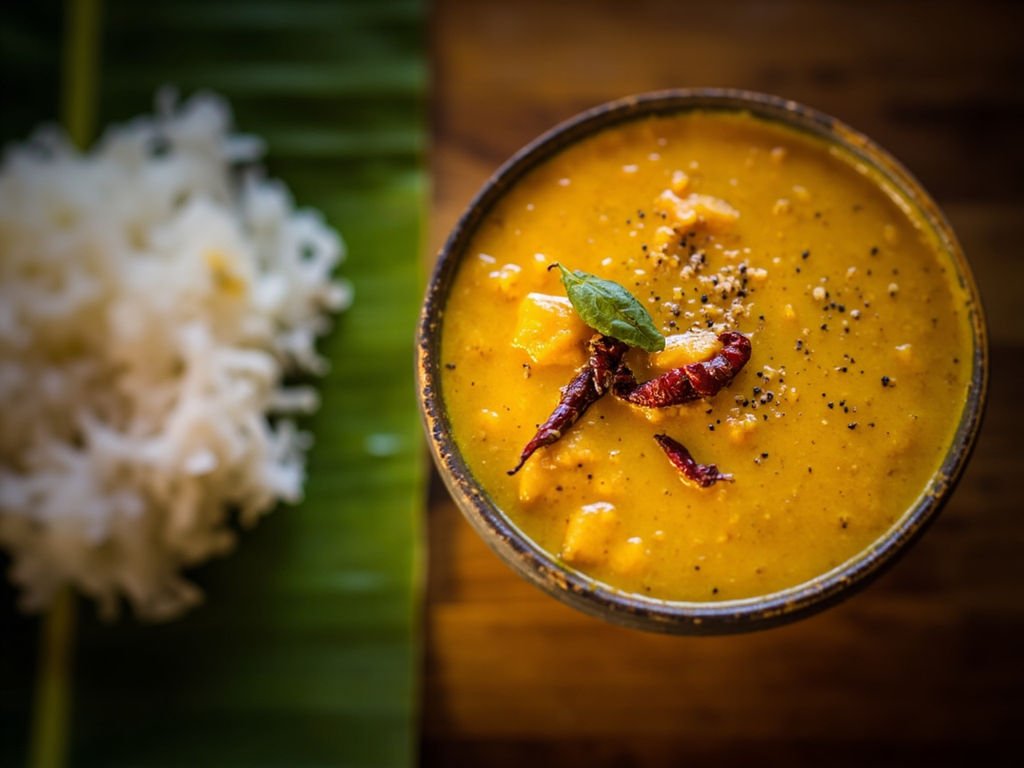
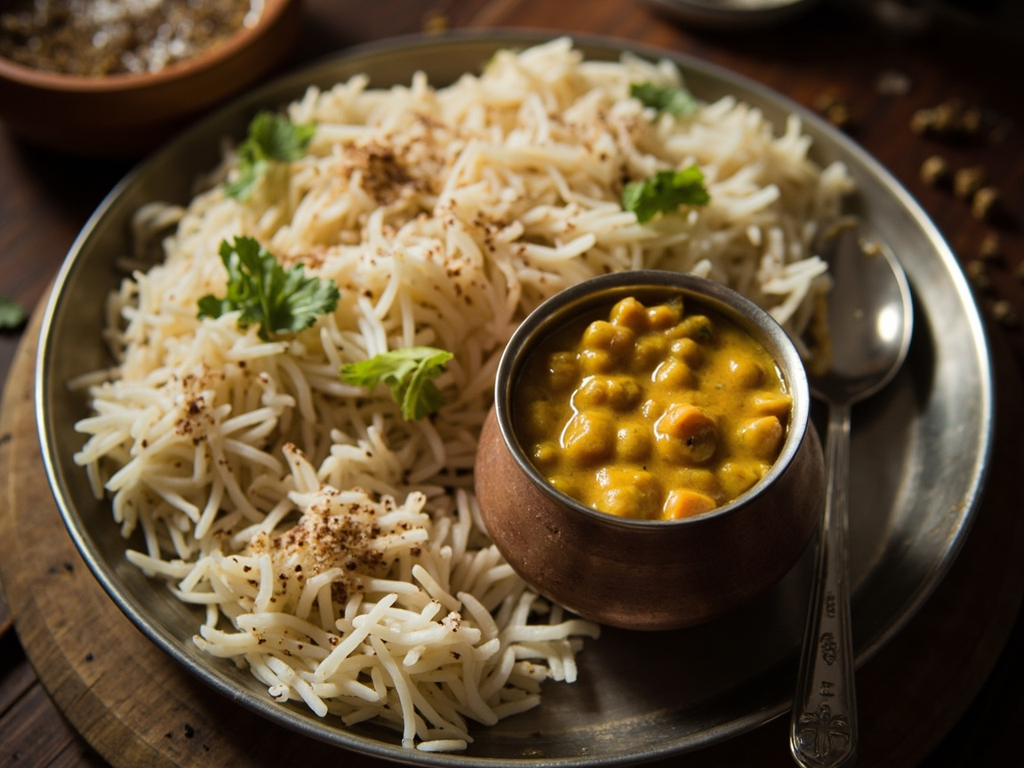
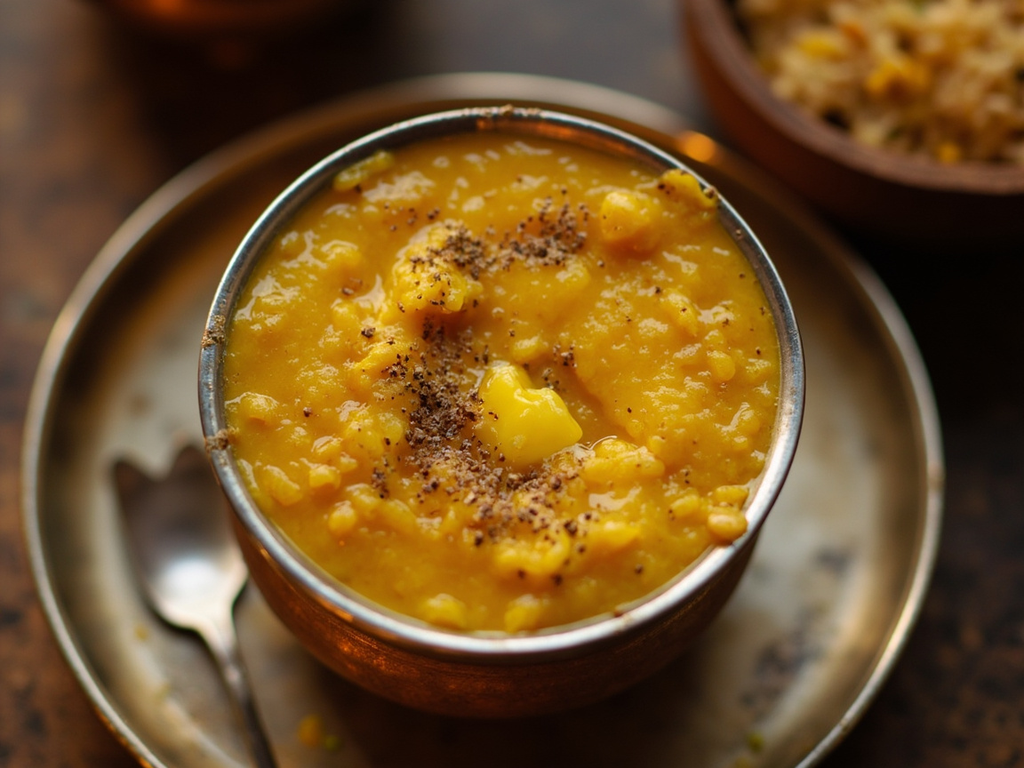
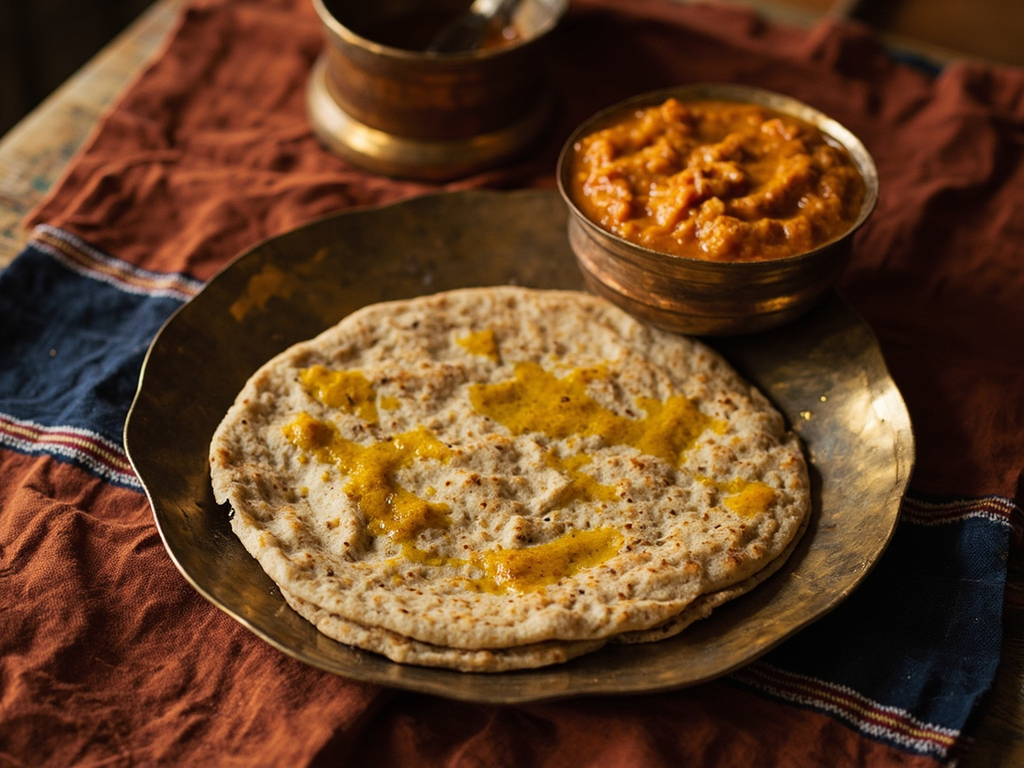
A dense pearl millet flatbread, cooked on a griddle then flamed until puffed, served slathered with ghee alongside a red lentil dal perfumed with cumin, ginger, and asafoetida. The everyday meal, filling and meatless.
Come, sit on the ground, friend, like me who left the silk cushions of the palace. I press the millet flour between my palms, without a rolling pin, and lay it on the hot griddle until it swells like a breath. A knob of ghee on top, a little dal with ginger, and I eat while singing the name of my Giridhar—for this bread, simple and warm, is worth all the feasts of Rajput kings.
- •Bajra millet flour — two handfuls (flatbread)
- •Warm water — as needed (binder)
- •Ghee — one spoonful (fat)
- •Red lentils (masoor/moong) — one bowl (dal)
- •Fresh ginger — a piece (aromatic)
- •Cumin — a pinch (spice)
- •Asafoetida (hing) — a trace (aromatic)
- •Turmeric — a pinch (color and spice)
- •Salt — to taste (seasoning)
Bajre ki Roti and Lentil Dal
A dense pearl millet flatbread, cooked on a griddle then flamed until puffed, served slathered with ghee alongside a red lentil dal perfumed with cumin, ginger, and asafoetida. The everyday meal, filling and meatless.
Why this dish? Mirabai, having become a wandering devotee, sustained herself on the flatbread (roti) and dal from temples and devotees. In the arid Rajasthan, bajra millet often replaces wheat: this is the humble bread of one who left the luxury of Chittorgarh palace.
Come, sit on the ground, friend, like me who left the silk cushions of the palace. I press the millet flour between my palms, without a rolling pin, and lay it on the hot griddle until it swells like a breath. A knob of ghee on top, a little dal with ginger, and I eat while singing the name of my Giridhar—for this bread, simple and warm, is worth all the feasts of Rajput kings.
Ingredients (period version)
- Bajra millet flour — two handfuls (flatbread)
- Warm water — as needed (binder)
- Ghee — one spoonful (fat)
- Red lentils (masoor/moong) — one bowl (dal)
- Fresh ginger — a piece (aromatic)
- Cumin — a pinch (spice)
- Asafoetida (hing) — a trace (aromatic)
- Turmeric — a pinch (color and spice)
- Salt — to taste (seasoning)
Ingredients
- Bajra (pearl millet) flour — 150 g (flatbread)
- Hot water — about 100 ml (binder)
- Ghee — 2 tbsp (fat)
- Red lentils — 150 g (dal)
- Grated ginger — 1 tsp (aromatic)
- Cumin seeds — 1 tsp (spice)
- Asafoetida (hing) — 1 pinch (aromatic)
- Turmeric — ½ tsp (color)
- Salt — to taste (seasoning)
Method
- Rinse the lentils, cook in water with turmeric and a little salt for 20 min until they break down.
- Heat 1 tbsp ghee, crackle cumin, hing and ginger, pour over the dal (tadka).
- Mix bajra flour with hot water to form a soft dough; shape into balls.
- Flatten each ball between your palms (or between two sheets) into a thick disc.
- Cook on a hot griddle 1–2 min per side, then briefly hold over a flame to puff.
- Brush with ghee and serve immediately with the dal.
How it was made : In Rajasthan, bajra millet (cultivated in arid zones for millennia) and millet were the bread of the humble, while wheat was rarer. The flatbread was shaped by hand, without a rolling pin, and cooked on a clay or cast-iron tava over a fire of dried dung. Dal, the protein base of the vegetarian diet, was finished with a tadka—a sizzle of spices in ghee poured at the last moment.
The contemporary twist : Serve the roti folded into a cone around a spoonful of dal, street-food style, with a squeeze of lime and fresh coriander.
Sources : K.T. Achaya, Indian Food: A Historical Companion, Oxford University Press, 1994
Mirabai · Charactorium