 flip
flipGrain-Fed Chicken Tourte with Verjuice
Grain-Fed Chicken Tourte with Verjuice
Why this dish? Having become the king's favorite, Molière saw his troupe perform his comedy-ballets at the great festivities of Versailles (the Pleasures of the Enchanted Island, 1664). Garnished poultry tourtes, golden and sumptuous, appeared on those royal tables where he was invited after the show.
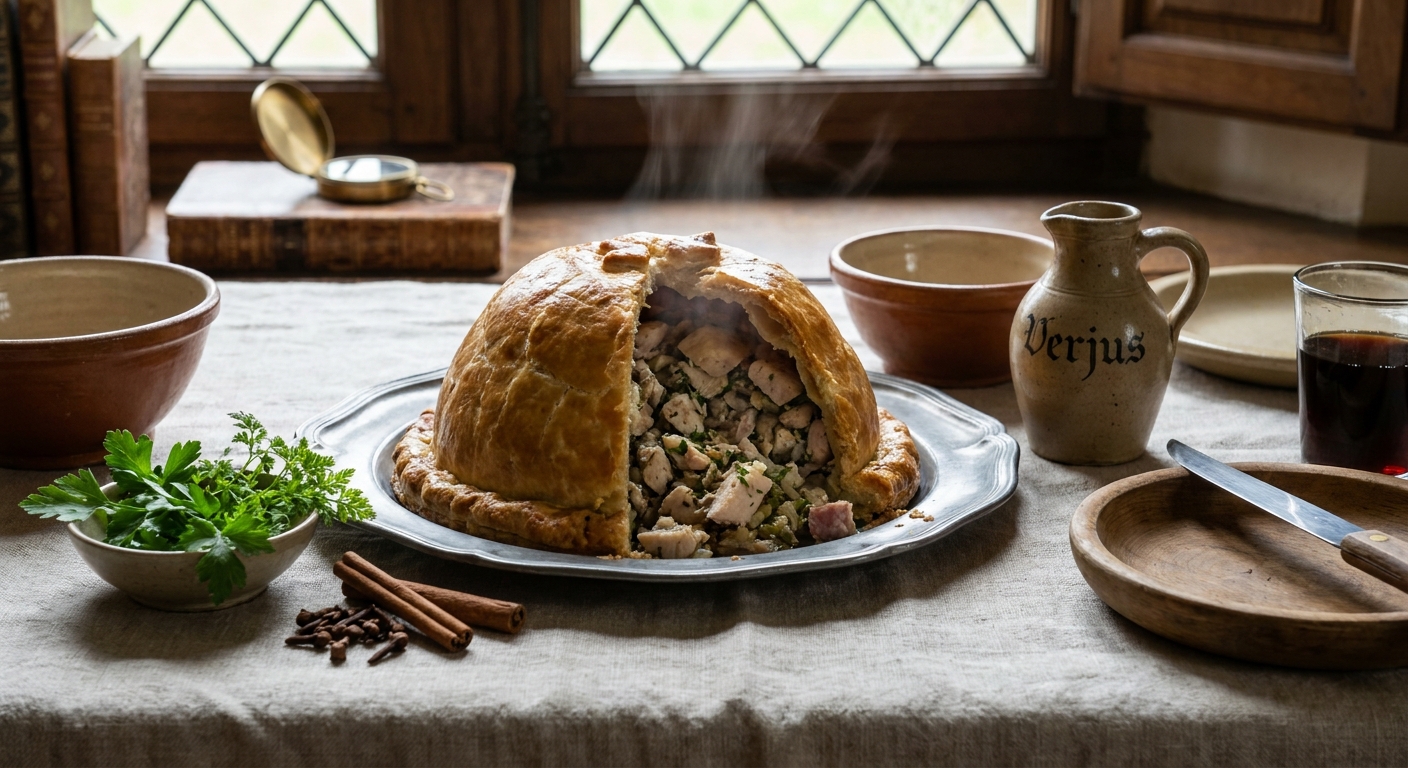
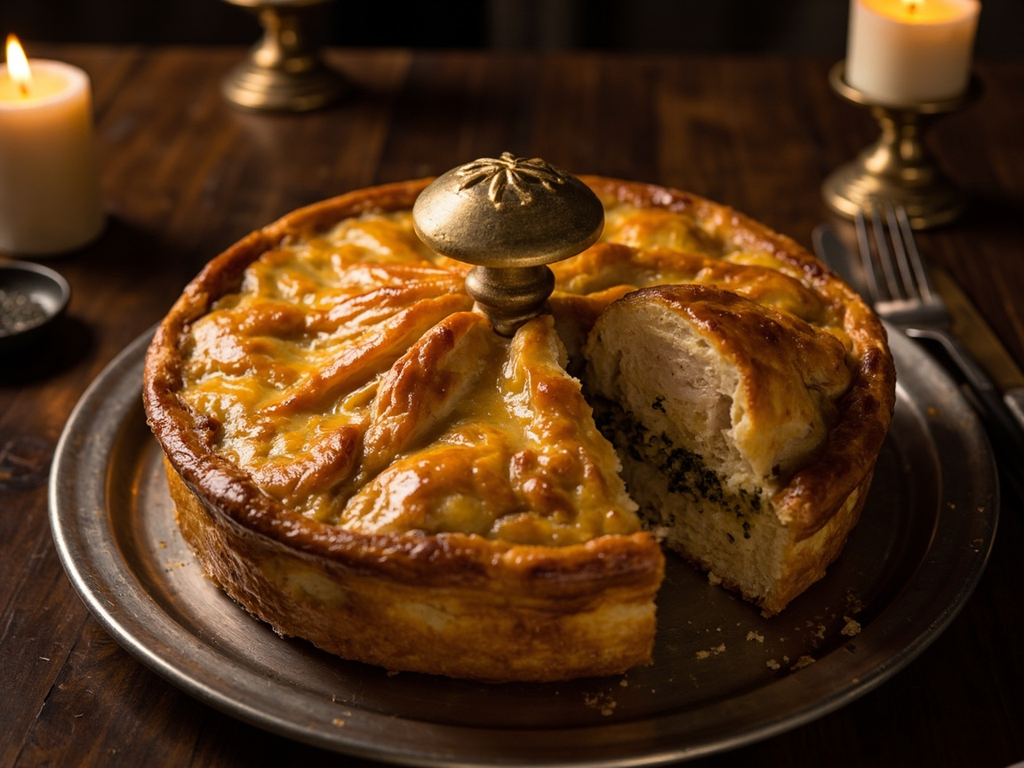
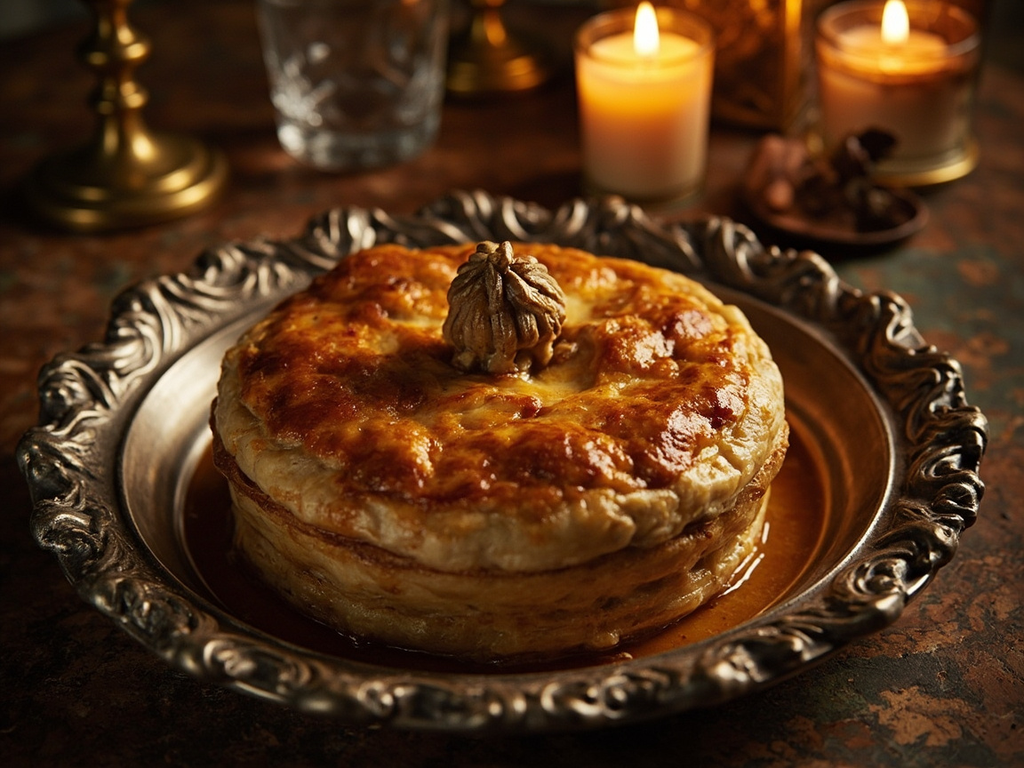
A golden pastry crust enclosing young chicken meat, fine herbs, and a touch of tangy verjuice. A showpiece dish, the centerpiece of grand 17th-century services.
Here you are at Versailles, and they have just laughed at one of my comedies — let us go into the kitchen while the King dines! Bone young chickens, mix them with fine herbs and a dash of verjuice to wake up the flavors, and enclose this company in a beautiful crust that must be egg-washed like a courtier's coat. Above all, not too many spices: we are no longer in our grandfathers' century! Let the meat keep its taste — that is all the finesse of today.
- •Grain-fed chickens — two young (main filling)
- •Pastry (flour, butter, eggs) — enough to line and cover (crust)
- •Verjuice (green grape juice) — a dash (acidity, signature of the century)
- •Fine herbs (parsley, chives) — a handful (flavor)
- •Butter — as needed (richness)
- •Nutmeg — a grating (mild spice, sparingly)
- •Egg yolk — one (glaze)
Grain-Fed Chicken Tourte with Verjuice
A golden pastry crust enclosing young chicken meat, fine herbs, and a touch of tangy verjuice. A showpiece dish, the centerpiece of grand 17th-century services.
Why this dish? Having become the king's favorite, Molière saw his troupe perform his comedy-ballets at the great festivities of Versailles (the Pleasures of the Enchanted Island, 1664). Garnished poultry tourtes, golden and sumptuous, appeared on those royal tables where he was invited after the show.
Here you are at Versailles, and they have just laughed at one of my comedies — let us go into the kitchen while the King dines! Bone young chickens, mix them with fine herbs and a dash of verjuice to wake up the flavors, and enclose this company in a beautiful crust that must be egg-washed like a courtier's coat. Above all, not too many spices: we are no longer in our grandfathers' century! Let the meat keep its taste — that is all the finesse of today.
Ingredients (period version)
- Grain-fed chickens — two young (main filling)
- Pastry (flour, butter, eggs) — enough to line and cover (crust)
- Verjuice (green grape juice) — a dash (acidity, signature of the century)
- Fine herbs (parsley, chives) — a handful (flavor)
- Butter — as needed (richness)
- Nutmeg — a grating (mild spice, sparingly)
- Egg yolk — one (glaze)
Ingredients
- Boneless free-range chicken breast and thighs — 500 g (filling)
- Shortcrust pastry — 2 discs (bottom and top) (crust)
- Verjuice (or lemon juice if unavailable) — 3 tbsp (acidity)
- Chopped parsley and chives — 1 handful (flavor)
- Butter — 40 g (richness)
- Grated nutmeg — 1 pinch (mild spice)
- Egg yolk + a little milk — 1 (glaze)
- Salt, pepper — to taste (seasoning)
Method
- Cut chicken into small pieces, sear in butter for a few minutes, season with salt.
- Off the heat, mix in herbs, nutmeg, and verjuice.
- Line a mold with pastry, fill with cooled chicken mixture, dot with butter.
- Cover with the second pastry disc, seal edges, make a chimney in the center.
- Brush with egg yolk and bake at 180°C for 40-45 minutes, until golden.
- Let rest 10 minutes before slicing.
How it was made : Tourtes were one of the great festive forms of the century: they were made with meat, poultry, and fish on lean days. Verjuice, juice of unripe grapes, was the reigning acidulant before lemon became widespread — it often replaced vinegar, considered too harsh for refined tables.
The contemporary twist : Trace a comedy mask on the pastry lid with a knife before glazing: the tourte makes an entrance before being devoured.
Sources : François Pierre de La Varenne, Le Pâtissier françois, 1653
Molière · Charactorium