 flip
flipChicken tourte with verjuice and fines herbes
Chicken tourte with verjuice and fines herbes
Why this dish? For feast days when Corneille entertains, a generous tourte is prepared: the pastry pie is the great prestige dish of the Grand Siècle, and the tangy verjuice that lifts it is the flavor reflex of French cuisine before the triumph of sugar.
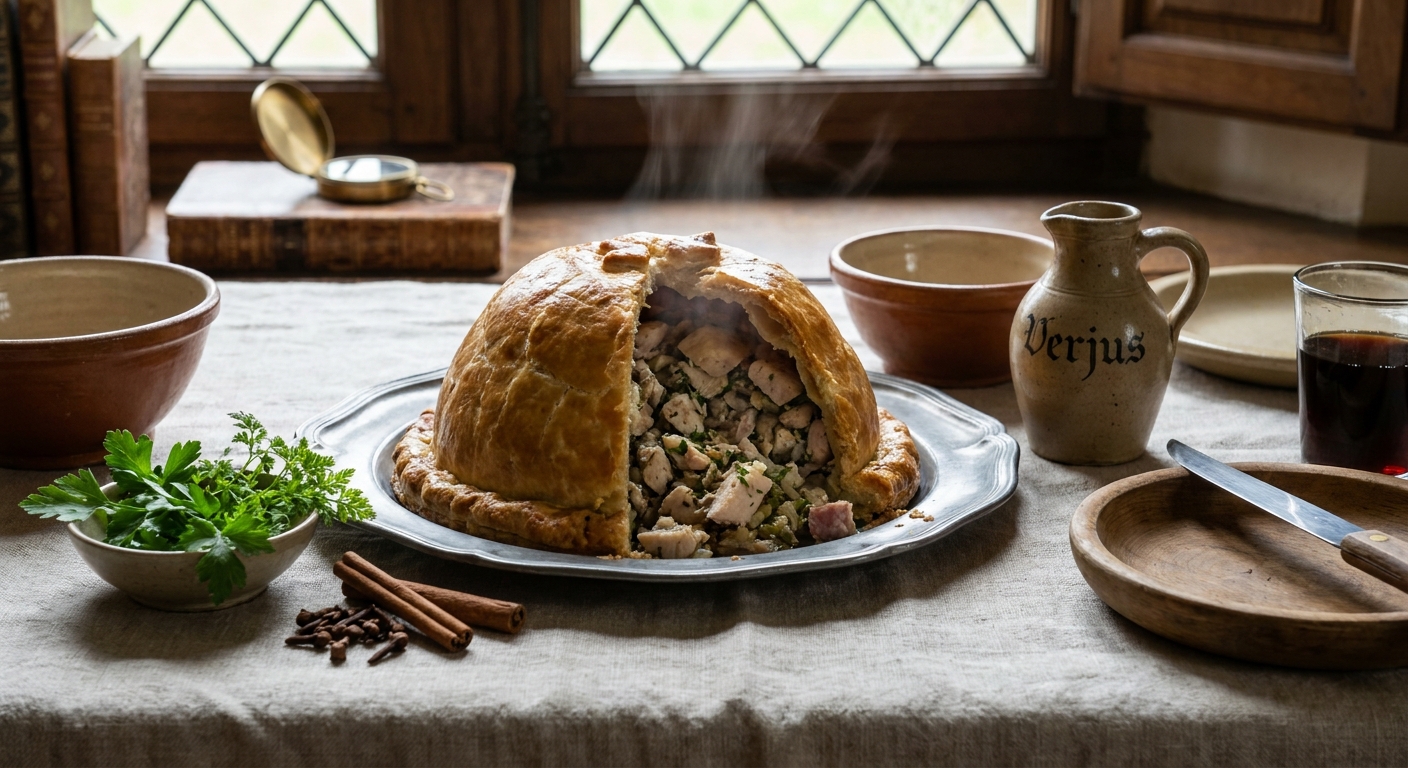
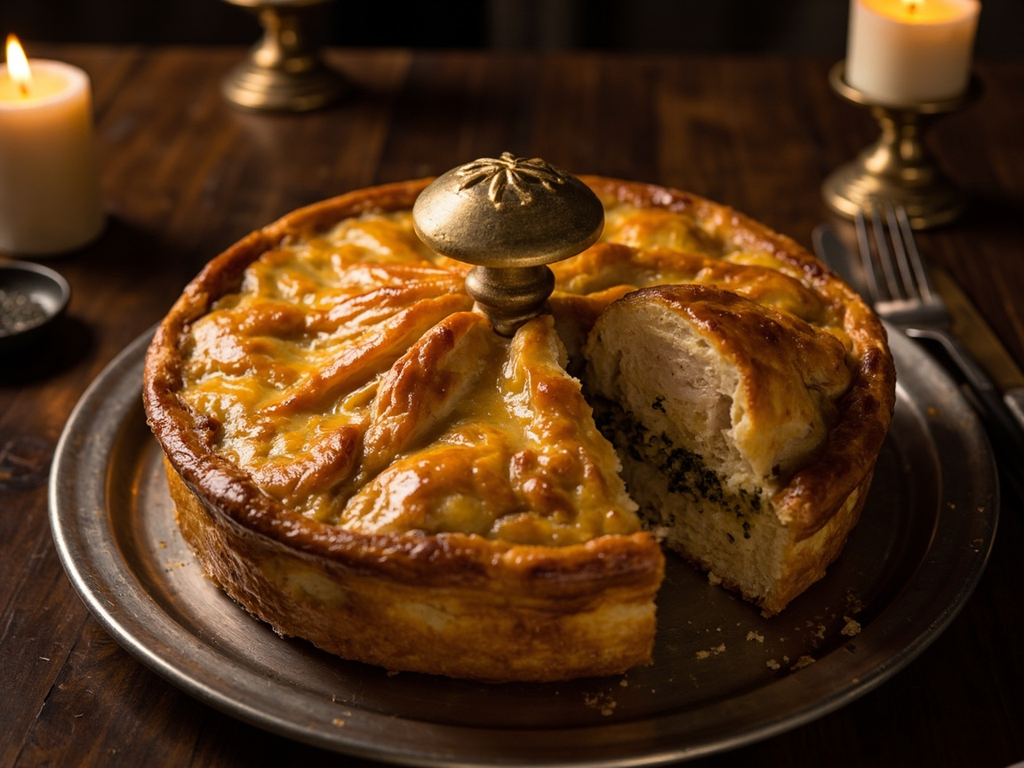
A golden tourte with a crisp crust, filled with tender chicken, fines herbes, and a hint of verjuice that awakens the palate. The dish that does honor to guests on the service tablecloth.
Ah, this one I serve only on days of rejoicing! Make a good butter pastry, fill it with minced chicken flesh, chopped fines herbes, and a spoonful of verjuice for the sour note — without sourness, believe me, the palate falls asleep. Glaze it with egg yolk, cap it with its crust, and put it in the oven until it sings. When you break it at table, the very fragrance earns you applause; and I confess I like a table to make an impression.
- •Chicken meat — one boned fowl (filling)
- •Verjuice — a dash (acidity)
- •Parsley, spring onion, fines herbes — a handful (aromatics)
- •Butter — generously (fat binder)
- •Eggs — two (glaze and binder)
- •Pie dough — two sheets (crust)
- •Nutmeg, salt — to taste (spices)
Chicken tourte with verjuice and fines herbes
A golden tourte with a crisp crust, filled with tender chicken, fines herbes, and a hint of verjuice that awakens the palate. The dish that does honor to guests on the service tablecloth.
Why this dish? For feast days when Corneille entertains, a generous tourte is prepared: the pastry pie is the great prestige dish of the Grand Siècle, and the tangy verjuice that lifts it is the flavor reflex of French cuisine before the triumph of sugar.
Ah, this one I serve only on days of rejoicing! Make a good butter pastry, fill it with minced chicken flesh, chopped fines herbes, and a spoonful of verjuice for the sour note — without sourness, believe me, the palate falls asleep. Glaze it with egg yolk, cap it with its crust, and put it in the oven until it sings. When you break it at table, the very fragrance earns you applause; and I confess I like a table to make an impression.
Ingredients (period version)
- Chicken meat — one boned fowl (filling)
- Verjuice — a dash (acidity)
- Parsley, spring onion, fines herbes — a handful (aromatics)
- Butter — generously (fat binder)
- Eggs — two (glaze and binder)
- Pie dough — two sheets (crust)
- Nutmeg, salt — to taste (spices)
Ingredients
- All-butter shortcrust pastry — 2 rolls (or homemade) (crust)
- Chicken breasts and thighs — 600 g (filling)
- Verjuice (or green grape juice / 2 tbsp lemon juice + water) — 5 cl (acidity)
- Parsley + chives + tarragon — 1 bunch (aromatics)
- Butter — 50 g (fat binder)
- Eggs — 2 (1 for glaze) (binder and glaze)
- Nutmeg — 1 pinch (spice)
- Salt, pepper — to taste (seasoning)
Method
- Cut the chicken into small dice. Sauté in butter for 5 minutes to sear without drying. Season with salt, pepper, and nutmeg.
- Off the heat, add the verjuice, finely chopped herbs, and 1 beaten egg to bind. Let cool slightly.
- Line a mold with one sheet of pastry. Fill with the chicken mixture.
- Cover with the second sheet, seal the edges, and cut a steam vent in the center.
- Glaze with beaten egg yolk. Bake at 190°C for about 35 minutes until the crust is golden brown.
- Let rest 10 minutes before breaking the tourte at the table.
How it was made : The tourte (or 'pâté en croûte') is the pinnacle of 17th-century culinary art, codified by masters like La Varenne (Le Cuisinier françois, 1651). Verjuice, pressed sour green grape juice, was the favorite acidulant of the era, long before lemon became common. Several tourtes were often served simultaneously during service à la française.
The contemporary twist : Served in individual portions with a drizzle of verjuice reduction as a shiny touch on the plate, like a bistronomic nod to the Grand Siècle.
Pierre Corneille · Charactorium