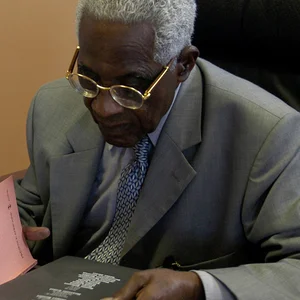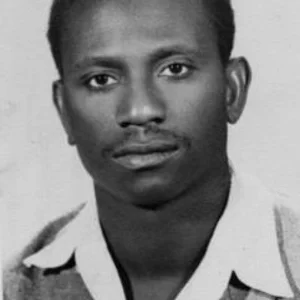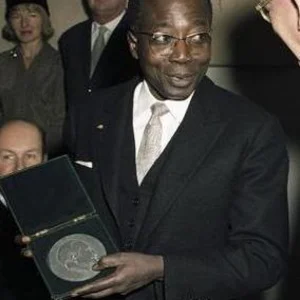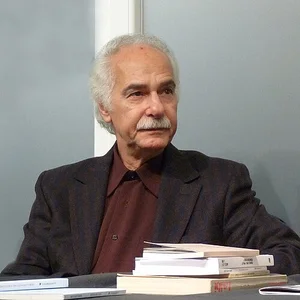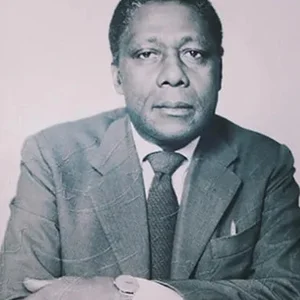

Mongo Beti (1932-2001) was a Cameroonian writer and teacher, a major figure of anticolonial French-language African literature. A committed novelist and essayist, he denounced colonialism and then the excesses of postcolonial regimes.
Mongo Beti(1932 — 2001)
Mongo Beti
France, Cameroun
6 min read
Frequently asked questions
Key Facts
- Born in 1932 in Akométam, near Mbalmayo (Cameroon), under the name Alexandre Biyidi Awala.
- Published “Ville cruelle” in 1954 under the pseudonym Eza Boto, then “Le Pauvre Christ de Bomba” (1956), a satire of colonial evangelization.
- Published “Mission terminée” in 1957, a novel awarded the Prix Sainte-Beuve.
- Had his essay “Main basse sur le Cameroun,” which denounced the regime of Ahmadou Ahidjo, seized and banned in 1972.
- Returned to Cameroon in 1991 after a long exile in France and died in Douala in 2001.
Works & Achievements
First novel, depicting the violence of the colonial city; marks the young writer's literary debut.
A satire of colonial evangelization, seen through the diary of a young houseboy; a major work of anticolonial criticism.
A coming-of-age novel awarded the Prix Sainte-Beuve in 1958, which established his reputation.
An ironic novel about the conversion of an African chief, before a long break from fiction.
A resounding political essay, seized in France, denouncing a stolen independence.
A novel paying tribute to the memory of nationalist leader Ruben Um Nyobè.
A novel denouncing oppression in postcolonial Cameroon through the fate of a woman.
A late novel, written after his return home, blending political satire with a detective plot.
Anecdotes
Before becoming “Mongo Beti,” the writer was in fact named Alexandre Biyidi-Awala. For his first novel, *Ville cruelle* (1954), he chose the pen name “Eza Boto.” Since writing against colonialism was dangerous, these assumed names protected his family back in Cameroon. “Mongo Beti” roughly means “the son of the Beti people,” his own ethnic group.
In 1972, his essay *Main basse sur le Cameroun* (Cruel Hand on Cameroon) accused both the former French colonizer and the regime of President Ahidjo. The book was immediately seized by the French police, on the orders of the Minister of the Interior, at the request of the Cameroonian government. Mongo Beti refused to stay silent: he took the matter to the Council of State and eventually obtained the lifting of the ban a few years later.
Mongo Beti lived more than thirty years in exile in France, unable to return home safely. To earn a living, he became a fully certified teacher of classical literature and taught Latin and Greek to French high school students, notably in **Rouen**. Many of his pupils had no idea that their teacher was a great writer banned in his own country.
Between his novel *Le Roi miraculé* (1958) and his major essay of 1972, Mongo Beti almost completely stopped publishing novels for nearly fourteen years. Disappointed by the African independences, he long preferred to stay silent rather than write books he considered useless, before returning to the fight through the political essay.
Back in Cameroon in 1991, after multiparty politics was authorized, he opened a bookshop in **Yaoundé** that he named “Librairie des Peuples Noirs” (Bookshop of the Black Peoples). Until his death, he sold books there while continuing to openly criticize those in power, turning his shop into a place of debate and intellectual resistance.
Primary Sources
The story takes the form of the diary of Denis, a young African houseboy in the service of Father Drumont, a missionary who believes he is saving souls while remaining blind to the ravages of colonial domination.
Subtitled “autopsy of a decolonization,” the book denounces a sham independence and the bloody repression of the UPC nationalist movement in Cameroon.
Founded with Odile Tobner, the journal sets itself the mission of giving Africans themselves a voice and of denouncing neocolonialism and the dictatorships backed from abroad.
A coming-of-age story in which Jean-Marie Medza, a young educated man sent to fetch a runaway wife from a village, discovers the gulf between the colonial education he has received and the wisdom of the world he comes from.
Key Places
Mongo Beti's native village, in southern Cameroon, at the heart of the Beti country from which he drew his pen name.
Where Mongo Beti pursued his higher studies in literature after leaving Cameroon. The French capital was also where his first novels were published.
The city where he attended the faculty of letters upon his arrival in France, before Paris.
Having become a certified senior teacher (agrégé), Mongo Beti taught classical literature here during his long French exile.
The capital where he returned in 1991 and opened the Librairie des Peuples Noirs, a hub of debate and criticism of those in power.
A major port city in Cameroon where Mongo Beti died in 2001.
Liens externes & ressources
Références
Œuvres
Ville cruelle (sous le nom Eza Boto)
1954
Le Pauvre Christ de Bomba
1956
Mission terminée
1957
Le Roi miraculé
1958
Main basse sur le Cameroun, autopsie d'une décolonisation
1972
Remember Ruben
1974
Perpétue et l'habitude du malheur
1974