 flip
flipKeşkek
Keşkek
Why this dish? Keşkek is the dish of great occasions in Seljuk Anatolia: weddings, circumcisions, religious festivals. Nasreddin, imam and kadi of Akşehir, presided over these ceremonies. His famous story of the banquet — where he arrives in simple clothes and is turned away, then returns wearing his beautiful fur cloak (kürk) and, once welcomed with honor, dips his sleeve into the dish saying 'Eat, my fur cloak, since you are the one who was invited' — takes place precisely around such a communal feast.
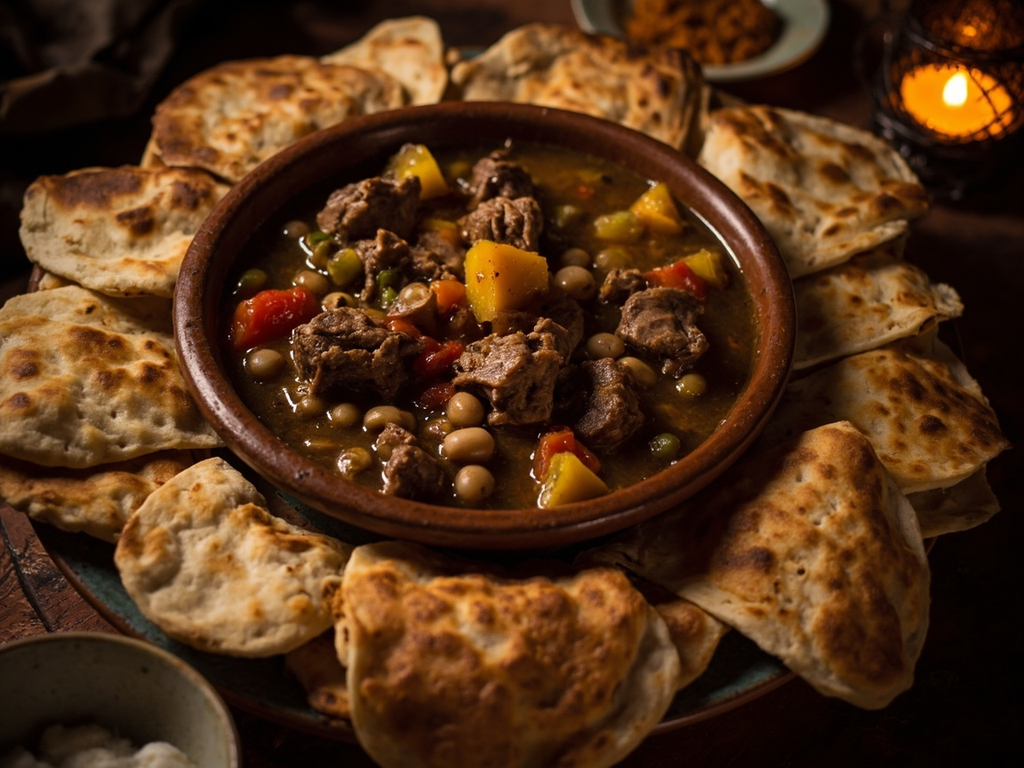
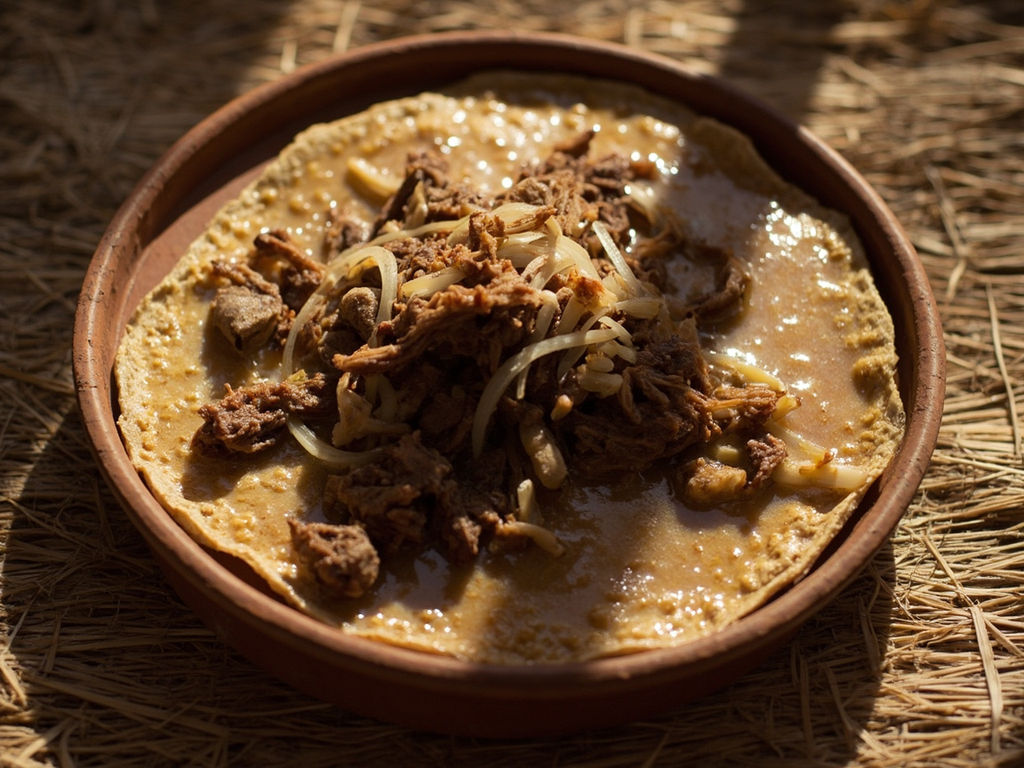
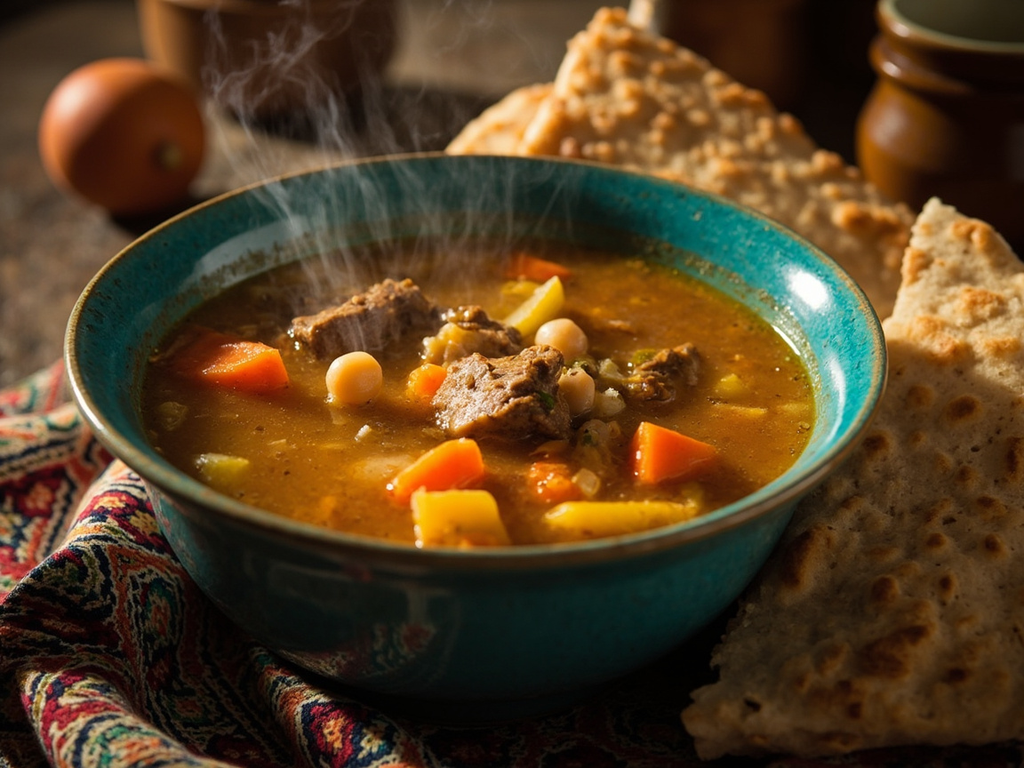
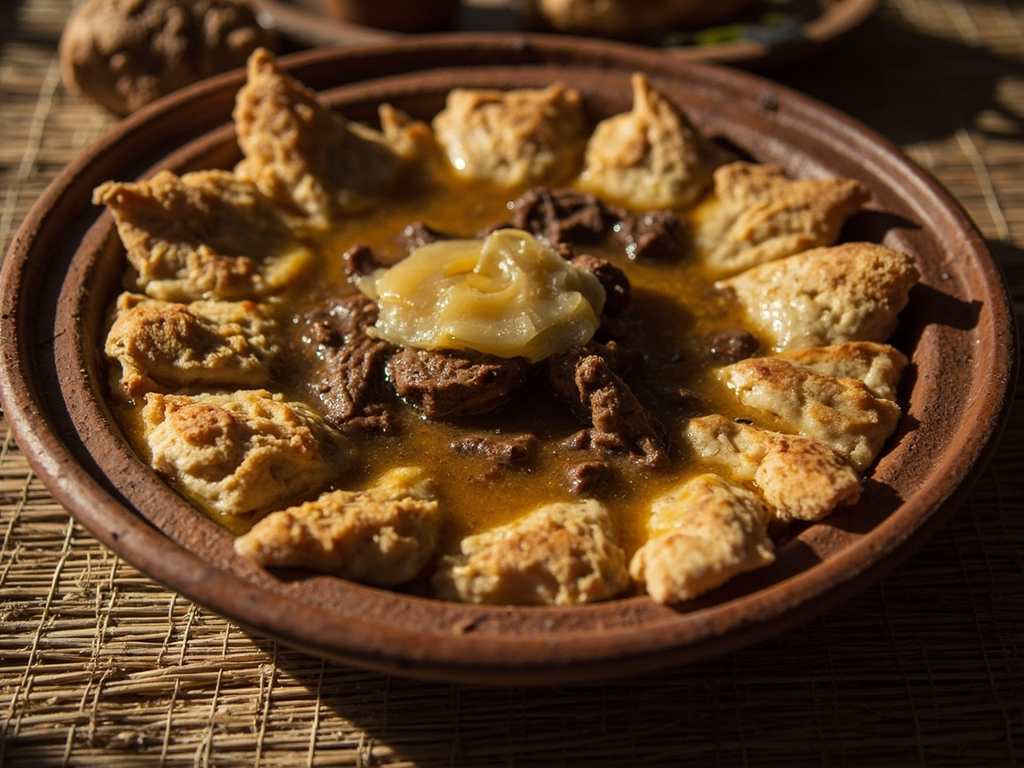
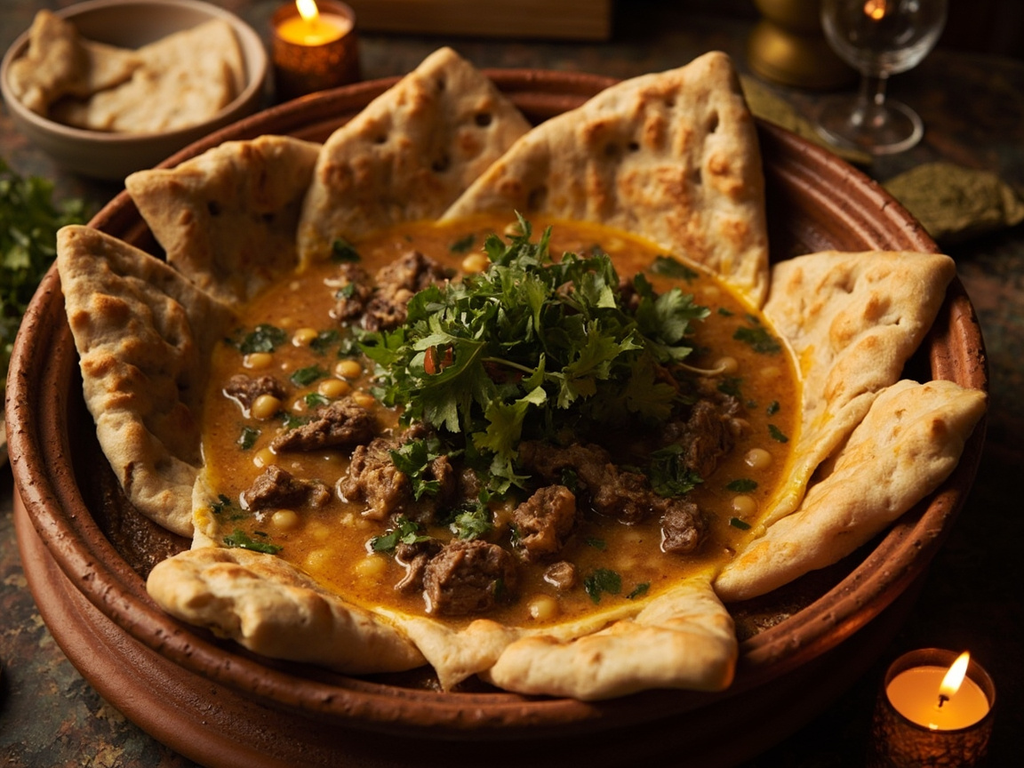
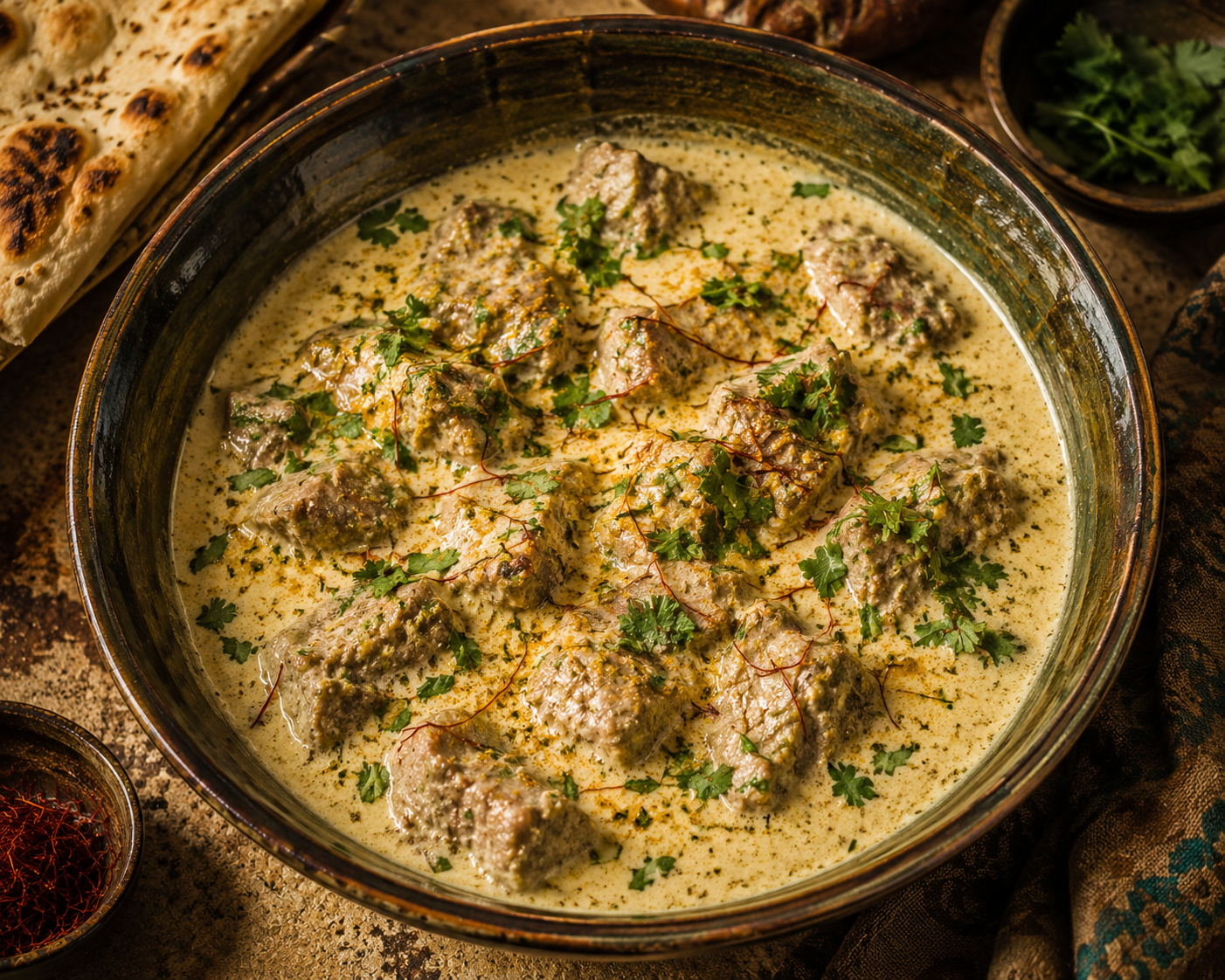
A thick, creamy porridge of cracked wheat slowly cooked with lamb, pounded until the meat is completely incorporated into the grains. A festive communal dish, prepared in large quantities in a cauldron and distributed to the whole neighborhood.
Ah, keşkek! We prepare it in the great cauldron, the very one that, it is said, gave birth to a small cauldron at my neighbor's — but that's another story. For a wedding in Akşehir, we pound the wheat and meat together all night, taking turns, until you can no longer tell one from the other. It is like wisdom and foolishness, you see: when you mix them long enough, you get something nourishing. The last time I was served keşkek, it was my fur cloak that ate — but it deserved it, since it was the one invited.
- •Hulled whole wheat (dövme) — A large bowl (Grain base)
- •Lamb shoulder on the bone — A good piece (Meat and stock)
- •Clarified butter — Generously (Fat and finishing)
- •Salt — To taste (Seasoning)
- •Water — Plenty (Long cooking)
Keşkek
A thick, creamy porridge of cracked wheat slowly cooked with lamb, pounded until the meat is completely incorporated into the grains. A festive communal dish, prepared in large quantities in a cauldron and distributed to the whole neighborhood.
Why this dish? Keşkek is the dish of great occasions in Seljuk Anatolia: weddings, circumcisions, religious festivals. Nasreddin, imam and kadi of Akşehir, presided over these ceremonies. His famous story of the banquet — where he arrives in simple clothes and is turned away, then returns wearing his beautiful fur cloak (kürk) and, once welcomed with honor, dips his sleeve into the dish saying 'Eat, my fur cloak, since you are the one who was invited' — takes place precisely around such a communal feast.
Ah, keşkek! We prepare it in the great cauldron, the very one that, it is said, gave birth to a small cauldron at my neighbor's — but that's another story. For a wedding in Akşehir, we pound the wheat and meat together all night, taking turns, until you can no longer tell one from the other. It is like wisdom and foolishness, you see: when you mix them long enough, you get something nourishing. The last time I was served keşkek, it was my fur cloak that ate — but it deserved it, since it was the one invited.
Ingredients (period version)
- Hulled whole wheat (dövme) — A large bowl (Grain base)
- Lamb shoulder on the bone — A good piece (Meat and stock)
- Clarified butter — Generously (Fat and finishing)
- Salt — To taste (Seasoning)
- Water — Plenty (Long cooking)
Ingredients
- Hulled whole wheat (or pearled spelt) — 300 g (Grain base)
- Lamb shoulder on the bone — 500 g (Meat)
- Butter — 60 g (Finishing)
- Salt — 1 tsp (Seasoning)
- Black pepper — 1/2 tsp (Seasoning)
- Water — 2 liters (Cooking)
Method
- The night before, soak the hulled wheat in cold water overnight.
- The next day, drain the wheat. In a large pot, place the lamb with the bone, cover generously with cold water, and bring to a boil. Skim.
- Add the drained wheat and salt. Reduce the heat to minimum and cook covered for 3-4 hours, stirring occasionally and adding water if needed.
- When the meat falls off the bone, remove the bone. Using a wooden pestle or a mixer, beat the mixture vigorously until it becomes a thick, stringy porridge where the meat is fully incorporated into the wheat.
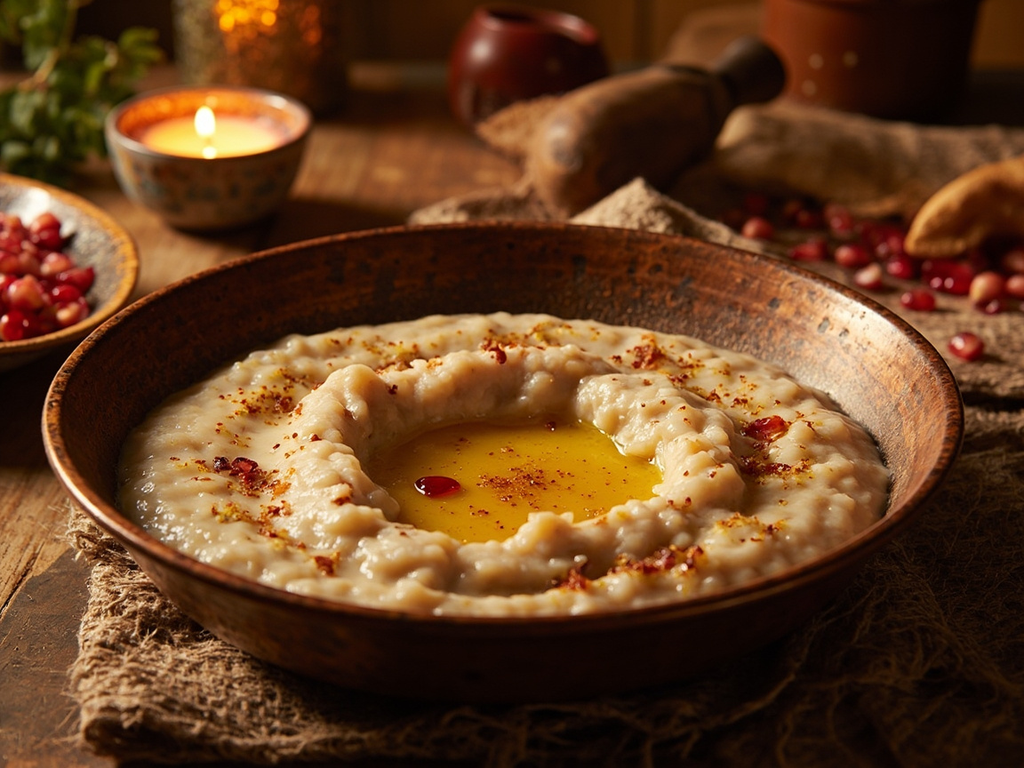
- Melt the butter until it turns hazelnut brown. Serve the keşkek on a large platter, make a well in the center, and pour the melted butter into it.
How it was made : Keşkek (also called herise/harissa in Arabic sources) is one of the oldest ceremonial dishes of Anatolia. Attested in Arabic culinary texts as early as the 10th century, it was the obligatory dish for Turkish village festivals. Its communal preparation — men taking turns pounding the wheat with a pestle in a large copper cauldron — was as much a social ritual as a culinary one. UNESCO inscribed it on the Intangible Cultural Heritage list in 2011 (tradition of Turkey).
The contemporary twist : Serve individual portions in deep bowls, with a well of hazelnut butter in the center, sprinkled with sumac and a few pomegranate seeds for color — a 'fur cloak keşkek'.
Sources : UNESCO, Keşkek tradition — Representative List of the Intangible Cultural Heritage of Humanity, 2011 · Charles Perry, A Baghdad Cookery Book (translation of al-Baghdadi's Kitab al-Tabikh, 13th c.), Prospect Books, 2005 · Priscilla Mary Işın, Bountiful Empire: A History of Ottoman Cuisine, Reaktion Books, 2018
Nasreddin Hodja · Charactorium