 flip
flipShorpa-yi Taikazan (Lamb Soup from the Great Cauldron)
Shorpa-yi Taikazan (Lamb Soup from the Great Cauldron)
Why this dish? The Taikazan — a huge bronze cauldron — is the emblematic object of the mausoleum of Ahmad Yasawi in Turkestan. Commissioned by Tamerlane in the 14th century in homage to the saint, it was used to prepare shorpa distributed to pilgrims and the poor during religious festivals. This tradition of communal soup is directly linked to the Yasawi khanqah, where shared meals structured spiritual life.
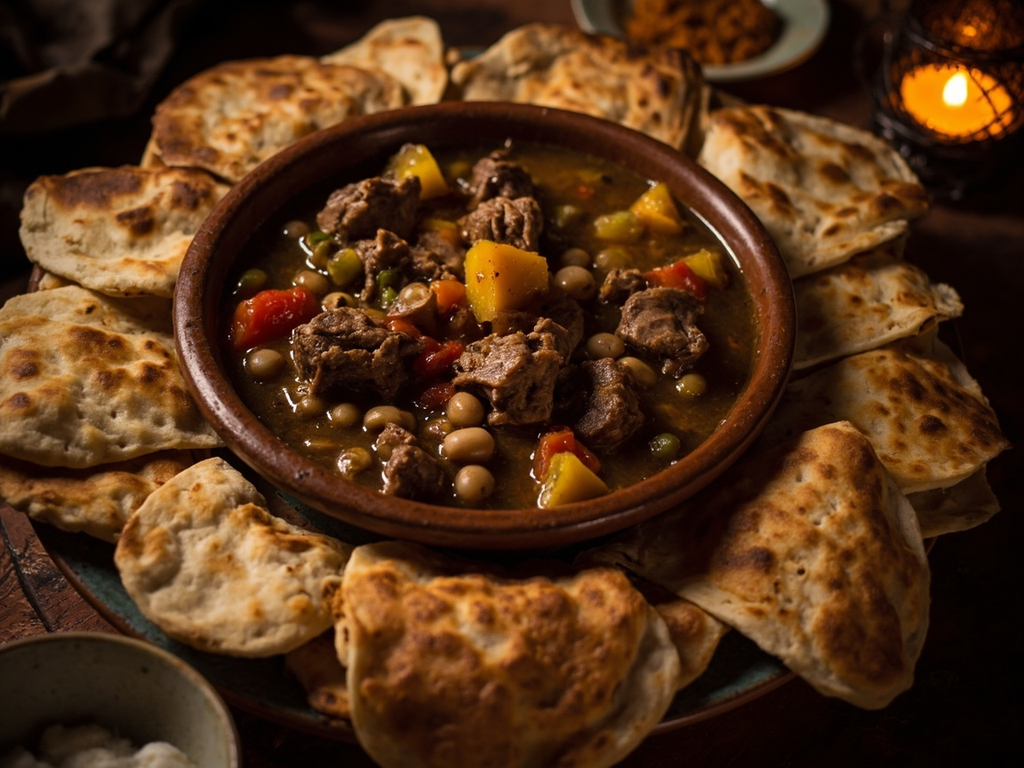
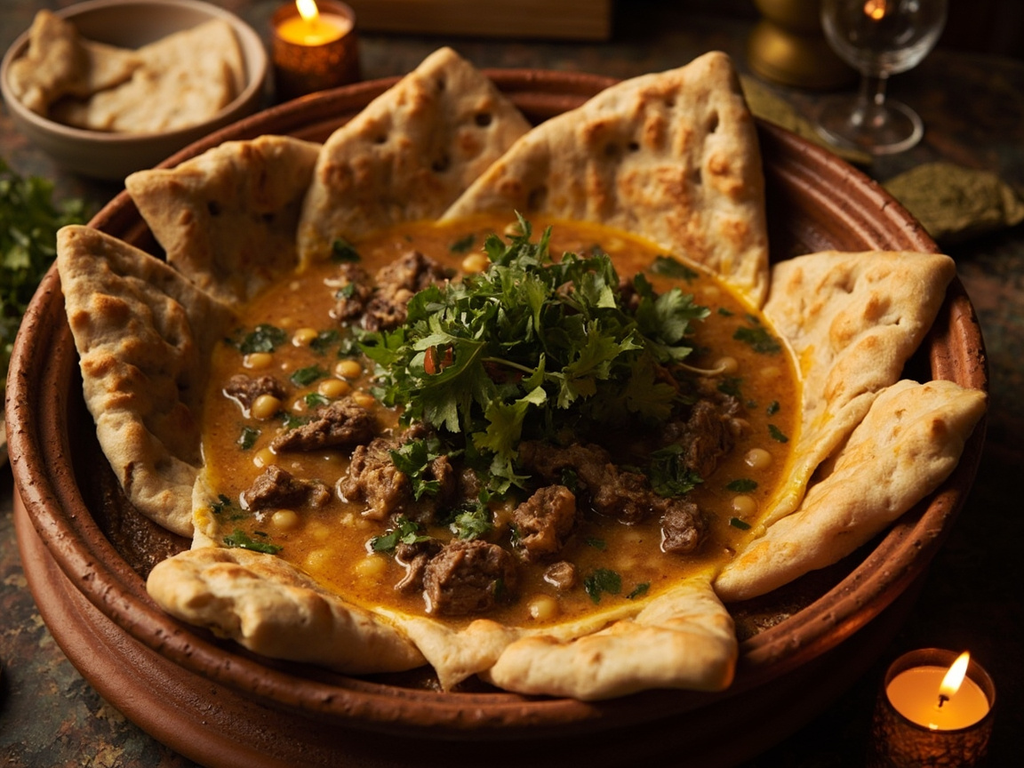
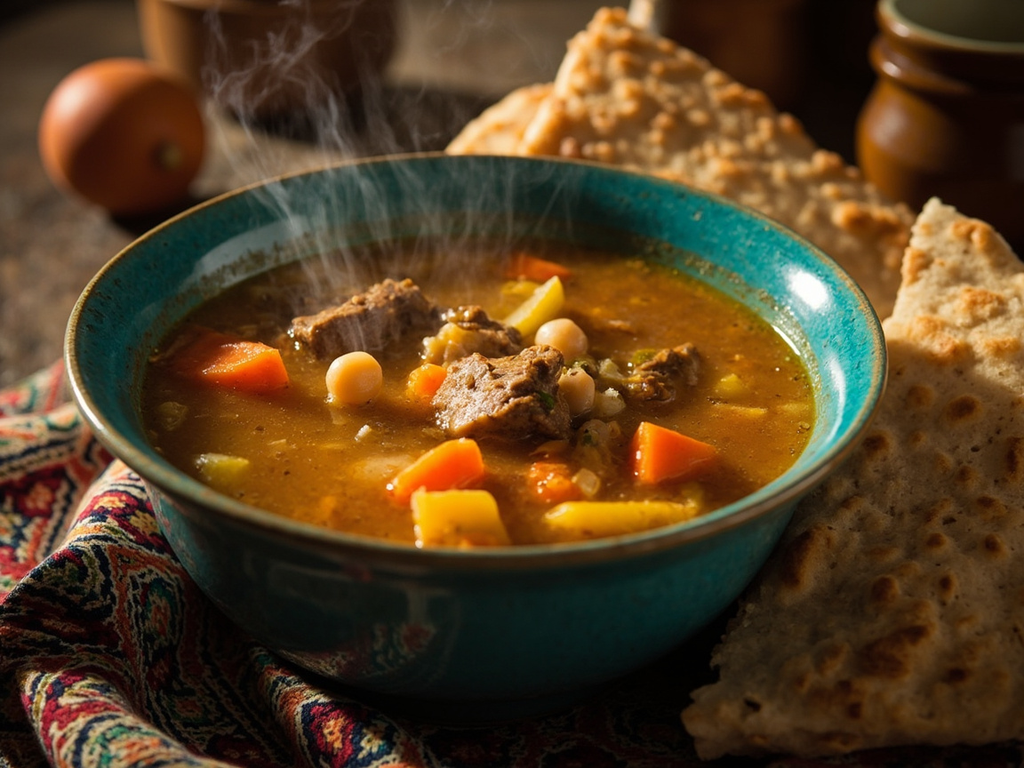
A hearty soup made with lamb pieces, turnips, yellow carrots, and chickpeas, long-simmered in a large cauldron. The broth absorbs the juices of the meat and root vegetables, becoming rich and golden. Served in wide bowls with barley bread for dipping.
When the great cauldron sings over the fire, it is the voice of mercy rising. We throw in the lamb that the shepherd offered, the turnips from the garden, the chickpeas swollen since dawn. Each receives his share — the beggar as well as the merchant from Bukhara. Salt and cumin suffice: the true flavor is that of sharing. Draw near your bowl, traveler, and let this warmth descend into your soul.
- •Lamb on the bone — A good portion (Meat and broth base)
- •Turnips — A few, cut into quarters (Root vegetable)
- •Yellow carrots — A few (Sweetness and color)
- •Dried chickpeas — A handful, soaked (Substance)
- •Onion — One large (Aromatic base)
- •Cumin seeds — A generous pinch (Main spice)
- •Rock salt — To taste (Seasoning)
- •Water — Enough to cover generously (Broth)
- •Fat tail (kurdiuk) — A piece (Cooking fat)
Shorpa-yi Taikazan (Lamb Soup from the Great Cauldron)
A hearty soup made with lamb pieces, turnips, yellow carrots, and chickpeas, long-simmered in a large cauldron. The broth absorbs the juices of the meat and root vegetables, becoming rich and golden. Served in wide bowls with barley bread for dipping.
Why this dish? The Taikazan — a huge bronze cauldron — is the emblematic object of the mausoleum of Ahmad Yasawi in Turkestan. Commissioned by Tamerlane in the 14th century in homage to the saint, it was used to prepare shorpa distributed to pilgrims and the poor during religious festivals. This tradition of communal soup is directly linked to the Yasawi khanqah, where shared meals structured spiritual life.
When the great cauldron sings over the fire, it is the voice of mercy rising. We throw in the lamb that the shepherd offered, the turnips from the garden, the chickpeas swollen since dawn. Each receives his share — the beggar as well as the merchant from Bukhara. Salt and cumin suffice: the true flavor is that of sharing. Draw near your bowl, traveler, and let this warmth descend into your soul.
Ingredients (period version)
- Lamb on the bone — A good portion (Meat and broth base)
- Turnips — A few, cut into quarters (Root vegetable)
- Yellow carrots — A few (Sweetness and color)
- Dried chickpeas — A handful, soaked (Substance)
- Onion — One large (Aromatic base)
- Cumin seeds — A generous pinch (Main spice)
- Rock salt — To taste (Seasoning)
- Water — Enough to cover generously (Broth)
- Fat tail (kurdiuk) — A piece (Cooking fat)
Ingredients
- Lamb shoulder on the bone — 800 g (Meat and broth base)
- Turnips — 2 medium (250 g) (Root vegetable)
- Carrots — 2 (200 g) (Sweetness)
- Dried chickpeas — 100 g (soaked overnight) (Substance)
- Yellow onion — 1 large (Aromatic base)
- Cumin seeds — 1 tbsp (Main spice)
- Vegetable oil or lamb fat — 2 tbsp (Cooking fat)
- Salt — 2 tsp (Seasoning)
- Water — 2.5 liters (Broth)
- Fresh cilantro — 1 small bunch (Finish)
Method
- The night before, soak the chickpeas in plenty of cold water.
- Cut the lamb shoulder into pieces with the bone. Slice the onion. Peel and cut turnips and carrots into large chunks.
- In a large pot, heat the fat over high heat. Brown the lamb pieces on all sides (5-7 min).
- Add the onion, cook 3 minutes. Add the cumin, stir for 30 seconds until fragrant.
- Pour in the water, add the drained chickpeas and salt. Bring to a boil, skim carefully, then reduce to low heat.
- Simmer covered for 1 hour. Add turnips and carrots, continue for 30-40 minutes until the meat falls off the bone.
- Adjust seasoning. Serve in large bowls, meat at the bottom, golden broth on top, sprinkled with chopped cilantro.
How it was made : Medieval Central Asian shorpa was prepared in large bronze or tinned copper cauldrons (kazan). Fat from the lamb's tail (kurdiuk) replaced any other fat. Chickpeas, brought by caravans from Transoxiana, were a festive addition. Cumin, grown locally, was the dominant spice in Turkish cuisines before the late arrival of chili.
The contemporary twist : Serve in a turquoise blue ceramic bowl reminiscent of the Timurid faience of the Turkestan mausoleum.
Sources : Mack, Glenn R., Food Culture in Russia and Central Asia, Greenwood Press, 2005 · Zakhidov, P., Le mausolée de Khoja Ahmed Yasawi, UNESCO, 2003
Ahmad Yasawi · Charactorium