 flip
flipPestil (dried fruit leather)
Pestil (dried fruit leather)
Why this dish? Nasreddin regularly traveled between Hortu, Sivrihisar, and Akşehir, perched on his donkey. Pestil — dried fruit leather, light, nourishing, and non-perishable — is the ideal travel provision for the Anatolian wayfarer. Several of his anecdotes take place on the road, and a man traveling with a stubborn donkey needs a snack that neither heat nor jolts can spoil.
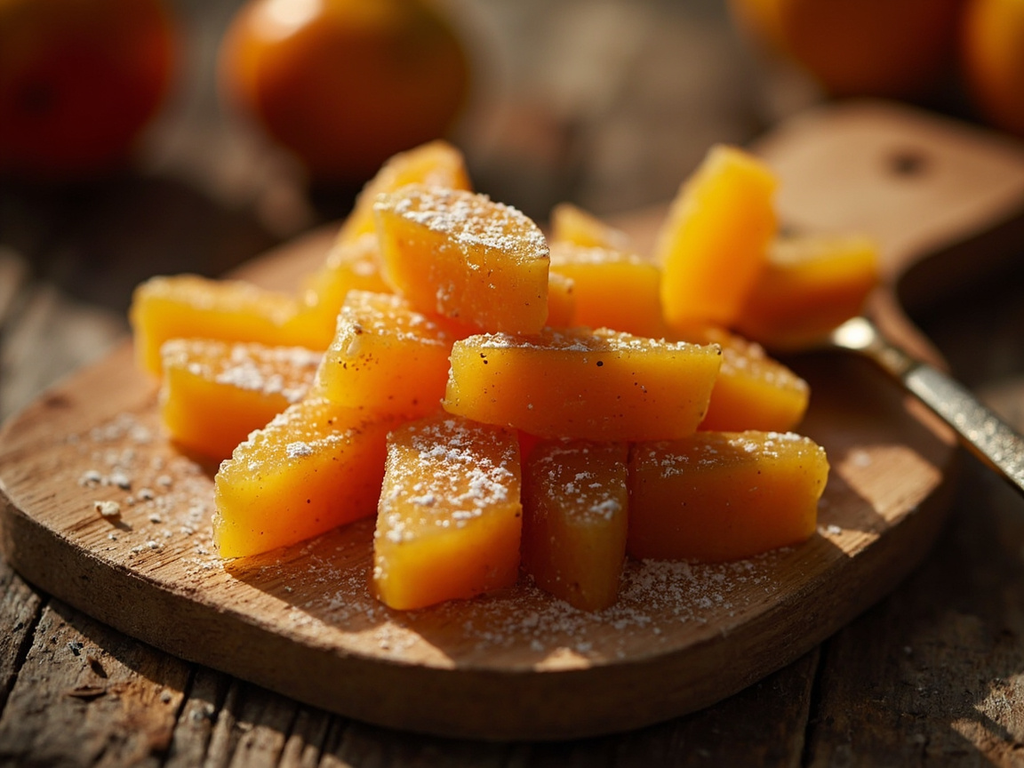
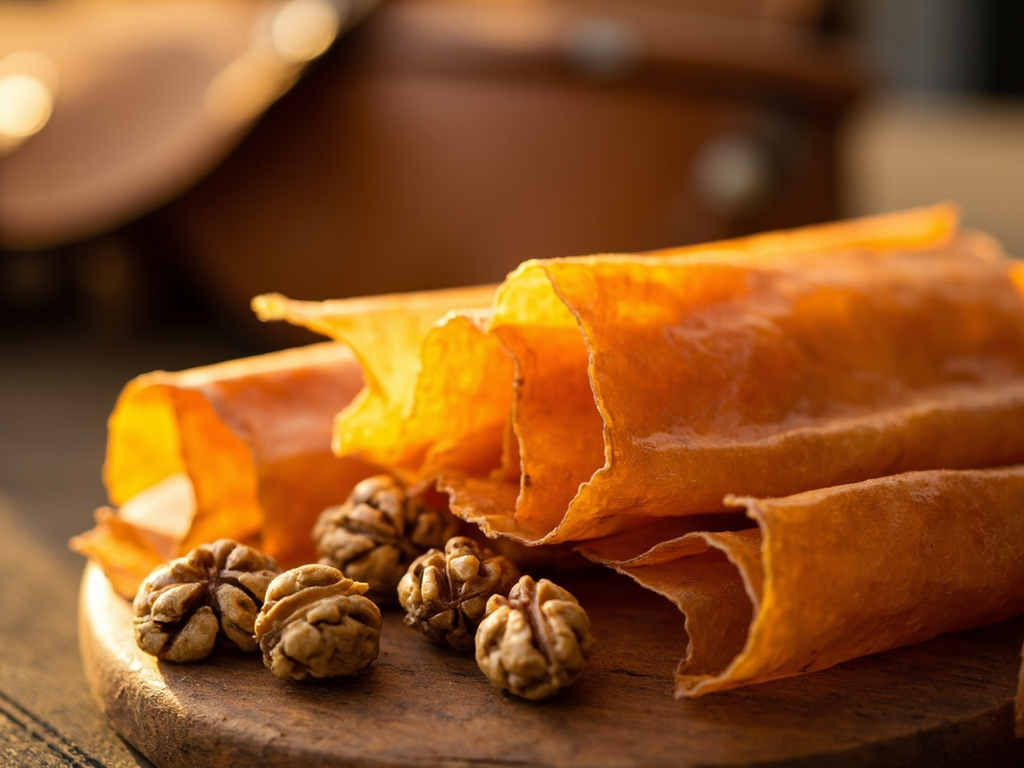
Thin translucent sheets of fruit pulp (grape, apricot, mulberry) spread and dried in the sun. Naturally sweet, supple and light, they keep for months and are eaten as is or rolled around walnuts.
My donkey and I share one thing: we don't like being hungry on the road. The difference is that he eats the thistle by the wayside, and I unroll a sheet of pestil that I forgot in my saddlebag last summer. It's still good! The sun of Akşehir dried it, time forgot it, and I find it just when I need it. That is exactly like wisdom: you prepare it when all is well, you dry it quietly, and you find it intact when the road is long.
- •Very ripe grapes or apricots — A large basket (Fruit base)
- •Starch (nişasta) — A little to thicken (Binder)
- •Crushed walnuts — A handful (optional) (Filling)
Pestil (dried fruit leather)
Thin translucent sheets of fruit pulp (grape, apricot, mulberry) spread and dried in the sun. Naturally sweet, supple and light, they keep for months and are eaten as is or rolled around walnuts.
Why this dish? Nasreddin regularly traveled between Hortu, Sivrihisar, and Akşehir, perched on his donkey. Pestil — dried fruit leather, light, nourishing, and non-perishable — is the ideal travel provision for the Anatolian wayfarer. Several of his anecdotes take place on the road, and a man traveling with a stubborn donkey needs a snack that neither heat nor jolts can spoil.
My donkey and I share one thing: we don't like being hungry on the road. The difference is that he eats the thistle by the wayside, and I unroll a sheet of pestil that I forgot in my saddlebag last summer. It's still good! The sun of Akşehir dried it, time forgot it, and I find it just when I need it. That is exactly like wisdom: you prepare it when all is well, you dry it quietly, and you find it intact when the road is long.
Ingredients (period version)
- Very ripe grapes or apricots — A large basket (Fruit base)
- Starch (nişasta) — A little to thicken (Binder)
- Crushed walnuts — A handful (optional) (Filling)
Ingredients
- Ripe apricots (or unfiltered grape juice) — 1 kg (Fruit base)
- Cornstarch or wheat starch — 2 tbsp (Binder)
- Walnut halves — 50 g (optional) (Filling to roll inside)
Method
- Wash and pit the apricots. Blend into a smooth puree. Strain if necessary to remove fibers.
- Pour the puree into a heavy-bottomed saucepan. Dissolve the starch in a little cold water and stir into the puree.
- Cook over low heat, stirring constantly, for 10-15 minutes until thickened.
- Spread the puree in a very thin layer (2-3 mm) on a baking sheet lined with lightly oiled parchment paper.
- Leave to dry in the sun for 2-3 days (or in the oven at 60°C for 6-8 hours, door ajar) until the sheet is pliable and peels off easily.
- Cut into rectangles, optionally roll around walnut halves. Store in a dry place.
How it was made : Pestil (also bastık) is a fruit preservation technique attested in Anatolia and the Caucasus since antiquity. In the Sivrihisar-Akşehir region in the 13th century, they mainly used grapes (spread grape pekmez) and apricots (the Malatya region, further east, was already a center). The sheets were dried on large cloths stretched over flat roofs in summer, a scene still visible in central Anatolian villages today.
The contemporary twist : Roll the sheets into tight spirals around crushed pistachios and slice into rounds, like sweet makis — 'Hodja rolls'.
Sources : Priscilla Mary Işın, Sherbet and Spice: The Complete Story of Turkish Sweets and Desserts, I.B. Tauris, 2013
Nasreddin Hodja · Charactorium