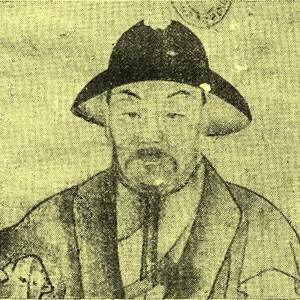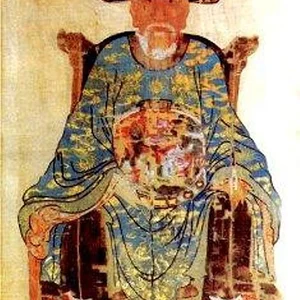

Nguyễn Trãi (1380–1442) was a Vietnamese scholar, poet, and statesman, a central figure in the resistance against Ming occupation of Đại Việt. Strategic adviser to Lê Lợi during the Lam Sơn uprising, he is one of the founding fathers of the Hậu Lê dynasty and a cornerstone of classical Vietnamese literature.
Nguyễn Trãi
Nguyễn Trãi
10 min read
Frequently asked questions
Key Facts
- 1380: born in Nhị Khê (present-day Thường Tín district, Hanoi) into a family of high-ranking scholars connected to the Trần royal lineage
- 1400: awarded the Thái học sinh degree (equivalent to a doctorate in letters) under the Hồ dynasty; appointed as a censor (Ngự sử đài Chính chưởng)
- 1407: Ming invasion — his father Nguyễn Phi Khanh is captured and deported to China; Nguyễn Trãi enters a decade of wandering
- 1418–1428: diplomatic and strategic adviser to the Lam Sơn uprising led by Lê Lợi, then a senior official of the new Hậu Lê dynasty
- 1442: condemned to the extermination of three clans (tru di tam tộc) in the Lệ Chi Viên affair; rehabilitated in 1464 by King Lê Thánh Tông
Works & Achievements
Written in the name of Lê Lợi, these letters addressed to Ming generals and governors combined legal arguments, peace proposals, and psychological pressure. They aimed to divide the enemy and legitimize the independence of Đại Việt — an early example of written diplomacy as a weapon of war [1].
Poems composed during the years of flight and wandering following the fall of the Hồ dynasty, evoking places in Đại Việt and China. These texts are among the rare surviving accounts of the darkest and most painful period of Nguyễn Trãi's life [1].
Anecdotes
In 1407
when Ming troops captured his father Nguyễn Phi Khanh
Nguyễn Trãi followed him with his brother as far as the Nam Quan pass
at the edge of the country. His father told him:
You are learned and talented — find a way to wash away the country's shame and avenge your father. That is true filial piety." Nguyễn Trãi, tears in his eyes, turned back and devoted his life to the liberation of Đại Việt [1].
Imprisoned in Đông Quan (present-day Hanoi) by Ming general Trương Phụ, who sought to have him eliminated, Nguyễn Trãi was spared thanks to the intervention of senior official Hoàng Phúc. Struck by his "extraordinary" face, Hoàng Phúc persuaded Trương Phụ to keep him under house arrest rather than execute him [1].
According to the chronicler Phan Huy Chú in the *Lịch triều hiến chương loại chí*, after escaping Ming surveillance, Nguyễn Trãi spent a night at an inn near the Trấn Vũ temple. There he had a dream in which a spirit revealed to him the name and identity of Lê Lợi, the future leader of the Lam Sơn resistance. He then set off to join him [1].
Nguyễn Trãi's birth is tied to a clandestine affair: his father Nguyễn Phi Khanh, a tutor hired by grand minister Trần Nguyên Đán for his daughters, became romantically involved with one of them. When the pregnancy was discovered, the couple fled, but the grandfather called them back and gave his daughter in marriage — a union that King Trần Nghệ Tông nonetheless considered an act of insolence on the part of a subordinate toward his superior [1].
In 1442, at the age of sixty-two, Nguyễn Trãi was implicated in the mysterious "Lệ Chi Viên incident
during which King Lê Thái Tông died. Accused of complicity, he and his entire family were sentenced to the harshest punishment in medieval Vietnamese law: the extermination of the three family lines (*tru di tam tộc*). It was not until twenty-two years later, in 1464, that King Lê Thánh Tông officially rehabilitated him by royal decree [1].
Primary Sources
Bọn Trần Nhật Chiêu, Nguyễn Phi Khanh, Nguyễn Cẩn, Đỗ Mãn đã hàng quân Minh trước rồi. [Figures such as Trần Nhật Chiêu, Nguyễn Phi Khanh, Nguyễn Cẩn, and Đỗ Mãn had already surrendered to the Ming troops.]
Tổng binh Trương Phụ ép Nguyễn Phi Khanh viết thư gọi ông... Thượng thư Hoàng Phúc thấy mặt mũi khác thường, tha cho và giam lỏng ở thành Đông Quan. [General Trương Phụ forced Nguyễn Phi Khanh to write a letter calling upon his son... Hoàng Phúc, struck by the young man's remarkable appearance, spared his life and kept him under house arrest in Đông Quan.]
Nhà Hồ mất, ông về ở ẩn. [After the fall of the Hồ dynasty, he withdrew into a life of seclusion.]
Nhà Hồ mất, ông tránh loạn ở Côn Sơn. [After the fall of the Hồ dynasty, he fled the turmoil and took refuge at Côn Sơn.]
Key Places
Birthplace of Nguyễn Trãi, in the present-day commune of Nhị Khê, Thường Tín district, Hà Nội. It was here that he grew up, raised by his father after his mother's early death, before moving to the household of his maternal grandfather Trần Nguyên Đán [1].
The border between Đại Việt and China, site of the defining scene in which Nguyễn Trãi accompanied his captured father to the threshold of exile. The parting words his father spoke here — "wash away the country's disgrace" — shaped his entire political and military trajectory [1].
The former capital of Đại Việt, renamed Đông Quan by the Ming occupiers. It was here that Nguyễn Trãi was kept under house arrest after being forced to surrender — spared by Hoàng Phúc but compelled to idleness throughout his years of wandering [1].
The ancestral estate of Nguyễn Trãi's maternal family, associated with Trần Nguyên Đán. According to the chroniclers Lê Quý Đôn and Phạm Đình Hổ, Nguyễn Trãi took refuge here during his years of wandering following the fall of the Hồ dynasty, seeking to escape the turmoil of the Ming occupation [1].
Birthplace of the uprising led by Lê Lợi against the Ming, beginning in 1418. It was here that Nguyễn Trãi joined the resistance and became its chief literary and diplomatic adviser, composing the letters that would contribute to the victory of 1428 [1].
A lychee orchard where King Lê Thái Tông died in 1442 under circumstances left unexplained by the sources. This "Lệ Chi Viên incident" led to Nguyễn Trãi's death sentence and the extermination of his three family lines (*tru di tam tộc*) [1].
Typical Objects

The central tool of the medieval Vietnamese scholar, the animal-hair brush was used to write poems, official memorials, and diplomatic correspondence in chữ Hán (Chinese characters). Nguyễn Trãi used such brushes to compose his letters to the Ming commanders as well as his poetic works, which have survived to this day [1].

A flat stone surface on which the scholar ground his ink stick with water to prepare calligraphy ink. A symbol of intellectual work and Confucian culture, it sat alongside the brush on the desk of every scholar-official at court [1].

The Four Books and Five Classics of Confucianism, which Nguyễn Trãi had mastered to perfection — knowledge that allowed him to pass the Thái học sinh examination in 1400. Command of these foundational texts was the basis of the intellectual and moral authority held by senior officials in Đại Việt [1].

A small rectangular tablet of ivory or lacquered wood that senior officials held before them during royal audiences. As Nhập nội hành khiển and later Thượng thư, Nguyễn Trãi carried this badge of office at official ceremonies under the early kings of the Hậu Lê dynasty [1].

A metal engraved stamp used to authenticate official documents and diplomatic correspondence. As the chief drafter of letters sent to the Ming commanders in the name of Lê Lợi, Nguyễn Trãi used seals to validate these texts, which carried enormous political weight [1].
School Curriculum
Vocabulary & Tags
Key Vocabulary
Daily Life
Morning
The scholar-official rose before dawn to study the Confucian Classics and practice calligraphy. In his roles at the Hậu Lê court — Nhập nội hành khiển and then Thượng thư — Nguyễn Trãi spent the early hours drafting memorials and official reports in chữ Hán for the king [1].
Afternoon
Afternoons were taken up by court audiences and diplomatic missions. During the ten years of the Lam Sơn uprising (1418–1427), Nguyễn Trãi devoted his afternoons to composing letters to Ming commanders — texts that became one of the resistance's most powerful weapons [1].
Evening
In the evenings, the scholar wrote poetry and meditated. The verses Nguyễn Trãi composed during his ten years of wandering (1407–1417) bear witness to solitary nights far from his homeland, moving between Đông Quan, Côn Sơn, and other places of refuge, in search of a leader worthy of his service [1].
Food
The diet of a fifteenth-century Vietnamese scholar rested principally on rice, vegetables, and freshwater fish. During his years of flight and wandering between 1407 and 1417, Nguyễn Trãi very likely endured precarious conditions; precise details about his diet are not documented in the source [1].
Clothing
Senior officials at the Hậu Lê court wore embroidered formal robes denoting their rank, with a belt and headdress matching their grade. Nguyễn Trãi, elevated to the rank of Thượng thư (minister), dressed in high ceremonial attire on formal occasions; precise details about his clothing are not documented in the source [1].
Housing
Nguyễn Trãi grew up in the village of Nhị Khê and later in the residence of his grandfather Trần Nguyên Đán. During his years of wandering he took refuge notably at Côn Sơn. After the Lam Sơn victory (1428), he resided in Thăng Long (formerly Đông Quan) as a senior dignitary of the Hậu Lê [1].
Historical Timeline
Period Vocabulary
Liens externes & ressources
Références
Œuvres
Correspondance diplomatique avec les commandants Ming (văn thư ngoại giao)
1418–1427
Poèmes de l'errance (dont Bình Nam dạ bạc, Đồ trung ký hữu)
v. 1407–1417