 flip
flipDublin colcannon
Dublin colcannon
Why this dish? Wilde was born and grew up in Dublin, in a literary Irish family, before Oxford and London. Colcannon, a mash of potatoes and cabbage, was the popular, homely dish of the Ireland of his childhood — the simple table behind the London dandy.
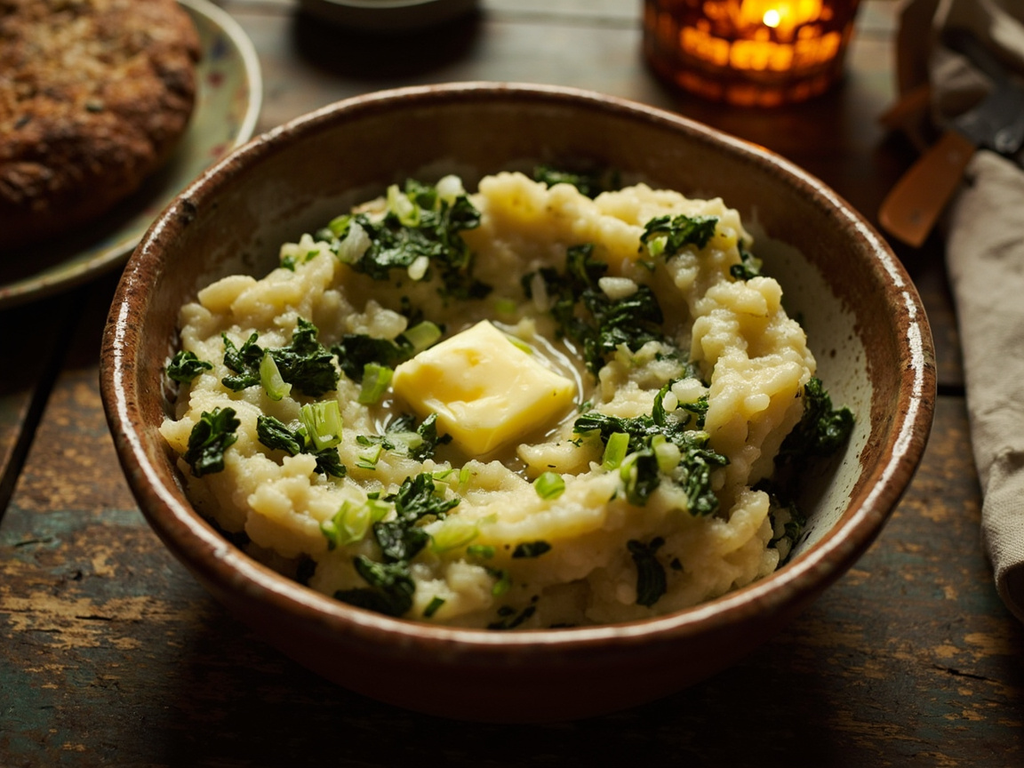
A melting potato purée mixed with finely shredded kale (or green cabbage) softened in butter, flavoured with spring onions and warm milk. A well is made in the centre to hold a knob of melting butter. Comforting, soft, and savoury, it is the dish of Irish winter evenings.
Do not be deceived by my velvet waistcoats: an Irishman never forgets the colcannon of his childhood. We would mash the potatoes still steaming, fold in the butter-softened cabbage, and in the middle we would dig a little well where the butter melted like a miser's gold. My mother used to say that a simple heart is nourished by simple things — I have spent my whole life trying to believe her and doing the opposite. Eat it hot, by the fire: it is the only philosophy that truly warms.
- •Floury potatoes — a good amount (base)
- •Kale or green cabbage — generous amounts (filling)
- •Butter — abundant (binder and richness)
- •Milk — a little, warm (smoothness)
- •Spring onions (scallions) — a bunch (flavour)
- •Salt — to taste (seasoning)
Dublin colcannon
A melting potato purée mixed with finely shredded kale (or green cabbage) softened in butter, flavoured with spring onions and warm milk. A well is made in the centre to hold a knob of melting butter. Comforting, soft, and savoury, it is the dish of Irish winter evenings.
Why this dish? Wilde was born and grew up in Dublin, in a literary Irish family, before Oxford and London. Colcannon, a mash of potatoes and cabbage, was the popular, homely dish of the Ireland of his childhood — the simple table behind the London dandy.
Do not be deceived by my velvet waistcoats: an Irishman never forgets the colcannon of his childhood. We would mash the potatoes still steaming, fold in the butter-softened cabbage, and in the middle we would dig a little well where the butter melted like a miser's gold. My mother used to say that a simple heart is nourished by simple things — I have spent my whole life trying to believe her and doing the opposite. Eat it hot, by the fire: it is the only philosophy that truly warms.
Ingredients (period version)
- Floury potatoes — a good amount (base)
- Kale or green cabbage — generous amounts (filling)
- Butter — abundant (binder and richness)
- Milk — a little, warm (smoothness)
- Spring onions (scallions) — a bunch (flavour)
- Salt — to taste (seasoning)
Ingredients
- Mashing potatoes (e.g., Bintje) — 1 kg (base)
- Kale or green cabbage — 300 g (filling)
- Butter — 80 g (+ a knob for serving) (binder)
- Whole milk — 150 ml (smoothness)
- Spring onions — 4 (flavour)
- Salt and pepper — to taste (seasoning)
Method
- Cook the peeled potatoes in salted water until tender, then drain.
- Shred the cabbage and wilt it in boiling water or butter for a few minutes; drain well.
- Heat the milk with the sliced spring onions and some of the butter.
- Mash the potatoes, then stir in the flavoured milk and the cabbage. Season with salt and pepper.
- Mound into a dome, make a well in the centre, and place a knob of butter in it to melt. Serve very hot.
How it was made : Colcannon, attested in Ireland since the 18th century, was especially eaten in autumn and at Halloween, when a coin or a ring was sometimes hidden in the mash to predict the future. The potato, imported from America in the 16th century, had become Ireland's staple food by Wilde's time.
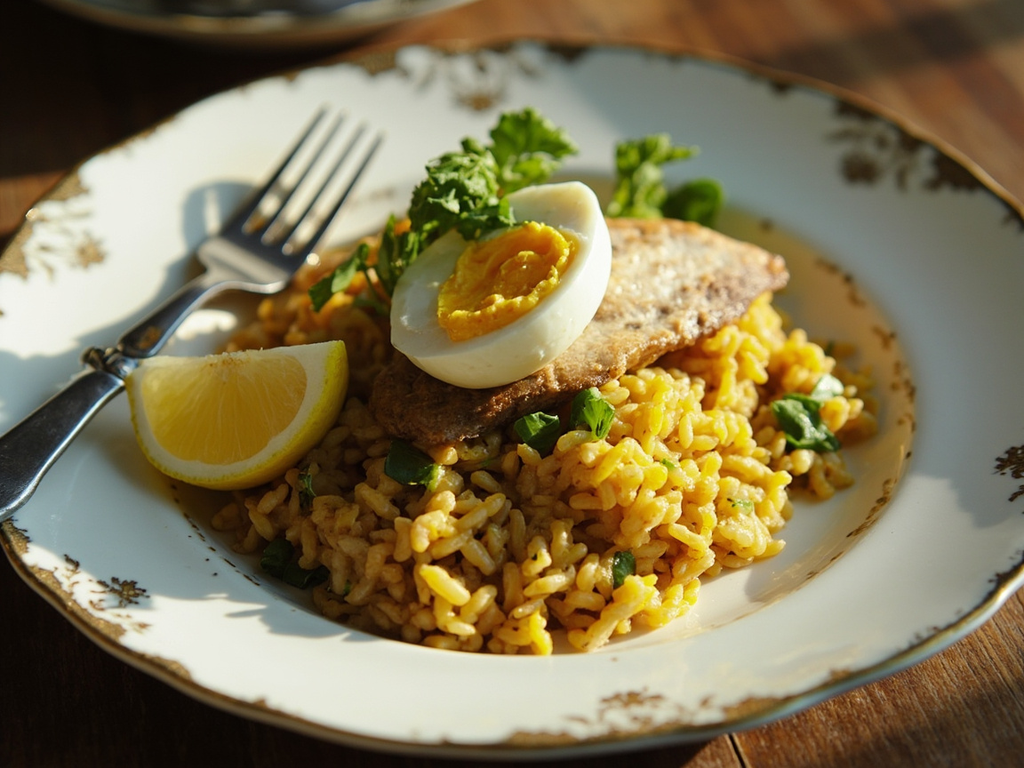
The contemporary twist : Crispy version: shape leftovers into golden pan-fried cakes ("colcannon cakes") and serve with a soft-boiled egg.
Sources : Florence Irwin, The Cookin' Woman: Irish Country Recipes, 1949 · Darina Allen, Irish Traditional Cooking, 1995
Oscar Wilde · Charactorium