 flip
flipMoretum (garlic and herb cheese spread)
Moretum (garlic and herb cheese spread)
Why this dish? The *Moretum*, a short poem from Ovid's era attributed to the Virgilian circle, describes a peasant preparing this paste at dawn. Ovid, who loved to evoke the simple life of Rome's origins in his *Fasti*, would have recognized this frugal lunch spread on bread to get through the morning.
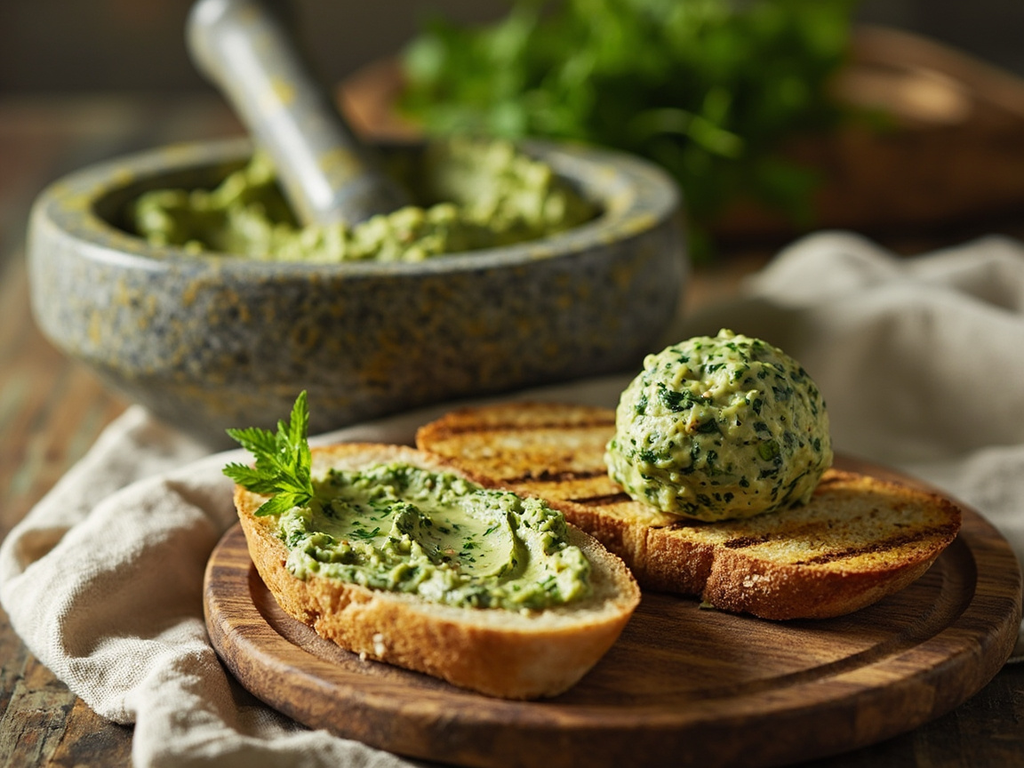
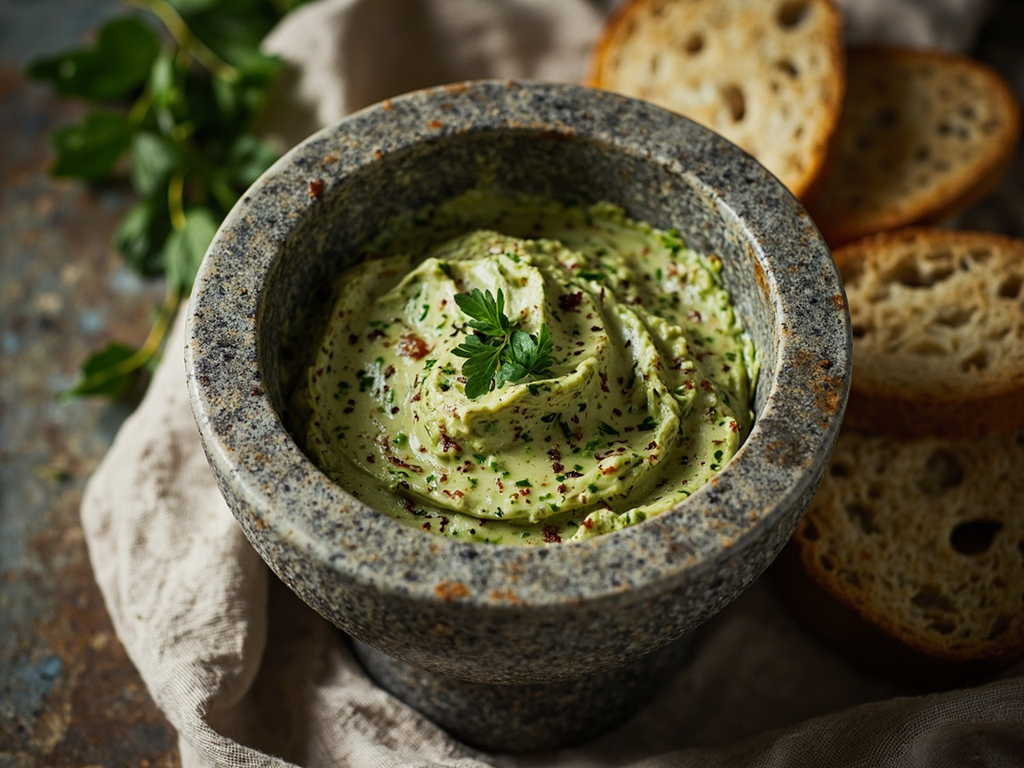
A green, pungent paste of fresh cheese crushed in a mortar with garlic, herbs, vinegar, and oil. Spread on bread: the quintessential Roman snack.
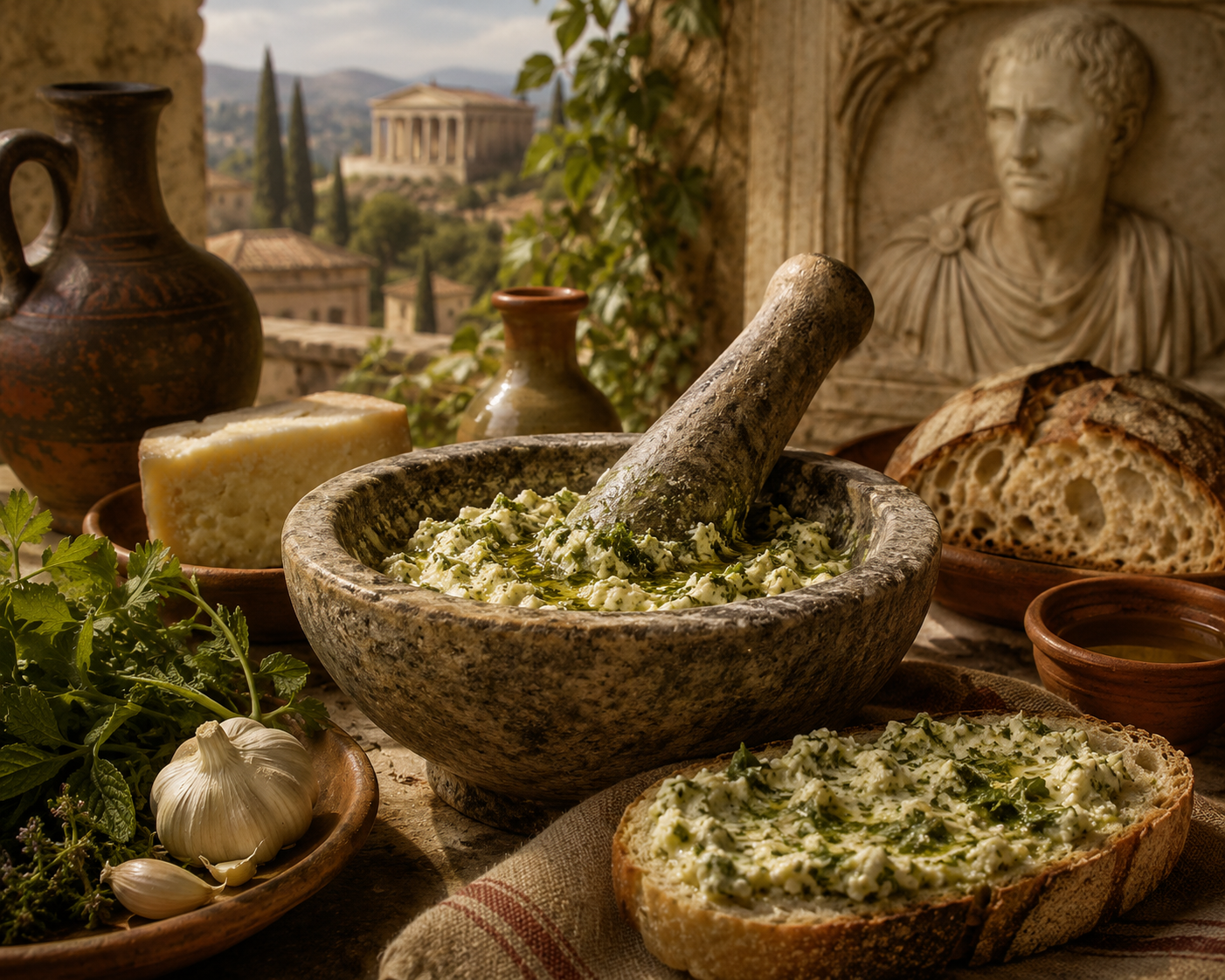
Do you want to know how the labourer staves off hunger before the sun climbs? He takes the mortar, tosses in a few cloves of garlic, garden herbs still wet with dew, salted cheese, a splash of vinegar and oil — and he turns, and turns, until a beautiful green-speckled paste is born. Spread it on your bread, reader: here is what it takes to face the fields. The modest table has delights that the rich know not.
- •Salted cheese (fresh pecorino) — a generous portion (base)
- •Garlic — a few cloves (pungency)
- •Fresh herbs (coriander, celery, parsley) — a handful (freshness)
- •Vinegar — a dash (acidity)
- •Olive oil — a drizzle (binder)
- •Salt — a pinch (seasoning)
Moretum (garlic and herb cheese spread)
A green, pungent paste of fresh cheese crushed in a mortar with garlic, herbs, vinegar, and oil. Spread on bread: the quintessential Roman snack.
Why this dish? The *Moretum*, a short poem from Ovid's era attributed to the Virgilian circle, describes a peasant preparing this paste at dawn. Ovid, who loved to evoke the simple life of Rome's origins in his *Fasti*, would have recognized this frugal lunch spread on bread to get through the morning.
Do you want to know how the labourer staves off hunger before the sun climbs? He takes the mortar, tosses in a few cloves of garlic, garden herbs still wet with dew, salted cheese, a splash of vinegar and oil — and he turns, and turns, until a beautiful green-speckled paste is born. Spread it on your bread, reader: here is what it takes to face the fields. The modest table has delights that the rich know not.
Ingredients (period version)
- Salted cheese (fresh pecorino) — a generous portion (base)
- Garlic — a few cloves (pungency)
- Fresh herbs (coriander, celery, parsley) — a handful (freshness)
- Vinegar — a dash (acidity)
- Olive oil — a drizzle (binder)
- Salt — a pinch (seasoning)
Ingredients
- Fresh pecorino or low-salt feta — 150 g (base)
- Garlic — 2 cloves (pungency)
- Coriander, parsley, and celery leaves — 1 mixed handful (freshness)
- Wine vinegar — 1 tsp (acidity)
- Extra virgin olive oil — 2 tbsp (binder)
- Rustic bread for serving — as needed (vehicle)
Method
- Pound the garlic with a pinch of salt in a mortar until a paste forms.
- Add the chopped herbs and crush to release their aromas.
- Incorporate the crumbled cheese and continue pounding to form a homogeneous paste.
- Loosen with vinegar, then oil, working until spreadable consistency.
- Serve fresh, spread on slices of rustic bread.
How it was made : The poem *Moretum* (Appendix Vergiliana) describes this mortar preparation in detail: it is one of the most precisely documented ancient recipes. Herbs varied according to the garden; rue, much used then, is now to be avoided as toxic in large doses.
The contemporary twist : Served in an aperitif glass with spelt breadsticks, under the name 'legionary pesto'.
Sources : Appendix Vergiliana, Moretum (poem) · Columella, De re rustica, XII, 59
Ovid · Charactorium