 flip
flipPuls fabata (emmer porridge with fava beans)
Puls fabata (emmer porridge with fava beans)
Why this dish? Ovid was born in Sulmo into an equestrian family, but puls remained the foundation of every Roman table, from peasant to senator. The poet, who celebrates Rome's rustic origins in his *Fasti*, knew this ancestral porridge that his ancestors ate even before bread became common.
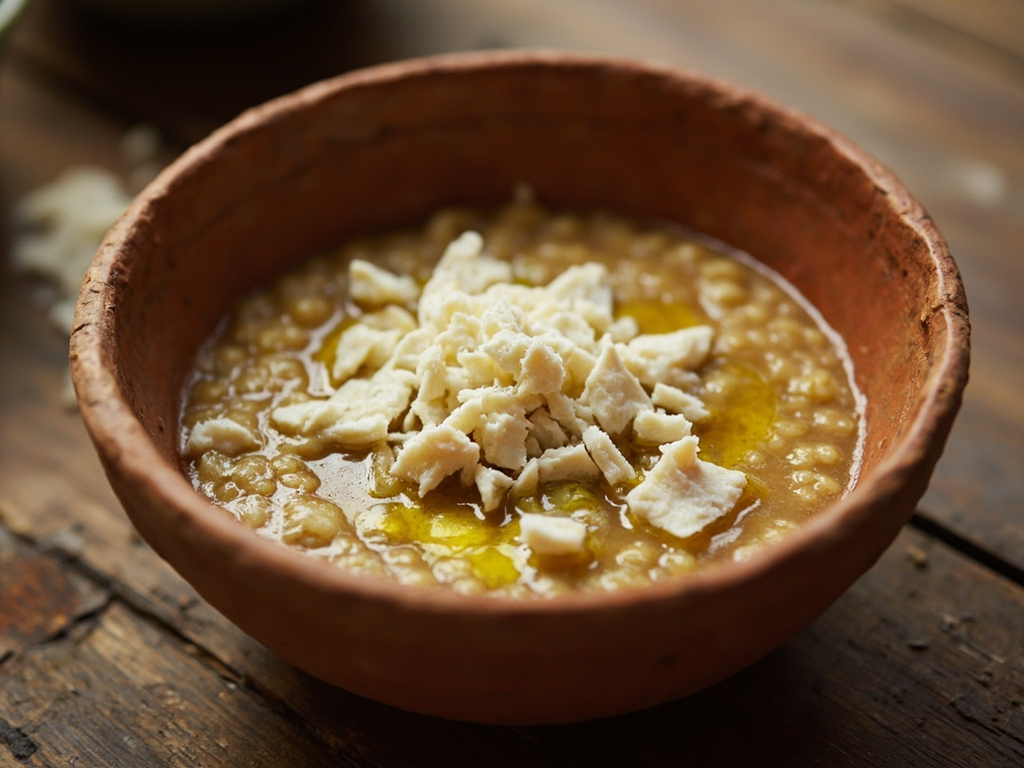
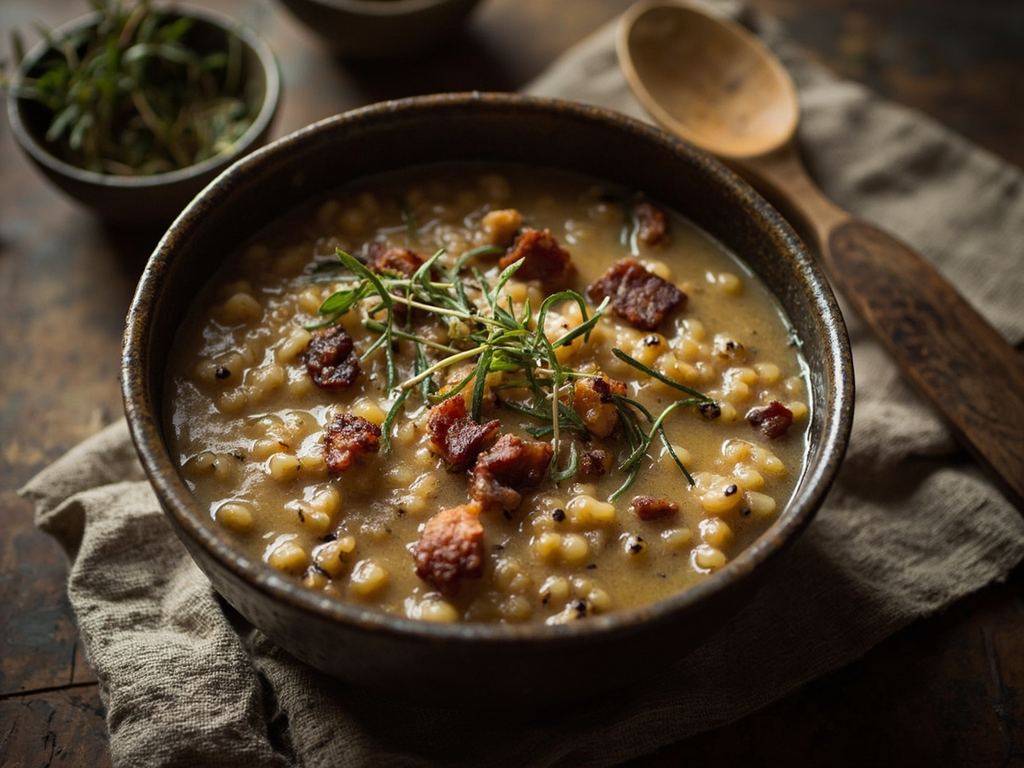
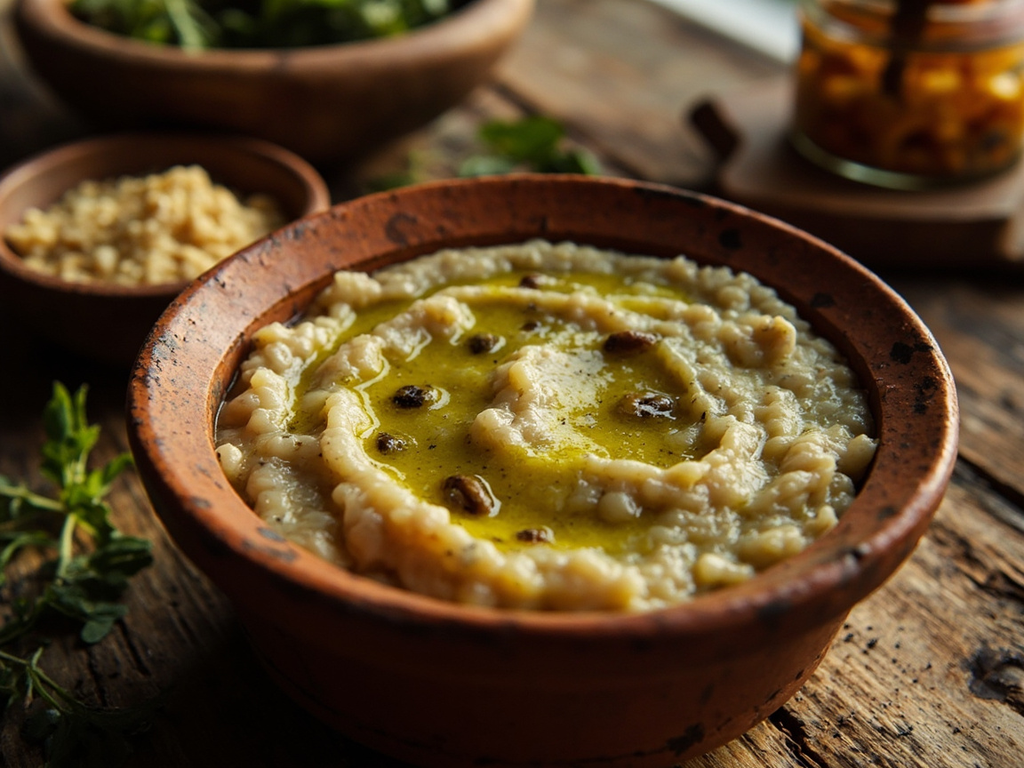
Thick porridge of emmer (far) simmered with mashed fava beans, seasoned with a dash of garum and olive oil. The most Roman dish of all: Romans were said to be a people of porridge-eaters (pultiphagi).
Come, reader, and do not disdain this humble bowl: from it Rome drew her strength before she drew her swords. On my father's hearth in Sulmo, we would toss the far into bubbling water until it grew creamy, then a thread of garum and green oil, and that was all. The ancestors whose *Fasti* I sing knew no leavened bread, but this porridge led them to the Capitol — think on that as you dip your spoon.
- •Far (hulled emmer or spelt) — two handfuls per diner (base grain)
- •Dried shelled fava beans — a good handful (hearty legume)
- •Garum — a dash (umami seasoning)
- •Olive oil — a drizzle (fat)
- •Salt — to taste, depending on garum (seasoning)
Puls fabata (emmer porridge with fava beans)
Thick porridge of emmer (far) simmered with mashed fava beans, seasoned with a dash of garum and olive oil. The most Roman dish of all: Romans were said to be a people of porridge-eaters (pultiphagi).
Why this dish? Ovid was born in Sulmo into an equestrian family, but puls remained the foundation of every Roman table, from peasant to senator. The poet, who celebrates Rome's rustic origins in his *Fasti*, knew this ancestral porridge that his ancestors ate even before bread became common.
Come, reader, and do not disdain this humble bowl: from it Rome drew her strength before she drew her swords. On my father's hearth in Sulmo, we would toss the far into bubbling water until it grew creamy, then a thread of garum and green oil, and that was all. The ancestors whose *Fasti* I sing knew no leavened bread, but this porridge led them to the Capitol — think on that as you dip your spoon.
Ingredients (period version)
- Far (hulled emmer or spelt) — two handfuls per diner (base grain)
- Dried shelled fava beans — a good handful (hearty legume)
- Garum — a dash (umami seasoning)
- Olive oil — a drizzle (fat)
- Salt — to taste, depending on garum (seasoning)
Ingredients
- Hulled spelt (or small spelt) — 150 g (base grain)
- Dried split fava beans (or fresh shelled) — 120 g (legume)
- Fish sauce (nuoc-mâm, failing garum) — 1 tbsp (umami)
- Extra virgin olive oil — 2 tbsp (fat)
- Water — 1 liter (cooking liquid)
- Salt and a pinch of cumin — to taste (seasoning)
Method
- Soak the spelt and dried fava beans separately the night before, for several hours.
- Cook the fava beans in salted water until they mash easily (about 45 min), then roughly crush them.
- Add the drained spelt and simmer over low heat, stirring, until a thick creamy porridge forms (40 min).
- Off the heat, stir in the fish sauce, olive oil, and a pinch of cumin.
- Serve piping hot in an earthenware bowl.
How it was made : Before the rise of bread in the 2nd century BC, puls was the staple food of Romans. Cato the Elder gives several versions in his *De Agricultura*. It was eaten plain or enriched with fava beans, cheese, or eggs depending on means.
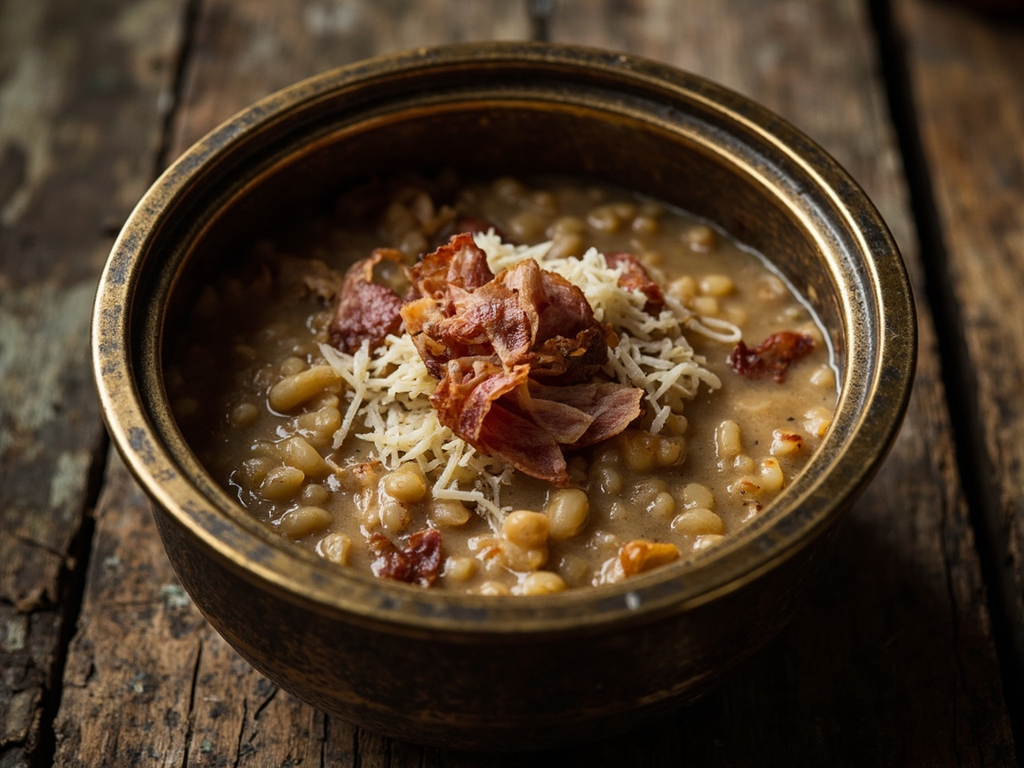
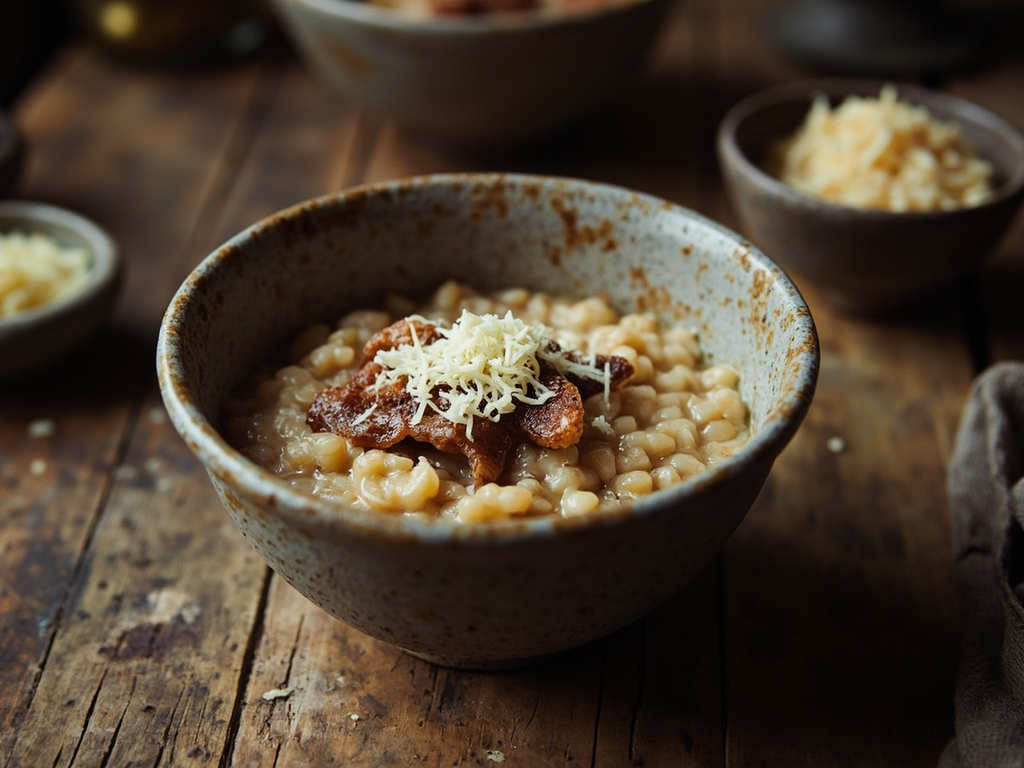
The contemporary twist : Served as an ancient risotto, sprinkled with fresh shoots and a veil of grated pecorino to recall Roman cheese.
Sources : Cato the Elder, De Agricultura, 85-86 · Pliny the Elder, Natural History, XVIII
Ovid · Charactorium