 flip
flipAndalusian Gazpacho
Andalusian Gazpacho
Why this dish? Picasso was born in Málaga, in the heart of Andalusia, the homeland of gazpacho. This raw, iced soup is the reflex of the Andalusian summer when the heat kills the appetite: a poor man's dish that became an emblem, which he rediscovered all his life as a taste of childhood.
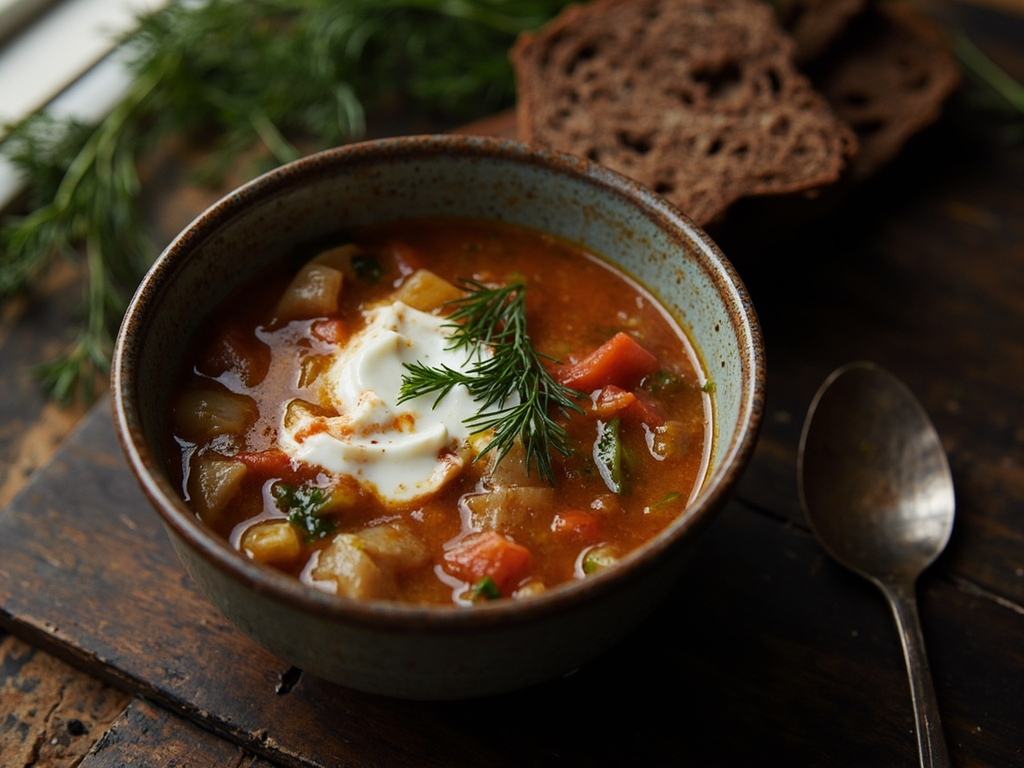
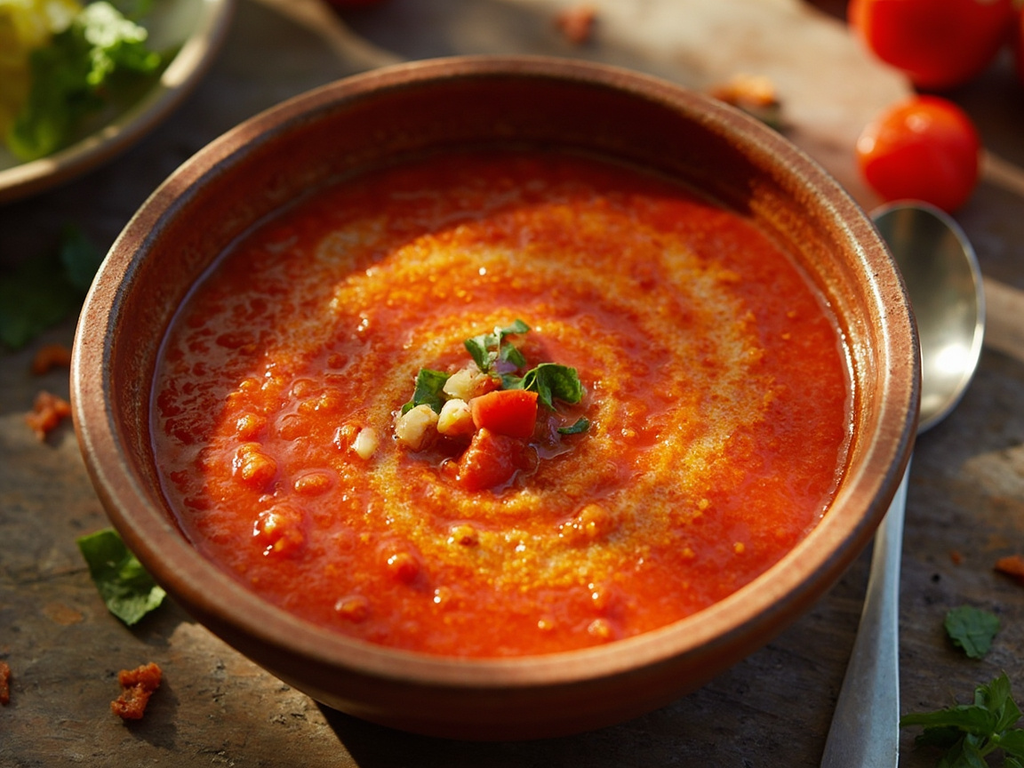
A cold soup of blended raw vegetables — tomato, cucumber, bell pepper, garlic — bound with olive oil and awakened by vinegar, served well chilled. Refreshing, bright, almost a drinkable juice.
Listen to me, friend: in Málaga, when the sun pounds like a hammer, you don't cook, you crush! My mother would pound the ripe tomato, the garlic, a stale bread crust soaked, and she'd drown it all in oil and a dash of vinegar. We drank it cold, in a bowl, standing in the kitchen. Red like one of my paintings — and believe me, it gives more strength than a nap.
- •Very ripe tomatoes — a generous handful per person (juicy, tangy base)
- •Stale bread — one soaked crust (traditional binder)
- •Garlic — to taste (aromatic kick)
- •Olive oil — a good drizzle (smoothness and binding)
- •Wine vinegar — a few drops (bright acidity)
- •Salt — to taste (seasoning)
Andalusian Gazpacho
A cold soup of blended raw vegetables — tomato, cucumber, bell pepper, garlic — bound with olive oil and awakened by vinegar, served well chilled. Refreshing, bright, almost a drinkable juice.
Why this dish? Picasso was born in Málaga, in the heart of Andalusia, the homeland of gazpacho. This raw, iced soup is the reflex of the Andalusian summer when the heat kills the appetite: a poor man's dish that became an emblem, which he rediscovered all his life as a taste of childhood.
Listen to me, friend: in Málaga, when the sun pounds like a hammer, you don't cook, you crush! My mother would pound the ripe tomato, the garlic, a stale bread crust soaked, and she'd drown it all in oil and a dash of vinegar. We drank it cold, in a bowl, standing in the kitchen. Red like one of my paintings — and believe me, it gives more strength than a nap.
Ingredients (period version)
- Very ripe tomatoes — a generous handful per person (juicy, tangy base)
- Stale bread — one soaked crust (traditional binder)
- Garlic — to taste (aromatic kick)
- Olive oil — a good drizzle (smoothness and binding)
- Wine vinegar — a few drops (bright acidity)
- Salt — to taste (seasoning)
Ingredients
- Ripe tomatoes — 1 kg (base)
- Cucumber — 1/2 (freshness)
- Green bell pepper — 1 small (herbaceous note)
- Garlic clove — 1 (kick)
- Stale bread — 50 g, soaked in water (binder)
- Extra virgin olive oil — 8 cl (emulsion)
- Sherry vinegar — 2 tbsp (acidity)
- Salt — 1 tsp (seasoning)
Method
- Roughly chop tomatoes, cucumber, and bell pepper; peel the garlic.
- Soak the bread in a little water for a few minutes.
- Blend all the vegetables with the bread, salt, and vinegar until smooth.
- Drizzle in the olive oil while blending to emulsify and create a velvety texture.
- Strain through a fine sieve for extra smoothness (optional), then refrigerate for at least 2 hours.
- Serve very cold, with a final drizzle of oil and a few diced vegetables.
How it was made : Before electric blenders became common in the 20th century, gazpacho was pounded in a mortar (the 'majado'): garlic, salt, and bread first, then the oil emulsified and water added. The word likely comes from Andalusian Arabic and originally referred to a porridge of bread, oil, and vinegar, long before the tomato arrived.
The contemporary twist : Served in small chilled shot glasses as an aperitif, topped with a drizzle of olive oil and a basil leaf — a vivid red 'liquid cubism'.
Sources : Inés Ortega, La cocina española ; tradition andalouse du gaspacho
Pablo Picasso · Charactorium