 flip
flipShchi with Sauerkraut (Sour Cabbage Soup)
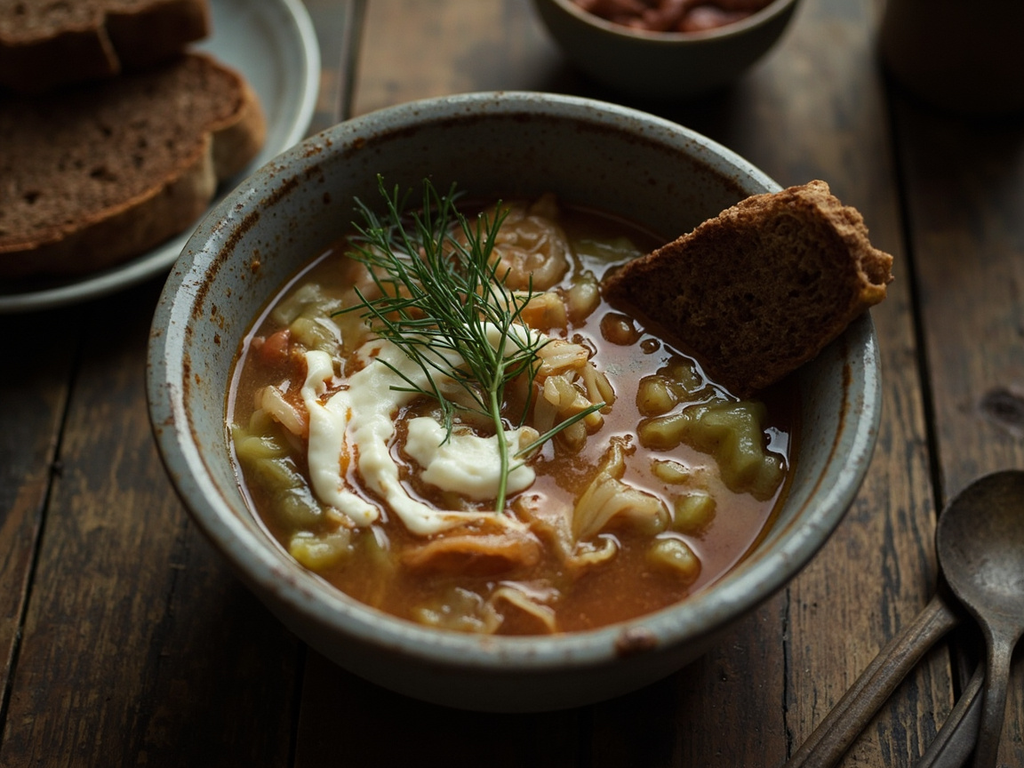
Shchi with Sauerkraut (Sour Cabbage Soup)
Why this dish? Shchi was at the heart of Kollontai's simple diet, inherited from exile and underground life. This cabbage soup, the quintessential Russian national dish, united the aristocrat turned Bolshevik and the working people around the same steaming bowl.
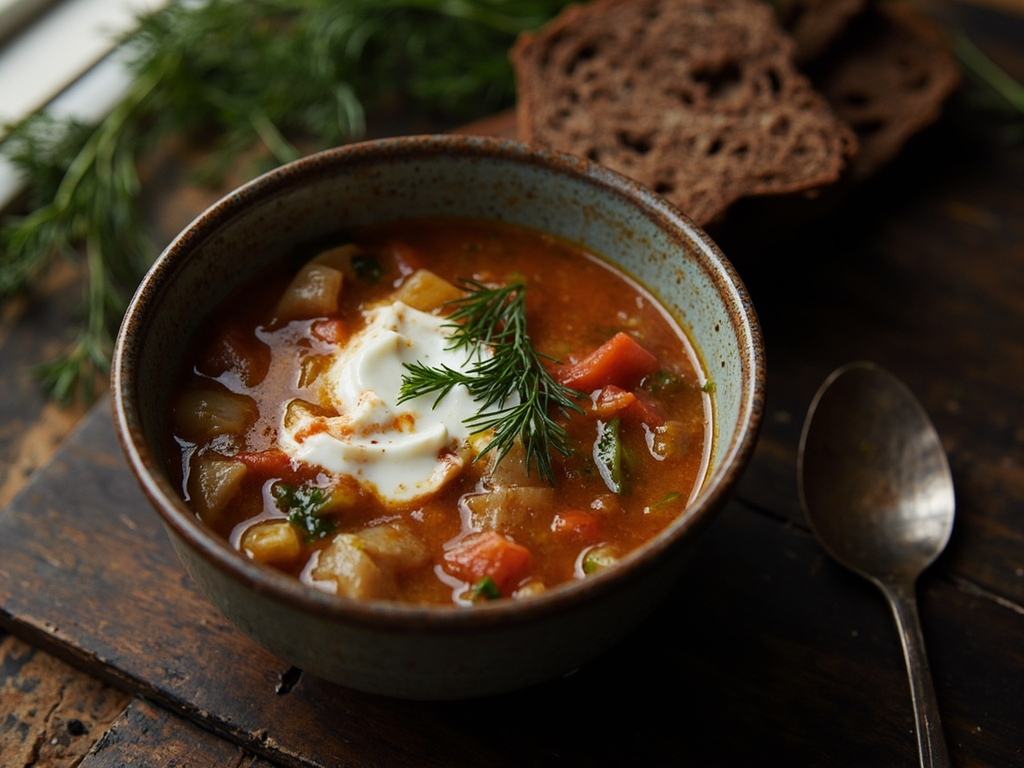
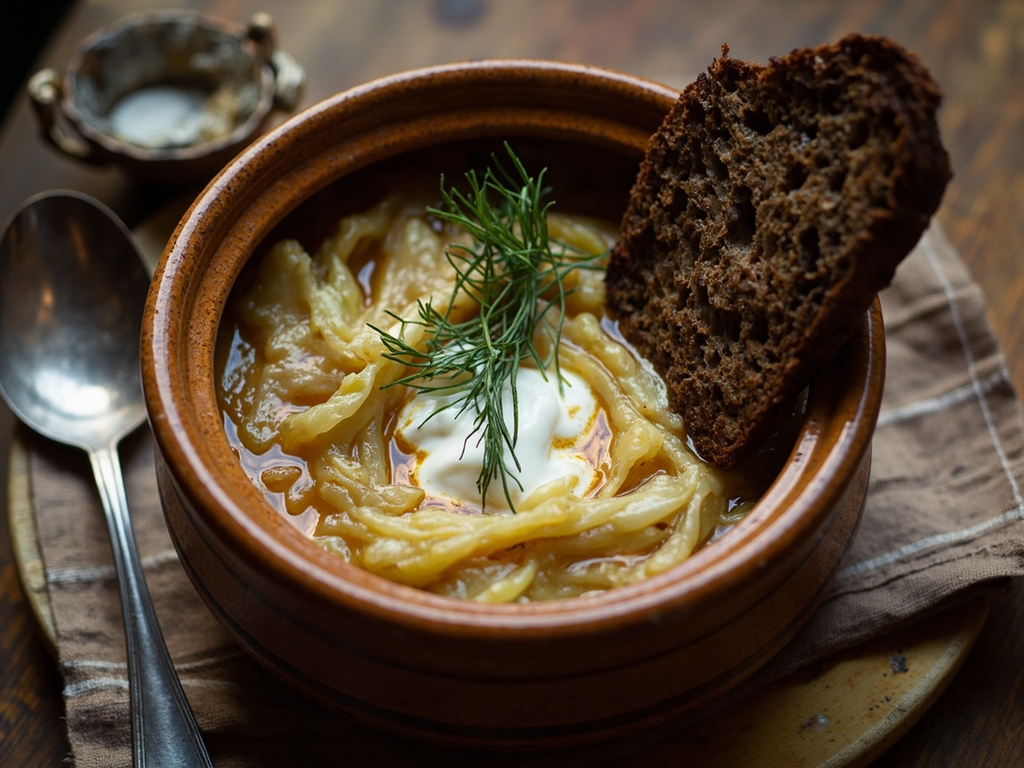
A tangy peasant soup where long-simmered sauerkraut gives its characteristic sour note, softened by root vegetables and onion. The dish that, they say, made Russians say that where there is shchi, there you find its people.
Comrade, do not seek here the sauces of bourgeois banquets — this bowl I have carried from Petrograd to the icy rooms of Christiania. A good handful of sour cabbage, a bit of root, black bread on the side, and you are fed to discuss the revolution until dawn. At my table, we served not luxury, but warmth and camaraderie. The shared spoon is worth all the silver services of the old world.
- •Sauerkraut (lacto-fermented cabbage) — two good handfuls (acidic and vitamin-rich base)
- •Fresh cabbage — half a cabbage (body of the soup)
- •Root vegetables (carrot, turnip, parsley root) — as desired (sweetness and depth)
- •Onion — one large head (aromatic)
- •Beef broth or water — a large cauldron (liquid)
- •Dill and bay leaf — a sprig (flavor)
- •Sour cream (smetana) — one spoonful per bowl (binding at serving)
Shchi with Sauerkraut (Sour Cabbage Soup)
A tangy peasant soup where long-simmered sauerkraut gives its characteristic sour note, softened by root vegetables and onion. The dish that, they say, made Russians say that where there is shchi, there you find its people.
Why this dish? Shchi was at the heart of Kollontai's simple diet, inherited from exile and underground life. This cabbage soup, the quintessential Russian national dish, united the aristocrat turned Bolshevik and the working people around the same steaming bowl.
Comrade, do not seek here the sauces of bourgeois banquets — this bowl I have carried from Petrograd to the icy rooms of Christiania. A good handful of sour cabbage, a bit of root, black bread on the side, and you are fed to discuss the revolution until dawn. At my table, we served not luxury, but warmth and camaraderie. The shared spoon is worth all the silver services of the old world.
Ingredients (period version)
- Sauerkraut (lacto-fermented cabbage) — two good handfuls (acidic and vitamin-rich base)
- Fresh cabbage — half a cabbage (body of the soup)
- Root vegetables (carrot, turnip, parsley root) — as desired (sweetness and depth)
- Onion — one large head (aromatic)
- Beef broth or water — a large cauldron (liquid)
- Dill and bay leaf — a sprig (flavor)
- Sour cream (smetana) — one spoonful per bowl (binding at serving)
Ingredients
- Raw sauerkraut — 250 g (acidic base)
- Fresh green cabbage — 300 g, shredded (body)
- Carrot — 1 large (sweetness)
- Turnip — 1 small (depth)
- Onion — 1 large (aromatic)
- Beef broth — 1.5 L (liquid)
- Bay leaf + peppercorns — 2 leaves, 5 grains (flavor)
- Fresh dill — 1 small bunch (finish)
- Thick crème fraîche — 4 tbsp (serving)
Method
- Sweat the sliced onion, then diced carrot and turnip in a little fat.
- Add the shredded fresh cabbage and let wilt for a few minutes.
- Pour in the broth, add bay leaf and pepper, bring to a simmer.
- Add the rinsed and drained sauerkraut; simmer covered for 45 minutes over low heat.
- Adjust salt, sprinkle with dill.
- Serve piping hot with a spoonful of sour cream and black bread.
How it was made : Shchi was cooked in the pechka, the large Russian oven, where the pot spent hours confiting at declining heat — which gave the cabbage a melting sweetness impossible to achieve over a high flame. It was said that yesterday's shchi, reheated, was always better.
The contemporary twist : Serve the shchi in a raw stoneware bowl with a cloud of whisked smetana and a shower of chopped dill, a self-aware and proud « committee soup ».
Sources : Elena Molokhovets, A Gift to Young Housewives (Подарок молодым хозяйкам), 1861 · William Pokhlebkin, The Art of Russian Cuisine
Alexandra Kollontai · Charactorium