 flip
flipWelsh Cawl with Leeks and Oats
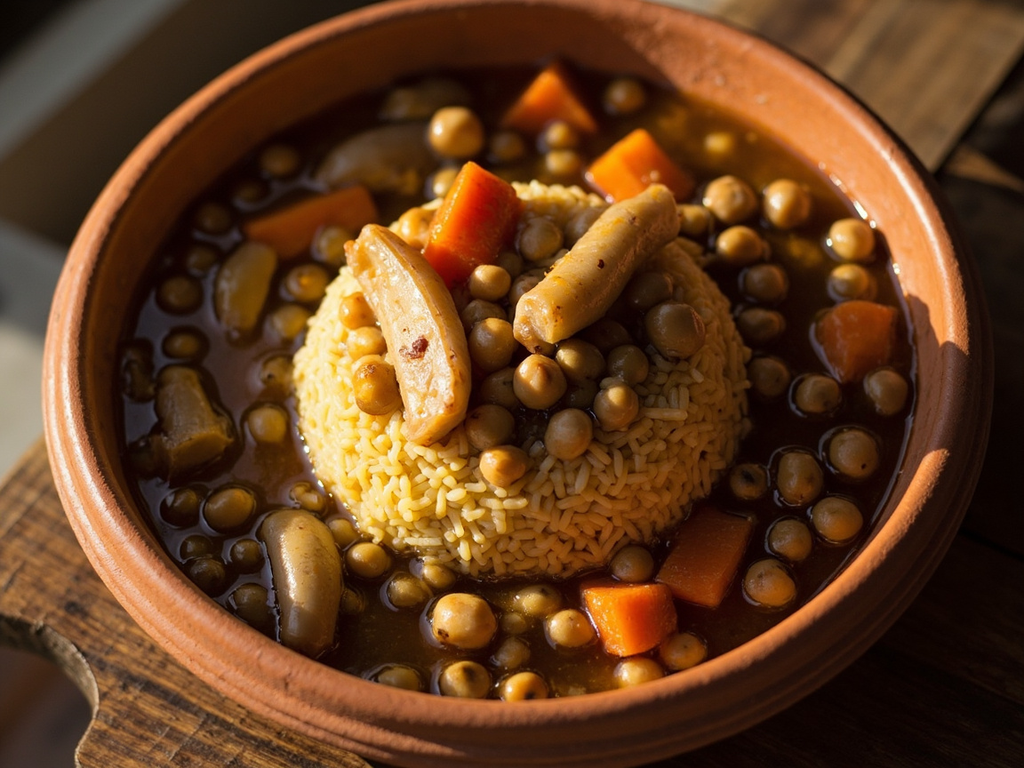
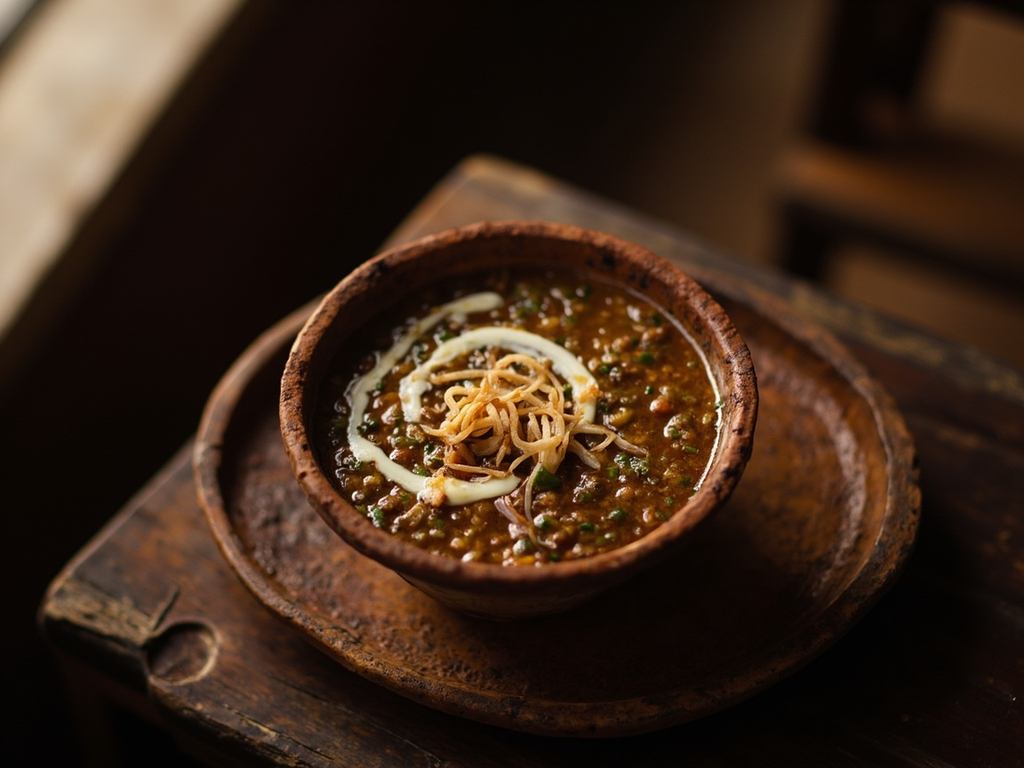
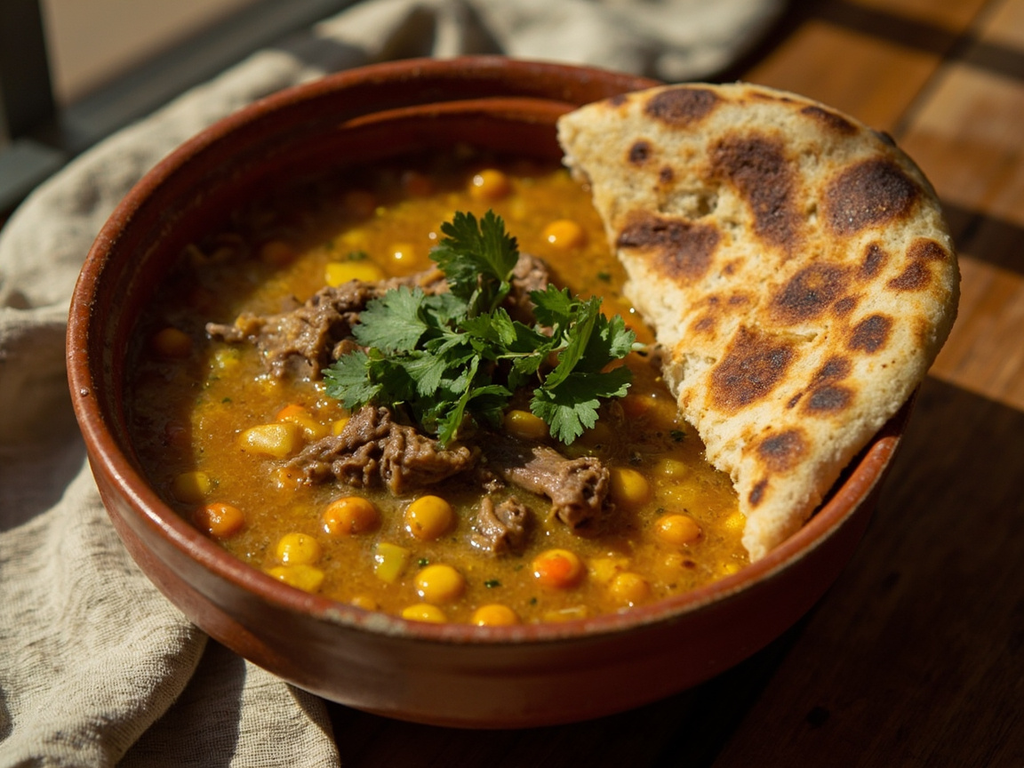
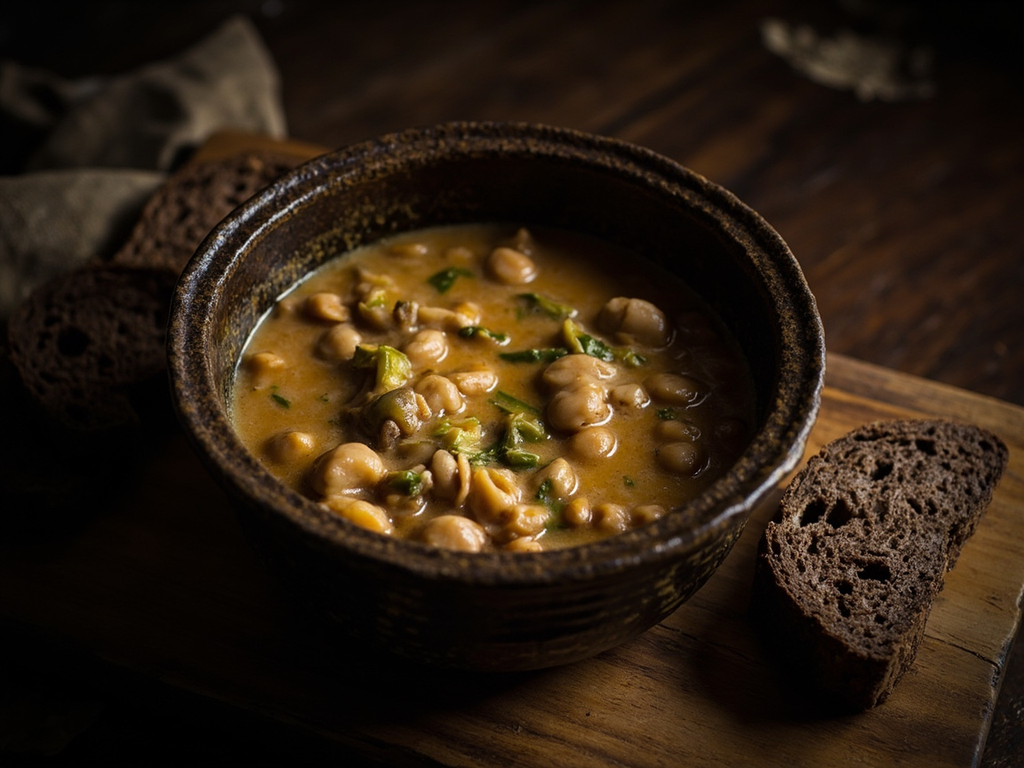
Welsh Cawl with Leeks and Oats
Why this dish? Before becoming a knight, Perceval grew up in the Welsh forest, raised by his mother far from the world. Cawl — the foundational soup of the Welsh hearth simmered with leek (emblem of Wales) and thickened with oats — is the taste of that rustic childhood, the meal of a humble home and a son still "nice" (naive).
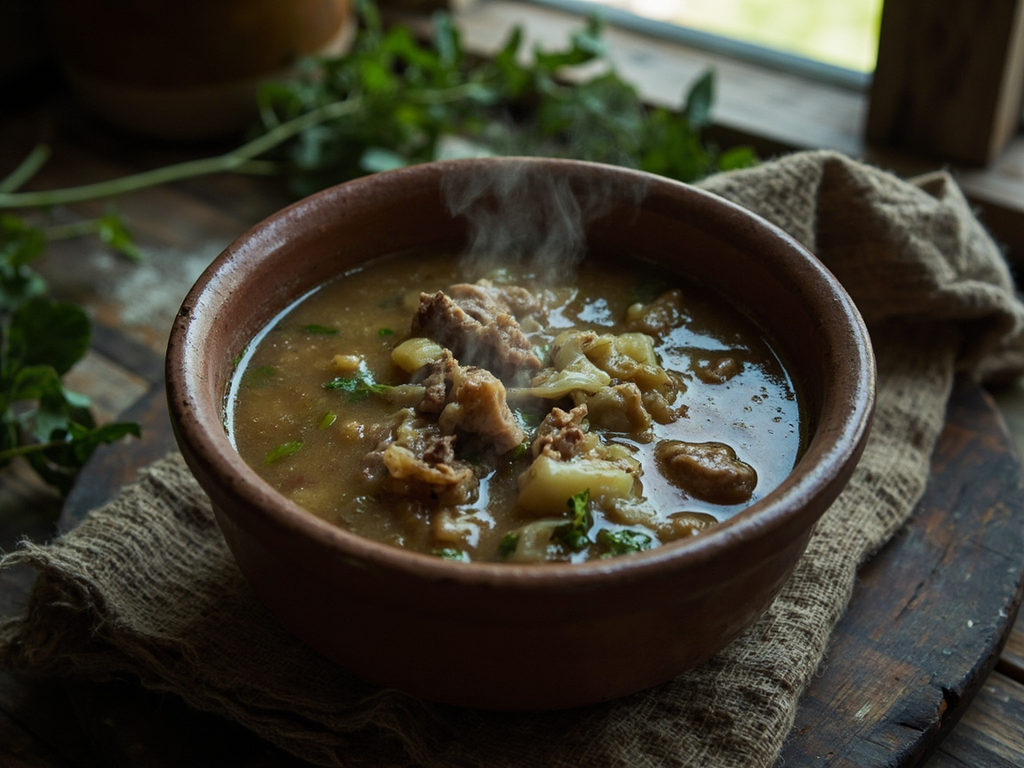
A thick and comforting soup of leeks, turnips and cabbage, flavored with a bit of mutton, thickened with oat flour. The mother dish of Wales, which feeds both the churl and the child who does not yet know he is a knight.
Know that I knew nothing of chivalry when I was a boy, only the Welsh forest and my mother's bowl. She would put the leek — which is the pride of our country — with the turnip and a piece of mutton, and thicken it all with oats so that it would stick to the ribs on cold mornings. It is poor fare, I confess, no saffron or spice from overseas; but when I ride through long quests, it is that taste, simple and warm, that my heart yearns for. Eat it in great cold, and you will know where I come from.
- •Leeks — one bunch (soul of the dish, Welsh emblem)
- •Mutton (neck or shank) — one piece (flavor base)
- •Turnips and cabbage — to measure (vegetables from the garden)
- •Oat flour — a handful (rustic thickener)
- •Salt, garden herbs — to taste (seasoning)
Welsh Cawl with Leeks and Oats
A thick and comforting soup of leeks, turnips and cabbage, flavored with a bit of mutton, thickened with oat flour. The mother dish of Wales, which feeds both the churl and the child who does not yet know he is a knight.
Why this dish? Before becoming a knight, Perceval grew up in the Welsh forest, raised by his mother far from the world. Cawl — the foundational soup of the Welsh hearth simmered with leek (emblem of Wales) and thickened with oats — is the taste of that rustic childhood, the meal of a humble home and a son still "nice" (naive).
Know that I knew nothing of chivalry when I was a boy, only the Welsh forest and my mother's bowl. She would put the leek — which is the pride of our country — with the turnip and a piece of mutton, and thicken it all with oats so that it would stick to the ribs on cold mornings. It is poor fare, I confess, no saffron or spice from overseas; but when I ride through long quests, it is that taste, simple and warm, that my heart yearns for. Eat it in great cold, and you will know where I come from.
Ingredients (period version)
- Leeks — one bunch (soul of the dish, Welsh emblem)
- Mutton (neck or shank) — one piece (flavor base)
- Turnips and cabbage — to measure (vegetables from the garden)
- Oat flour — a handful (rustic thickener)
- Salt, garden herbs — to taste (seasoning)
Ingredients
- Leeks — 4 large (aromatic base)
- Mutton or lamb neck or shank — 500 g (broth and meat)
- Turnips — 2 (vegetable)
- Green cabbage — 1/4 head (vegetable)
- Rolled oats — 3 tbsp (thickener)
- Parsley, salt, pepper — to taste (seasoning)
Method
- Cover the mutton with cold water, bring to a simmer, skim, season with salt. Let simmer for 1 h 30 until the meat falls apart.
- Add diced turnips and the white parts of the leeks, cook 20 min.
- Stir in shredded cabbage and rolled oats to thicken, cook another 15 min.
- Shred the meat, return to the broth, add the finely sliced green parts of the leeks at the end for color.
- Adjust salt, sprinkle with parsley. Serve boiling hot with brown bread.
How it was made : Cawl is the foundation dish of the Welsh hearth, attested in tradition since the Middle Ages: a broth of meat and vegetables thickened with grain (oats, barley, or bread). Before the potato (introduced in the 16th c.), turnip and cabbage made its body — it is this pre-1492 version that we reconstruct here.
The contemporary twist : Serve "Welsh-style": the clear broth first in a bowl, then the meat and vegetables on a board with crumbled Caerphilly cheese.
Sources : Welsh culinary tradition of cawl (documented transmission)
Perceval · Charactorium