 flip
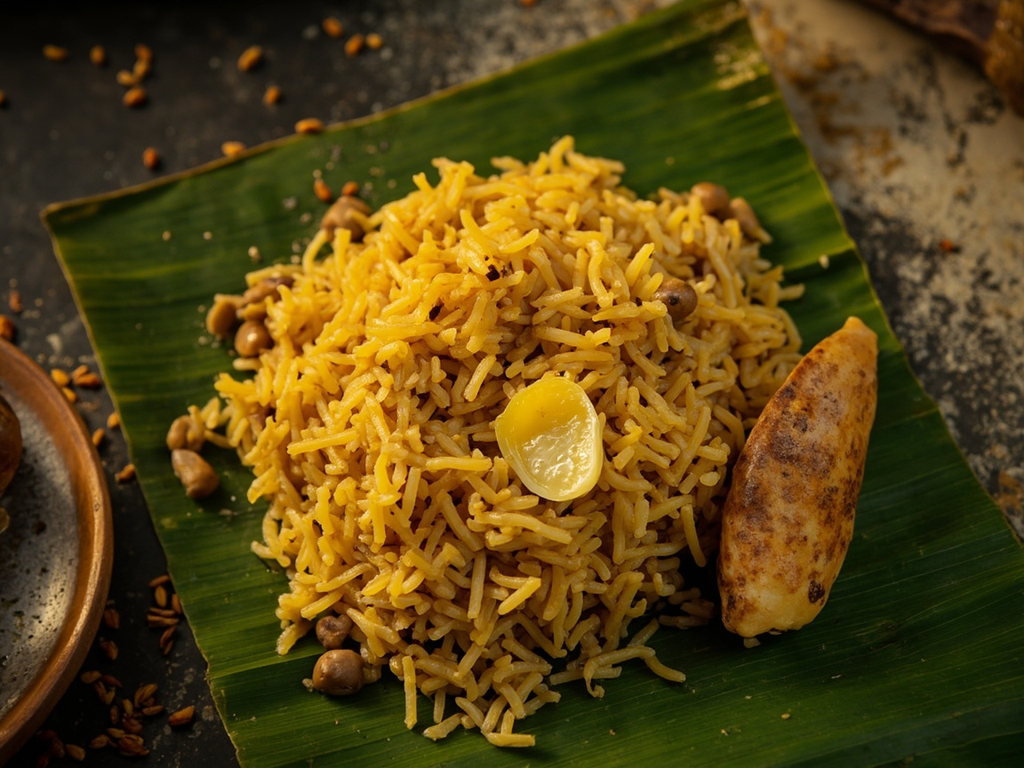
flipRice with ghee, golden lentils and cumin (princely khichri)
Rice with ghee, golden lentils and cumin (princely khichri)
Why this dish? Everyday dish in the palace of Ayodhya as in the simplicity of forest exile. Rice and lentils could be transported and cooked anywhere: this is the meal that follows Rāma from his throne to the clearings of the Dandaka forest.
A soft blend of rice and lentils cooked together, bound with ghee, awakened by cumin and ginger. Nourishing, gentle, easy to digest — the ultimate comfort food of ancient India.
Approach, friend, and sit on the mat. This dish I have eaten under the gold of Ayodhyā as under the trees of Daṇḍaka, for dharma feeds on little. Wash the rice and lentil while reciting, then let them melt together in water until they become one — see in this the soul and body united. Pour the hot ghee in a wide gesture, without counting: what you give to the fire and to guests always returns. Eat with your hand, slowly, and may the cumin remind you that virtue, like the spice, reveals itself when heated.
- •White rice — one measure (base)
- •Red lentils (masoor) or hulled mung — half a measure (legume)
- •Ghee — generously (sacred fat)
- •Cumin seeds — a pinch (spice)
- •Fresh ginger — a piece (aromatic)
- •Turmeric — a pinch (color and mild bitterness)
- •Salt — to taste (seasoning)
Rice with ghee, golden lentils and cumin (princely khichri)
A soft blend of rice and lentils cooked together, bound with ghee, awakened by cumin and ginger. Nourishing, gentle, easy to digest — the ultimate comfort food of ancient India.
Why this dish? Everyday dish in the palace of Ayodhya as in the simplicity of forest exile. Rice and lentils could be transported and cooked anywhere: this is the meal that follows Rāma from his throne to the clearings of the Dandaka forest.
Approach, friend, and sit on the mat. This dish I have eaten under the gold of Ayodhyā as under the trees of Daṇḍaka, for dharma feeds on little. Wash the rice and lentil while reciting, then let them melt together in water until they become one — see in this the soul and body united. Pour the hot ghee in a wide gesture, without counting: what you give to the fire and to guests always returns. Eat with your hand, slowly, and may the cumin remind you that virtue, like the spice, reveals itself when heated.
Ingredients (period version)
- White rice — one measure (base)
- Red lentils (masoor) or hulled mung — half a measure (legume)
- Ghee — generously (sacred fat)
- Cumin seeds — a pinch (spice)
- Fresh ginger — a piece (aromatic)
- Turmeric — a pinch (color and mild bitterness)
- Salt — to taste (seasoning)
Ingredients
- Basmati rice — 200 g (base)
- Hulled mung lentils (moong dal) or red lentils — 100 g (legume)
- Ghee — 3 tbsp (fat)
- Cumin seeds — 1 tsp (spice)
- Fresh grated ginger — 1 tsp (aromatic)
- Turmeric — 1/2 tsp (color)
- Water — 750 ml (cooking)
- Salt — 1 tsp (seasoning)
Method
- Rinse rice and lentils in clear water until it runs clear.
- Heat 2 tbsp ghee in a pot; pop the cumin seeds for a few seconds.
- Add ginger, then rice and lentils; stir to coat.
- Pour in water, add turmeric and salt; bring to a boil, then cover and simmer on low heat for 20 min until soft and creamy.
- Off the heat, add the last tbsp of ghee, cover for 5 min, and serve piping hot.
How it was made : The rice-legume mixture cooked together is one of the oldest dishes of the subcontinent, mentioned as early as the Vedic texts under the name krsara. It was cooked in a single earthen pot over a wood fire, without tomato or chili (unknown before 1492), the heat coming from ginger and long pepper.
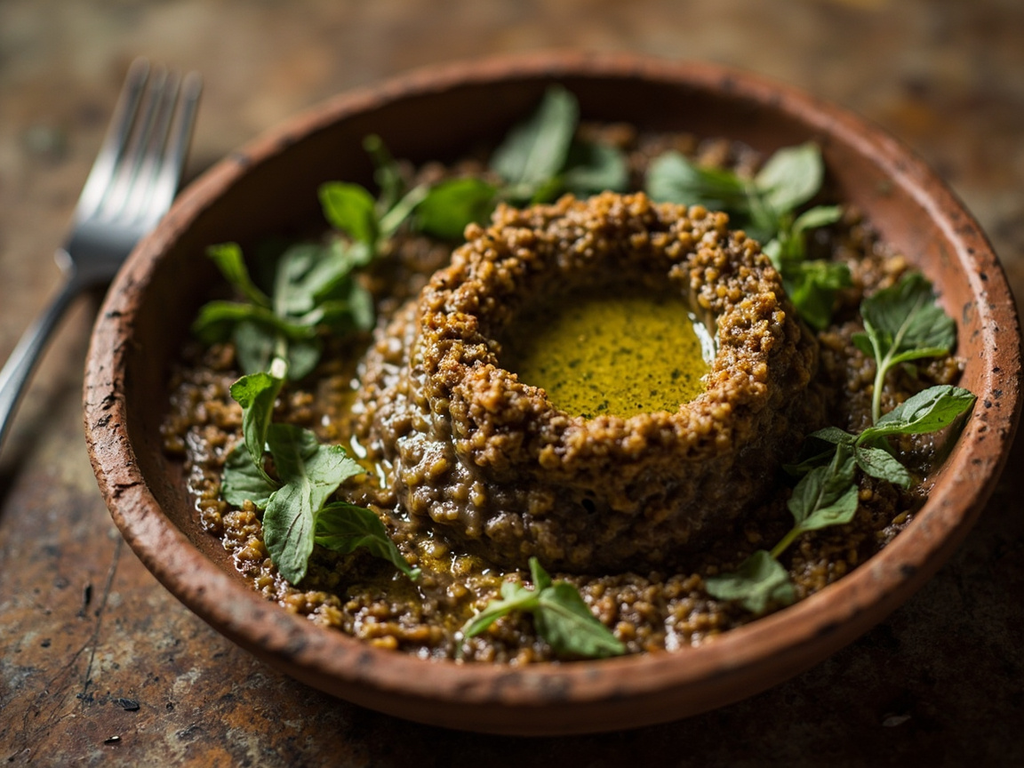
The contemporary twist : Serve domed in a black bowl, with ghee cascading down and a few coriander leaves — a royal comfort food from 3000 years ago.
Rama · Charactorium