 flip
flipEmmer Bread with Sweet Onions
Emmer Bread with Sweet Onions
Why this dish? Emmer bread is the pillar of Ramesside Egypt: the workers of Deir el-Medina were paid in loaves and beer, and the table of Ramesses II, however lavish, first rested on this same wheat. The granaries of Pi-Ramesses, his delta city, overflowed with this emmer.
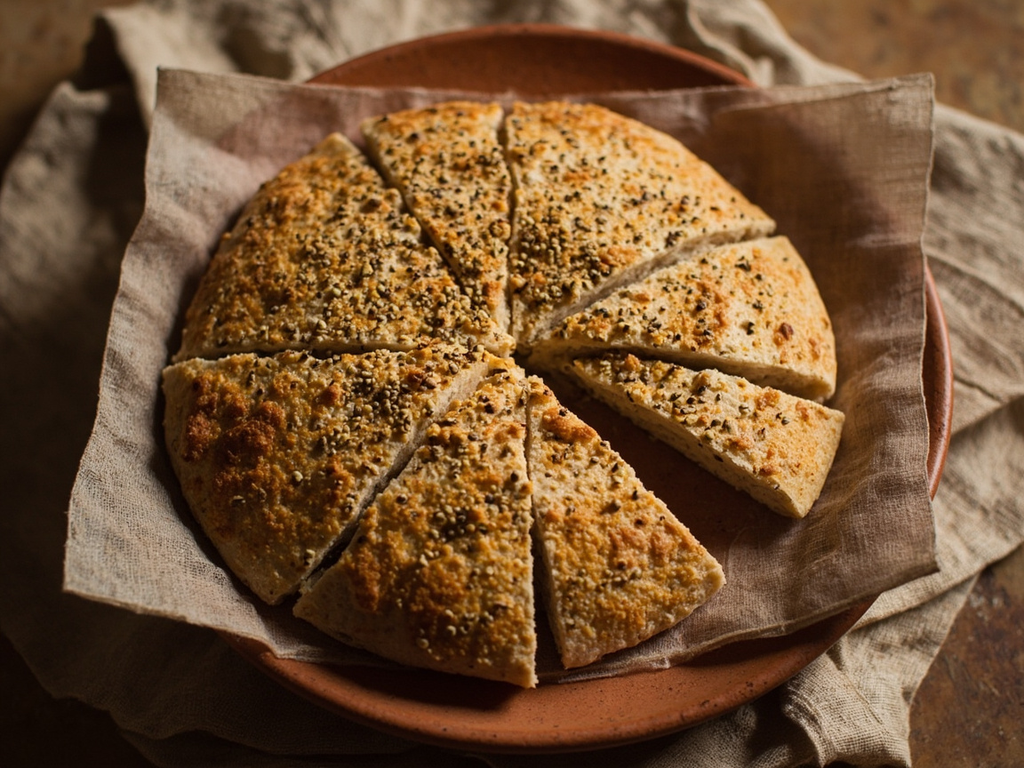
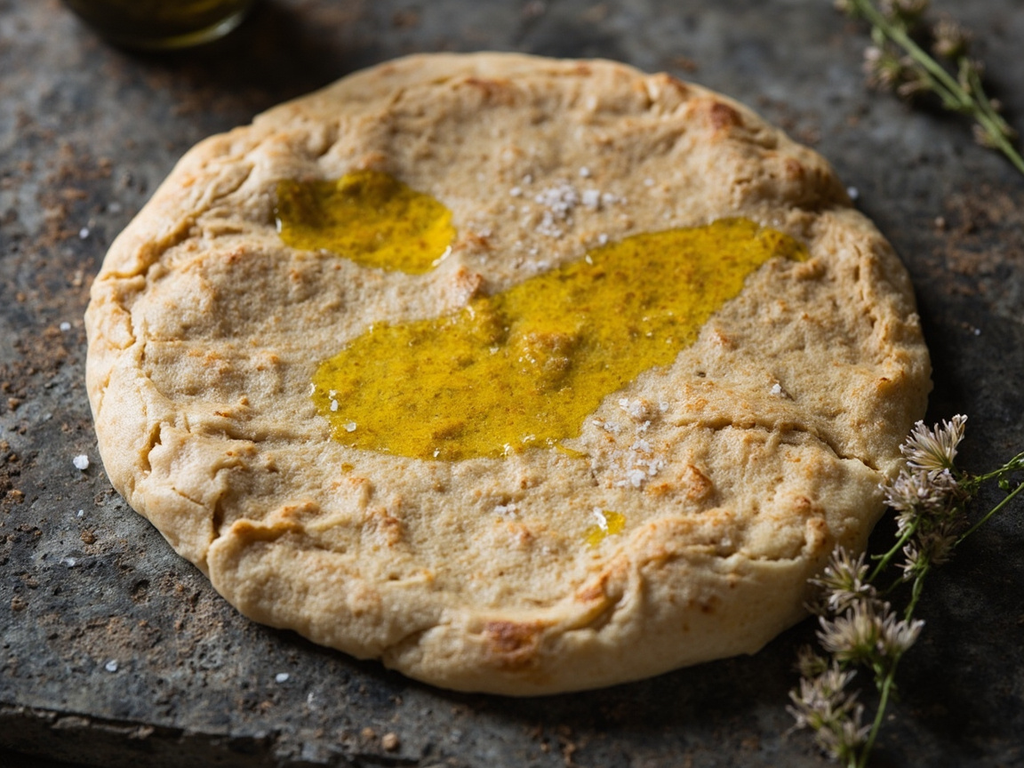
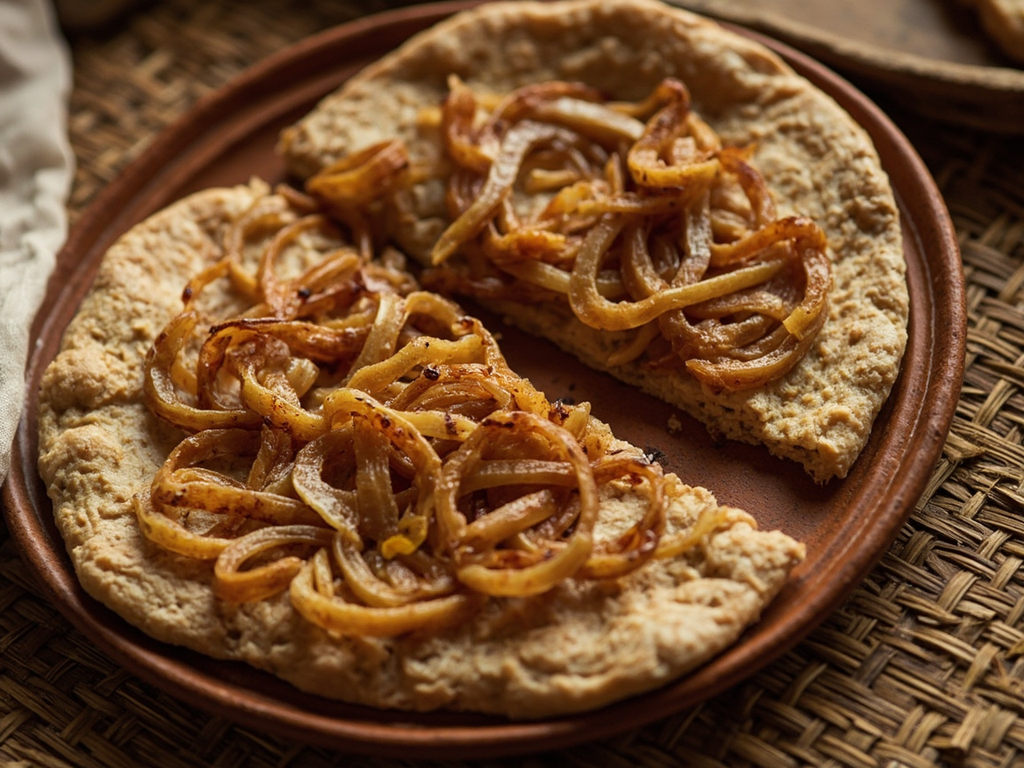
A dense, slightly sweet-nutty bread baked as a thick flatbread, studded with melted onions. The daily bread that nourished workman, scribe, and king alike.
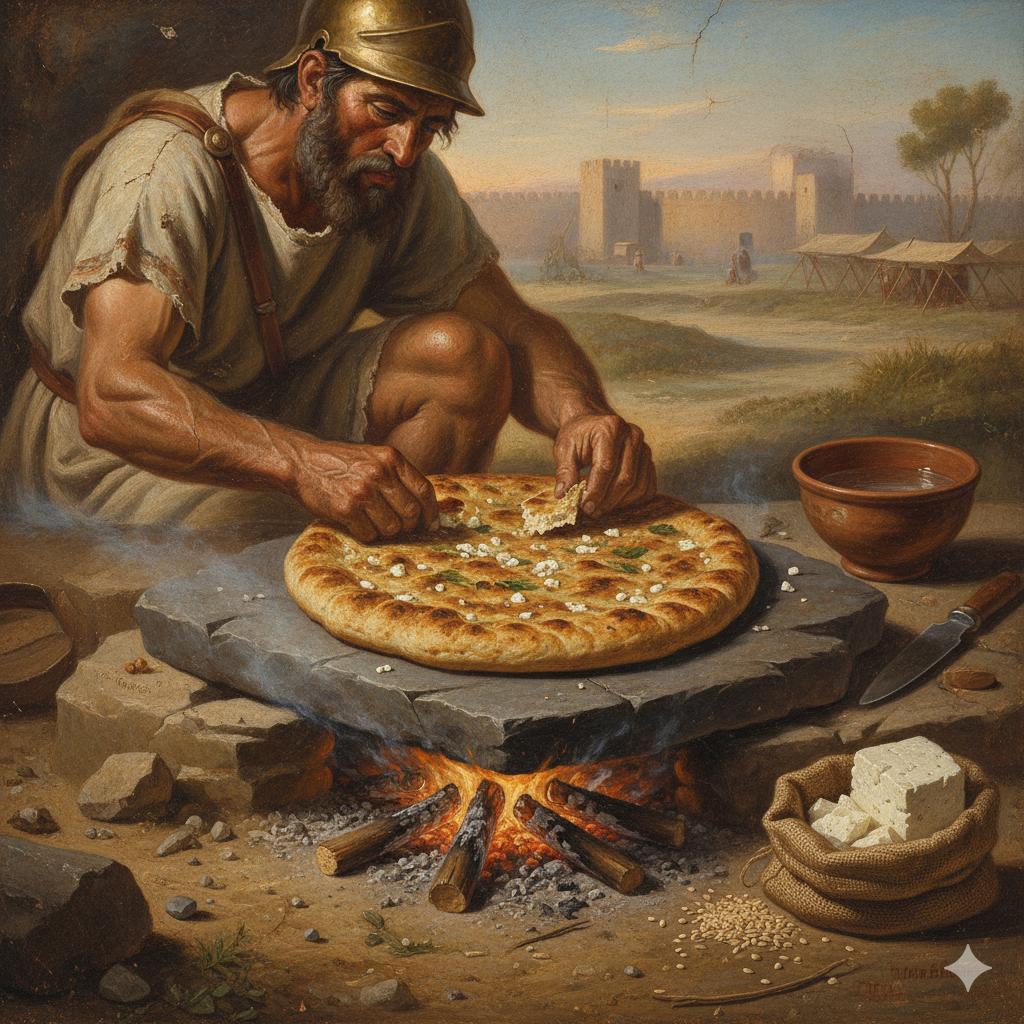
I, Usermaatre Setepenre, Ramesses beloved of Amun, tell you this: before gold and before war, there is bread. My granaries at Pi-Ramesses are so full that the people know no hunger under my reign. See how the emmer is ground on the quern, how the woman kneads the dough in the clay jar, then lays it on the fire of dried dung. Eat it warm with the sweet onion of the Delta, and you will taste what the pharaoh tastes in the morning, for even the Son of Ra breaks this bread.
- •Emmer flour (ancient farro) — one measure (staple cereal)
- •Nile water — by hand (binder)
- •Natural sourdough (yesterday's dough) — a handful (fermentation)
- •Delta onions — a few (garnish)
- •Salt — a pinch (seasoning)
Emmer Bread with Sweet Onions
A dense, slightly sweet-nutty bread baked as a thick flatbread, studded with melted onions. The daily bread that nourished workman, scribe, and king alike.
Why this dish? Emmer bread is the pillar of Ramesside Egypt: the workers of Deir el-Medina were paid in loaves and beer, and the table of Ramesses II, however lavish, first rested on this same wheat. The granaries of Pi-Ramesses, his delta city, overflowed with this emmer.
I, Usermaatre Setepenre, Ramesses beloved of Amun, tell you this: before gold and before war, there is bread. My granaries at Pi-Ramesses are so full that the people know no hunger under my reign. See how the emmer is ground on the quern, how the woman kneads the dough in the clay jar, then lays it on the fire of dried dung. Eat it warm with the sweet onion of the Delta, and you will taste what the pharaoh tastes in the morning, for even the Son of Ra breaks this bread.
Ingredients (period version)
- Emmer flour (ancient farro) — one measure (staple cereal)
- Nile water — by hand (binder)
- Natural sourdough (yesterday's dough) — a handful (fermentation)
- Delta onions — a few (garnish)
- Salt — a pinch (seasoning)
Ingredients
- Spelt flour (or small spelt) — 400 g (staple cereal)
- Warm water — 260 ml (binder)
- Active sourdough starter (or 5 g fresh yeast) — 80 g (fermentation)
- Sweet onions — 2 medium (garnish)
- Salt — 7 g (seasoning)
- Olive oil — 2 tbsp (cooking onions)
Method
- Mix flour, water, starter, and salt; knead 10 min until a supple dough forms. Let rise 3–4 hours (spelt rises more slowly).
- Slice the onions and gently sweat them in olive oil until golden and sweet.
- Incorporate half the onions into the dough, shape into a thick 3 cm flatbread.
- Scatter remaining onions on top, let rest 30 min.
- Bake 30–35 min at 220 °C (ideally on a hot stone) until a golden, hollow-sounding crust.
How it was made : Egyptians baked bread in preheated conical clay molds (bedja) or as flatbreads slapped against the walls of an clay oven. Emmer (Triticum dicoccum), difficult to hull, often left bran and sand grains from the quern in the bread—hence the tooth wear found on mummies.
The contemporary twist : Serve on a board with smoked onion butter and a sprinkle of crushed toasted coriander seeds.
Sources : Delwen Samuel, “Bread Making and Social Interactions at the Amarna Workmen’s Village”, World Archaeology, 1999 · Pierre Tallet, Histoire de la cuisine et de la gastronomie égyptiennes
Ramesses II · Charactorium