 flip
flipBagna Càuda (Hot Anchovy and Garlic Sauce)
Bagna Càuda (Hot Anchovy and Garlic Sauce)
Why this dish? A ritual dish of Piedmontese conviviality, bagna càuda gathers the family around a single pot in the Turin autumn cold. For Gentili, a Piedmontese intellectual attached to his region, it is the dish of reunions, where one talks about music and work while dipping vegetables into the hot sauce.
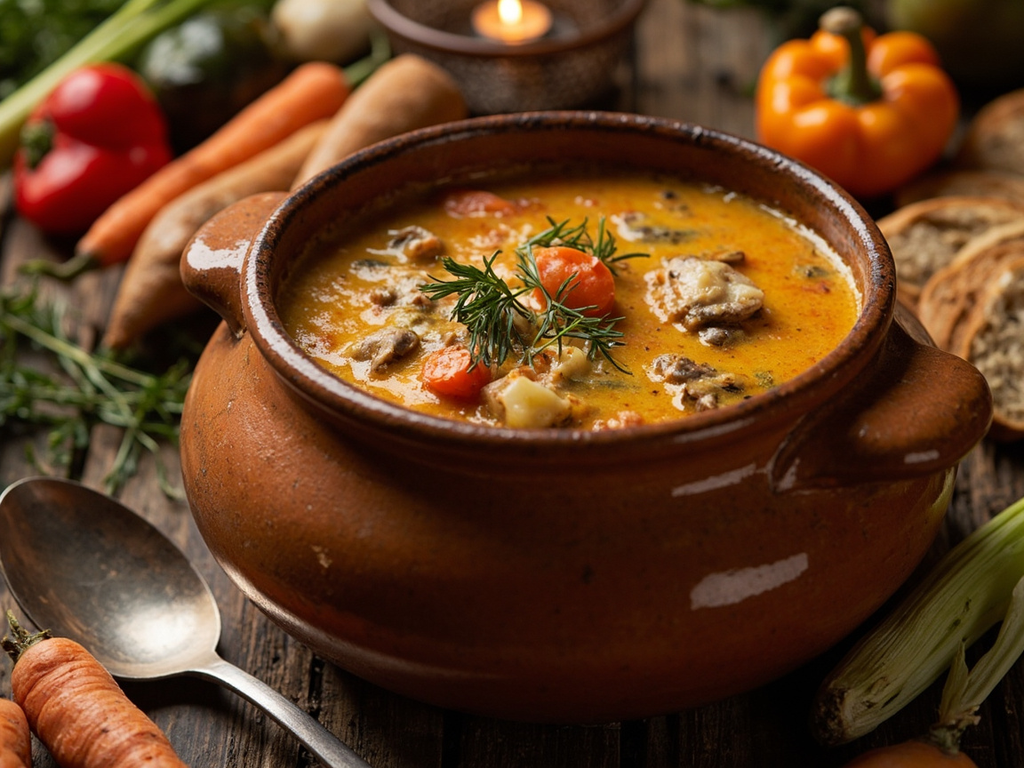
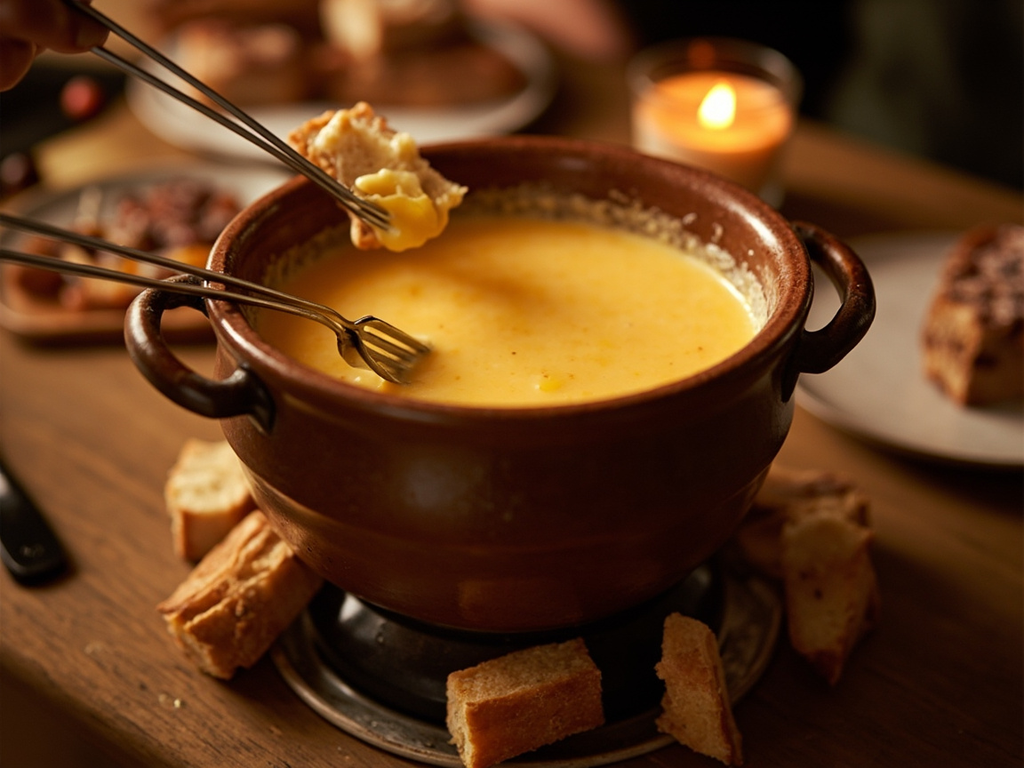
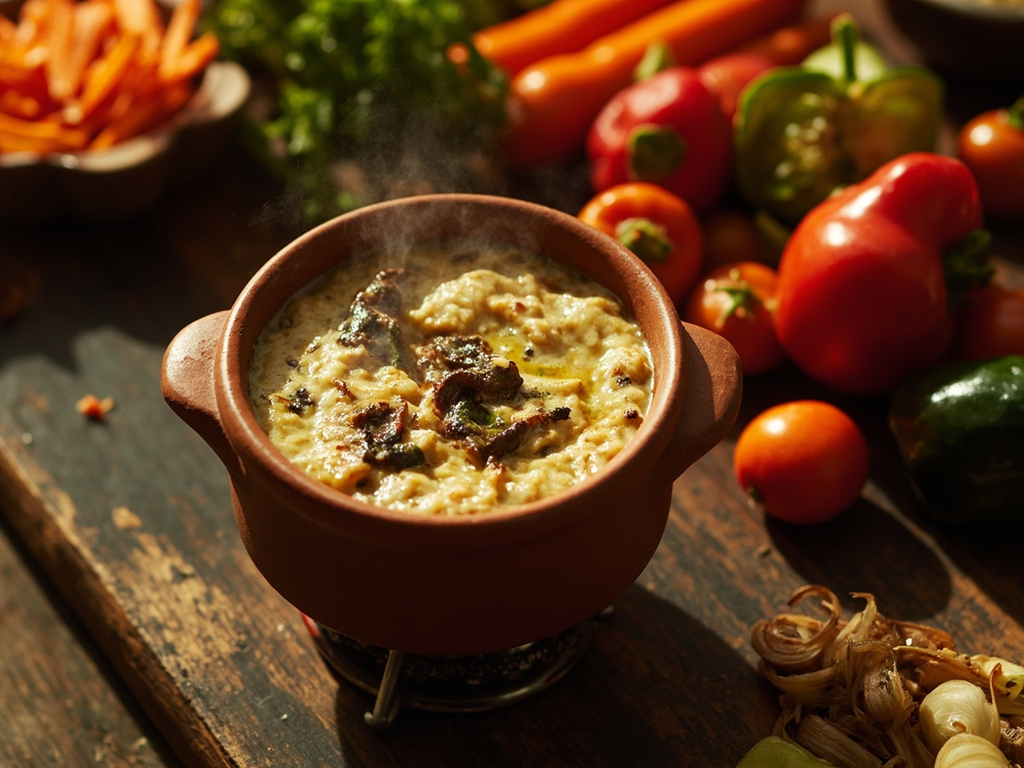
A hot, fragrant sauce where garlic, salted anchovies, and olive oil melt together, kept warm on a small burner in the center of the table. Everyone dips raw and cooked vegetables into it. It is less a dish than a shared ceremony.
Ah, bagna càuda! When autumn came and the mist rose from the Po, we would bring out the fojòt, that little earthenware pot on its flame. I would let the Ligurian anchovies melt in the oil with the garlic — plenty of garlic, do not be afraid, it is the soul of the dish — until it formed a brown, fragrant cream. The whole household would dip cardoons and roasted peppers into it, and we would stay at the table for hours. Believe me, no score warms the heart as much as that shared pot.
- •Salted Ligurian anchovies — a good handful (salty umami, base)
- •Piedmontese garlic — generously (aromatic signature)
- •Olive oil — abundant (binder and gentle cooking)
- •Butter (sometimes) — a knob (smoothness)
- •Cardoons, cabbage, Jerusalem artichokes, grilled peppers — as much as desired (dipping vegetables)
Bagna Càuda (Hot Anchovy and Garlic Sauce)
A hot, fragrant sauce where garlic, salted anchovies, and olive oil melt together, kept warm on a small burner in the center of the table. Everyone dips raw and cooked vegetables into it. It is less a dish than a shared ceremony.
Why this dish? A ritual dish of Piedmontese conviviality, bagna càuda gathers the family around a single pot in the Turin autumn cold. For Gentili, a Piedmontese intellectual attached to his region, it is the dish of reunions, where one talks about music and work while dipping vegetables into the hot sauce.
Ah, bagna càuda! When autumn came and the mist rose from the Po, we would bring out the fojòt, that little earthenware pot on its flame. I would let the Ligurian anchovies melt in the oil with the garlic — plenty of garlic, do not be afraid, it is the soul of the dish — until it formed a brown, fragrant cream. The whole household would dip cardoons and roasted peppers into it, and we would stay at the table for hours. Believe me, no score warms the heart as much as that shared pot.
Ingredients (period version)
- Salted Ligurian anchovies — a good handful (salty umami, base)
- Piedmontese garlic — generously (aromatic signature)
- Olive oil — abundant (binder and gentle cooking)
- Butter (sometimes) — a knob (smoothness)
- Cardoons, cabbage, Jerusalem artichokes, grilled peppers — as much as desired (dipping vegetables)
Ingredients
- Anchovy fillets in oil (or desalted) — 150 g (salty umami, base)
- Garlic cloves — 12 cloves (aromatic signature)
- Extra virgin olive oil — 250 ml (binder and gentle cooking)
- Butter — 30 g (smoothness)
- Seasonal vegetables (cardoons, cauliflower, fennel, carrots, roasted peppers, celery) — a large platter (dipping vegetables)
Method
- Peel the garlic cloves, cut them in half, remove the germ, and cook them very gently in a little milk or water for 10 min to soften them (optional but recommended step).
- In a heavy-bottomed saucepan, heat the oil over very low heat and melt the garlic without browning.
- Add the anchovies and stir patiently: they should dissolve into a homogeneous cream, never frying.
- Off the heat, incorporate the butter to bind and soften the sauce.
- Pour into a pot kept warm on a burner in the center of the table.
- Arrange the raw and cooked vegetables all around, and dip.
How it was made : Bagna càuda dates back at least to the Piedmontese Middle Ages. The massive use of anchovies in a landlocked region is explained by the acciugai, itinerant merchants who brought salt and salted fish up from Liguria: the anchovy often served as a declared cover to conceal undertaxed salt. It was eaten after the grape harvest, as a sign of sharing.
The contemporary twist : For a milder, creamier version, some mount the sauce with a little cream at the end of cooking — and serve it as a fondue with colorful vegetables arranged in a rainbow around the pot.
Alberto Gentili · Charactorium