
Robert Hooke was a 17th-century English polymath and scientist, a pioneer of microscopy. His work *Micrographia* (1665) revealed the microscopic world, and he introduced the term “cell.” He also formulated the law of elasticity that bears his name.
Robert Hooke(1635 — 1703)
Robert Hooke
royaume d'Angleterre
6 min read
Frequently asked questions
Key Facts
- Publishes *Micrographia* in 1665, the first major illustrated work of microscope observations
- Coins the word “cell” to describe the structures he observed in cork
- States Hooke's law on the elasticity of springs (ut tensio sic vis, 1678)
- Curator of Experiments at the Royal Society from 1662
- Born in 1635 on the Isle of Wight, died in London in 1703
Works & Achievements
The first great illustrated work of microscopy, which revealed the microscopic world and introduced the word “cell.”
A physical law relating the deformation of a spring to the force applied: ut tensio, sic vis. Still taught today.
Surveying and architectural work with Christopher Wren after the Great Fire.
A stone column commemorating the Great Fire, designed as a scientific instrument (a vertical telescope).
A mechanism transmitting rotation between two angled shafts, still used in automobile drivetrains today.
Hooke sensed that a component of the air sustained both fire and life, anticipating the discovery of oxygen.
Contributions to the regulating spring of watches, the subject of a priority dispute with Christiaan Huygens.
Anecdotes
In his book *Micrographia* (1665), Hooke observed a thin slice of cork under the microscope. The tiny cavities he saw reminded him of the cells (small rooms) of monks in a monastery: that is how he coined the word "cell
still used in biology today.
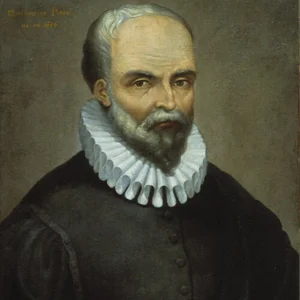
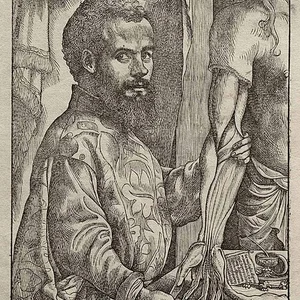
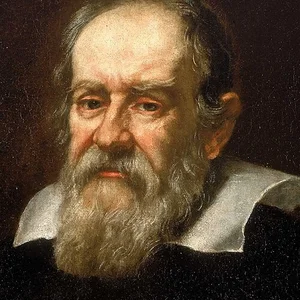
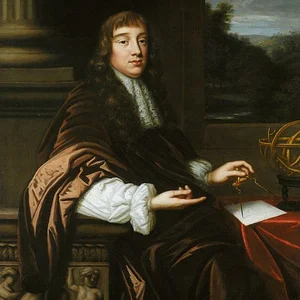
Hooke and the famous Isaac Newton developed a fierce rivalry. When Hooke claimed to have had the idea of gravitation before him, Newton, furious, removed almost every mention of Hooke from his great work *Principia*. Legend has it that no reliable portrait of Hooke has survived, perhaps because of this feud.
After the Great Fire of London in 1666, Hooke became one of the surveyors charged with redesigning the city. He worked alongside the architect Christopher Wren and took part in rebuilding many structures, including the Monument commemorating the fire.
Hooke was the official "experimenter" of the Royal Society: every week, he had to present several new experiments before the scholars. This exhausting duty forced him to dabble in nearly every field, from astronomy to mechanics to biology.
Hooke stated his famous law of the elasticity of springs as a Latin anagram
*ceiiinosssttuv*
in 1676. He revealed the solution (*ut tensio
sic vis*:
as the extension, so the force
) only two years later
a common way at the time to protect a discovery while establishing the priority of its date.
Primary Sources
These pores, or cells, were not very deep, but consisted of a great many little boxes... These were the first microscopical pores I ever saw, and perhaps the first that were ever seen.
Ut tensio, sic vis; that is, the force with which a spring tends to return to its resting position is always proportional to the distance by which it has been displaced.
By the means of telescopes, there is nothing so far distant but may be represented to our view; and by the help of microscopes, there is nothing so small as to escape our inquiry.
In it, Hooke records day by day his experiments, his appointments, his purchases, and his headaches, offering a rare testimony of the life of a London scholar.
Key Places
Coastal village in southern England where Hooke was born and spent his childhood, the son of a parson.
Where he studied, became Robert Boyle's assistant, and joined the circle of the future founders of the Royal Society.
Hooke was professor of geometry here and lodged here for many years. He also led the meetings of the Royal Society here.
Learned society of which Hooke was the first Curator of Experiments, presenting new demonstrations every week.
Column commemorating the Great Fire of 1666, designed by Hooke and Christopher Wren; Hooke also carried out scientific experiments there.
Typical Objects

A multi-lens instrument that Hooke improved and used for the Micrographia. He added a lamp and a glass globe to focus light onto the sample.

The object on which Hooke studied elasticity to formulate his law. He also used it to design spiral-spring clockwork mechanisms.

A pneumatic machine that Hooke built for Robert Boyle to study air and the vacuum. It made possible the famous experiments on atmospheric pressure.

An astronomical instrument that Hooke was one of the first to actually build. He used it to observe the planet Mars and the craters of the Moon.

An instrument for measuring air pressure that Hooke improved with a needle dial. He used it to record the daily weather.

Hooke meticulously recorded and drew each of his observations. His detailed engravings, such as the one of the flea, made the Micrographia famous.
School Curriculum
Vocabulary & Tags
Key Vocabulary
Tags
Daily Life
Morning
Hooke rose early and immediately noted in his diary his mood and the weather, recorded from his barometer. The morning was often devoted to preparing the experiments he was to present to the Royal Society.
Afternoon
In the afternoon, he roamed London to supervise the reconstruction sites, or received craftsmen and instrument makers. He also discussed his ideas in the coffee houses, the centres of scholarly exchange of the time.
Evening
In the evening, Hooke would meet Christopher Wren and other friends at a coffee house to talk about science late into the night. Back home, he continued his reading and calculations, often until the small hours.
Food
Like many well-off Londoners, he ate bread, meat and cheese, and drank beer and coffee, which was then fashionable. Hooke, often unwell, experimented on himself with various remedies and purges that wrecked his health.
Clothing
He wore the dress of seventeenth-century English gentlemen: a linen shirt, waistcoat, long coat, breeches and stockings, and sometimes a wig. His figure was described as thin and stooped.
Housing
Hooke lodged in his apartments at Gresham College, which served at once as home, laboratory and workshop. The place was cluttered with instruments, books and experiments in progress.
Historical Timeline
Period Vocabulary
Liens externes & ressources
Références
Œuvres
Micrographia
1665
Loi de Hooke (élasticité)
1678
Reconstruction de Londres
1666-1670
Le Monument de Londres
1677
Le joint universel (joint de Hooke)
1676
Théorie de la combustion et de la respiration
1665
Travaux d'horlogerie (ressort spiral)
1675