 flip
flipCracked Olives in Hyssop Brine
Cracked Olives in Hyssop Brine
Why this dish? Ekron lived by the olive tree. Before oil, there was the fruit: bitter, inedible raw, debittered in brine to keep all year. On the table of the deity of the oil city, these fermented olives were the constant accompaniment, green gold in its humblest form.
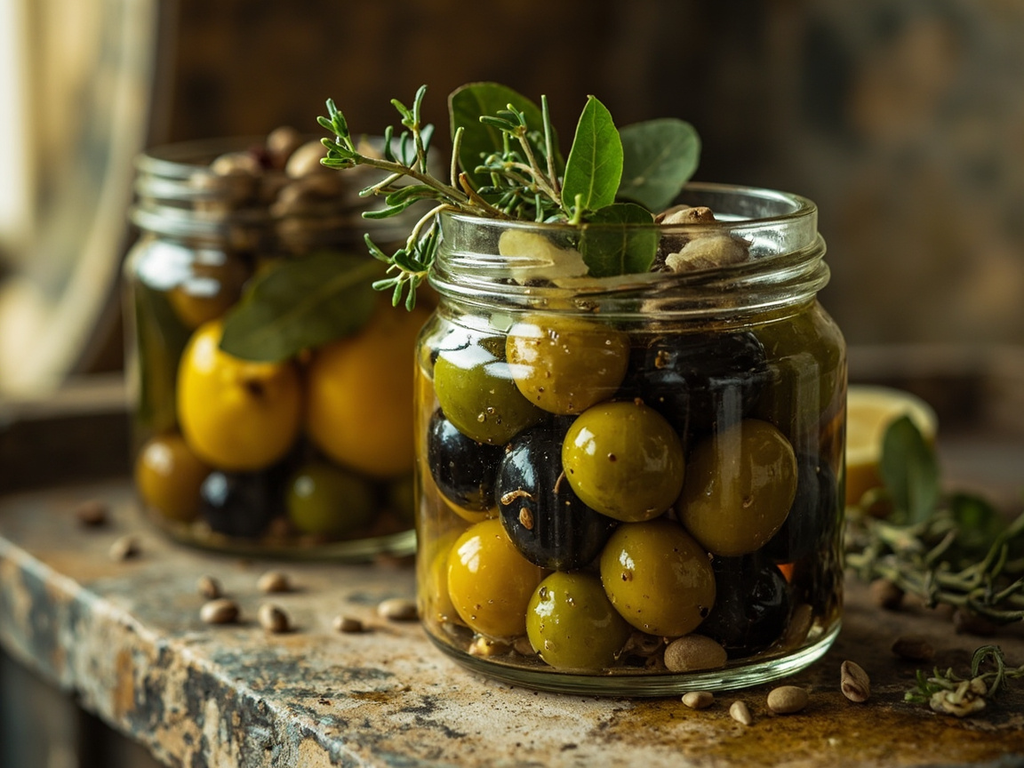
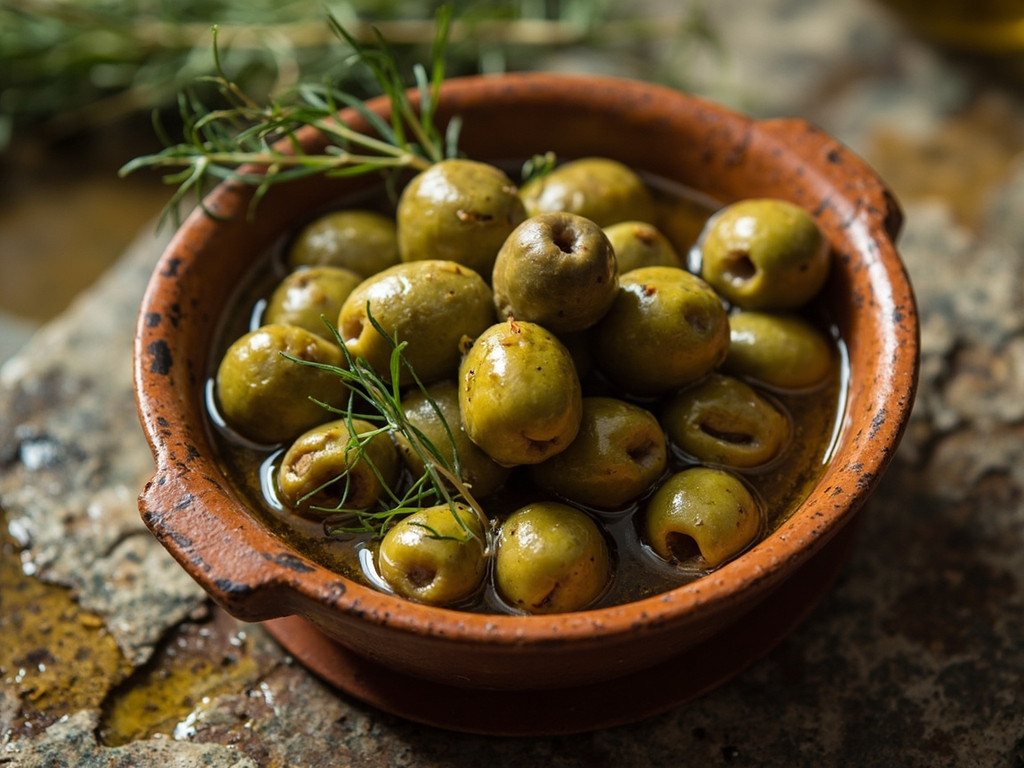
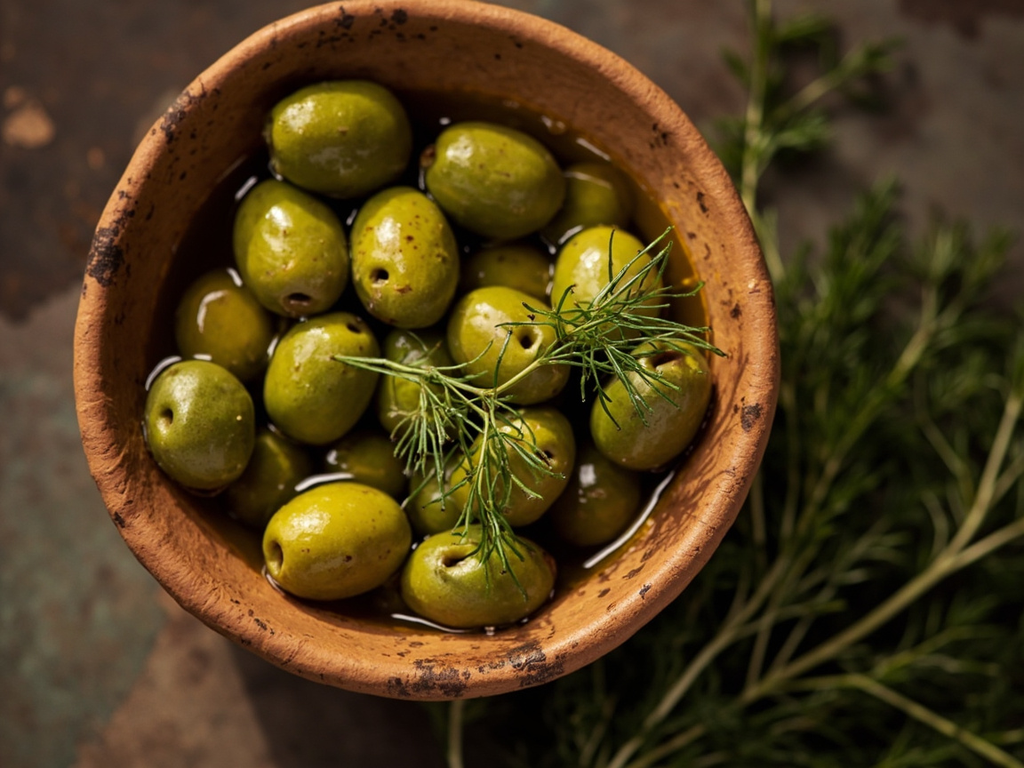
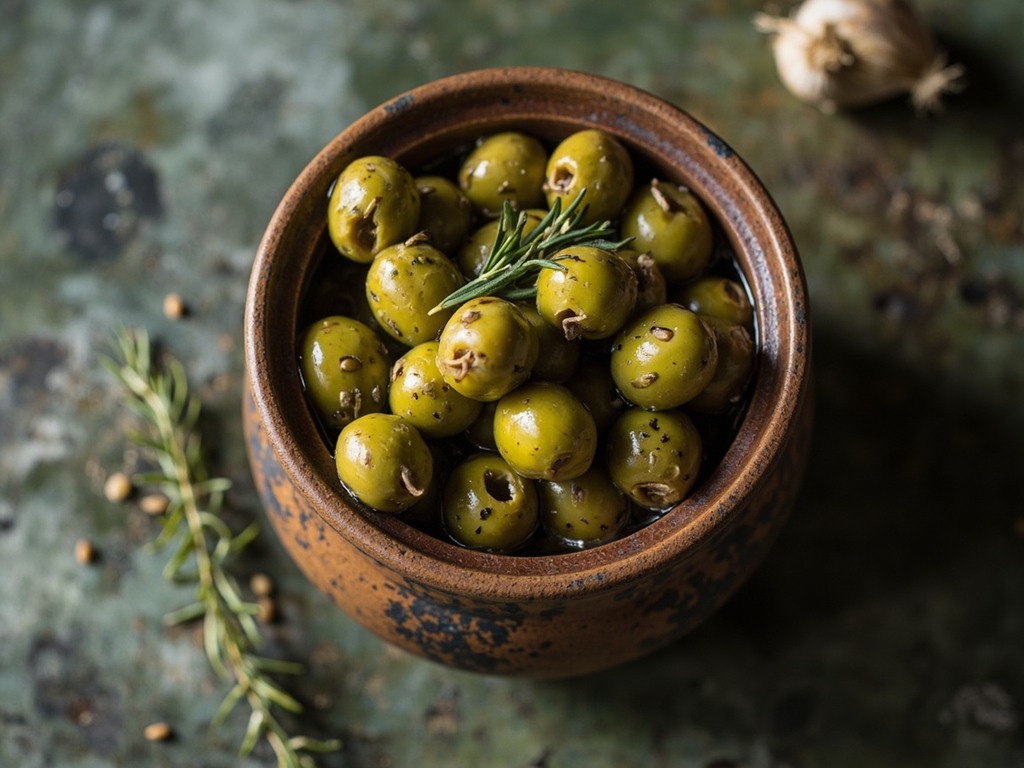
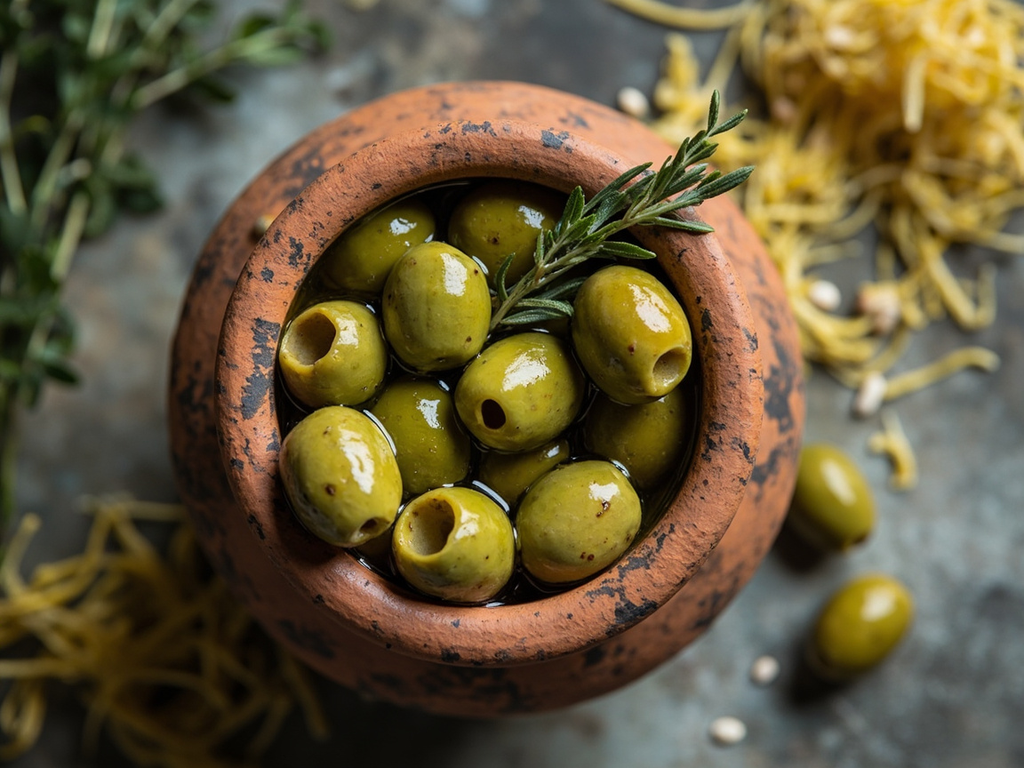
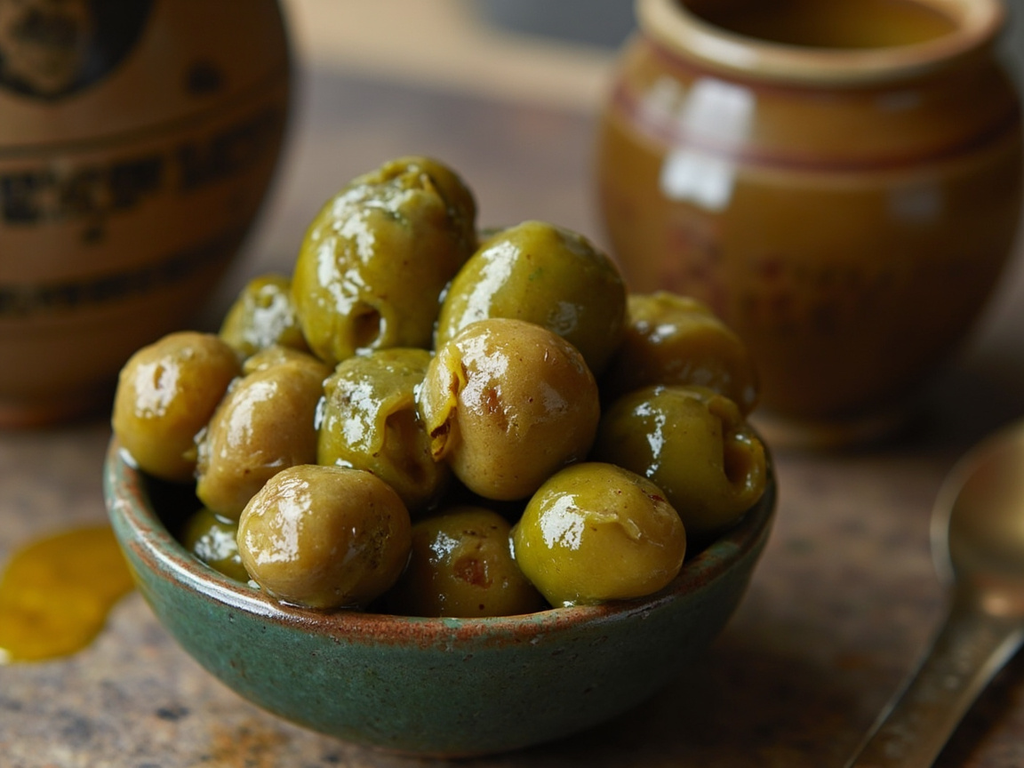
Green olives cracked, soaked in water to remove bitterness, then preserved in salted brine perfumed with hyssop, fennel, and garlic. Bitter, salty, alive with fermentation — the emblematic preserve of the oil city.
My city crushed olives by the thousands of jars — but the fruit, you see, does not yield so quickly. Raw, it twists your mouth with bitterness; you must crack it, drown it in water that you change and change again, then lay it in brine until it softens. My servants kept sealed jars of it in the depths of the temple, perfumed with hyssop and garlic. Be patient, mortal: what is bitter today will be your best bite in two moons.
- •Fresh green olives — full basket (base)
- •Salt — generously (brine and preservation)
- •Spring water — to cover (soaking and brine)
- •Hyssop, fennel, garlic — a few sprigs and cloves (flavor)
- •Drizzle of Ekron olive oil — at serving (finish)
Cracked Olives in Hyssop Brine
Green olives cracked, soaked in water to remove bitterness, then preserved in salted brine perfumed with hyssop, fennel, and garlic. Bitter, salty, alive with fermentation — the emblematic preserve of the oil city.
Why this dish? Ekron lived by the olive tree. Before oil, there was the fruit: bitter, inedible raw, debittered in brine to keep all year. On the table of the deity of the oil city, these fermented olives were the constant accompaniment, green gold in its humblest form.
My city crushed olives by the thousands of jars — but the fruit, you see, does not yield so quickly. Raw, it twists your mouth with bitterness; you must crack it, drown it in water that you change and change again, then lay it in brine until it softens. My servants kept sealed jars of it in the depths of the temple, perfumed with hyssop and garlic. Be patient, mortal: what is bitter today will be your best bite in two moons.
Ingredients (period version)
- Fresh green olives — full basket (base)
- Salt — generously (brine and preservation)
- Spring water — to cover (soaking and brine)
- Hyssop, fennel, garlic — a few sprigs and cloves (flavor)
- Drizzle of Ekron olive oil — at serving (finish)
Ingredients
- Raw green olives (untreated) — 500 g (base)
- Coarse salt — 100 g per liter of water (brine (~10%))
- Water — 1 to 1.5 l (soaking and brine)
- Hyssop or thyme sprigs + fennel seeds — a few (flavor)
- Garlic — 3 cloves (flavor)
- Extra virgin olive oil — a drizzle (finish at serving)
Method
- Crack or tap each olive to split the flesh without breaking the pit.
- Cover with cold water and change the water daily for 8-12 days to remove bitterness (taste to judge).
- Prepare a 10% brine (100 g salt per liter of water), boil with hyssop and fennel, then let cool.
- Place drained olives in a jar with garlic, cover with cold brine, weigh down to keep submerged.
- Ferment at room temperature for 3-6 weeks; serve drained with a drizzle of olive oil.
How it was made : Raw olives are inedible due to oleuropein, which is very bitter. Since antiquity, they were debittered by repeated water soaks then preserved in salted brine, sometimes flavored with herbs and fennel. In a city like Ekron, capital of oil, the fermentation of table olives was a common domestic and temple skill.
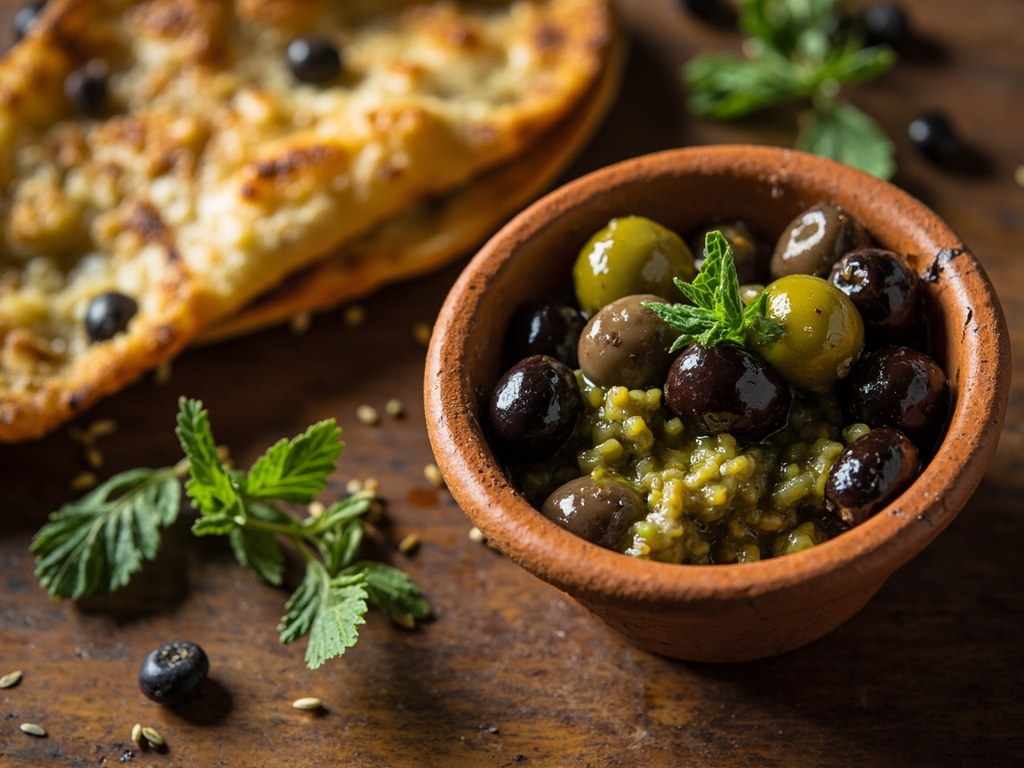
The contemporary twist : Serve in a black bowl with a shard of lemon zest and a hyssop leaf — the bitterness of olden days presented as a wine-bar delicacy.
Sources : Seymour Gitin, studies on Tel Miqne-Ekron and the olive oil industry · Columella, De re rustica (ancient methods of olive preservation)
Beelzebub · Charactorium