 flip
flipCracked green olives in brine
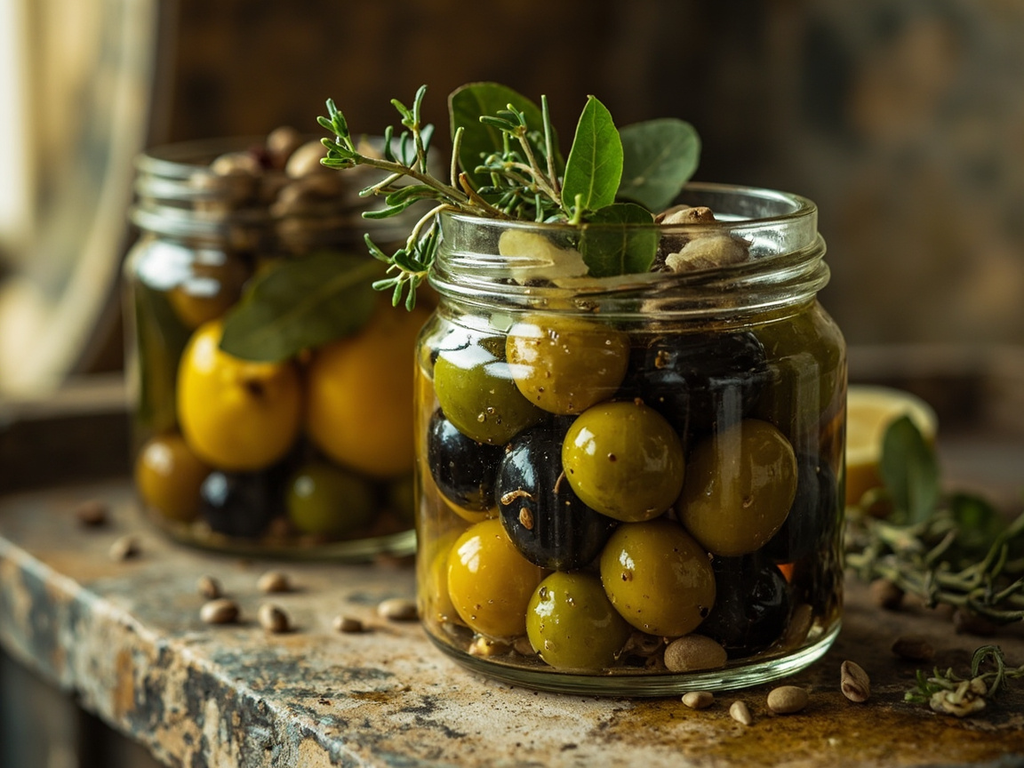
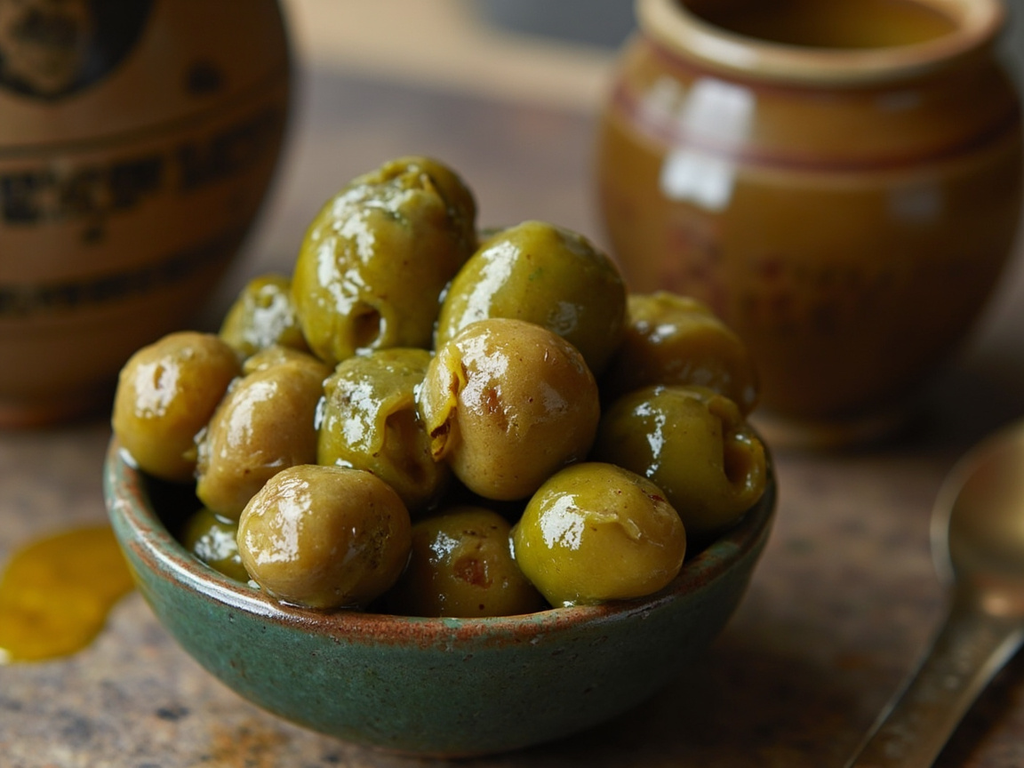
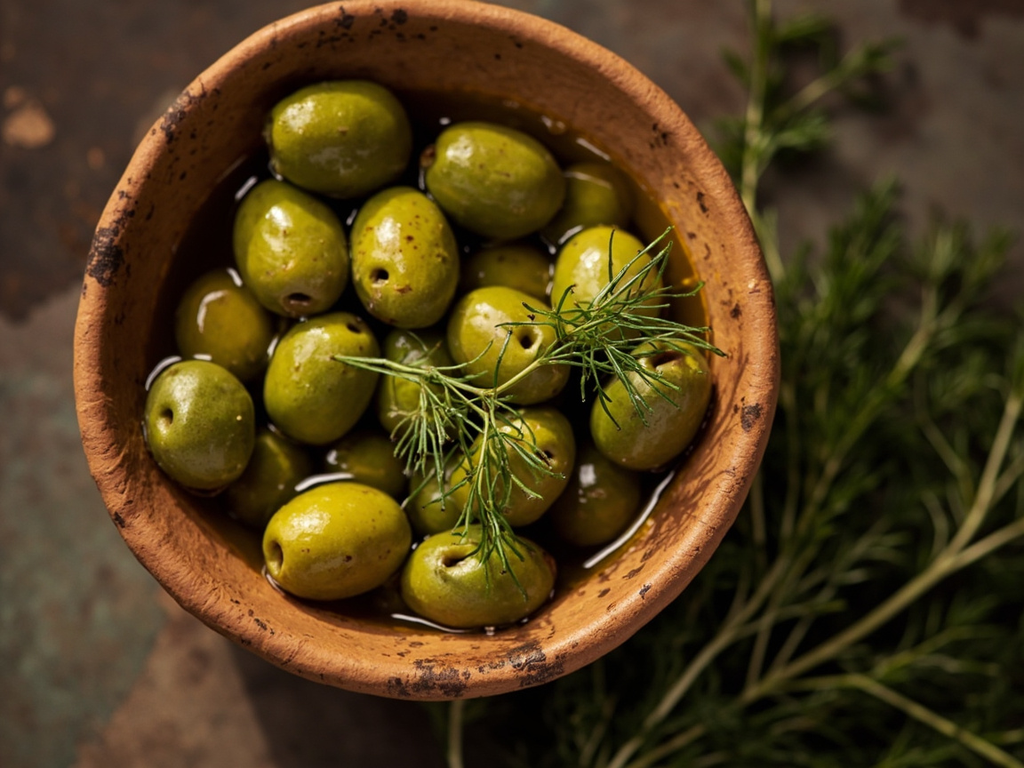
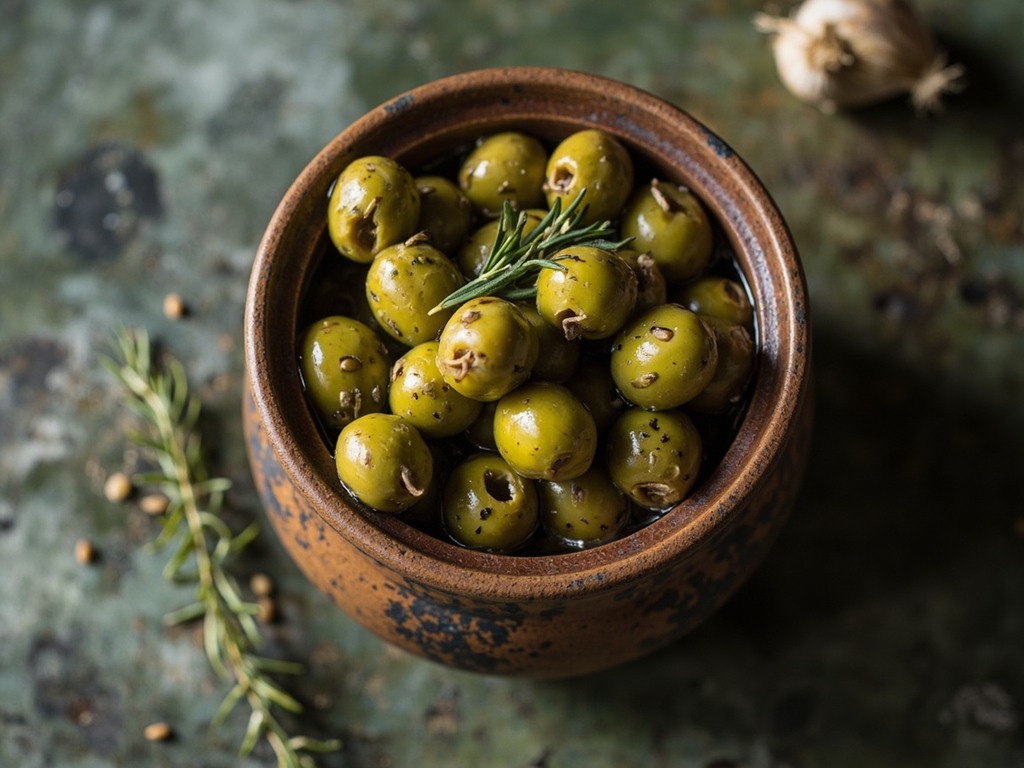
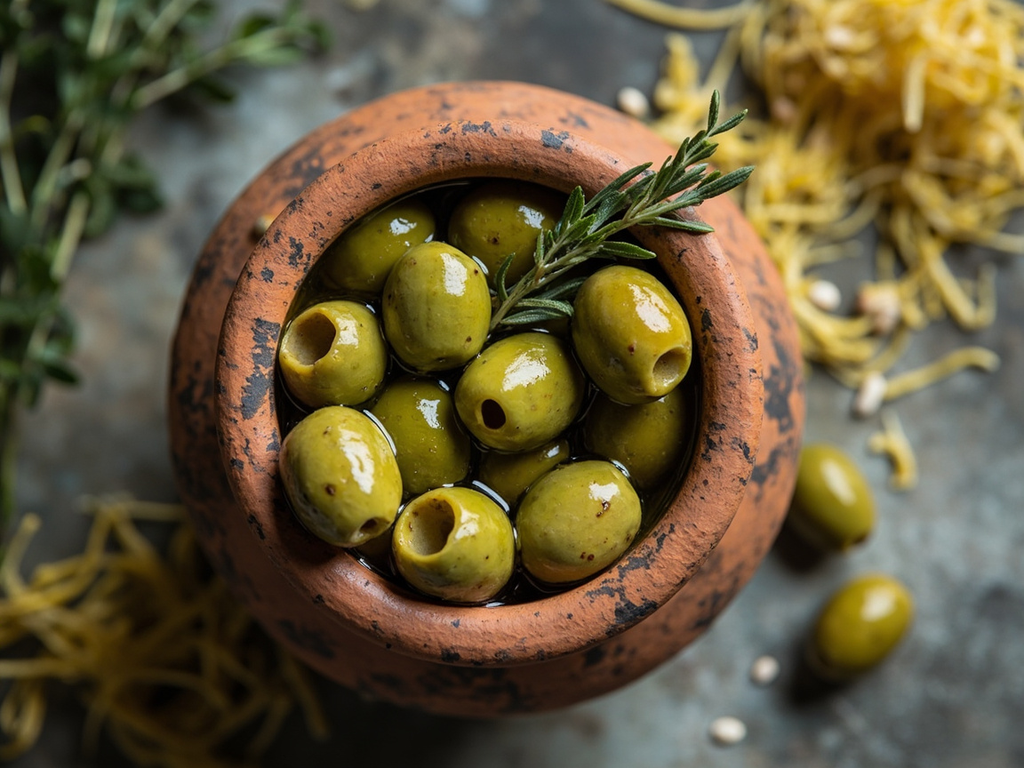
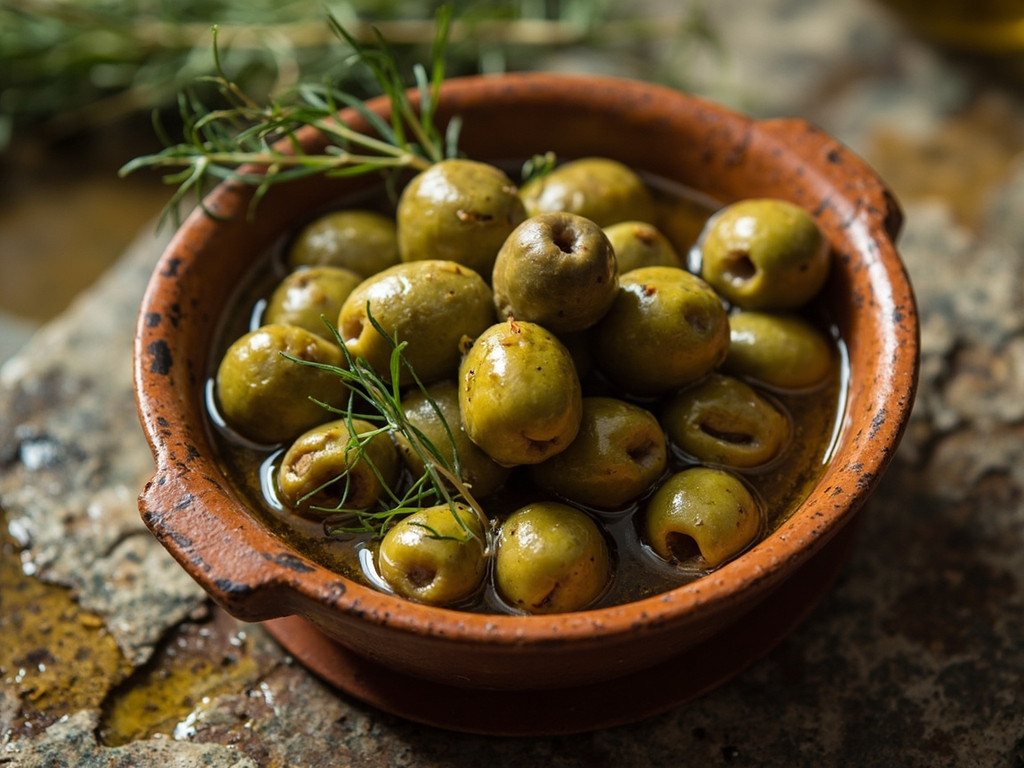
Cracked green olives in brine
Why this dish? The olive tree is Athena's tree, her gift to the city. Preserving its fruit in brine is to extend her blessing all year, and to keep on the table an opson that never spoils — exactly the provident spirit of the goddess of practical wisdom.
Fresh green olives, split, purged of bitterness, then immersed in a brine scented with fennel and wine vinegar. A preserved condiment that enlivens maza all winter.
The fruit of my tree, mortal, cannot be eaten raw: it is so bitter it would seal your mouth. That is why we split it, bathe it in spring water for many days, changing it daily, until the bitterness yields. Then I want salt, much salt, and wild fennel, and a little sour wine so the fruit keeps from solstice to solstice. He who knows how to preserve never goes hungry: remember this lesson better than my battles.
- •Fresh green olives — a full basket (main ingredient)
- •Spring water — renewed daily (debittering)
- •Sea salt — generously (brine and preservation)
- •Wild fennel — a few stems (aromatic)
- •Wine vinegar — a splash (acidity and preservation)
Cracked green olives in brine
Fresh green olives, split, purged of bitterness, then immersed in a brine scented with fennel and wine vinegar. A preserved condiment that enlivens maza all winter.
Why this dish? The olive tree is Athena's tree, her gift to the city. Preserving its fruit in brine is to extend her blessing all year, and to keep on the table an opson that never spoils — exactly the provident spirit of the goddess of practical wisdom.
The fruit of my tree, mortal, cannot be eaten raw: it is so bitter it would seal your mouth. That is why we split it, bathe it in spring water for many days, changing it daily, until the bitterness yields. Then I want salt, much salt, and wild fennel, and a little sour wine so the fruit keeps from solstice to solstice. He who knows how to preserve never goes hungry: remember this lesson better than my battles.
Ingredients (period version)
- Fresh green olives — a full basket (main ingredient)
- Spring water — renewed daily (debittering)
- Sea salt — generously (brine and preservation)
- Wild fennel — a few stems (aromatic)
- Wine vinegar — a splash (acidity and preservation)
Ingredients
- Raw green olives (untreated) — 500 g (main ingredient)
- Water — to cover, changed daily (debittering)
- Coarse salt — 80 g per liter of brine (brine and preservation)
- Fennel (seeds or stems) — 1 tbsp (aromatic)
- Wine vinegar — 3 tbsp (acidity and preservation)
- Olive oil — to cover when serving (signature finish)
Method
- Crack each olive with a knife or crush lightly.
- Cover with cold water and soak for 8-10 days, changing water daily to remove bitterness.
- Prepare a brine (80 g coarse salt per liter of boiled then cooled water).
- Drain olives, place in a jar with fennel, add vinegar, cover with brine.
- Seal and let mature in a cool place for 3-4 weeks. Serve drizzled with olive oil.
How it was made : The Greeks debittered olives through successive soakings before preserving them in salted brine, sometimes with vinegar, fennel, or herbs. They were a cheap opson present on every table, capable of lasting from one harvest to the next.
The contemporary twist : Add a lemon zest and a bay leaf to the jar; serve as 'Athena's olives' for aperitif.
Sources : Cato the Elder, De agricultura (olive preservation methods, ancient world) · Andrew Dalby, Food in the Ancient World from A to Z, Routledge, 2003
Athena · Charactorium