 flip
flipZū — Brine-Fermented Mallow
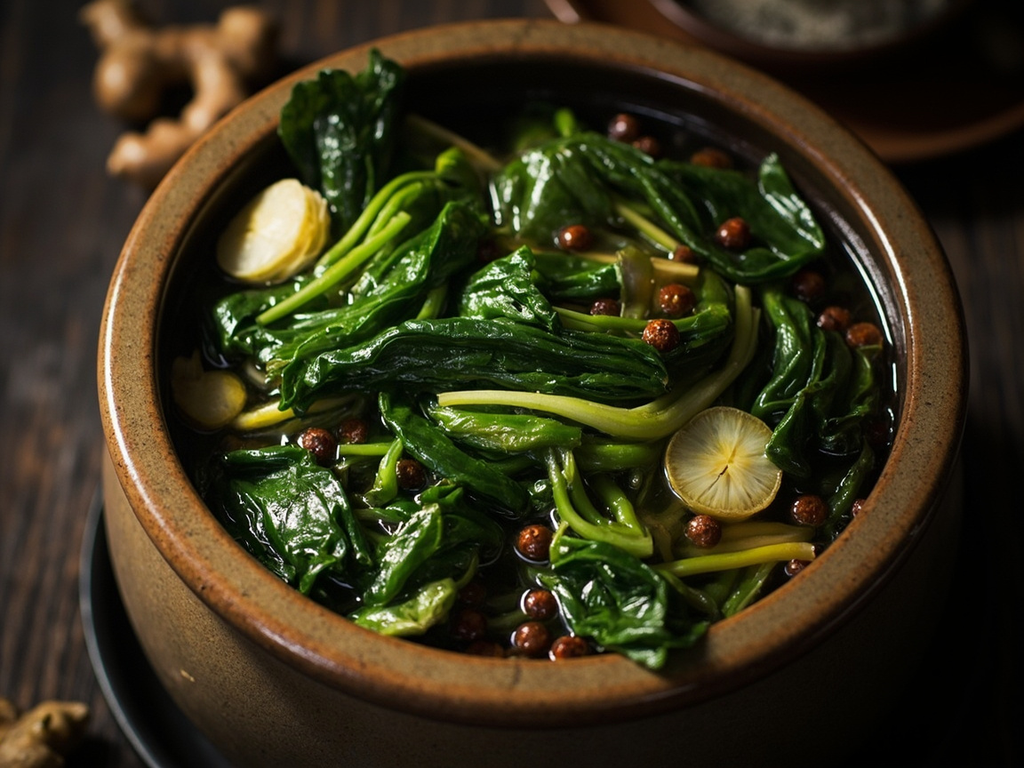
Zū — Brine-Fermented Mallow
Why this dish? Preserving vegetables for winter was an essential domestic skill, exactly the kind of household diligence Ban Zhao extols as virtue in her Lessons. A jar of fermented mallow on the shelf is the foresight of an orderly home—and a permanent tangy accompaniment to grain.
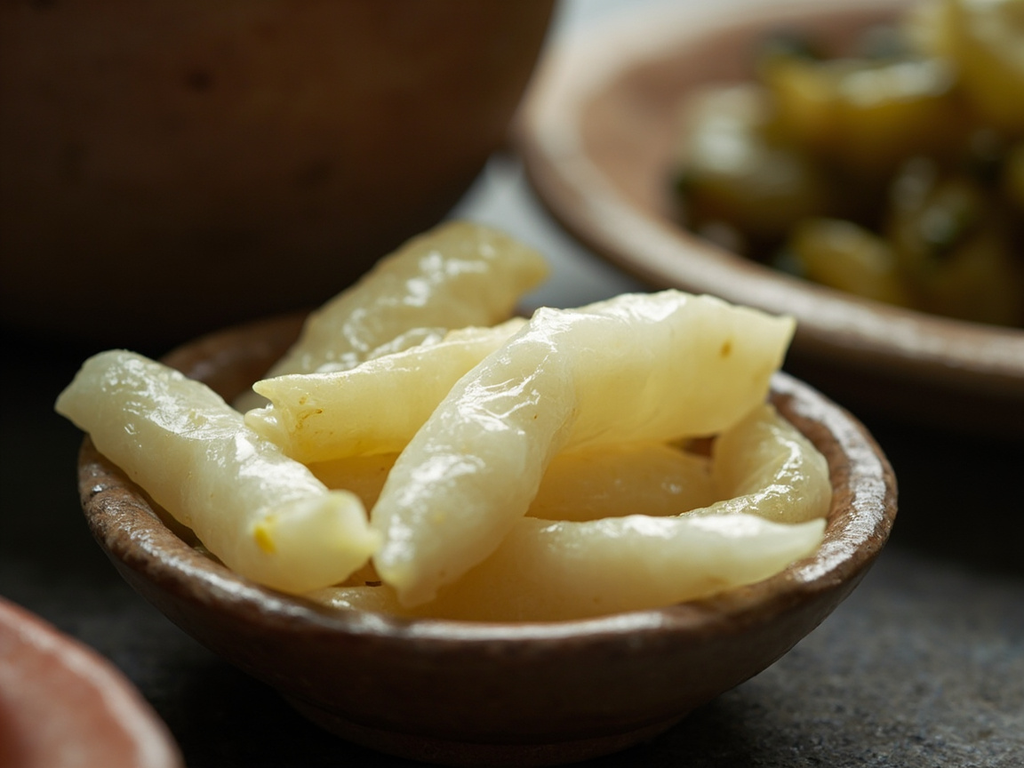
Firm leaves salted and packed into a jar, fermenting gently until sour and crunchy. The Han 'pickle,' which lasts through the cold months and enlivens any bowl of millet.
A well-kept household does not fear winter: in autumn, I salt and press the leaves into the jar, expel the air, cover. Time transforms them—they become sour and firm, and last while the garden sleeps. It is a small thing, I know, but the prudent woman is measured by these silent reserves. Take out a handful to enliven the grain: nothing is lost, all is kept, and the table remains honorable until spring.
- •Mallow leaves (kuí) or mustard greens — full a jar (vegetable to ferment)
- •Salt — generously (brine and preservation)
- •Ginger, Sichuan pepper — to taste (flavor (optional))
Zū — Brine-Fermented Mallow
Firm leaves salted and packed into a jar, fermenting gently until sour and crunchy. The Han 'pickle,' which lasts through the cold months and enlivens any bowl of millet.
Why this dish? Preserving vegetables for winter was an essential domestic skill, exactly the kind of household diligence Ban Zhao extols as virtue in her Lessons. A jar of fermented mallow on the shelf is the foresight of an orderly home—and a permanent tangy accompaniment to grain.
A well-kept household does not fear winter: in autumn, I salt and press the leaves into the jar, expel the air, cover. Time transforms them—they become sour and firm, and last while the garden sleeps. It is a small thing, I know, but the prudent woman is measured by these silent reserves. Take out a handful to enliven the grain: nothing is lost, all is kept, and the table remains honorable until spring.
Ingredients (period version)
- Mallow leaves (kuí) or mustard greens — full a jar (vegetable to ferment)
- Salt — generously (brine and preservation)
- Ginger, Sichuan pepper — to taste (flavor (optional))
Ingredients
- Mustard greens, Chinese cabbage, or chard (if mallow unavailable) — 1 kg (vegetable to ferment)
- Non-iodized salt — 20 to 25 g (2 to 2.5% of weight) (brine)
- Ginger, sliced — a few slices (flavor)
- Sichuan pepper — 1 teaspoon (flavor)
Method
- Wash and dry the leaves. Cut them into wide strips.
- Massage with salt until they release water and soften. Add ginger and pepper.
- Pack firmly into a clean jar, expelling air; the leaves must be submerged in their juice (add a little 2% brine if needed). Weigh down with a weight.
- Cover without sealing airtight and let ferment 5 to 10 days at room temperature: the taste will become sour.
- Then move to cool storage. Serve in small quantity with grain. Discard if mold or off odor appears.
How it was made : Zū (brine-fermented vegetable) is attested in early texts and systematized shortly after in the Qimin Yaoshu, which gives several recipes. Salt lacto-fermentation allowed winter survival without refrigeration—a cornerstone technique of Chinese pantries.
The contemporary twist : Rolled tightly and sliced into thin rosettes, arranged next to warm rice like a 'kimchi before kimchi' from the Han dynasty.
Ban Zhao · Charactorium