 flip
flipSharbat-e anâr (pomegranate syrup with rose water)
Sharbat-e anâr (pomegranate syrup with rose water)
Why this dish? The pomegranate appears constantly in classical Persian poetry as a symbol of beauty, fertility, and paradise. Rûdakî, who sang of the orchards of Transoxiana and the sweetness of Samarkand's fruits, certainly knew sharbat — refreshing drinks made from fruit juice and sugar or honey — attested in the Persian world since the 9th century, and whose word gave French "sorbet".
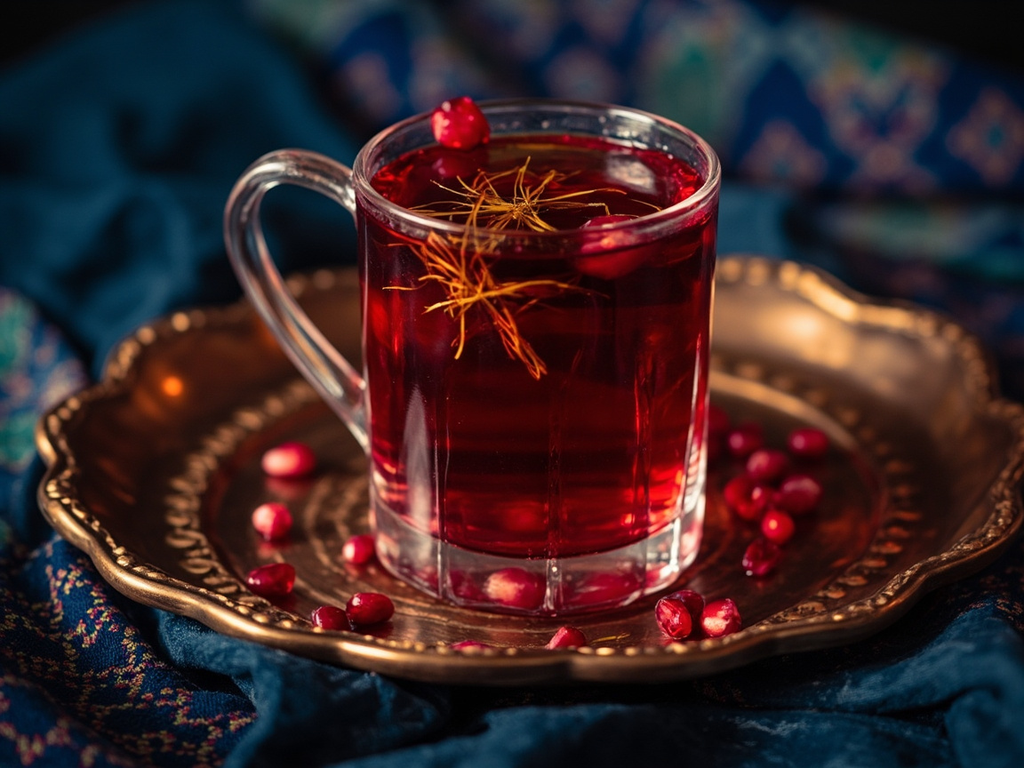
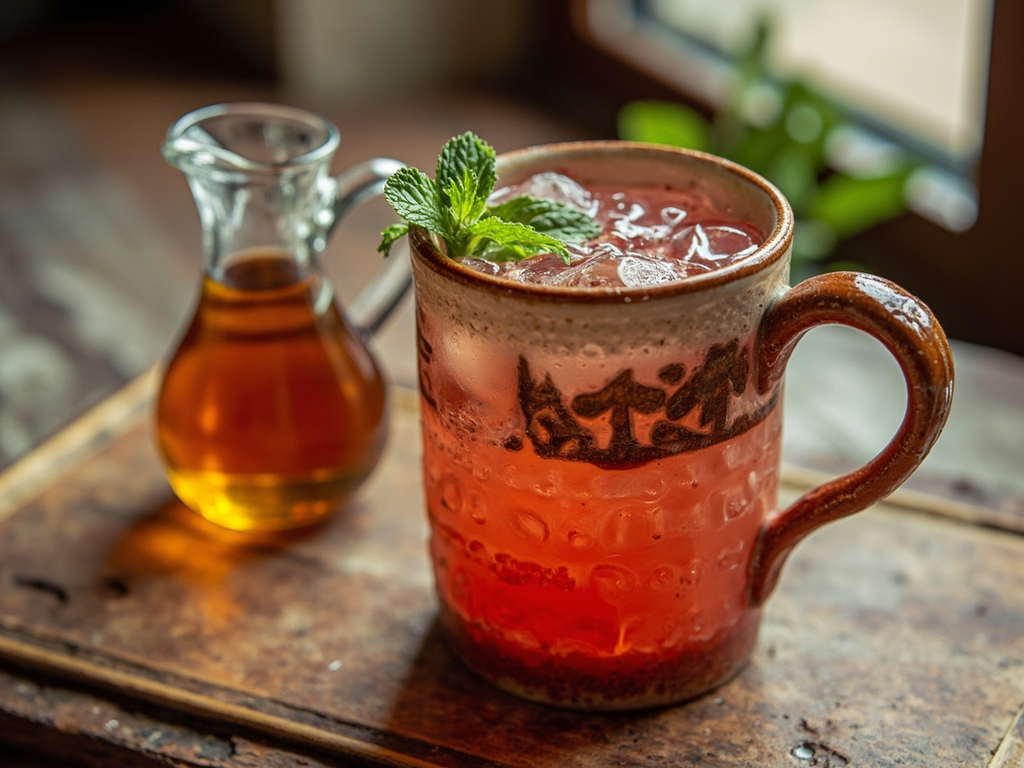
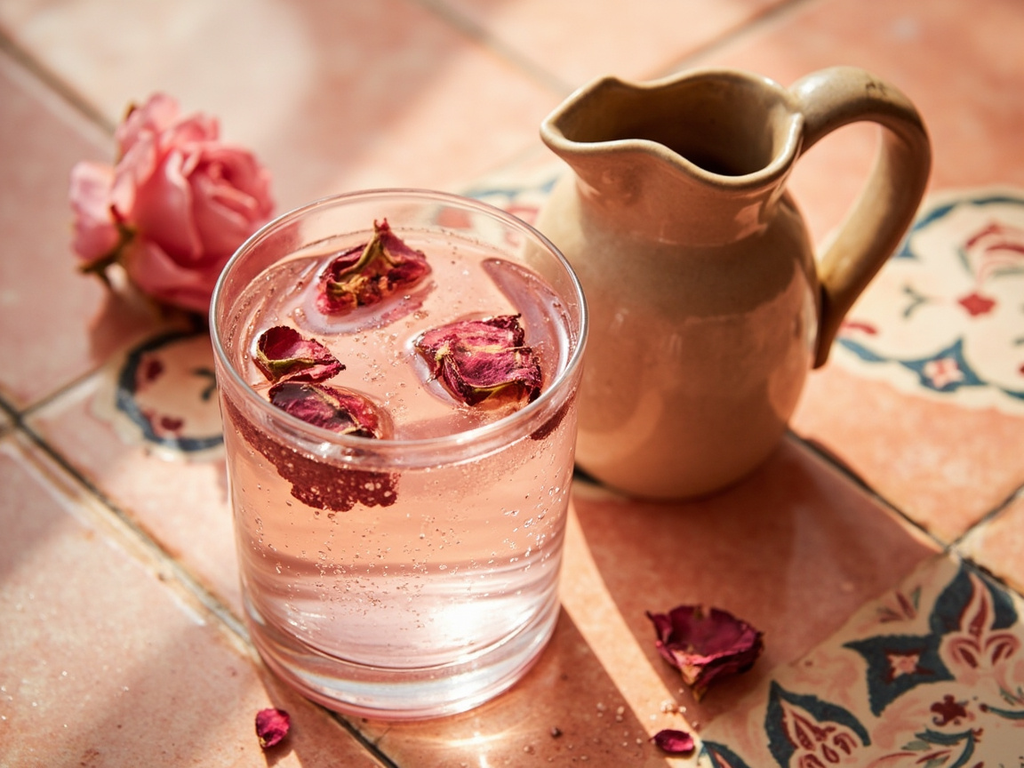
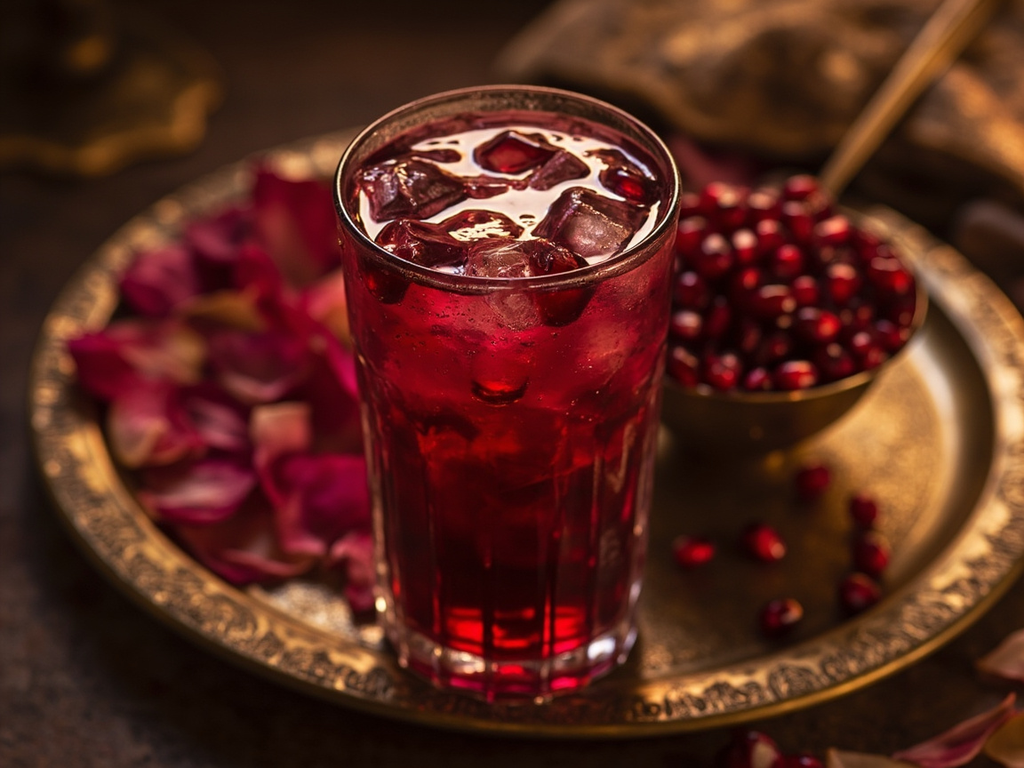
A cool, tangy drink, pink and translucent, made by diluting a syrup of fresh pomegranate juice with rose water and ice water. Refreshing, elegant, and fragrant.
In the heat of Bukhara, when the sun oppresses even poets, they bring ewers of sharbat red as ruby. The juice of pomegranates from our gardens, sweetened with honey and perfumed with rose water — this revives the spirit and loosens the tongue for song. I have written that wine is the blood of the earth, but sharbat is the blood of paradise. It is served cold, in glass cups set on mountain ice, and its color alone is already a poem.
- •Ripe pomegranates — several, juiced (Main juice)
- •Honey or cane sugar — to taste (Sweetener)
- •Rose water — a few drops (Floral aroma)
- •Fresh spring water — to dilute (Dilution)
Sharbat-e anâr (pomegranate syrup with rose water)
A cool, tangy drink, pink and translucent, made by diluting a syrup of fresh pomegranate juice with rose water and ice water. Refreshing, elegant, and fragrant.
Why this dish? The pomegranate appears constantly in classical Persian poetry as a symbol of beauty, fertility, and paradise. Rûdakî, who sang of the orchards of Transoxiana and the sweetness of Samarkand's fruits, certainly knew sharbat — refreshing drinks made from fruit juice and sugar or honey — attested in the Persian world since the 9th century, and whose word gave French "sorbet".
In the heat of Bukhara, when the sun oppresses even poets, they bring ewers of sharbat red as ruby. The juice of pomegranates from our gardens, sweetened with honey and perfumed with rose water — this revives the spirit and loosens the tongue for song. I have written that wine is the blood of the earth, but sharbat is the blood of paradise. It is served cold, in glass cups set on mountain ice, and its color alone is already a poem.
Ingredients (period version)
- Ripe pomegranates — several, juiced (Main juice)
- Honey or cane sugar — to taste (Sweetener)
- Rose water — a few drops (Floral aroma)
- Fresh spring water — to dilute (Dilution)
Ingredients
- Fresh pomegranates — 4 large (or 500 ml pure pomegranate juice) (Main juice)
- Granulated sugar — 100 g (adjust for tartness) (Syrup)
- Water — 100 ml (for syrup) + 500 ml (for serving) (Syrup and dilution)
- Rose water — 2 tbsp (Floral aroma)
- Ice cubes — generous (Chill)
Method
- If using fresh pomegranates: cut them in half, extract the seeds, and press through a sieve or juicer to obtain about 500 ml juice. Strain.
- Make the syrup: in a saucepan, dissolve the sugar in 100 ml water over low heat. Simmer for 3 minutes without stirring. Let cool.
- Mix the strained pomegranate juice with the cooled syrup and rose water. Taste and adjust sweetness.
- To serve, pour into a pitcher with plenty of ice cubes and dilute with 500 ml fresh water. Stir.
- Serve in glasses with a few pomegranate seeds as decoration.
How it was made : The word "sharbat" (شربت) comes from Persian and gave French "sorbet" and "sirop". These sweet fruit-based drinks, perfumed with rose water or musk, were common in the Persian and Arab world from the 9th century. Snow from Central Asian mountains was used to chill them — a court luxury described with admiration in sources.
The contemporary twist : Add a splash of sparkling water when serving for an effervescent version, and frost the glass rim with pink-tinted sugar.
Sources : Nawal Nasrallah, Annals of the Caliph's Kitchens: Ibn Sayyār al-Warrāq's Tenth-Century Baghdadi Cookbook (Brill, 2007)
Rudaki · Charactorium