 flip
flipSharbat-e anar wa za'faran (pomegranate saffron syrup)
Sharbat-e anar wa za'faran (pomegranate saffron syrup)
Why this dish? The pomegranate, abundant in Transoxiana and Khorasan, is a fruit laden with symbolism in Persian culture — prosperity, fertility, hospitality. Ismail Samani, who maintained renowned gardens in Bukhara, would naturally have offered this saffron sharbat to his guests as a sign of welcome and munificence.
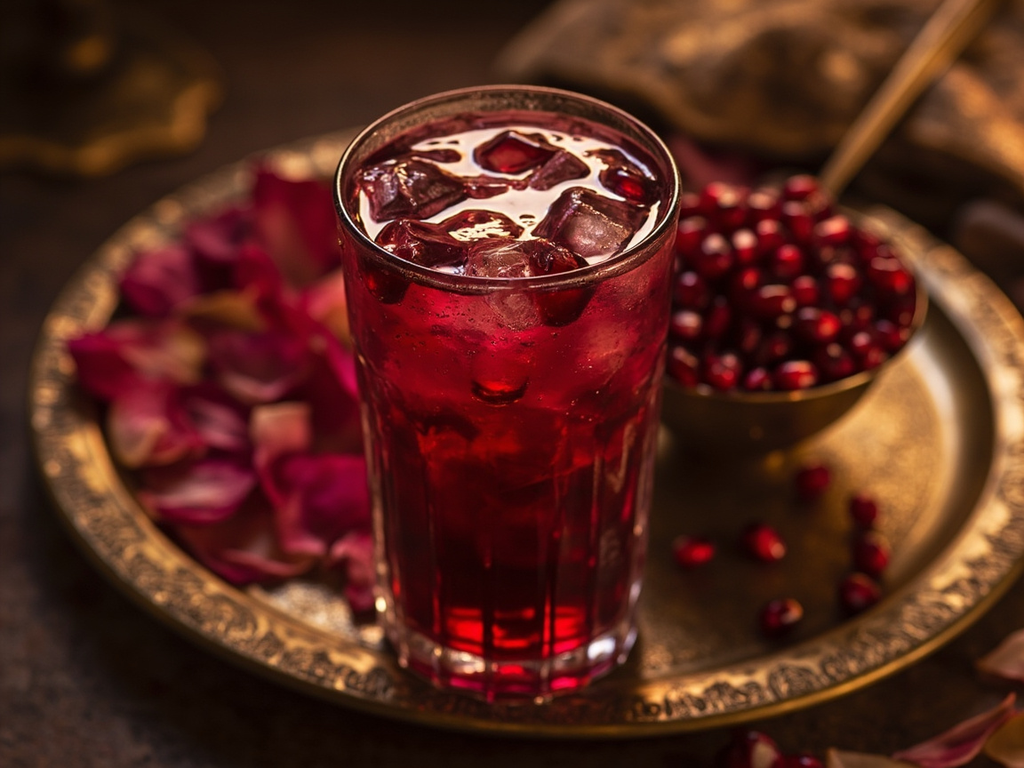
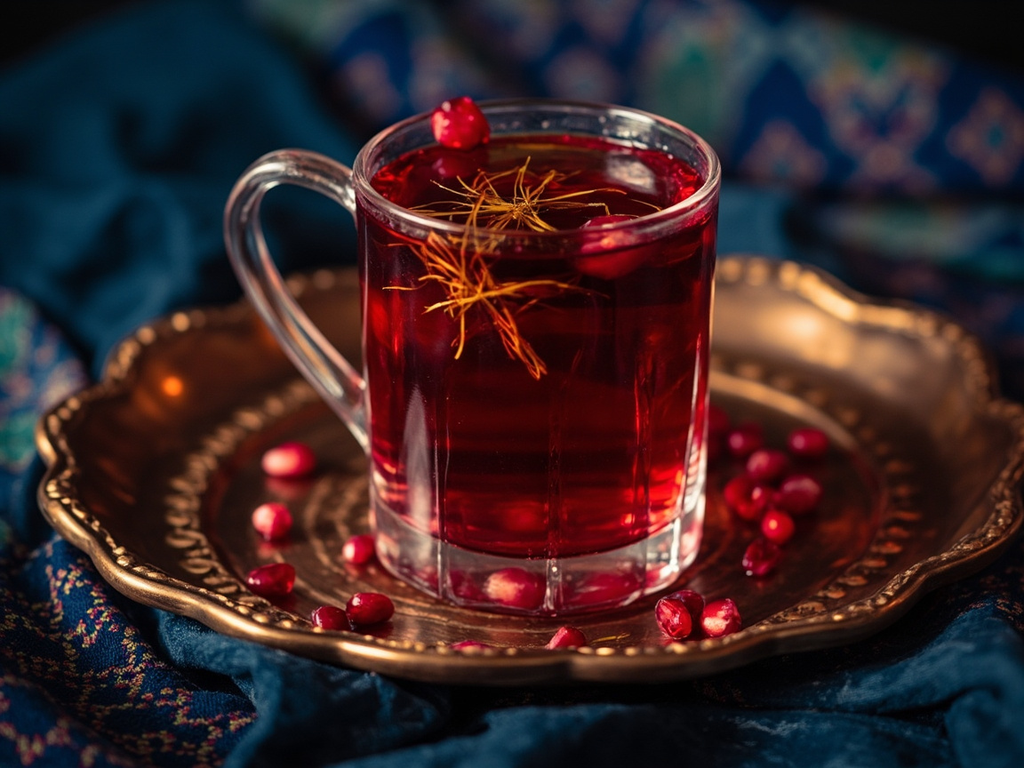
Refreshing drink made from fresh pomegranate juice, sweetened with honey and brightened with saffron infusion. Served well-chilled with spring water, it is the quintessential welcoming beverage of the Persian court, as beautiful as it is delicious with its red-gold hue.
When an envoy of the caliph passes through the gates of Bukhara, the first thing he receives from my hand is neither gold nor silk, but a bowl of sharbat. The pomegranate from our orchards is pressed on the spot, the saffron gives it a golden glow, and the mountain honey tempers the fruit's tartness. This drink says to the one who drinks it: you are my guest, and all that this land produces best is before you. An emir who does not know how to receive does not deserve to rule.
- •Ripe pomegranates — Several fruits, juiced (Tart and fruity juice)
- •Honey — To desired sweetness (Natural sweetener)
- •Saffron — A few threads in warm water (Golden color and fragrance)
- •Fresh spring water — To dilute (Dilution)
- •Rose water — A hint (Floral fragrance)
Sharbat-e anar wa za'faran (pomegranate saffron syrup)
Refreshing drink made from fresh pomegranate juice, sweetened with honey and brightened with saffron infusion. Served well-chilled with spring water, it is the quintessential welcoming beverage of the Persian court, as beautiful as it is delicious with its red-gold hue.
Why this dish? The pomegranate, abundant in Transoxiana and Khorasan, is a fruit laden with symbolism in Persian culture — prosperity, fertility, hospitality. Ismail Samani, who maintained renowned gardens in Bukhara, would naturally have offered this saffron sharbat to his guests as a sign of welcome and munificence.
When an envoy of the caliph passes through the gates of Bukhara, the first thing he receives from my hand is neither gold nor silk, but a bowl of sharbat. The pomegranate from our orchards is pressed on the spot, the saffron gives it a golden glow, and the mountain honey tempers the fruit's tartness. This drink says to the one who drinks it: you are my guest, and all that this land produces best is before you. An emir who does not know how to receive does not deserve to rule.
Ingredients (period version)
- Ripe pomegranates — Several fruits, juiced (Tart and fruity juice)
- Honey — To desired sweetness (Natural sweetener)
- Saffron — A few threads in warm water (Golden color and fragrance)
- Fresh spring water — To dilute (Dilution)
- Rose water — A hint (Floral fragrance)
Ingredients
- Pure pomegranate juice (100%) — 500 ml (Fruity base)
- Liquid honey — 3 tbsp (adjust to taste) (Natural sweetener)
- Saffron threads — 1 pinch (0.1 g) (Golden color and fragrance)
- Rose water — 1 tsp (Floral fragrance)
- Cold water or sparkling water — 250 ml (Dilution)
- Pomegranate seeds — 2 tbsp (garnish) (Garnish)
Method
- Infuse saffron in 2 tbsp warm water for 10 minutes until bright orange.
- In a pitcher, pour pomegranate juice. Add honey and stir until fully dissolved.
- Stir in saffron infusion and rose water. Mix well.
- Dilute with cold water (still or sparkling as desired). Refrigerate for at least 30 minutes.
- Serve in glasses or bowls, with a few pomegranate seeds and optionally an ice cube.
How it was made : Sharbats (from Persian sharba, "drink") are a pre-Islamic Persian tradition, perfected under the Abbasids and Samanids. They were chilled using snow brought from the mountains and stored in underground icehouses (yakhchâl). Pomegranate juice (robb-e anâr) is mentioned in many medical and culinary treatises of the medieval Islamic world as a tonic and digestive drink.
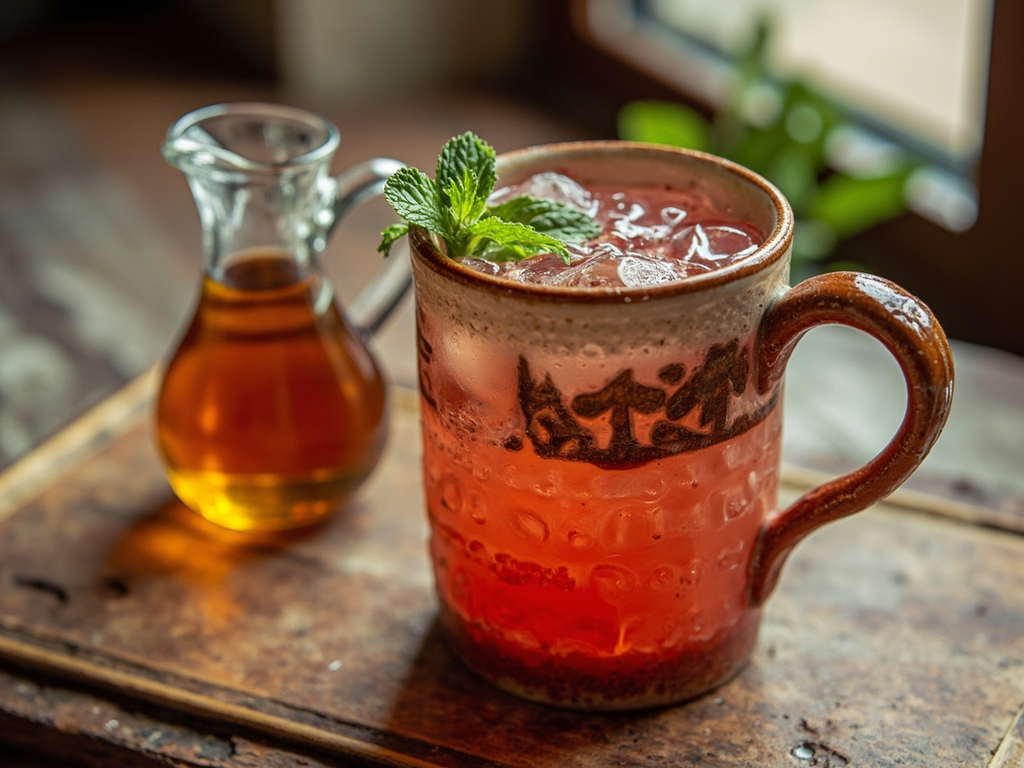
The contemporary twist : Serve in small tea glasses on a hammered copper tray, with a golden straw and a saffron thread suspended — an oriental touch for a non-alcoholic aperitif.
Ismail Samani · Charactorium