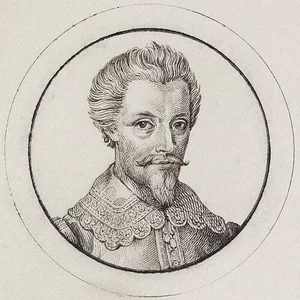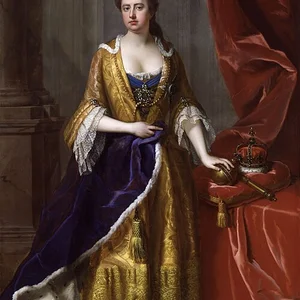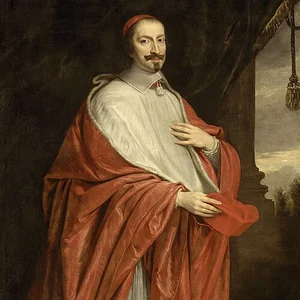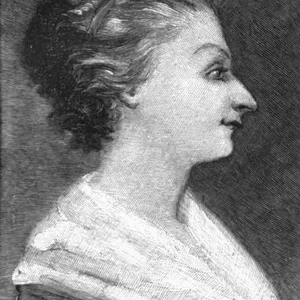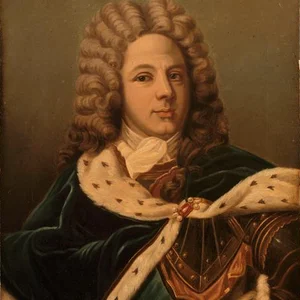

French memoirist and duke at the court of Louis XIV. His Memoirs, written in secret, offer a striking and incisive portrait of life at Versailles and the intrigues of the nobility under Louis XIV and the Regency.
Saint-Simon(1675 — 1755)
Louis de Rouvroy de Saint-Simon
France
6 min read
Frequently asked questions
Key Facts
- Born in 1675 in Paris into a family of the high nobility, son of a favorite of Louis XIII
- Enters the court of Versailles and becomes a keen observer of intrigues under Louis XIV
- Close to the Duke of Orléans, he plays a minor political role during the Regency (1715-1723)
- Writes his famous Memoirs, a vast portrait of the court, published in full long after his death
- Dies in 1755 in Paris, leaving behind a major work of French memoir literature
Works & Achievements
His major work: a monumental and incisive portrait of the court of Louis XIV and the Regency, a historical and literary source of the highest order.
A gallery of striking portraits woven into the *Memoirs*, where Saint-Simon captures the figures of the court with brilliant flair.
Marginal annotations on the journal of the Marquis de Dangeau, the starting point and raw material for his own *Memoirs*.
An account of his diplomatic mission to Madrid, incorporated into the *Memoirs*, rich in observations on the Spanish court.
Memoirs and notes defending the privileges of the dukes and peers, reflecting his obsession with the hierarchy of the nobility.
Anecdotes
Saint-Simon wrote his *Memoirs* in secret, often at night, and hid them carefully: he knew that his scathing portraits of the courtiers and even of the king could have earned him disgrace or imprisonment had they been discovered during his lifetime.
A minor duke obsessed with rank and etiquette, Saint-Simon waged a veritable crusade against the legitimized “bastards” of **Louis XIV** (such as the Duke of Maine), whom he deemed unworthy of walking as equals to the dukes and peers by birth.
When **Louis XIV** died in **1715**, Saint-Simon, a close associate of the future Regent **Philippe d'Orléans**, played a role in overturning the provisions of the royal will before the Parlement, one of his rare moments of real political influence.
His *Memoirs* were not published in full until the **19th century**, nearly a hundred years after his death: the court he described had vanished, but his portraits remain the most vivid source we have on Versailles under **Louis XIV**.
Saint-Simon recounts with ferocious precision the famous scene in which **Louis XIV**, displeased, simply remarks “Monsieur, you were at Marly” — showing how a single sentence from the king could make and unmake a reputation at court.
Primary Sources
Never did a man bestow a favour with greater grace, and thereby so increase the value of his benefactions; never did a man sell his words, his smile, even his glances, to better advantage.
The king died on Sunday, 1 September 1715... Versailles, that abode of pleasures, had become a desert.
In all things he loved only grandeur, magnificence, and profusion. This policy, through shrewdness, became a genuine taste in him.
Key Places
Birthplace of Saint-Simon and the place where he died. He owned his private mansion there and wrote part of his *Memoirs* in the city.
Center of the court of Louis XIV, where Saint-Simon spent a large part of his life observing the intrigues he would describe in his *Memoirs*.
A more intimate residence of Louis XIV where being invited (“being at Marly”) was a much sought-after favor among courtiers.
Saint-Simon's seigneurial estate, where he retired after the Regency and worked on writing his *Memoirs*.
The Spanish capital, where Saint-Simon was sent in 1721 as ambassador extraordinary to negotiate a union between the crowns of France and Spain.
Liens externes & ressources
Références
Œuvres
Mémoires
rédigés v. 1739-1750
Portraits de courtisans
v. 1739-1750
Notes et additions au Journal de Dangeau
à partir de 1729
Récit de l'ambassade d'Espagne
1721-1722
Écrits sur le rang et la pairie
début XVIIIe siècle