 flip
flipLawzinaj, Almond and Rose Water Filled Diamonds
Lawzinaj, Almond and Rose Water Filled Diamonds
Why this dish? Medieval Arabic medicine, inherited from Galen and Avicenna, considered almonds and sugar to be fortifying, recommended for convalescents and those exhausted by fatigue. For an aging and often ailing sultan like Saladin, these sweets were as much remedy as pleasure.
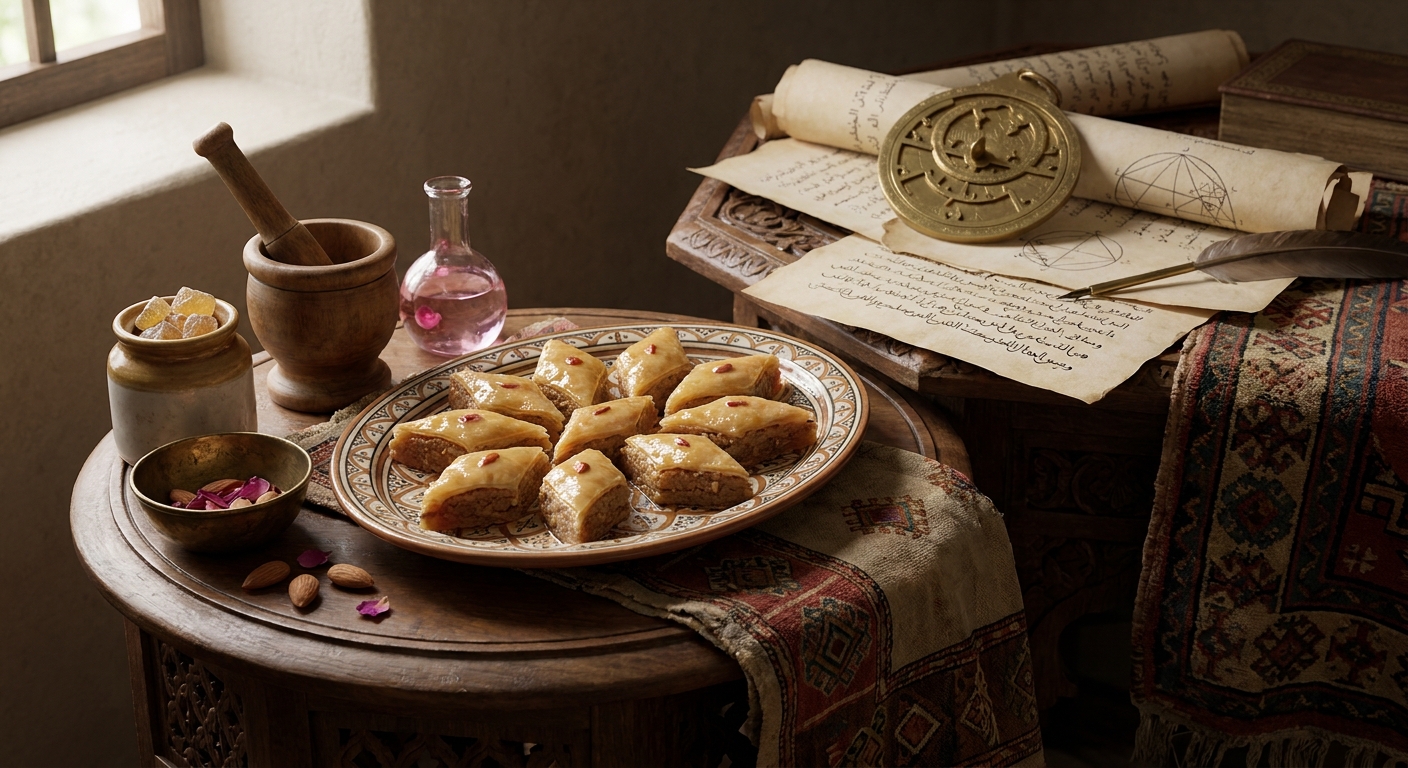
Thin sheets of dough enclosing a filling of pounded almonds, sugar, and rose water, perfumed with cinnamon, folded into diamonds and drizzled with syrup. The direct ancestor of baklava, considered comforting and strengthening.
The physicians of my court — may Allah reward their knowledge — prescribed these sweets to me when fever had left me without strength. The almond, they said, restores warmth to the exhausted body, and sugar lifts the fallen spirit. You pound the almond fine as flour, knead it with sugar and rose water, enclose it in a dough as thin as a veil, and drown it all in a perfumed syrup. Eat little, O guest, but eat with a good heart: what heals the body also rejoices the grateful soul.
- •Blanched almonds — a good measure (fortifying filling)
- •Sugar — in generous portions (sweetness)
- •Rose water — a perfume (aroma)
- •Cinnamon — a pinch (spice)
- •Very thin dough — several sheets (wrapper)
- •Honey or sugar syrup — to drizzle (binder and shine)
Lawzinaj, Almond and Rose Water Filled Diamonds
Thin sheets of dough enclosing a filling of pounded almonds, sugar, and rose water, perfumed with cinnamon, folded into diamonds and drizzled with syrup. The direct ancestor of baklava, considered comforting and strengthening.
Why this dish? Medieval Arabic medicine, inherited from Galen and Avicenna, considered almonds and sugar to be fortifying, recommended for convalescents and those exhausted by fatigue. For an aging and often ailing sultan like Saladin, these sweets were as much remedy as pleasure.
The physicians of my court — may Allah reward their knowledge — prescribed these sweets to me when fever had left me without strength. The almond, they said, restores warmth to the exhausted body, and sugar lifts the fallen spirit. You pound the almond fine as flour, knead it with sugar and rose water, enclose it in a dough as thin as a veil, and drown it all in a perfumed syrup. Eat little, O guest, but eat with a good heart: what heals the body also rejoices the grateful soul.
Ingredients (period version)
- Blanched almonds — a good measure (fortifying filling)
- Sugar — in generous portions (sweetness)
- Rose water — a perfume (aroma)
- Cinnamon — a pinch (spice)
- Very thin dough — several sheets (wrapper)
- Honey or sugar syrup — to drizzle (binder and shine)
Ingredients
- Almond flour — 200 g (fortifying filling)
- Powdered sugar — 120 g (filling) + 150 g (syrup) (sweetness)
- Rose water — 2 tbsp (aroma)
- Ground cinnamon — 1/2 tsp (spice)
- Phyllo dough sheets — 1 package (wrapper)
- Melted butter (or oil) — 80 g (browning)
- Honey — 3 tbsp (for the syrup) (binder and shine)
Method
- Prepare the filling: mix almond flour, powdered sugar, cinnamon, and 1 tbsp rose water until a malleable paste forms.
- Layer 2 phyllo sheets brushed with melted butter, place the filling, and fold into diamonds or small packets.
- Brush with butter and bake at 180 °C for 15 to 20 minutes until golden.
- Prepare a syrup: melt sugar, honey, and a little water, perfume with the remaining rose water.
- Drizzle the warm diamonds with the syrup and let soak before serving.
How it was made : Lawzinaj (from lawz, "almond") is abundantly described in medieval cookbooks and is considered the ancestor of baklava. It was offered at festivities and prescribed to the sick, as almond and sugar were classified among "hot" and restorative foods by the humoral dietetics of the time.
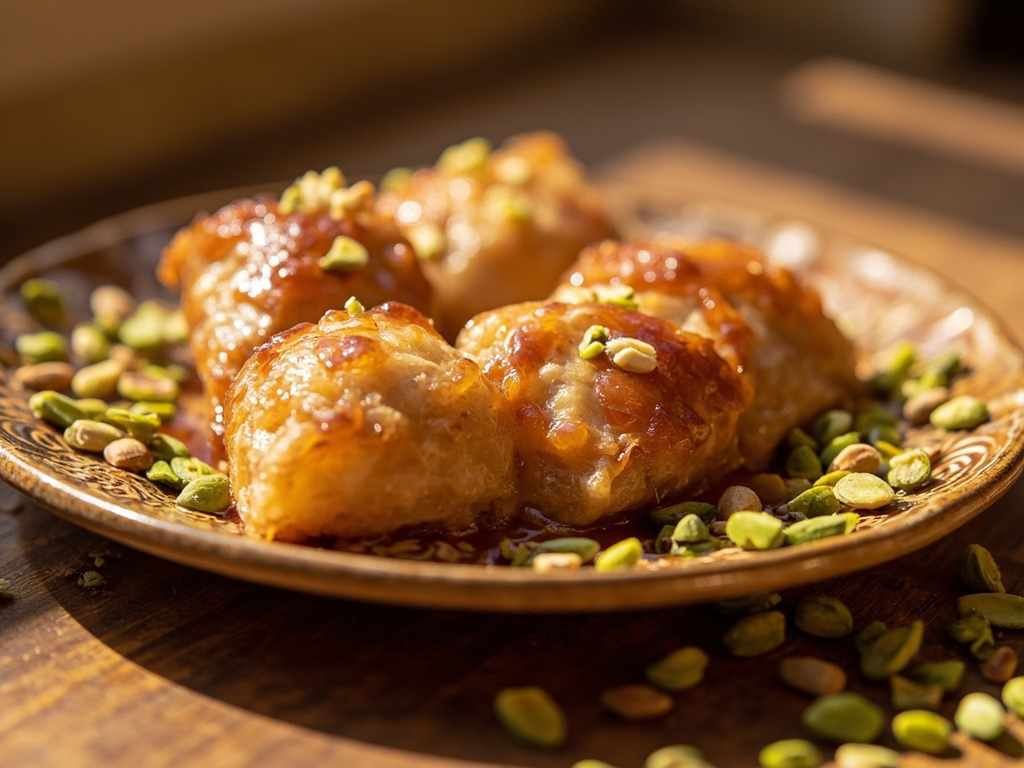
The contemporary twist : Sprinkle with crushed Aleppo pistachios and a grating of lemon zest: the freshness of citrus lightens the richness of the almond.
Sources : Charles Perry (trad.), A Baghdad Cookery Book (Kitab al-Tabikh d'al-Baghdadi, 1226) · Kitab al-Wusla ila al-habib (Syrian culinary collection from the 13th century)
Saladin · Charactorium