 flip
flipIpocrasso (Hippocras spiced wine)
Ipocrasso (Hippocras spiced wine)
Why this dish? In Florence, fine tables closed with ipocrasso, a sweet spiced wine filtered through the "sleeve of Hippocrates." For a painter dining with wealthy patrons, this warm, fragrant drink accompanied the confections of the last service.
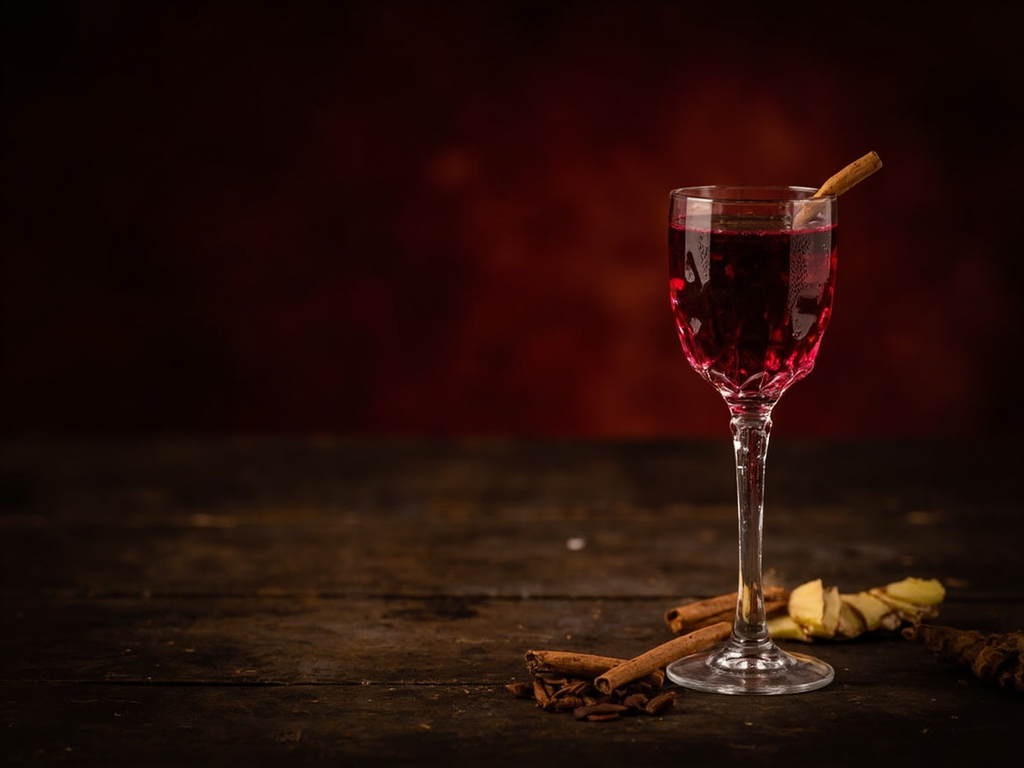
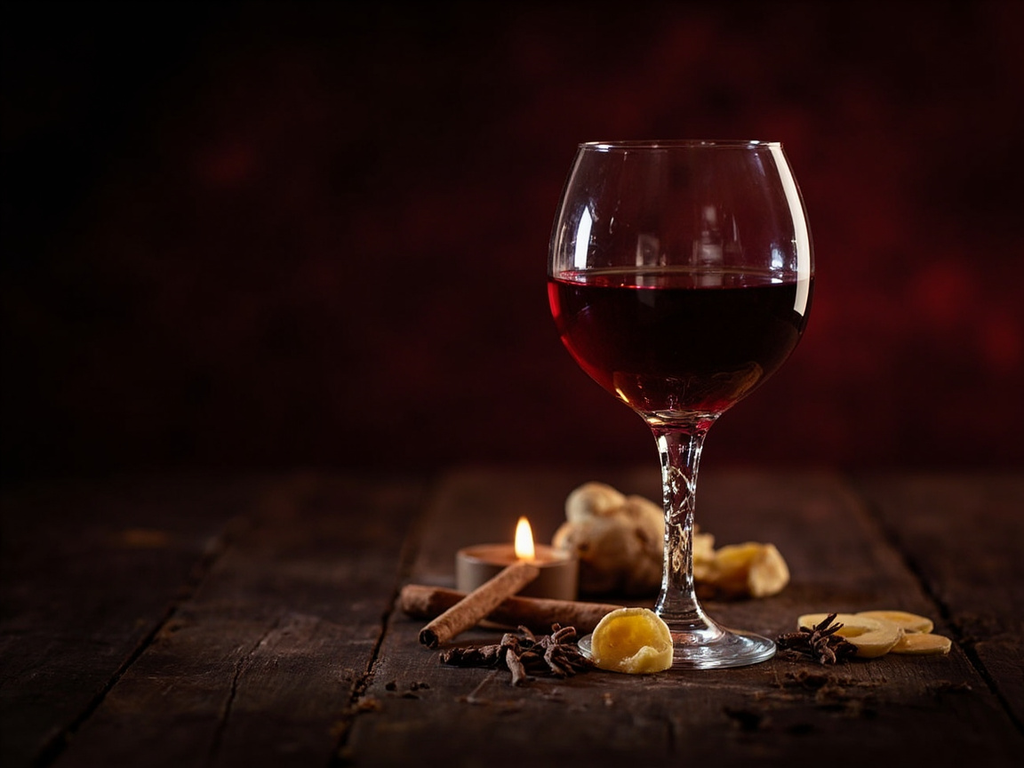
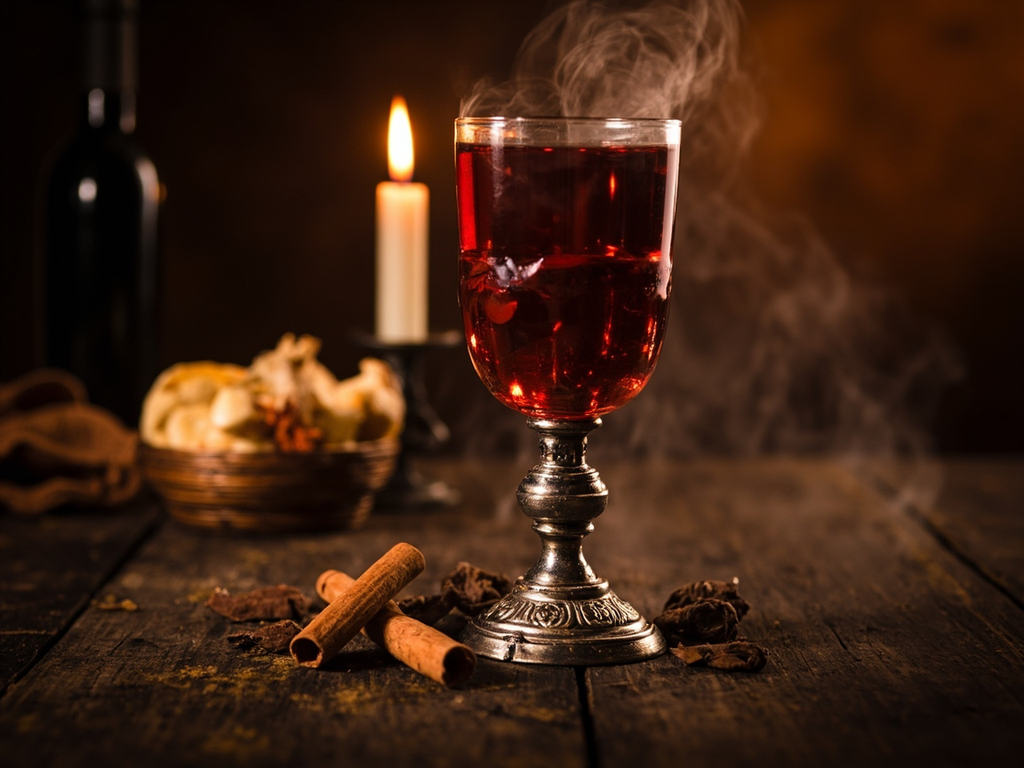
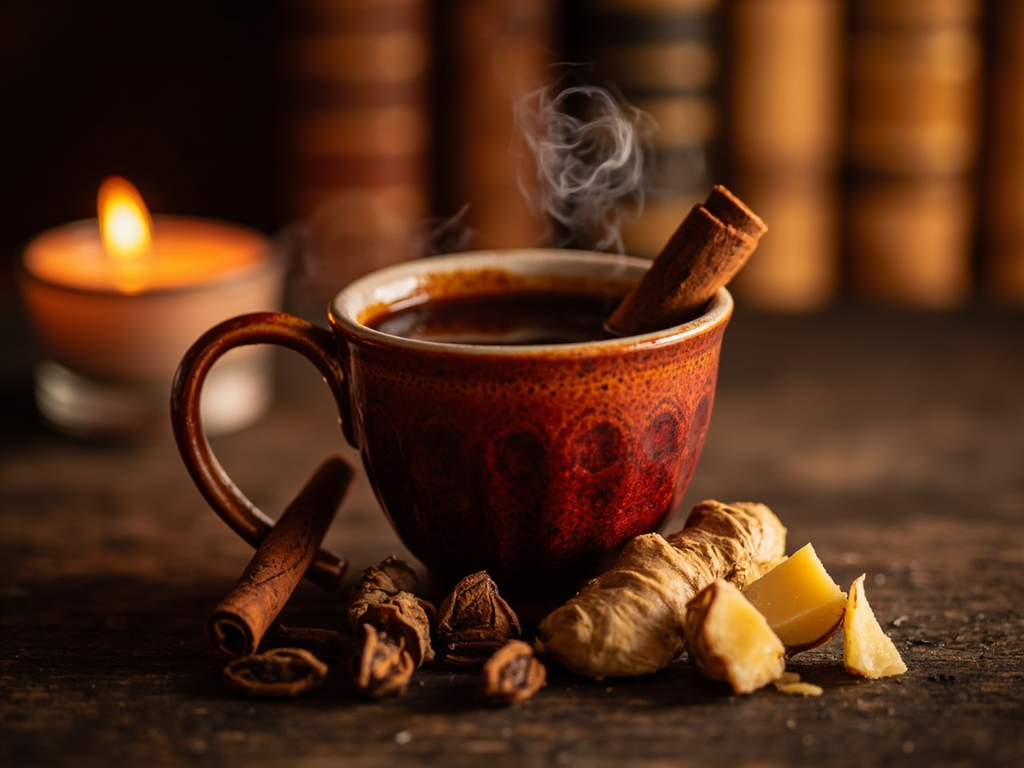
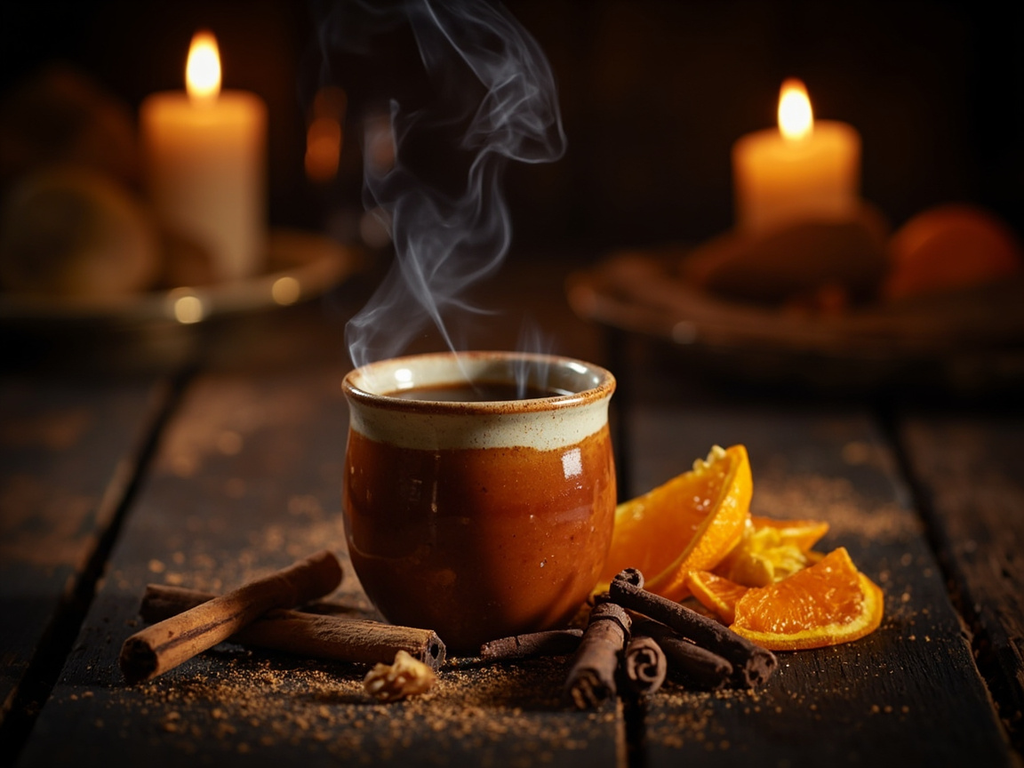
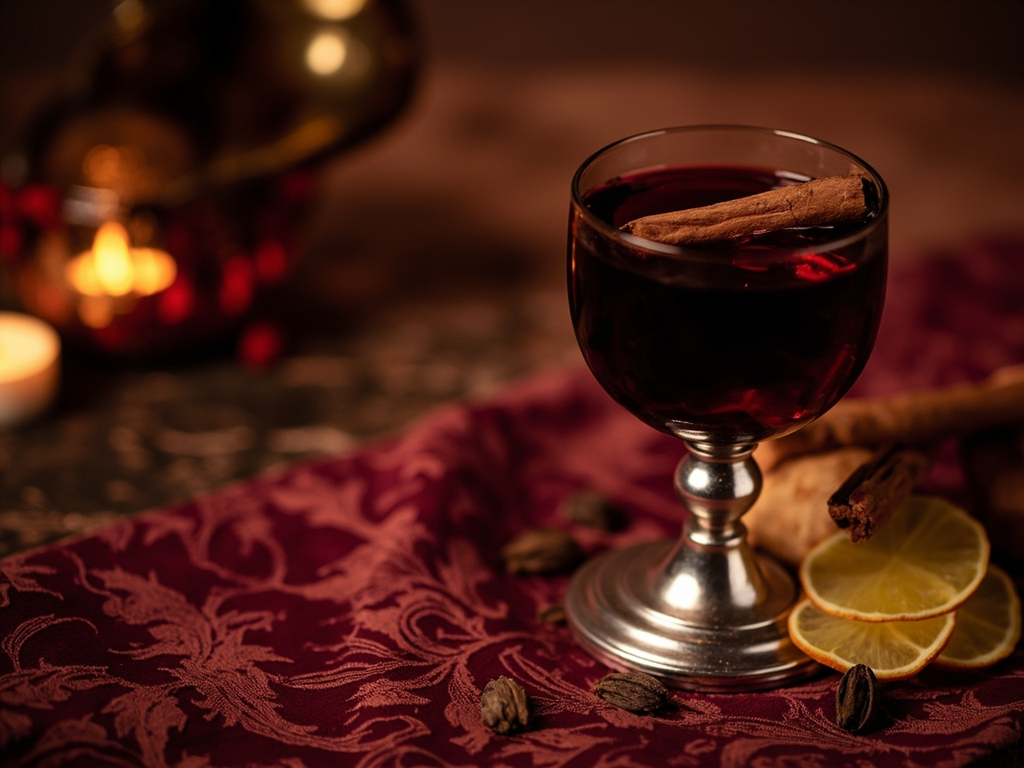
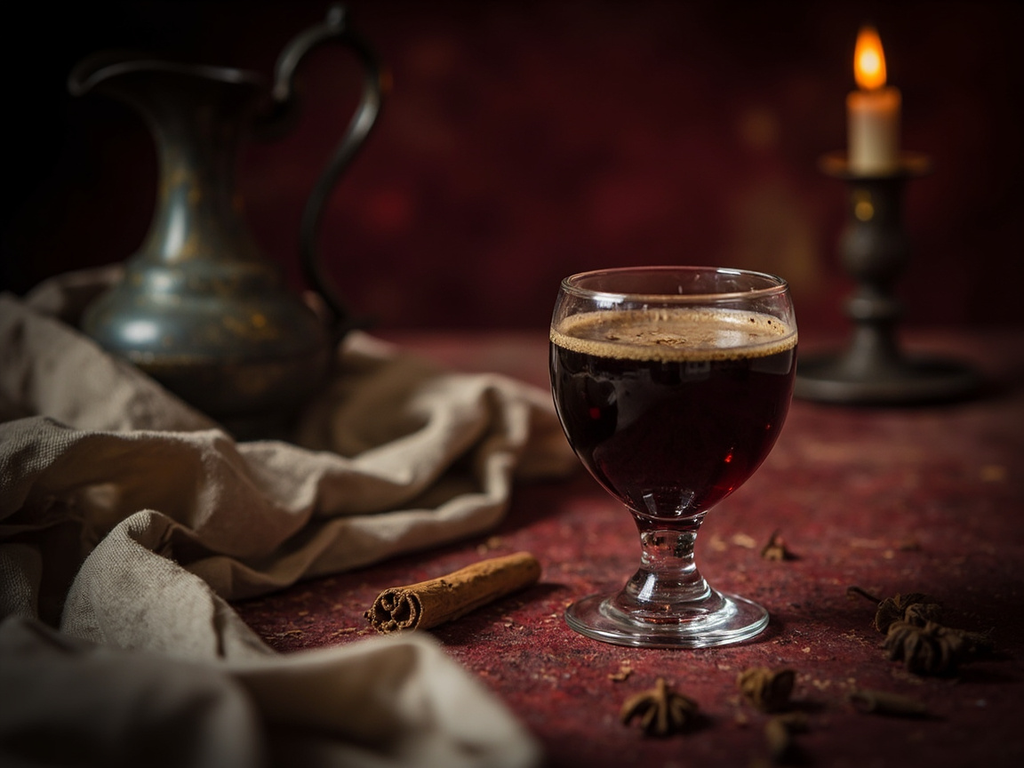
A red wine warmed with sugar, cinnamon, ginger, and cloves, long filtered until clear and silky. Sweet, spiced, comforting: the cup that ends the meal and warms Tuscan winter evenings.
Before you rise from table, accept this cup: it is ipocrasso, named after the pointed filter, the sleeve of Hippocrates, through which we pour it until it is clear as varnish. We dissolve sugar, cinnamon, ginger, and cloves—all precious things merchants bring from beyond the seas. Drink it warm: it warms the blood, loosens the tongue, and makes conversation about the Muses last until night. Moderately, though—a painter must keep a steady hand in the morning.
- •Red wine — a pitcher (base)
- •Sugar (or honey) — as desired (sweetness)
- •Cinnamon — one stick (master spice)
- •Ginger — a piece (hot spice)
- •Cloves — a few (spice)
- •Grains of paradise or long pepper — a little (spice (optional))
Ipocrasso (Hippocras spiced wine)
A red wine warmed with sugar, cinnamon, ginger, and cloves, long filtered until clear and silky. Sweet, spiced, comforting: the cup that ends the meal and warms Tuscan winter evenings.
Why this dish? In Florence, fine tables closed with ipocrasso, a sweet spiced wine filtered through the "sleeve of Hippocrates." For a painter dining with wealthy patrons, this warm, fragrant drink accompanied the confections of the last service.
Before you rise from table, accept this cup: it is ipocrasso, named after the pointed filter, the sleeve of Hippocrates, through which we pour it until it is clear as varnish. We dissolve sugar, cinnamon, ginger, and cloves—all precious things merchants bring from beyond the seas. Drink it warm: it warms the blood, loosens the tongue, and makes conversation about the Muses last until night. Moderately, though—a painter must keep a steady hand in the morning.
Ingredients (period version)
- Red wine — a pitcher (base)
- Sugar (or honey) — as desired (sweetness)
- Cinnamon — one stick (master spice)
- Ginger — a piece (hot spice)
- Cloves — a few (spice)
- Grains of paradise or long pepper — a little (spice (optional))
Ingredients
- Full-bodied red wine — 75 cl (base)
- Sugar — 120 g (sweetness)
- Cinnamon stick — 1 (spice)
- Fresh ginger — 5 slices (spice)
- Cloves — 4 (spice)
- Long pepper or grains of paradise — 1 pinch (spice (optional))
Method
- Pour the wine into a saucepan with sugar and all spices.
- Heat gently without boiling until sugar dissolves, then let steep off the heat for 30 minutes to 1 hour, covered.
- Strain carefully twice through a fine cloth (the equivalent of the "sleeve of Hippocrates") for a clear drink.
- Rewarm gently before serving in small cups.
How it was made : Ipocrasso (hypocras) is attested throughout medieval and Renaissance Europe; its name comes from the conical filter called the "sleeve of Hippocrates." It was served sweet and spiced at the end of meals, sometimes cold in summer. The spices—cinnamon, ginger, cloves, grains of paradise—displayed the host's wealth, as the spice trade flourished in Florence.
The contemporary twist : Serve in small glasses with a cinnamon stick, or freeze into a spiced granita for a summer version that surprises guests.
Sources : Le Ménagier de Paris (1393), recipe for hypocras · Platina, De honesta voluptate et valetudine, 1474
Sandro Botticelli · Charactorium