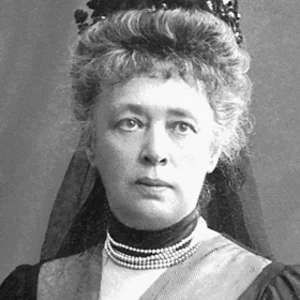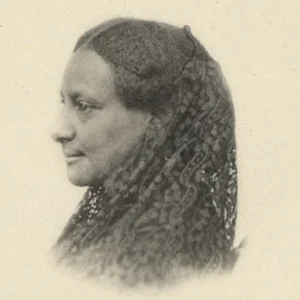

African American abolitionist and suffragist activist of the nineteenth century. She traveled across Europe to raise public awareness of the anti-slavery cause, and settled in Italy where she became a physician.
Sarah Parker Remond(1824 — 1894)
Sarah Parker Remond
États-Unis
8 min read
Frequently asked questions
Key Facts
- Born in 1824 in Salem, Massachusetts, into a free African American family committed to the fight against slavery
- From 1856 onward, she embarked on a lecture tour of Great Britain and Ireland to mobilize European opinion against American slavery
- She was one of the first African American women to earn a medical degree, in Florence in 1868
- She settled permanently in Italy, where she practiced as a physician until her death in 1894
- She also campaigned for women's right to vote, weaving together abolitionist and suffragist struggles
Works & Achievements
A series of dozens of public lectures delivered across Great Britain, Ireland, and Scotland, in which Sarah bore witness to the realities of American slavery. Her talks helped shape British public opinion against the Southern Confederacy.
Medical training completed in Florence, culminating in a diploma in 1868. Sarah thereby became one of the first African American women to earn a recognized medical qualification in Europe.
For more than twenty years, Sarah Parker Remond practiced as a physician in Rome, treating an international clientele and embodying, for generations to come, the possibility of dual intellectual and professional achievement for Black women.
Sarah signed and contributed to petitions addressed to the American and European governments calling for the abolition of slavery and the non-recognition of the Confederacy, demonstrating the diplomatic reach of her activism.
Anecdotes
In 1853, Sarah Parker Remond purchased a ticket to a concert at the Howard Athenæum in Boston, only to be refused entry because of her race. Far from being intimidated, she took the matter to court and won, receiving $500 in damages — a rare victory for a Black woman in pre-war America.
From 1858 onward, Sarah criss-crossed the United Kingdom, Ireland, and Scotland, speaking before hundreds of audiences to denounce American slavery. Her lectures were so compelling that several historians believe she helped prevent Britain from granting diplomatic recognition to the Confederate South during the Civil War.
After the Civil War, Sarah did not return to the United States. She enrolled in the medical school affiliated with the Santa Maria Nuova hospital in Florence, Italy, and earned her degree in 1868, becoming one of the first African American women to practice medicine in Europe.
Born into a free Black family in Salem, Massachusetts, Sarah grew up in a household deeply committed to the abolitionist cause. Her brother Charles Lenox Remond was already a celebrated anti-slavery orator before she took to the stage, and the entire family was active within the American Anti-Slavery Society.
After completing her studies, Sarah Parker Remond settled in Rome, where she practiced medicine for decades and married an Italian citizen, Lazzaro Pintor, in 1877. She lived in the Eternal City until her death in 1894 and was buried in the Protestant cemetery of Testaccio.
Primary Sources
Miss Remond spoke for nearly two hours on the condition of the enslaved population of the Southern States, dwelling particularly on the sufferings of women held in bondage, and was greeted throughout with the closest attention and warm applause.
Miss Remond is among the most effective advocates of the anti-slavery cause we have had among us; her testimony as a free coloured woman from America carries an authority no white lecturer could match.
Sarah Parker Remond addressed a large and sympathetic audience at the Rotunda, urging British and Irish citizens to use all moral influence to prevent recognition of the Southern Confederacy by European powers.
We learn that our friend Miss S. P. Remond continues her labours in England with great acceptance; her lectures in the principal towns have been numerously attended and have done much to enlighten the British public.
Key Places
Sarah Parker Remond's birthplace in 1824. The Remond family was well established in Salem's free African American community, and the city was the cradle of her abolitionist commitment.
Sarah's main base during her European lecture tours from 1858 onward. She forged close ties with British abolitionist and Quaker circles there and attended courses at Bedford College for Women.
A key stop on her European tour, where she delivered several widely acclaimed lectures. Ireland, itself marked by oppression and famine, received her message with particular empathy.
The city where Sarah Parker Remond pursued her medical studies at the Santa Maria Nuova hospital, earning her diploma in 1868. Florence represents her reinvention and her definitive emancipation.
The city where Sarah settled permanently to practice medicine, married in 1877, and died in 1894. She is buried in the Protestant Cemetery of Testaccio.
Typical Objects

Activists like Sarah distributed illustrated leaflets depicting the living conditions of enslaved people at their lectures. These printed materials then circulated throughout the United Kingdom, fueling the public debate against American slavery.

An essential document for Sarah during her travels in Europe, her passport paradoxically attested to her freedom in a country where millions of people from her community were held in bondage. Obtaining one as a free Black woman was far from straightforward in 1850s America.

Once she had qualified in Italy, Sarah Parker Remond practised with the standard instruments of a nineteenth-century physician: stethoscope, lancets, and vials of remedies. Her medical bag symbolised a double conquest — that of her degree and that of professional recognition for a Black woman.

Sarah maintained an extensive correspondence with leading figures of the abolitionist movement on two continents, notably William Lloyd Garrison and British Quakers. These letters formed the activist network of the era, enabling the coordination of transatlantic campaigns.

For her public appearances, Sarah wore restrained, dignified attire in keeping with the bourgeois codes of the Victorian age. Her careful dress contradicted racist stereotypes and commanded the respect of audiences who had sometimes never encountered a free, educated Black woman.

During her travels across Britain and Ireland, Sarah recorded her lectures, audience reactions, and meetings with local abolitionists. These notebooks are today a valuable source for historians reconstructing her activist itinerary across Europe.
School Curriculum
Vocabulary & Tags
Key Vocabulary
Tags
Daily Life
Morning
During her period of activism in England, Sarah began her day by reading the British and American press to follow developments in the slavery debate. She would then write correspondence with abolitionists on both sides of the Atlantic before preparing for her public engagements.
Afternoon
Her afternoons were often devoted to meetings with local anti-slavery societies or to visits with the Quaker families who housed her. In Florence, during her studies, this time was dedicated to theoretical lectures and practical training sessions in the hospital wards.
Evening
The evening was the highlight of Sarah's activity: she frequently gave lectures in parish halls, Mechanics' Institutes, or chapels, before audiences of hundreds. After settling in Rome as a physician, evenings became occasions for gatherings with the anglophone expatriate community and the Italian bourgeoisie.
Food
Traveling through Victorian England and then through Risorgimento Italy, Sarah adopted local eating habits — roasts and puddings across the Channel, pasta and vegetables in Italy. Meals shared during activist meetings carried an important sense of fellowship, with communal tables strengthening bonds of solidarity among campaigners.
Clothing
Sarah wore crinoline gowns and later bustle dresses in keeping with Victorian fashion, in understated colors — black, grey, or burgundy — that lent seriousness and respectability to a lecturer who constantly had to overcome racial prejudice. She took particular care with her appearance in order to command respect at her public appearances.
Housing
During her years in Britain, Sarah was often lodged with sympathetic Quaker families in comfortable bourgeois houses in Edinburgh, Manchester, or London. In Rome after her marriage, she lived in a city apartment, much like the middle-class Italian professionals of her day.
Historical Timeline
Period Vocabulary
Liens externes & ressources
Références
Œuvres
Tournée de conférences anti-esclavagistes au Royaume-Uni et en Irlande
1858-1865
Études de médecine à l'hôpital Santa Maria Nuova de Florence
1866-1868
Pratique médicale à Rome
1868-1894
Participation aux campagnes de pétitions transatlantiques
1859-1863