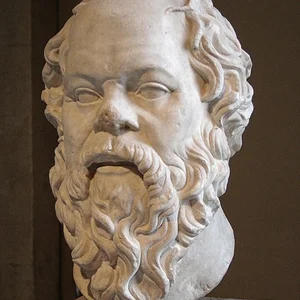

Athenian philosopher (469–399 BC) and founder of Western philosophy. He left no writings, yet profoundly influenced his contemporaries through his method of questioning known as maieutics. Condemned to death by the city of Athens, he stands as the embodiment of a philosopher's commitment to truth.
Socrates(469 av. J.-C. — 398 av. J.-C.)
Socrates
Athènes
8 min read
Frequently asked questions
Famous Quotes
« I know that I know nothing»
« Know thyself»
« The unexamined life is not worth living»
Key Facts
- Born in Athens in 469 BC, during the period of Athenian democracy under Pericles
- Developed maieutics, a pedagogical method based on progressive questioning to help minds 'give birth' to truth
- Condemned to death in 399 BC for impiety and corrupting the youth
- Refused to flee and drank hemlock, accepting the sentence handed down by the democratic city
- Left no writings; his thought is known through the works of Plato, Xenophon, and Aristophanes
Works & Achievements
A pedagogical method based on systematic questioning designed to draw the truth out of people's minds. This approach revolutionized education by favoring dialogue and critical thinking over the passive transmission of knowledge.
Socrates inaugurated a new form of philosophy centered on ethics, virtue, and self-knowledge ("Know thyself"). He marked the transition from pre-Socratic philosophy to moral and existential inquiry.
Socrates taught freely in the Athenian agora, attracting many disciples including Plato and Xenophon. His commitment to the civic and moral education of young Athenians profoundly influenced the intellectual life of the city.
Tried for impiety and corrupting the youth, Socrates refused to flee and accepted his death sentence. The trial became a symbol of a philosopher's commitment to truth and civil disobedience in the face of injustice.
Socrates held that true wisdom lies in recognizing the limits of one's knowledge ("I know that I know nothing"). This humble awareness of ignorance became a founding principle of rational philosophical inquiry.
Socrates questioned his fellow citizens on the nature of virtue, justice, and the good. He sought universal and absolute definitions, laying the groundwork for Western philosophical ethics.
Anecdotes
Socrates walks barefoot through the streets of Athens, dressed in a simple tunic, questioning passersby about their certainties. One day, his friend Chaerephon consults the oracle at Delphi, who declares that no one is wiser than Socrates. Puzzled, Socrates sets out across the city to find someone wiser, only to discover that his wisdom lies in the fact that he knows he knows nothing — unlike others, who falsely believe they know everything.
At the Battle of Potidaea (432 BC), Socrates distinguished himself as a courageous hoplite: he stood motionless for an entire day and night, lost in thought, while his companions grew worried about him. His composure and bravery were noted by his fellow soldiers.
Socrates refuses to leave Athens even after his death sentence. His friends offer to help him escape by bribing the guards, but he rejects flight as a violation of the city's laws. He drinks the poison hemlock in 399 BC, faithful to his principles until his very last breath.
Socrates argues that physical love is merely a distraction, and that only the love of wisdom and truth is worth pursuing. He spends time with young Athenians in the gymnasia — not to seduce them, but to educate them through dialogue and questioning, embodying his philosophy of transcending material desires.
Before the Athenian tribunal that condemns him, Socrates declares: "It is you I pity — you who have condemned me." He sees his death not as a defeat, but as an opportunity to remain true to his mission: seeking truth and challenging injustice, even at the cost of his life.
Primary Sources
You have heard Meletus speak about me. Well, know that I am not troubled by his accusations, Athenians, though his words nearly made me forget who I am. For he led me to believe I was a wonderful orator, when I am nothing of the sort.
Socrates asked: 'Tell me, is death something dreadful?' And he continued: 'Is it not that death is the separation of the soul from the body, and that it is when the soul, alone, freed from the body, departs entirely on its own, that this new life begins?'
Socrates believed it was important to seek out the nature of each thing that exists. For he thought that one who knows what a thing truly is can make better use of it than one who remains ignorant of it.
Socrates, who had always taught that virtue can be learned, seeks to show through dialogue that we know nothing with certainty, and that true wisdom lies in recognizing our own ignorance.
Key Places
Capital of ancient Greece where Socrates lived and practiced philosophy. It was in the public squares and agora of Athens that he questioned citizens to lead them toward knowledge, embodying the intellectual heart of Athenian democracy.
The central public square of Athens where Socrates spent his days in dialogue with young Athenians and political figures. This was the primary setting where he practiced his maieutic method and was observed by his disciples, including Plato.
An establishment in Athens where Socrates taught and engaged in dialogue with young Athenian men. This place of learning was central to his mission of philosophical education and the intellectual development of youth.
The place where Socrates was imprisoned after his death sentence in 399 BC, on charges of impiety and corrupting the youth. It was here that he spent his final days and drank the hemlock poison rather than renounce his convictions.
The deme (administrative district) of Attica where Socrates was born and raised in 469 BC. This place marks the origins of the philosopher who laid the foundations of Western thought.
An island in the ancient Greek world associated with the Platonic tradition that preserved the teachings of Socrates. Though the connection is indirect, it is a key site in the transmission of Socratic ideas through his disciples.
Typical Objects
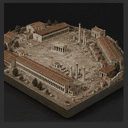
The central public square where Socrates spent his days in dialogue with citizens and young people. It was the heart of his philosophical practice and method of questioning.

A portable writing surface used by Athenians in the 5th century BC. Although Socrates himself wrote nothing, these are the tablets his disciples such as Plato would have used to record his teachings.
📷 CC BY-SA 3.0 · Wikimedia Commons ↗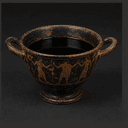
The poison used to execute Socrates in 399 BC, following his death sentence by Athens. It symbolizes his sacrifice for his principles and his commitment to truth.

The simple, worn garment Socrates was known to wear, reflecting his indifference to material possessions and his ascetic life devoted to philosophy.
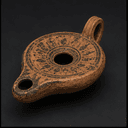
A typical object of everyday Athenian life in the 5th century BC, symbolizing the light and illumination of knowledge — core values of Socratic philosophy.
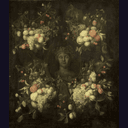
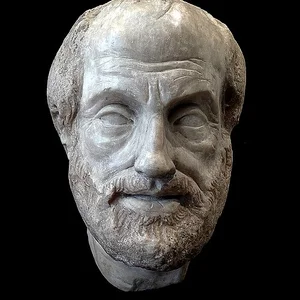
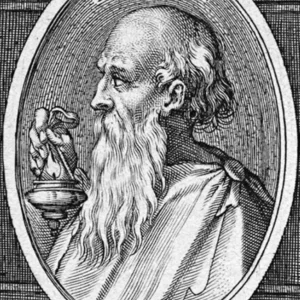
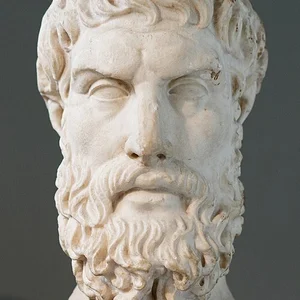
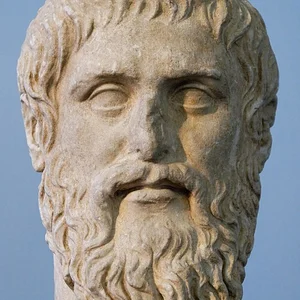
A sculpted portrait of Socrates depicting his distinctive appearance — his beard and characteristic features — and a symbol of his legacy and importance in Western philosophy.
📷 Domaine public · Wikimedia Commons ↗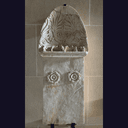
A commemorative monument typical of the Athenian era, recalling the death of Socrates and serving as a memorial to the man who chose death rather than renounce his convictions.
📷 CC0 · Wikimedia Commons ↗School Curriculum
Vocabulary & Tags
Key Vocabulary
Daily Life
Morning
Socrates wakes at dawn in his modest Athenian home. He eats a light meal of bread with water or diluted wine, then prepares for his daily activities in the agora — the political and commercial heart of Athens, where he spends most of his time.
Afternoon
In the afternoon, Socrates engages in philosophical conversations with young Athenians, magistrates, and citizens in the agora or near the gymnasium. He practices his method of questioning (maieutics), probing his interlocutors about their convictions concerning justice, virtue, and wisdom, and drawing out the contradictions in their thinking.
Evening
As the day draws to a close, Socrates is often invited to banquets (symposia) where he continues his philosophical discussions over wine with the Athenian elite. He then returns home for the night, frequently accompanied by devoted disciples such as Plato or Xenophon, who record his teachings.
Food
Socrates' diet is simple and frugal: barley bread, vegetables, fruit, cheese, and occasional fish or meat. He drinks wine diluted with water, in keeping with Greek custom, and his legendary temperance in food and drink reflects his contempt for material pleasures.
Clothing
Socrates wears the plain white or beige chiton (short tunic) typical of Athenians, often worn and poorly kept. He is known for walking the streets of Athens barefoot and shows no concern for his physical appearance — a deliberate neglect that embodies his detachment from earthly vanity.
Housing
Socrates lives in a small, modest house in an Athenian neighborhood, a reflection of his chosen material poverty. His dwelling is spartan and free of luxury, as he believes physical needs must be kept to a minimum so that the mind can focus on the pursuit of truth and virtue.
Historical Timeline
Period Vocabulary
Visual Style
Un style inspiré de la céramique grecque classique et des reliefs athéniens, privilégiant les tons chauds et terreux, avec des compositions épurées et contemplatives rappelant la simplicité de l'agora. L'ambiance évoque la sagesse antique par une représentation intemporelle et philosophique.
Sound Ambience
Une ambiance sonore qui capture l'essence de l'Athènes antique : le murmure des débats philosophiques dans l'agora, les échos de pas sur les pierres, la brise méditerranéenne, et une atmosphère de contemplation intellectuelle propice à la maïeutique socratique.
Liens externes & ressources
Références
Œuvres
La Méthode Socratique (Maïeutique)
450-399 av. J.-C.
Fondation de la Philosophie Occidentale
Ve siècle av. J.-C.
Enseignement à Athènes
440-399 av. J.-C.
Condamnation et Procès
399 av. J.-C.
Concept de l'Ignorance Sage
450-399 av. J.-C.
Recherche de la Vertu
Ve siècle av. J.-C.