 flip
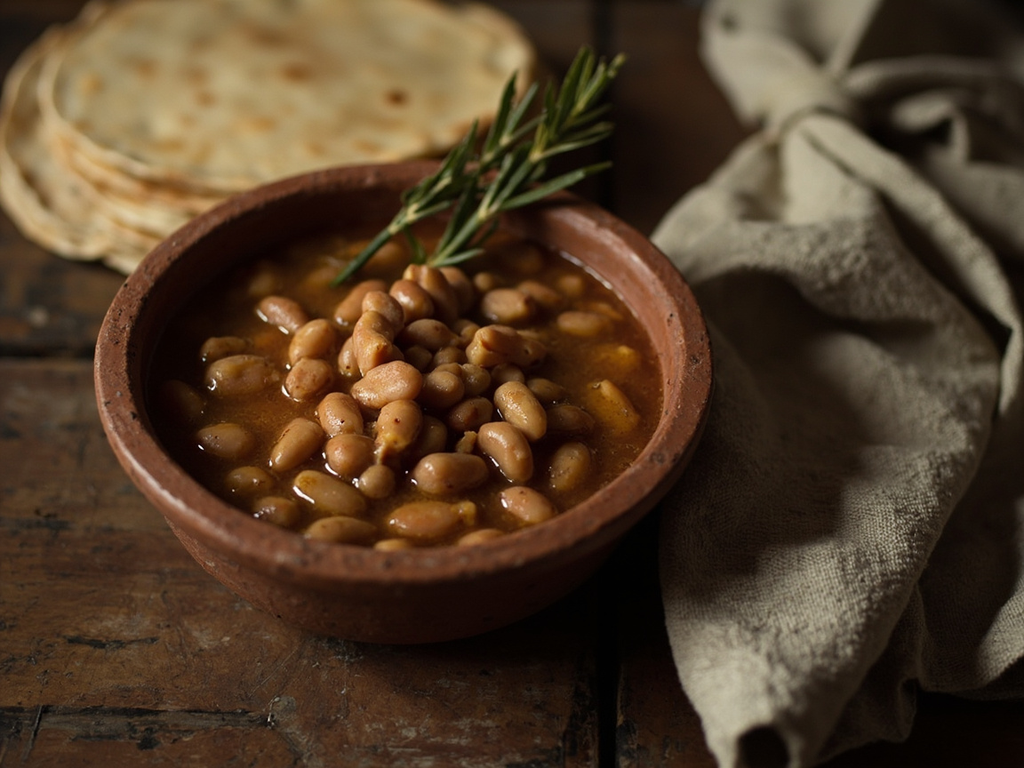
flipFrijoles de la olla con tortillas
Frijoles de la olla con tortillas
Why this dish? Beyond the banquets, the daily life of a cloistered nun consisted of corn bread, beans, and chiles: this is the austere fare that Sor Juana ate between hours of study in her cell-library at the convent of San Jerónimo.
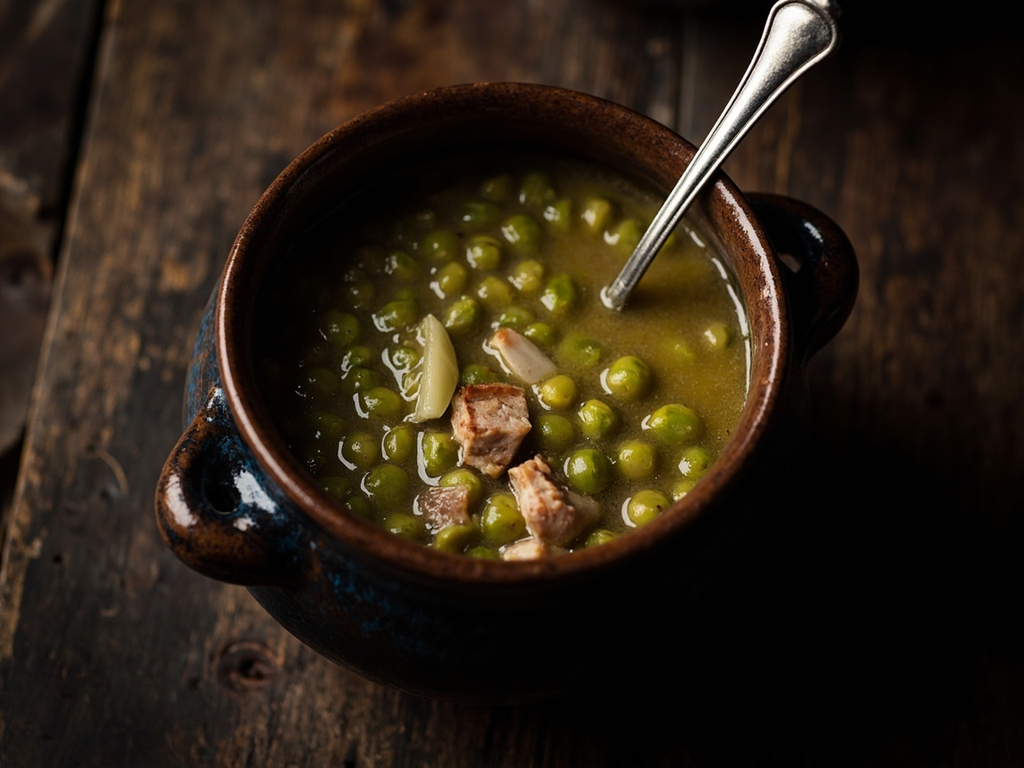
Beans simmered for a long time in their earthen pot with epazote, accompanied by nixtamalized corn tortillas just cooked on the *comal*: the humble, nourishing staple of all New Spain.
Do not think I live on feasts: most often, a simple bowl of *frijoles* keeps me company when I keep vigil over my treatises. I let them cook gently in the earthen *olla* with a sprig of epazote, that herb which perfumes and soothes the belly, and I eat them rolled in a warm tortilla fresh from the *comal*. Believe me, the mind thinks better when the body is content with little — and no meat has ever inspired a better verse in me than this corn bread.
- •Beans (frijoles) — one measure (nourishing base)
- •Epazote — one sprig (aromatic herb and digestive)
- •Fresh green chile — one, optional (heat)
- •Salt — at the end (seasoning)
- •Nixtamalized corn (for tortillas) — as needed (corn bread)
Frijoles de la olla con tortillas
Beans simmered for a long time in their earthen pot with epazote, accompanied by nixtamalized corn tortillas just cooked on the *comal*: the humble, nourishing staple of all New Spain.
Why this dish? Beyond the banquets, the daily life of a cloistered nun consisted of corn bread, beans, and chiles: this is the austere fare that Sor Juana ate between hours of study in her cell-library at the convent of San Jerónimo.
Do not think I live on feasts: most often, a simple bowl of *frijoles* keeps me company when I keep vigil over my treatises. I let them cook gently in the earthen *olla* with a sprig of epazote, that herb which perfumes and soothes the belly, and I eat them rolled in a warm tortilla fresh from the *comal*. Believe me, the mind thinks better when the body is content with little — and no meat has ever inspired a better verse in me than this corn bread.
Ingredients (period version)
- Beans (frijoles) — one measure (nourishing base)
- Epazote — one sprig (aromatic herb and digestive)
- Fresh green chile — one, optional (heat)
- Salt — at the end (seasoning)
- Nixtamalized corn (for tortillas) — as needed (corn bread)
Ingredients
- Dried beans (pinto or black) — 300 g, soaked overnight (base)
- Fresh or dried epazote — 1 sprig (or 1 tsp) (herb)
- Onion — 1/2 (cooking base)
- Serrano chile — 1, optional (heat)
- Salt — to taste (seasoning)
- Corn tortillas — 8 (store-bought or homemade from masa) (accompaniment)
Method
- Put the drained beans in a pot, cover generously with cold water, add the onion.
- Bring to a simmer and cook on low heat for 1.5 to 2 hours, without salting at the beginning.
- Add the epazote (and chile) halfway through cooking.
- Salt only when the beans are tender, then simmer another 15 minutes to thicken the broth.
- Reheat the tortillas on a dry skillet (comal) until they puff slightly.
- Serve the frijoles in a bowl, to be eaten rolled in the tortillas.
How it was made : Beans cooked for hours in the earthen *olla* over embers; salting too early would harden them, a knowledge passed from cook to cook. Tortillas were made from nixtamalized corn (cooked with lime), ground on the *metate*, shaped by hand, and cooked on the *comal* — a daily task in indigenous and conventual kitchens.
The contemporary twist : Mash a ladleful of frijoles in a pan to make 'refried beans' and serve with a sprinkle of raw onion and cilantro — monastic austerity lifted by a touch of freshness.
Sources : Sophie D. Coe, America's First Cuisines · Bernardino de Sahagún, Historia general de las cosas de Nueva España (indigenous foods)
Sor Juana Inés de la Cruz · Charactorium