 flip
flipRefectory Chickpea Potage — the Dominican Pitanza
Refectory Chickpea Potage — the Dominican Pitanza
Why this dish? Before leaving for the Indies, and each time he returned to Spain, Las Casas lived by the Dominican rule: sober meals, rare meat, many lean days. The chickpea simmered in oil is the foundation of this austere table that he knew in Seville as in Valladolid.
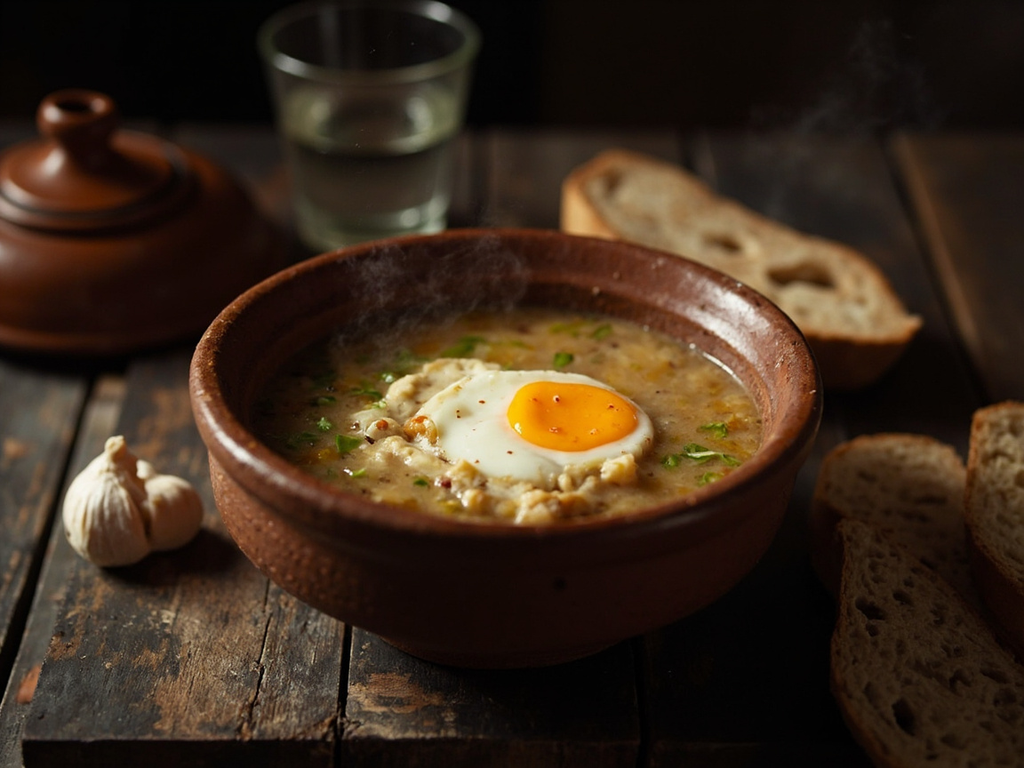
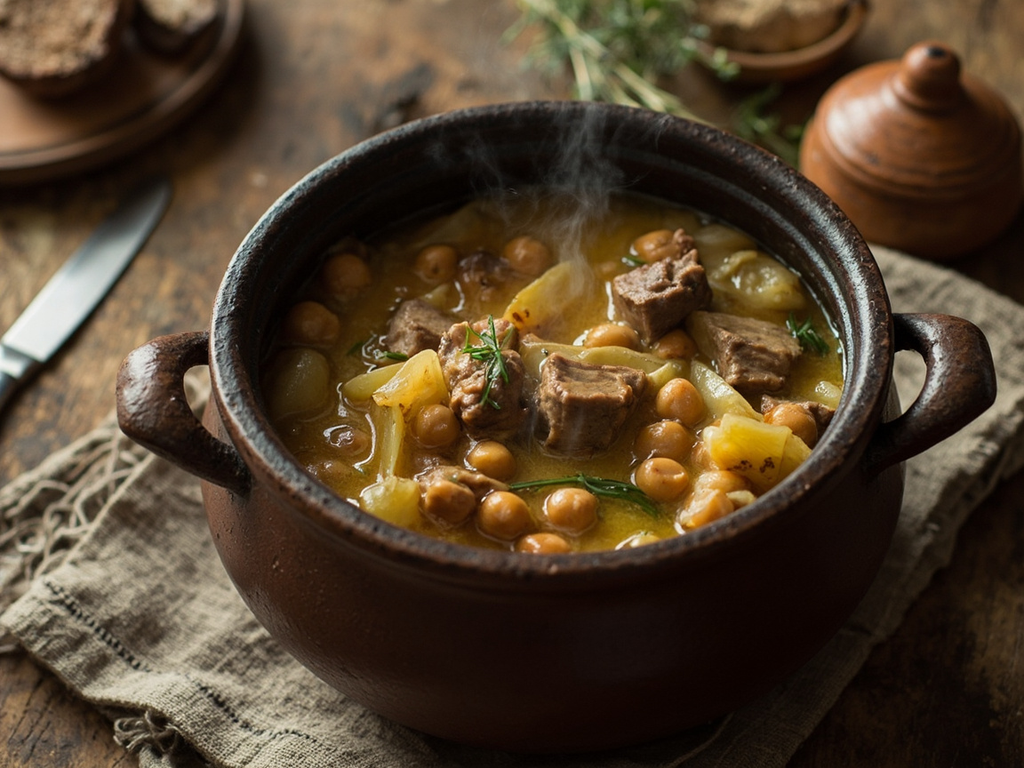
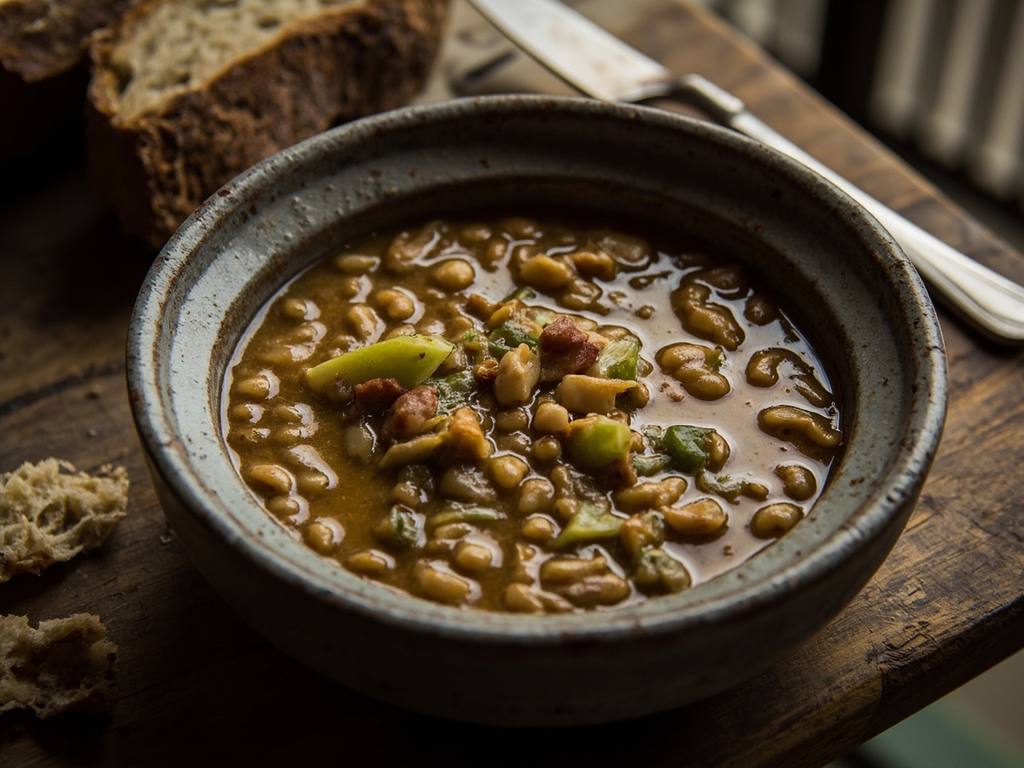
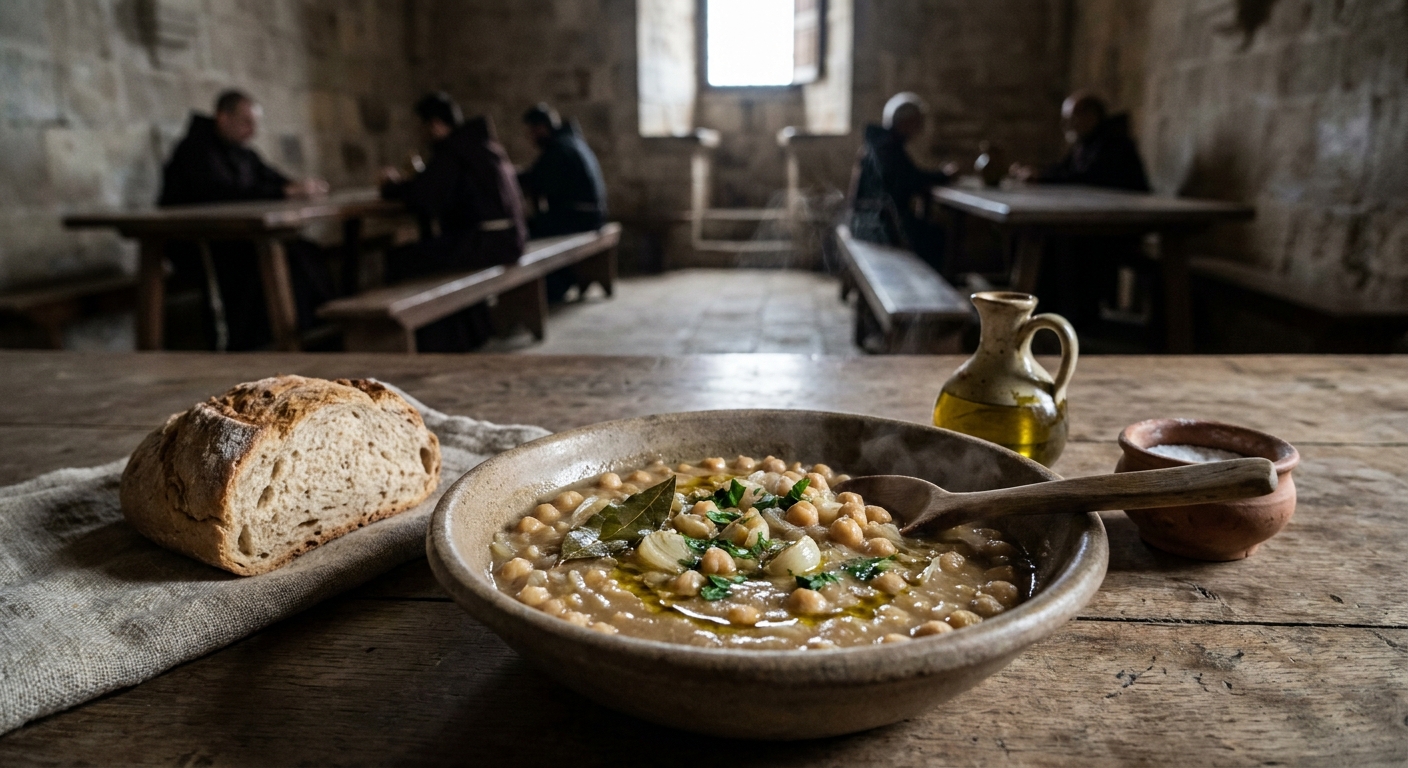
A thick pottage of chickpeas long-simmered with onion, garlic, herbs, and a drizzle of olive oil, eaten with bread. Nourishing, simple, without ostentation: exactly what the convent rule prescribes.
Approach, and do not disdain this bowl for its poverty. In the refectory, we ate in silence while a brother read the Scripture, and this pottage of garbanzos, cooked from dawn on a low fire with a little oil and garlic, sufficed us amply. On lean days, no meat: God is better served by a sober belly than a full one. Dip your bread, give thanks, and think that he who has little and shares it is richer than the conqueror who has taken all.
- •Chickpeas (garbanzos) — a good full bowl, soaked the night before (nourishing base)
- •Olive oil — a generous drizzle (fat, binder)
- •Onion and garlic — one onion, a few cloves (aromatic base)
- •Bay leaf, parsley — to taste (herbs)
- •Stale wheat bread — as desired (accompaniment, thickener)
- •Salt — to taste (seasoning)
Refectory Chickpea Potage — the Dominican Pitanza
A thick pottage of chickpeas long-simmered with onion, garlic, herbs, and a drizzle of olive oil, eaten with bread. Nourishing, simple, without ostentation: exactly what the convent rule prescribes.
Why this dish? Before leaving for the Indies, and each time he returned to Spain, Las Casas lived by the Dominican rule: sober meals, rare meat, many lean days. The chickpea simmered in oil is the foundation of this austere table that he knew in Seville as in Valladolid.
Approach, and do not disdain this bowl for its poverty. In the refectory, we ate in silence while a brother read the Scripture, and this pottage of garbanzos, cooked from dawn on a low fire with a little oil and garlic, sufficed us amply. On lean days, no meat: God is better served by a sober belly than a full one. Dip your bread, give thanks, and think that he who has little and shares it is richer than the conqueror who has taken all.
Ingredients (period version)
- Chickpeas (garbanzos) — a good full bowl, soaked the night before (nourishing base)
- Olive oil — a generous drizzle (fat, binder)
- Onion and garlic — one onion, a few cloves (aromatic base)
- Bay leaf, parsley — to taste (herbs)
- Stale wheat bread — as desired (accompaniment, thickener)
- Salt — to taste (seasoning)
Ingredients
- Dried chickpeas — 250 g (or 2 drained cans) (base)
- Extra virgin olive oil — 4 tbsp (fat)
- Onion — 1 large, sliced (base)
- Garlic — 3 cloves (aromatic)
- Bay leaf + flat-leaf parsley — 1 leaf + 1 handful (herbs)
- Stale country bread — 4 slices (accompaniment)
- Salt — to taste (seasoning)
Method
- Soak dried chickpeas overnight (skip if using canned).
- In a pot, gently sweat onion and garlic in olive oil until golden.
- Add drained chickpeas, bay leaf, cover generously with water, and simmer on low heat for 1 hour 30 minutes (20 minutes if canned) until tender.
- Season with salt, mash some chickpeas against the pot wall to thicken, sprinkle with parsley.
- Serve piping hot with stale bread for dipping.
How it was made : In Castilian convents, oil often replaced lard on lean days, and legume pottage (chickpeas, beans, lentils) formed the heart of the meal. Wheat bread, the base of every Spanish table, served both as utensil and thickener.
The contemporary twist : A spoonful of raw olive oil and a little lemon zest at serving time revive this age-old pottage without betraying it.
Bartolomé de las Casas · Charactorium