 flip
flipIdli (Steamed Rice and Lentil Cakes)
Idli (Steamed Rice and Lentil Cakes)
Why this dish? Idli is the daily bread of the Tamil Brahmin. As a frail child in Kumbakonam, Ramanujan ate them upon waking before his hours of calculation; his mother Komalatammal tended the fermented batter. It is the South Indian home dish he would miss so much in England.
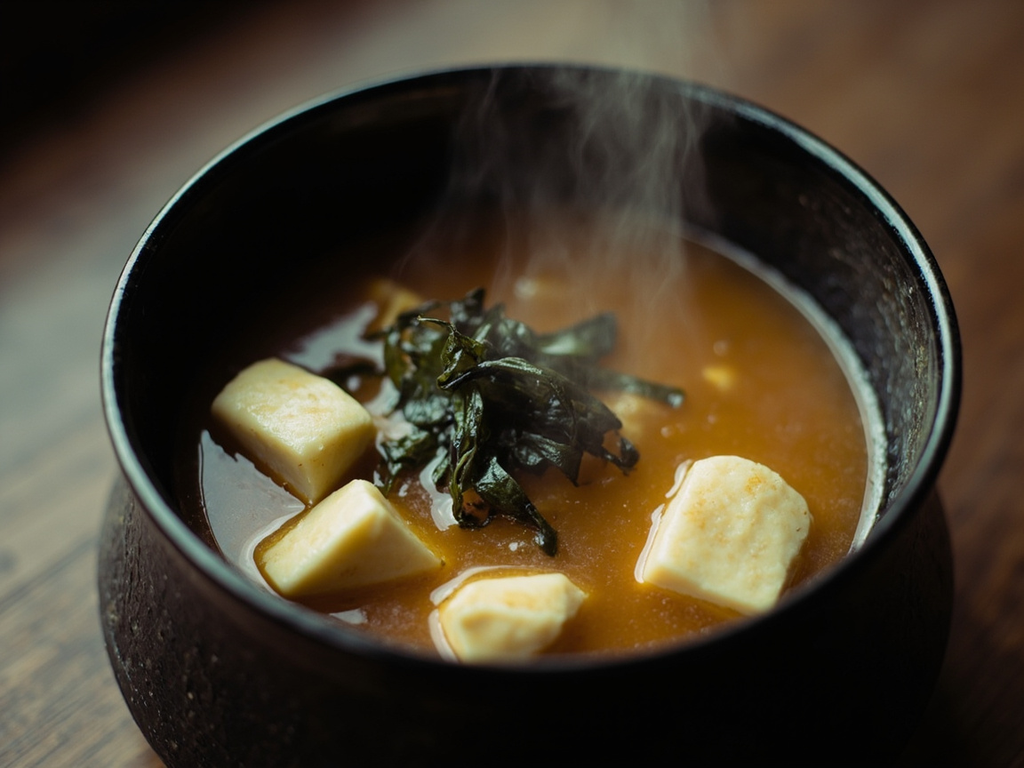
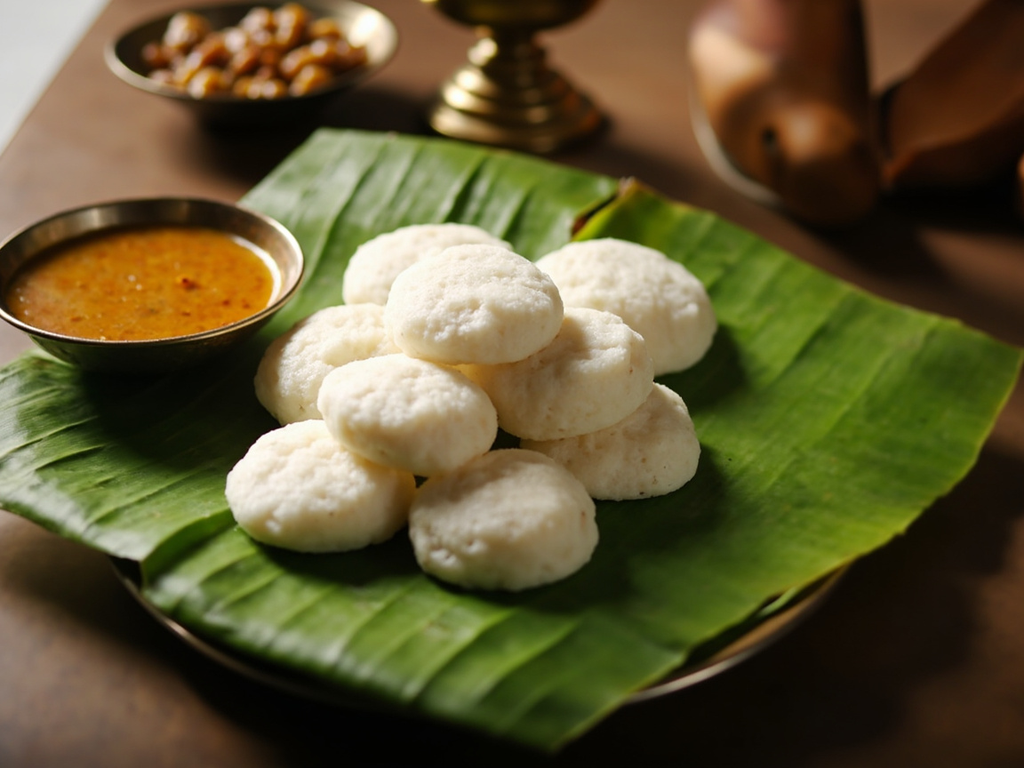
Small white cakes, soft and slightly tangy, made from a batter of rice and skinned lentils left to ferment overnight, then steamed. They are dipped in lentil sambar or chutney.
Come closer, I will tell you the simple truth of my table. Each morning in Kumbakonam, my mother would soak the rice and urad dal, grind them on the stone, and let the batter swell all night — as if life entered it by itself. At dawn, before I covered my slates with formulas, I ate these white cakes, soft and warm, dipped in dal. A Brahmin, I touched neither flesh nor egg; this pure food came, I believed, from the grace of Namagiri. There, in England, in the cold, it was this humble cake that I missed most.
- •White rice (idli rice) — two measures (base, softness)
- •Skinned urad lentils (urad dal) — one measure (fermentation, binder)
- •Fenugreek — a pinch (aids fermentation)
- •Rock salt — to taste (seasoning)
Idli (Steamed Rice and Lentil Cakes)
Small white cakes, soft and slightly tangy, made from a batter of rice and skinned lentils left to ferment overnight, then steamed. They are dipped in lentil sambar or chutney.
Why this dish? Idli is the daily bread of the Tamil Brahmin. As a frail child in Kumbakonam, Ramanujan ate them upon waking before his hours of calculation; his mother Komalatammal tended the fermented batter. It is the South Indian home dish he would miss so much in England.
Come closer, I will tell you the simple truth of my table. Each morning in Kumbakonam, my mother would soak the rice and urad dal, grind them on the stone, and let the batter swell all night — as if life entered it by itself. At dawn, before I covered my slates with formulas, I ate these white cakes, soft and warm, dipped in dal. A Brahmin, I touched neither flesh nor egg; this pure food came, I believed, from the grace of Namagiri. There, in England, in the cold, it was this humble cake that I missed most.
Ingredients (period version)
- White rice (idli rice) — two measures (base, softness)
- Skinned urad lentils (urad dal) — one measure (fermentation, binder)
- Fenugreek — a pinch (aids fermentation)
- Rock salt — to taste (seasoning)
Ingredients
- Idli rice (or short-grain rice) — 300 g (2 volumes) (base)
- Skinned urad dal — 150 g (1 volume) (fermentation)
- Fenugreek seeds — 1/2 tsp (natural ferment)
- Salt — 1 tsp (seasoning)
- Water — as needed (dough)
Method
- Rinse and soak separately the rice on one side, the urad dal with fenugreek on the other, for 5 to 6 hours.
- Grind the urad dal into an airy, silky paste with a little water, then the rice into a slightly grainy paste.
- Mix the two, add a little salt, cover and let ferment 8 to 12 hours in a warm place until the batter doubles and becomes frothy.
- Pour into greased idli molds, steam for 10 to 12 minutes.
- Unmold and serve warm with sambar or coconut chutney.
How it was made : Before electricity, grinding was done by hand on the ammikkal (stone grinder) and fermentation relied on the wild yeasts of the warm Tamil air and the heat of the hands. Steaming was done in stacked brass molds.
The contemporary twist : Serve as mini idlis 'formula bites', rolled in podi (spiced roasted lentil powder) for an appetizer twist.
Sources : S. Meenakshi Ammal, Samaithu Paar (Cook and See), 1951 · Robert Kanigel, The Man Who Knew Infinity, 1991
Srinivasa Ramanujan · Charactorium