 flip
flipHāngi toa (Warrior's hāngi: kererū and kūmara)
Hāngi toa (Warrior's hāngi: kererū and kūmara)
Why this dish? After his great military victories — the capture of Kāpiti, the raids on the South Island — Te Rauparaha ordered hākari (feasts) lasting several days. The hāngi, earth oven, simultaneously cooked kererū (wood pigeons) and kūmara for hundreds of warriors. It was the spectacular affirmation of the chief's mana.
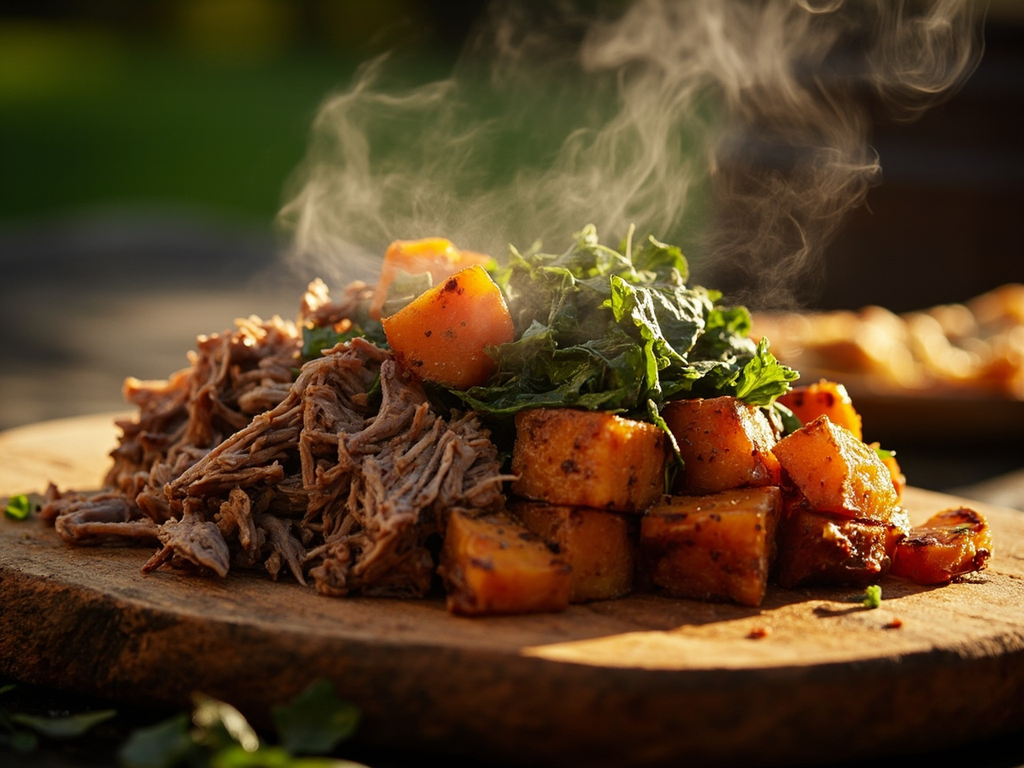
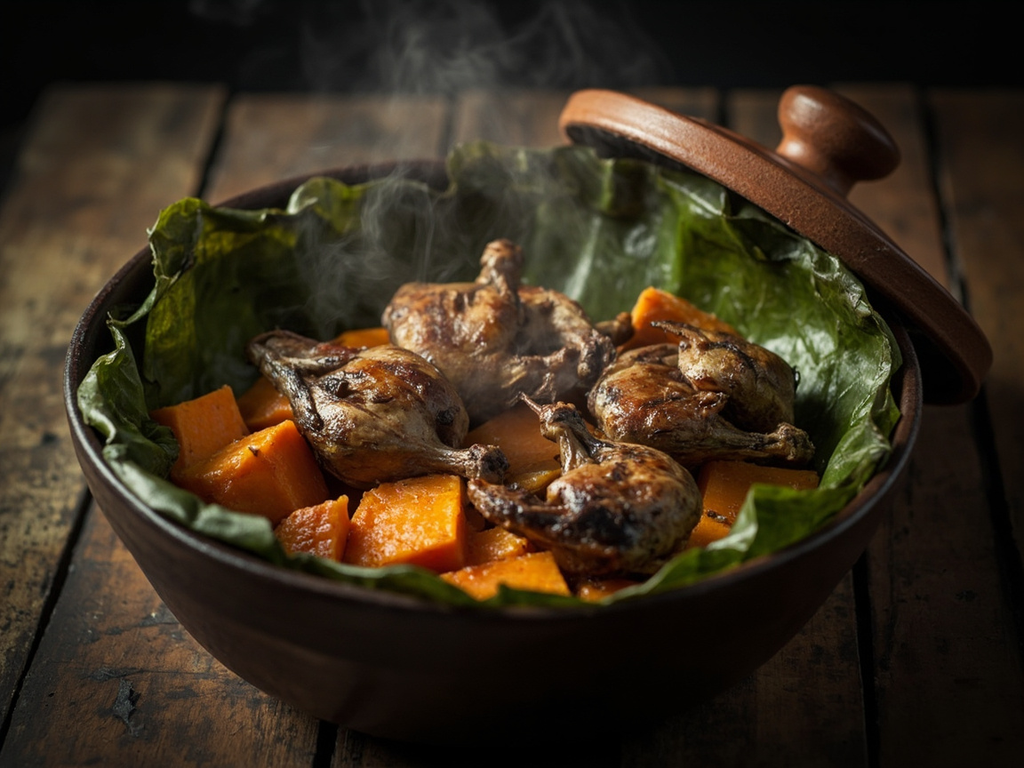
Whole wood pigeons slow-steamed in an earth oven with sweet potatoes, wrapped in flax leaves. The slow cooking gives the birds a melting tenderness and the kūmara a caramelized sweetness, all infused with a scent of earth and vegetable smoke.
When my warriors return victorious, I have the hāngi dug before they have even laid down their taiaha. We heat the stones until they sing, we pile up the fat kererū from the miro berry season, the red kūmara from our gardens, and we cover it with earth. All night, the earth does its work. At dawn, when we open the oven, the steam carries the smell of victory. A three-day hākari — that is what cements a chief's mana among his people.
- •Kererū (wood pigeons) — 4 to 6 whole birds, plucked (Prestigious festive meat)
- •Kūmara (sweet potatoes) — Large quantity, red varieties (Main starch)
- •Harakeke leaves (New Zealand flax) — Large leaves for wrapping (Cooking wrap)
- •Volcanic stones — Enough to line the oven floor (Heat source)
Hāngi toa (Warrior's hāngi: kererū and kūmara)
Whole wood pigeons slow-steamed in an earth oven with sweet potatoes, wrapped in flax leaves. The slow cooking gives the birds a melting tenderness and the kūmara a caramelized sweetness, all infused with a scent of earth and vegetable smoke.
Why this dish? After his great military victories — the capture of Kāpiti, the raids on the South Island — Te Rauparaha ordered hākari (feasts) lasting several days. The hāngi, earth oven, simultaneously cooked kererū (wood pigeons) and kūmara for hundreds of warriors. It was the spectacular affirmation of the chief's mana.
When my warriors return victorious, I have the hāngi dug before they have even laid down their taiaha. We heat the stones until they sing, we pile up the fat kererū from the miro berry season, the red kūmara from our gardens, and we cover it with earth. All night, the earth does its work. At dawn, when we open the oven, the steam carries the smell of victory. A three-day hākari — that is what cements a chief's mana among his people.
Ingredients (period version)
- Kererū (wood pigeons) — 4 to 6 whole birds, plucked (Prestigious festive meat)
- Kūmara (sweet potatoes) — Large quantity, red varieties (Main starch)
- Harakeke leaves (New Zealand flax) — Large leaves for wrapping (Cooking wrap)
- Volcanic stones — Enough to line the oven floor (Heat source)
Ingredients
- Whole pigeons (or quails, 2 per person) — 8 quails, cleaned (Meat)
- Orange-fleshed sweet potatoes — 1 kg, cut into large chunks (Starch)
- Banana leaves (or parchment paper + foil) — 4 large leaves (Cooking wrap)
- Water — 250 ml (For steam)
- Salt — 1 teaspoon (Seasoning)
Method
- Preheat the oven to 150°C.
- Lightly salt the inside of the quails.
- Cut the sweet potatoes into 4-5 cm chunks.
- Spread the banana leaves in a large cast-iron pot (or a deep oven dish). Lay the sweet potato chunks as a bed.
- Place the quails on the sweet potatoes, breast side up.
- Pour the water into the bottom, fold the banana leaves over to wrap everything.
- Cover tightly with the lid (or seal with foil).
- Bake for 2.5 to 3 hours without opening.
- Open at the table to release the fragrant steam. Serve the quails on their bed of melting sweet potato.
How it was made : The hāngi required collective work: a pit a meter deep, hours of heating stones in a wood fire, then careful stacking — kūmara at the bottom (long cooking), meat above, all covered with wet harakeke leaves and earth. Cooking lasted from four to twelve hours. Kererū were especially prized when they were fat from miro or kahikatea berries, between March and May. The hāngi remains a living practice today at hui (gatherings) and tangihanga (funerals).
The contemporary twist : Serve each quail in an individual earthenware bowl covered with a leaf, to be opened by the diner themselves like "opening the hāngi" — a small table ritual.
Sources : Best, Elsdon. "Maori Agriculture", Dominion Museum Bulletin n° 9, Wellington, 1925. · Leach, Helen. "1,000 Years of Gardening in New Zealand", A.H. & A.W. Reed, Wellington, 1984. · Polack, Joel S. "New Zealand: Being a Narrative of Travels and Adventures", London, 1838.
Te Rauparaha · Charactorium