 flip
flipIka maroke (Wind-dried fish of the strait)
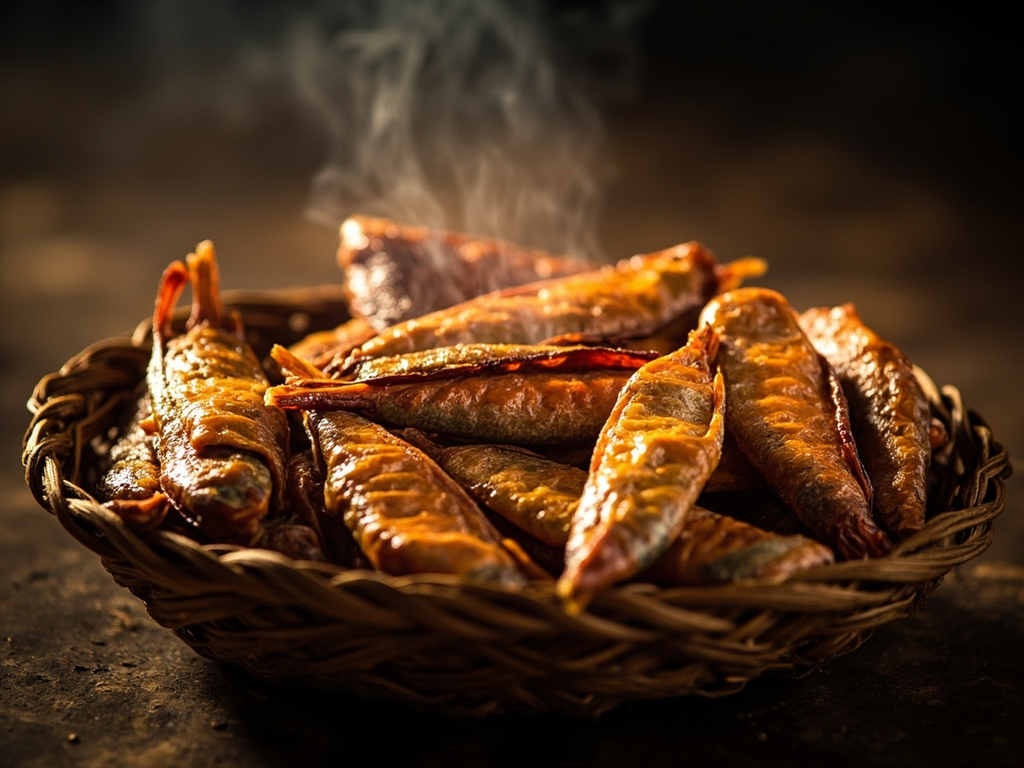
Ika maroke (Wind-dried fish of the strait)
Why this dish? Te Rauparaha's military campaigns — his raids on Kaiapoi and the South Island coast — required transportable supplies on waka taua (war canoes). Wind-dried fish, light and durable, was the quintessential war ration of Māori taua (armed expeditions). Cook Strait, which Te Rauparaha regularly crossed, provided abundant fish and ideal drying wind.
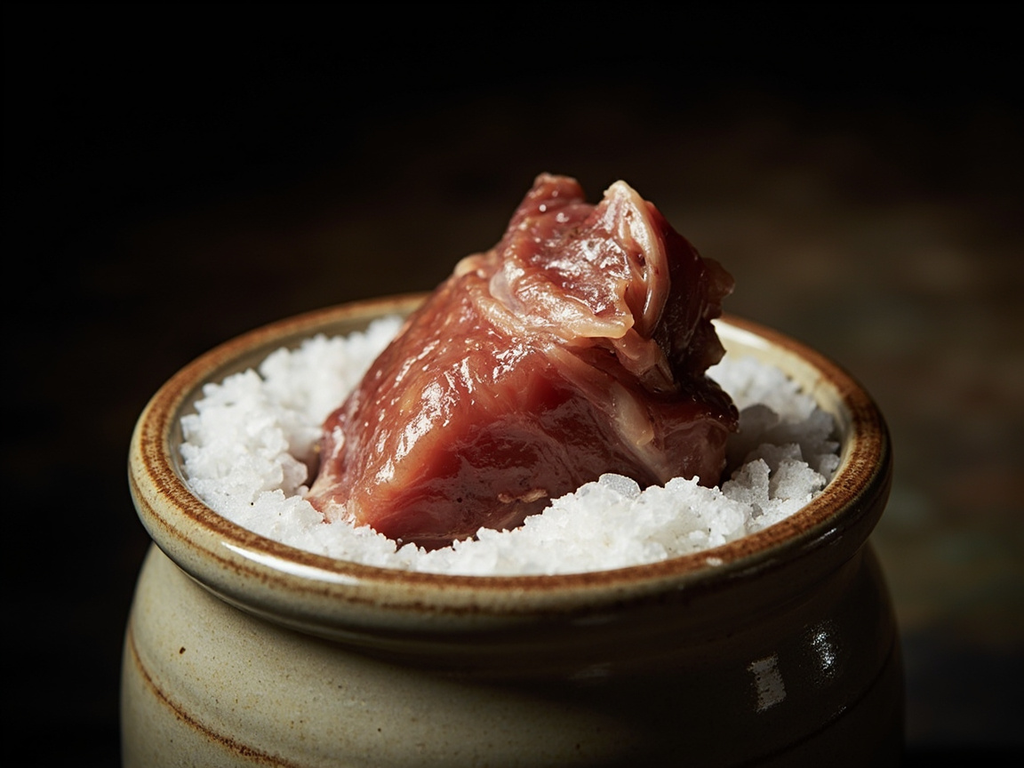
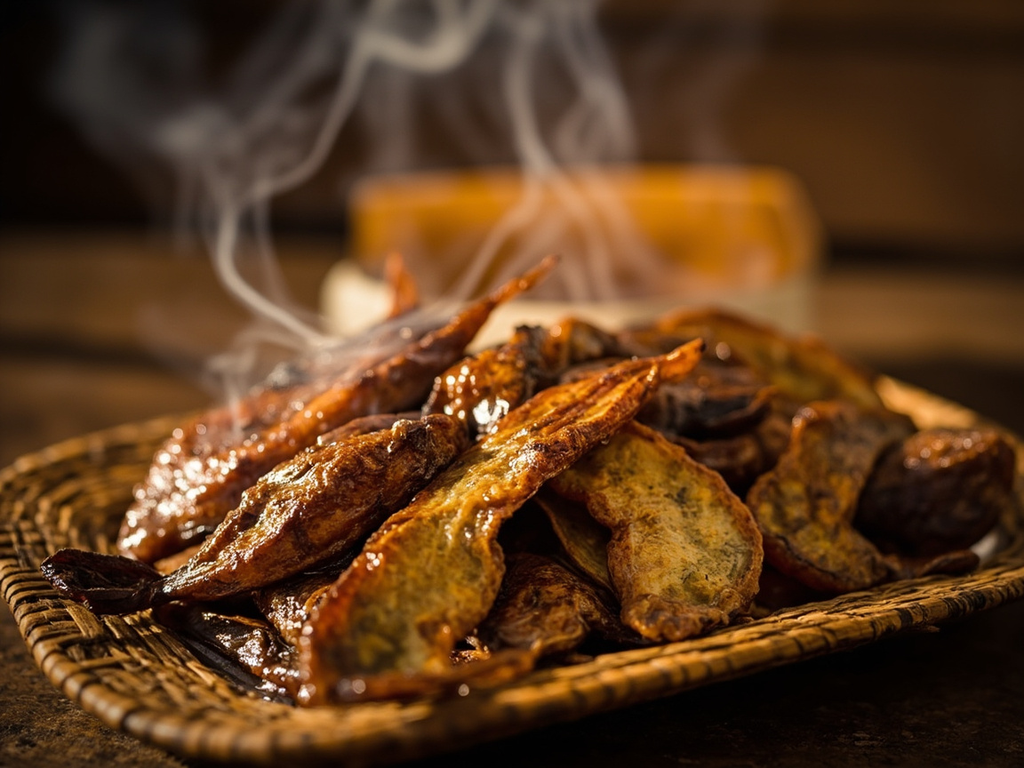
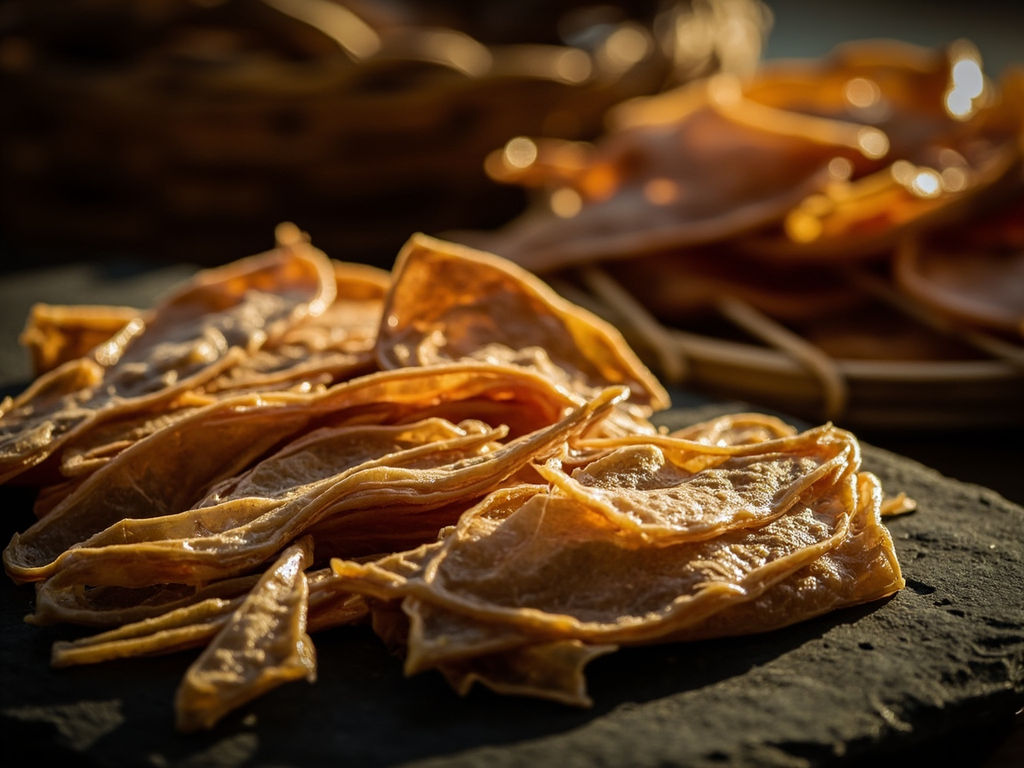
Fish fillets salted in seawater then wind-dried on wooden racks for several days. The result is firm flesh, concentrated in flavor, which keeps for weeks and is eaten as is or rehydrated in a broth.
Before every taua, my women prepare the ika maroke. We split the fish in two with a single shell-stroke, dip them in the sea, and hang them on the racks facing the wind of Kāpiti. This strait wind never stops — in three days, the fish is hard as wood and light as a feather. A warrior carries enough ika maroke for ten days' march in his kete. He who goes on campaign with an empty belly does not fight — he dies.
- •Whole fish (kahawai, barracouta or hapuku) — Several large fish (Base to preserve)
- •Seawater — Abundant (Natural salting)
- •Mānuka racks (aromatic wood) — Drying structure (Drying support)
Ika maroke (Wind-dried fish of the strait)
Fish fillets salted in seawater then wind-dried on wooden racks for several days. The result is firm flesh, concentrated in flavor, which keeps for weeks and is eaten as is or rehydrated in a broth.
Why this dish? Te Rauparaha's military campaigns — his raids on Kaiapoi and the South Island coast — required transportable supplies on waka taua (war canoes). Wind-dried fish, light and durable, was the quintessential war ration of Māori taua (armed expeditions). Cook Strait, which Te Rauparaha regularly crossed, provided abundant fish and ideal drying wind.
Before every taua, my women prepare the ika maroke. We split the fish in two with a single shell-stroke, dip them in the sea, and hang them on the racks facing the wind of Kāpiti. This strait wind never stops — in three days, the fish is hard as wood and light as a feather. A warrior carries enough ika maroke for ten days' march in his kete. He who goes on campaign with an empty belly does not fight — he dies.
Ingredients (period version)
- Whole fish (kahawai, barracouta or hapuku) — Several large fish (Base to preserve)
- Seawater — Abundant (Natural salting)
- Mānuka racks (aromatic wood) — Drying structure (Drying support)
Ingredients
- Very fresh sea bass or mackerel fillets — 800 g (4 fillets) (Base to preserve)
- Coarse sea salt — 200 g (Salting)
- Water — 1 litre (For brine)
Method
- Prepare a brine by dissolving 200 g of coarse salt in 1 litre of water.
- Remove bones from the fillets, leave the skin on. Score the flesh diagonally every 2 cm without cutting through the skin.
- Submerge the fillets in the brine for 2 hours in the refrigerator.
- Drain and pat the fillets dry thoroughly.
- Place the fillets skin-side down on a wire rack set on a baking sheet, in a ventilated refrigerator (or in front of a fan in a cool place).
- Let dry for 48 to 72 hours, turning once a day, until the flesh is firm and translucent.
- The dried fish can be eaten as is, sliced into strips, or rehydrated in hot water for 10 minutes before serving warm.
How it was made : Wind drying (whakamaroke) was the main Māori preservation method. Fish were split using knives of obsidian or shell, then hung on whata (raised platforms) facing the prevailing wind. Mānuka wood, slightly aromatic, was sometimes used for the racks, adding a subtle smoky note. Considerable quantities were prepared during seasonal fish migrations. The reserves, stored in pātaka (storehouses on stilts), were a sign of the hapū (clan)'s wealth.
The contemporary twist : Present the dried fish strips as "Strait chips," arranged vertically in a small earthenware pot, accompanied by a bowl of hot broth for dipping.
Sources : Best, Elsdon. "Fishing Methods and Devices of the Maori", Dominion Museum Bulletin n° 12, Wellington, 1929. · Leach, B. Foss & Leach, Helen. "Prehistoric Man in Palliser Bay", National Museum of New Zealand Bulletin 21, 1979.
Te Rauparaha · Charactorium